Setting up a 12-volt solar battery setup means picking a chemistry and capacity that match how you actually live, whether that’s running a trolling motor through the afternoon or keeping a cabin’s lights on after dark. The list below pairs deep-cycle LiFePO4 packs with three portable solar chargers that keep them topped off. Each pick is sized to a real use case so you’re not overpaying for amp-hours you won’t use, or under-specing a system that needs more headroom.
The Choices Worth Comparing

VATRER POWER 12V 300Ah LiFePO4 Dual-Mode Battery
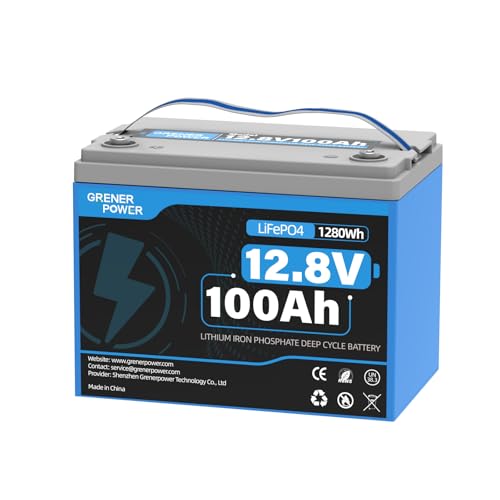
GrenerPower 12V 100Ah LiFePO4 Group 24 Battery

SUNER POWER 20W Waterproof 12V Solar Charger

SUNER POWER 30W Waterproof 12V Solar Charger

Renogy 12V 100Ah Trolling Motor LiFePO4 Battery
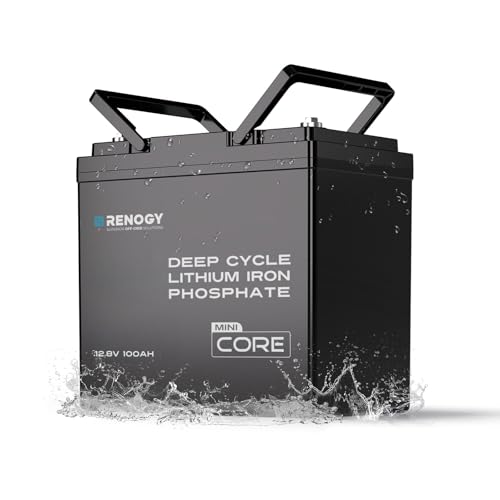
Renogy 12V 100Ah Core Mini LiFePO4 Battery

Renogy 12V 100Ah Self-Heating LiFePO4 Mini Battery
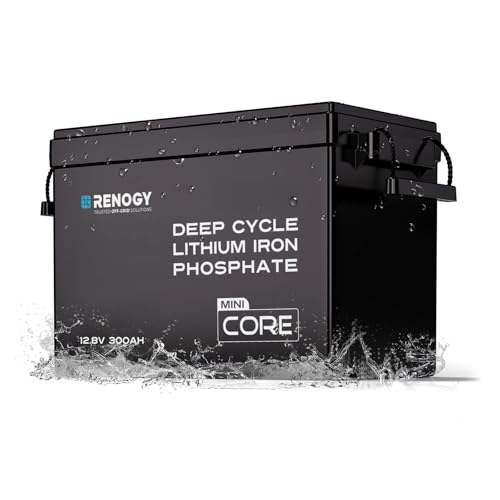
Renogy 12V 300Ah Mini LiFePO4 Battery

SUNER POWER 50W Waterproof 12V Solar Charger
Inside Each Recommended Option
VATRER POWER’s 300Ah pack pulls double duty in a way most off-grid batteries don’t. The built-in BMS (battery management system) runs in two modes: a deep-cycle storage profile for daily draws, and a momentary high-discharge mode for engine starting that pushes up to 1,500A of peak current. For a Class C RV with a generator bay or a cabin with a backup sump pump, that hybrid behavior removes the need to keep a separate cranking battery on hand.
Capacity lands at 300Ah of LiFePO4 chemistry, which trades extra weight for thousands of usable cycles and stable voltage as it drains. App-based monitoring adds a layer of comfort for installers who like to check state of charge from the cab without crawling into a battery box. For heavier users running a fridge, lights, and a microwave off a single pack, this one carries the load without the bulk of a lead-acid bank.
Noteworthy Benefits
- Dual-mode BMS handles both storage and engine starting in one unit.
- 300Ah of LiFePO4 capacity supports multi-day off-grid use without recharging.
- App monitoring gives real-time state-of-charge visibility from a phone.
- Long cycle rating means years of daily use before meaningful capacity loss.
Points To Keep In Mind
- Heavier and bulkier than the mini-format Renogy options reviewed below.
- Peak starting amps only engage when the BMS detects a startup load.
- Requires a LiFePO4-compatible charger or alternator profile for top performance.
Feature Snapshot
Who Will Love This
RVers and cabin owners who want one battery that runs house loads and starts an engine when needed.
A Better Fit Elsewhere
Teardrop trailer owners with limited bay space will find the Renogy 12V 100Ah Core Mini LiFePO4 Battery easier to fit.
GrenerPower keeps the format simple: a Group 24 case with cylindrical A-grade LiFePO4 cells and a 100A BMS rated for 15,000 cycles at reduced depth of discharge. That’s a strong cycle rating for the price tier, and the Group 24 footprint drops straight into the battery trays common to boats, RVs, and small off-grid systems. You skip the custom mounting brackets that come with the smaller Renogy Core Mini design.
Five layers of protection (overcharge, overdischarge, short-circuit, overcurrent, and overheat) cover the everyday failure paths. For weekend warriors running a trolling motor or a small inverter for lights and a phone charger, this is the kind of battery you install and largely forget. Compared to the VATRER 300Ah dual-mode pack above, this one focuses purely on deep-cycle storage rather than engine starting.
Real Benefits
- 15,000-cycle rating supports years of regular cycling on a modest budget.
- Group 24 case fits standard RV and marine trays without adapters.
- 100A BMS with five protection layers handles typical 12V loads cleanly.
- A-grade cylindrical cells hold voltage more steadily than prismatic alternatives.
Honest Caveats
- No Bluetooth or app monitoring for remote state-of-charge checks.
- Larger footprint than the Renogy Mini options, so it won’t fit tight battery boxes.
Best Suited To
RVers and anglers who want a standard-size drop-in replacement for an old lead-acid battery without extra mounting work.
Reach For A Different Pick When
Installers with very tight bay dimensions should pick the Renogy 12V 100Ah Core Mini LiFePO4 Battery instead.
SUNER POWER’s 20W panel handles the maintenance side of any 12V solar battery setup. The built-in UltraSmart MPPT controller (MPPT stands for Maximum Power Point Tracking, a method that squeezes more usable energy out of a panel than simpler controllers) regulates the charge through three stages, which keeps a stored battery topped off without cooking it. It’s the kind of low-effort panel you stick on a truck dash, a boat console, or a stored motorcycle to prevent sulfation during winter downtime.
Waterproof construction handles the spray zone on a trailer tongue or a marine deck. The 20W output won’t recharge a deeply discharged pack, but it does exactly what a maintainer should: replaces the small parasitic drain a vehicle’s clock and alarm pull over weeks of sitting. Owners commonly mount it with the included hardware and route the leads through a gap in the hood or cabin.
The Helpful Details
- Built-in MPPT controller runs a three-stage charge for safer topping off.
- Waterproof housing handles outdoor mounting on trailers and boats.
- 20W output suits maintenance duties on stored vehicles and seasonal equipment.
- Compact panel size fits on dashboards, cabin tops, and small deck spaces.
Things To Consider
- Too small to recover a deeply discharged battery in any reasonable time.
- Output depends heavily on direct sunlight and clean panel surface.
Feature Rundown
Right Fit For
Owners storing cars, boats, and motorcycles through the winter who need a low-effort way to keep the battery alive.
Skip It When
Shoppers looking to actually recharge a battery in the field should pick the SUNER POWER 50W model further down the list.
Stepping up to 30W fills the gap between pure maintenance and meaningful charging. SUNER POWER’s mid-size panel uses the same UltraSmart MPPT controller as the 20W version, so the charge profile stays consistent across the line. That 50% jump in wattage makes a real difference for boats that sit at a mooring or RVs that spend a few weeks between trips: parasitic loads from radios and clocks add up faster than you’d think.
The footprint is still small enough to mount on a cabin roof or a kayak hatch cover, which keeps it from dominating the deck. Compared to the 20W model above, this one pushes enough current to noticeably recover charge on a partly depleted battery over a sunny afternoon. It’s the middle child of the SUNER POWER lineup, and for most people it’s the right one.
Notable Gains
- 30W output recovers partial charge on a depleted battery in a single sunny day.
- Same UltraSmart MPPT controller as the larger panel for consistent charge quality.
- Waterproof build tolerates splashes and brief rain exposure on open mounts.
- Three-stage charging protects battery health during long maintenance cycles.
Worth Noting
- Still too small for full recharging on a large house battery bank.
- Real output depends on direct, unobstructed sun for the full panel surface.
Best Suited To
Boat and RV owners who want stronger maintenance plus light recovery on a battery that’s been sitting for a few weeks.
Look Elsewhere When
Off-grid cabin owners running a daily draw should consider the SUNER POWER 50W panel for steadier top-ups.
Renogy built this pack specifically for anglers running 12V to 36V trolling motors. The IP67 rating (a standard that means full dust protection and immersion in up to one meter of water) seals the case against spray, rain, and the occasional splash over the gunwale. Continuous discharge tops out at 150A with a 300A surge for 30 seconds, which covers the prop-load spikes a trolling motor pulls when it hits a submerged log or thick grass.
Bluetooth integration through the Renogy app shows voltage, current, and state of charge without opening the hatch. That matters on a bass boat where the battery lives under a seat or in a console cavity. For saltwater anglers, the sealed case also reduces the corrosion risk that wrecks standard batteries within a season or two.
What Pays Off
- IP67 sealing protects against splashes and rain on open-deck installations.
- 150A continuous discharge handles trolling motor load without voltage sag.
- Bluetooth monitoring reads state of charge from a phone in the seat box.
- Group 24 case drops into common marine battery trays without modification.
Practical Considerations
- Not designed for engine starting, unlike the VATRER dual-mode pack reviewed earlier.
- IP67 rating helps but doesn’t make the case fully submersible for long periods.
Quick Facts
Perfect Match For
Anglers running 12V to 36V trolling motors who need a sealed, Bluetooth-equipped pack that handles spray and heavy draw.
Not Your Match When
Winter ice fishing requires a self-heating battery like the Renogy 12V 100Ah Self-Heating LiFePO4 Mini Battery.
The Core Mini shrinks the standard Renogy 100Ah pack down to roughly 13% smaller than competing 12.8V 100Ah minis and about half the volume of a Group 31 lead-acid case. That’s the difference between a teardrop trailer install that needs custom fabrication and one where the battery slides into a space originally meant for a Group 22NF. Kayak anglers and small RV converters will appreciate the lighter footprint most.
Renogy builds in a 100A BMS with low-temperature charging protection, so the pack won’t accept a charge below freezing without an internal cutoff. The Core Mini drops the Bluetooth radio from the trolling-motor model above, but you can add Renogy’s external monitoring accessories for remote state-of-charge reads if you need them.
Where It Excels
- Group 22NF size fits tight battery bays in teardrops and small campers.
- 100A BMS includes low-temperature charge cutoff for winter safety.
- 13% smaller than competing 12.8V 100Ah mini-format batteries.
- Remote monitoring compatibility through Renogy accessories.
Small Caveats
- No built-in Bluetooth, unlike the trolling motor model reviewed earlier.
- Below-freezing charging still requires an external warm-up before use.
Whose Shelf It Belongs On
Teardrop trailer, kayak, and van builders who need real capacity in the smallest possible case.
Swap It Out When
Sub-zero charging matters, in which case the Renogy 12V 100Ah Self-Heating LiFePO4 Mini Battery handles cold conditions on its own.
Renogy’s DuoHeat technology adds dual heating pads inside the case, delivering 110W of warm-up power that brings the cells up to a safe charging temperature roughly 40% faster than single-pad designs. That matters most for ice fishing shacks, snowmobile trailers, and any off-grid cabin where the battery lives in an unheated bay through a long winter.
The housing still sits at about 45% smaller than similar 100Ah self-heating batteries on the market, so the cold-weather capability doesn’t cost you bay space. The 100A BMS layers in 25+ safety protections and accepts charge cycles at low temperatures once the internal heaters do their job. For cold-climate use, this is the more thoughtful choice over the Core Mini above.
Practical Pluses
- Dual heating pads warm cells to safe charging temps 40% faster than single-pad designs.
- Group 22NF mini size keeps cold-weather capability without bulk penalty.
- 25+ BMS protections cover low-temp, overvoltage, and short-circuit events.
- Over 5,000 cycles at 80% depth of discharge for years of seasonal use.
Trade-Offs
- Heating draws power from the battery itself, so cold-start charge takes planning.
- Slightly higher cost than the non-heated Core Mini for similar capacity.
Built With In Mind
Ice anglers and cold-climate cabin owners who need reliable charging when temperatures drop well below freezing.
Reach For A Different Pick When
Warm-weather installers will get equal performance from the less expensive Renogy 12V 100Ah Core Mini LiFePO4 Battery.
Renogy squeezes 300Ah of LiFePO4 capacity into a case roughly 31% more space-efficient than competing 300Ah deep-cycle batteries. The 55-pound weight sits about 57% lighter than the equivalent 200Ah lead-acid pack, which keeps the floor load down on small RV bays and lightweight camper builds.
A 200A BMS with low-temperature cutoff adds another layer of safety for off-grid installers. Note that this model ships as a hazardous-materials regulated item and may be non-returnable depending on the listing terms, so check the policy before you order. The big takeaway is that this is the pack to reach for when you want capacity without the lead-acid weight penalty.
Strengths Worth Knowing
- 300Ah in a mini-format case reduces bay footprint compared to other 300Ah batteries.
- 55-pound weight cuts floor load versus equivalent lead-acid banks.
- 200A BMS handles heavier inverter loads without tripping.
- Low-temperature cutoff protects cells when charging in cold conditions.
Things To Weigh Up
- Listed as a hazardous-materials item with potential return restrictions.
- Higher upfront capacity cost versus running two smaller 100Ah batteries.
At A Glance
Made For
Off-grid cabin owners and full-time RVers running a fridge, lights, and inverter loads from a single bank.
Consider Something Else When
Shoppers running lighter weekend loads get equivalent service from the smaller Renogy 12V 100Ah Core Mini LiFePO4 Battery.
SUNER POWER’s 50W panel marks the jump from maintenance to actual charging duty. The same UltraSmart MPPT controller runs the show, but with more panel surface the unit puts enough current back into a depleted 12V solar battery to matter over the course of a day. Cabin owners running lights, a fan, and a phone charger will see meaningful recovery rather than just a topped-off float voltage.
The footprint grows with the wattage, so it needs more roof or ground space than the 20W and 30W models earlier in the lineup. Waterproof construction and three-stage charging carry over from the smaller panels, keeping the charge profile consistent across the family. For users stepping up from maintenance to real off-grid charging, this is the entry point.
Where It Delivers
- 50W output recharges partial depletion over a full sunny day.
- UltraSmart MPPT controller tracks peak power efficiently across varying sun.
- Three-stage charging protects battery health through long solar cycles.
- Waterproof housing tolerates outdoor installation on cabins and sheds.
Points To Note
- Larger panel footprint requires more roof or ground space than smaller units.
- Output depends heavily on direct, unobstructed sun for maximum harvest.
Right Fit For
Off-grid cabin owners and remote shed users who want a single panel that handles daily low-wattage draws.
Where Another Pick Suits Better
Shoppers who only need maintenance on a stored vehicle should save space and budget with the SUNER POWER 20W model.
Matching Capacity, Chemistry, and Charge Profile to Your Setup
A 12V solar battery setup has three choices that drive everything else: capacity, chemistry, and how you’ll recharge it. Capacity in amp-hours tells you how long the battery can run a given load before it needs topping off. A 100Ah pack running a 5A draw gets about 20 hours, while the same pack at a 50A draw from an inverter lasts closer to two. Right-sizing capacity to your real draw, not your theoretical worst case, keeps weight and cost reasonable.
Chemistry matters more than most shoppers realize. Lithium iron phosphate (LiFePO4) cells hold voltage steadier as they discharge, which means your lights and fridge don’t dim as the battery drains. They also tolerate thousands of cycles at deeper discharge than lead-acid, so the upfront cost pays back over years of regular use. For most off-grid scenarios today, LiFePO4 is the right starting point, with a lead-acid budget reserved for seasonal weekend use.
Charge profile ties back to your panel choice. MPPT controllers harvest more energy than PWM (Pulse Width Modulation, a simpler controller type that switches current on and off rapidly) alternatives in cool or cloudy conditions, though both work in full sun. A built-in controller on a panel handles the basics; a separate unit gives you more visibility and flexibility for larger systems. For mixed users running maintenance plus occasional recovery, the 30W to 50W range covers most needs without oversizing the panel.
Key Considerations Across These Picks
Common Slip Ups Worth Dodging
The most common slip-up is sizing a battery to peak draw instead of average draw. A 100Ah pack running a 50A continuous load will drain in two hours, and the BMS may trip before then. Match capacity to your typical 24-hour consumption and add about 20% headroom for surprises. Oversizing adds weight; undersizing shortens cycle life by forcing deeper discharges.
Why Spending Up Sometimes Pays
Higher-tier batteries earn their premium through BMS sophistication, sealed enclosures, and cold-weather charging support. If your battery lives in an unheated bay or feeds an inverter pulling 100A or more, the upgrade to a 200A BMS with low-temperature cutoff pays off in reliability. For warm-climate weekend use, mid-tier packs deliver the same capacity without the premium features you won’t exercise.
Frequently Asked Questions
How long will a 12V 100Ah LiFePO4 battery last on a single charge?
Runtime depends on your draw, but a 100Ah pack running a 10A continuous load delivers roughly 10 hours before hitting the BMS cutoff. Lower draws extend that proportionally.
Can I use a regular solar panel to charge a LiFePO4 battery?
A LiFePO4-compatible charge profile is required, either through a built-in MPPT controller or a separate charger matched to the chemistry. Generic panels work fine when paired with the right controller.
What’s the real difference between MPPT and PWM controllers?
MPPT controllers track the panel’s peak power output as sunlight changes, harvesting more energy in cool or cloudy conditions. PWM controllers switch current on and off, losing efficiency as conditions vary.
Do I need a self-heating battery for winter use?
If you charge below freezing, yes. LiFePO4 cells can be damaged by charging at low temperatures, so either a self-heating pack or an insulated, heated bay is required for cold-climate charging.
How long do these batteries typically last?
LiFePO4 batteries commonly deliver thousands of cycles at 80% depth of discharge, translating to several years of daily use. Storage conditions and discharge depth drive most of the variation.
Closing Remarks
The right 12V solar battery choice depends less on specs in isolation and more on how you’ll actually use it. Match the chemistry to your climate, the capacity to your draw, and the panel to the recharge pace you need. With the right combination, an off-grid battery setup runs quietly for years without much fuss.