Whether you’re wiring up an off-grid workshop, replacing tired SLA cells in a garage door opener, or building a portable rig for outdoor adventures, the right 12V pack makes the difference between a project that hums and one that limps. Capacity, chemistry, and connector type all matter, and matching them to your device matters even more. This roundup walks through ten solid options across DIY-friendly lithium packs, marine-grade LiFePO4 banks, and workhorse SLA replacements that cover most everyday 12V needs.
A Side-By-Side Look
PickWhy We Picked ItBest ForAction

DIY Favoriterapthor 12V 2600mAh Rechargeable Li-ion Battery Pack with 12.6V 1A Charger
Compact entry-level lithium pack
LED strips and small routers
Heavy-Duty PickLitime 12V 200Ah Mini Trolling Motors LiFePO4 Lithium Battery 4-Pack
Massive marine-grade capacity
Boats, RVs, off-grid rigs
Backup Bulk BuyMighty Max Battery ML8-12 12V 8AH SLA Replacement Battery 10-Pack
Ten-pack SLA value
UPS and emergency backups
Value PickMighty Max Battery 12V 5AH SLA Replacement Battery 2-Pack
Twin-pack SLA replacement
Mighty Max Battery 12V 5AH SLA Replacement Battery 2-Pack
Twin-pack SLA replacement
Small backup devices
Dual Pack Conveniencerapthor 12V 2600mAh Rechargeable Li-ion Battery Pack with Charger, 2-Pack
Two packs, one charger
DIY swaps and small builds
Garage Door FixMighty Max Battery 12V 5AH SLA Battery for Garage Door Opener 4-Pack
Four-pack standby reserve
Garage door openers
Bluetooth Marine PickLitime 12V 200Ah Lithium LiFePO4 Battery for Trolling Motor, Marine 4-Pack
Smart Bluetooth monitoring
Connected boat setups
![]()
Workshop WorkhorseACDelco Tools AB1207LA G12 Series 12V Li-Ion 4-Battery Pack
Four spare tool batteries
Auto shops and DIYers
Higher Capacity SLAMighty Max Battery 12V 18AH SLA Replacement Battery 2-Pack
Heavy 18Ah SLA cells
Mobility and deep-cycle use
Power Upgraderapthor 12V 10Ah Rechargeable Lithium Battery Pack with 12.6V 2A Charger
Big lithium jump from 2.6Ah
Longer-running DIY projects
A Closer Look At Each Pick
For first-time tinkerers wiring up a low-draw 12V project, this rapthor pack strips things down to what actually matters: a 2600mAh lithium cell (milliamp-hours, the rating that tells you how long a battery can deliver a given current), a 3A maximum output, and a charger that tops it off at a sensible 1A rate. You get the bare essentials plus a DC pigtail, so connecting to LED strips, CCTV cameras, or a small Bluetooth speaker takes minutes rather than a parts-bin hunt.
Built-in BMS (battery management system, the circuitry that guards against over-charge, over-discharge, and short circuits) protection adds peace of mind for setups that run unattended, like a router backup or a night-time fishing light. Compared to the Litime marine giants later in this list, the rapthor is genuinely pocketable, which makes it the friendliest starting point for bench experiments.
Bright Spots
- ✓Lightweight enough to mount almost anywhere, even inside a small project enclosure.
- ✓BMS protection means you can leave it on a charge without babysitting the process.
- ✓DC pigtail and connector included, so you skip the adapter scavenger hunt.
- ✓Pairs naturally with low-power 12V gear like LED strips, IP cameras, and routers.
Points To Keep In Mind
- •2600mAh runs out fast on anything beyond a few hundred milliamp loads, so plan your runtime expectations honestly.
- •The 3A ceiling rules out anything with a motor or inverter draw.
Who It Suits Best
Beginners assembling a low-draw 12V rig who want a forgiving, plug-and-go lithium pack rather than a wiring project.
Swap It Out When
Anyone running motors, trolling gear, or anything pulling sustained amps will find the Litime 12V 200Ah Mini Trolling Motors LiFePO4 Lithium Battery 4-Pack a more honest match.
Step up from hobby packs and you land in Litime territory: a Group 31+ form factor (a standardized case size commonly used in marine and RV battery boxes) packing 200Ah of LiFePO4 (lithium iron phosphate, a safer and longer-lived lithium chemistry than typical Li-ion) per unit, shipped as a four-pack. The headline feature is weight: roughly 44.5 pounds per battery, around 65% lighter than a lead-acid equivalent of the same rating, which matters a lot when you’re hauling four of them into a bass boat.
Grade A automotive-grade cells (the highest-grade lithium cells, vetted for capacity consistency and longevity) mean these are built for the daily discharge cycles a trolling motor or RV house bank demands. For most anglers and overlanders, the headline advantage is straightforward: less weight, longer cycle life, no acid spills if a battery tips in rough water.
The Good Stuff
- ✓Massive 200Ah capacity per unit covers long days on the water or off-grid weekends.
- ✓LiFePO4 chemistry tolerates deep discharges better than lead-acid, so usable capacity is closer to the rated number.
- ✓Four batteries bought together simplifies building a 12V bank at higher total capacity.
- ✓Drop-in Group 31+ sizing fits standard marine battery trays.
Trade-Offs
- •Four-pack pricing puts it well out of reach for casual hobby use.
- •LiFePO4 cells need a charger rated for the chemistry, so an old SLA charger won’t cut it.
- •You’ll want to confirm your boat or RV’s charging system supports lithium profiles before swapping these in.
Quick Facts
| | Feature | Specification | Why It Matters |
|---|
| Capacity per battery | 200Ah | Delivers full-day runtime for typical trolling motor loads. |
| Weight per battery | 44.5 lbs | About 65% lighter than a comparable SLA cell. |
| Form factor | Group 31+ | Fits standard marine and RV battery trays without modification. |
Made For
Boat owners, RV travelers, and off-grid cabin dwellers who need real deep-cycle capacity and don’t mind the upfront cost.
Look Elsewhere When
Makers running small LED projects or single-camera rigs should reach for the rapthor 12V 2600mAh pack instead and save the heavy hardware for serious loads.
There’s a quiet kind of shopper who needs ten of the same 12V 8Ah SLA (sealed lead-acid, a maintenance-free battery chemistry that can be mounted in any orientation) cell at once, and Mighty Max caters to them directly. Each ML8-12 is a sealed, spill-proof unit measuring roughly 5.94 x 2.56 x 4.02 inches with F1 terminals (the small spade-style connectors used on most compact SLA batteries), so they slot into legacy UPS, emergency lighting, and alarm panels without fuss.
The AGM (absorbent glass mat, a construction where the electrolyte is held in fiberglass separators, making the battery spill-proof and vibration-resistant) construction handles wide temperature swings, which is why these end up in outdoor enclosures and unheated garages. The honest read is that you’re not buying innovation here; you’re buying dependable, replaceable inventory at a per-cell price that justifies a ten-pack.
The Practical Payoff
- ✓Buying ten at once drops the per-cell cost for fleet replacements.
- ✓Mountable in any orientation, useful in cramped alarm and lighting cabinets.
- ✓Spill-proof AGM chemistry is friendlier than flooded lead-acid around sensitive gear.
- ✓Wide operating temperature range suits unheated basements and outdoor boxes.
Where It May Fall Short
- •SLA is heavier than lithium for the same capacity, so any portable use gets tiring fast.
- •8Ah is small for anything beyond brief backup duty; runtime tops out fast on bigger loads.
Best Suited To
Facilities teams and homeowners replacing multiple UPS or alarm backup cells at once who value predictable SLA behavior over lithium weight savings.
A Better Fit Elsewhere
Anyone wanting modern lithium weight savings for portable setups should consider the Mighty Max Battery 12V 5AH SLA Replacement Battery 2-Pack for lighter SLAs or step up to the ACDelco Tools AB1207LA G12 Series 12V Li-Ion 4-Battery Pack for cordless tool use.
The 5Ah ML5-12 is the smaller sibling to the ML8-12 covered above, and it lands in that sweet spot where sealed lead-acid still makes sense: small standby loads, kid ride-on toys, security panels, and similar low-amp jobs. At roughly 3.58 x 2.76 x 4.21 inches, the case is genuinely compact, and the F1 terminal format is the industry default for this capacity tier.
What you give up versus the rapthor lithium packs earlier is weight and cycle life. What you gain is a cheaper cell that tolerates being topped off constantly and shrugs at temperature swings. For most people replacing an existing SLA in a fixed location, this two-pack is the sensible, predictable choice.
Where It Excels
- ✓Per-pack pricing is friendly when you just need to swap a worn cell.
- ✓Same SLA/AGM construction as the larger ML8-12, so behavior is predictable.
- ✓Compact footprint fits legacy compartments built for the Ritar RT1245 form factor.
- ✓Mountable in any position without leaking concerns.
Honest Caveats
- •5Ah runs short fast on anything pulling more than an amp or two continuously.
- •SLA self-discharge (the slow loss of charge when sitting idle) means these want a top-off every few months in storage.
The Right Fit
Anyone replacing a single small SLA cell in a security panel, scooter, or backup light who wants a near-identical drop-in swap rather than a lithium upgrade.
Consider Something Else When
People building new lithium-based projects will be happier with the rapthor 12V 2600mAh Rechargeable Li-ion Battery Pack with Charger, 2-Pack, which delivers the same form-factor flexibility at lighter weight.
If the single rapthor pack earlier caught your eye but you want a spare ready to go, the two-pack version solves the “one battery is always on the charger” problem neatly. Two 2600mAh lithium cells, one 12.6V charger, and a set of DC 5521 connectors (a common 12V barrel-plug standard for small electronics) plus pigtail cables come in the box, so you can hot-swap between projects without pausing to top off a single cell.
For most home setups, the practical value is having a charged backup while the other runs your CCTV rig or LED install. The trade-off is that you’re still working within a 2600mAh per-pack budget, so heavier loads will drain these quickly.
Everyday Perks
- ✓Two-pack format means a charged spare is always on hand.
- ✓Same BMS-protected lithium chemistry as the single-pack version, so safety stays predictable.
- ✓DC 5521 connectors match common low-voltage 12V gadgets out of the box.
- ✓Pigtail cables included, which removes an extra trip to the parts drawer.
Small Caveats
- •2600mAh per pack still won’t satisfy anything with sustained draw.
- •The single-port charger means simultaneous top-offs aren’t possible without a second adapter.
Quick Facts
| | Feature | Specification | Why It Matters |
|---|
| Capacity per pack | 2600mAh | Suits intermittent low-draw devices, not continuous loads. |
| Maximum output | 3A per pack | Plenty for cameras and routers, marginal for motors. |
| Charger output | 12.6V / 1A | Slow but gentle on cell longevity. |
Who Will Love This
DIYers running two or three 12V devices simultaneously who want battery redundancy without paying for higher-capacity lithium.
Reach For A Different Pick When
Users needing longer runtime per charge should look at the rapthor 12V 10Ah Rechargeable Lithium Battery Pack with 12.6V 2A Charger, which nearly quadruples the capacity in a similar form factor.
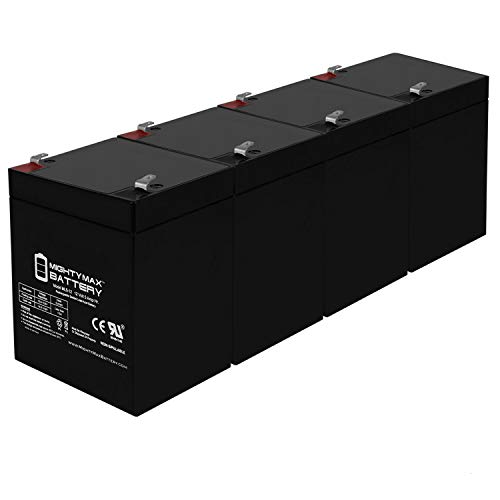
Garage door openers don’t need much, but they need a battery that will work when the power’s out and the opener has to get you in or out during a storm. The ML5-12 four-pack is sized exactly for that standby role. Each 12V 5Ah cell slots into the battery compartment of typical residential openers, and the AGM construction shrugs at the temperature swings an uninsulated garage delivers year-round.
For most people replacing a tired garage backup, four cells is generous: you typically only need one or two per opener, so this leaves spares for the next swap or for other small 12V gear around the house. It’s also worth noting that the cells are spill-proof, so you can mount them in any orientation without worrying about acid creep over time.
Reasons It Performs
- ✓Four-pack pricing works out cheaper per cell than single replacements.
- ✓AGM/SLA chemistry tolerates the temperature swings of an attached garage.
- ✓Spill-proof design lets you mount the cell in any position.
- ✓F1 terminals match the standard wiring on most opener backup compartments.
Worth Bearing In Mind
- •5Ah is minimal runtime: it’s enough for a few open/close cycles, not extended outage use.
- •SLA self-discharge means the cells will need a refresh charge if your power is rarely out.
Perfect Match For
Homeowners who want standby battery insurance across multiple openers or want spares on the shelf for the next replacement.
Not Your Match When
Anyone needing higher-capacity SLA for mobility scooters or wheelchairs should step up to the Mighty Max Battery 12V 18AH SLA Replacement Battery 2-Pack instead.
The Bluetooth-equipped cousin to the Litime Mini earlier in the list, this 200Ah LiFePO4 4-pack adds a smartphone app that reports state of charge (the battery’s remaining capacity as a percentage), voltage, and current draw in real time. For anglers and overlanders running a 100Ah trolling motor or 100Ah electric outboard, that telemetry removes the old guessing game of wondering how much juice is left before you head back to the ramp.
The cells are still Grade A automotive-grade LiFePO4, rated for thousands of deep cycles at 100% depth of discharge (the percentage of battery capacity you’ve actually used; 100% DOD means fully drained) without the rapid degradation lead-acid suffers. Depending on your charging setup, the Bluetooth feature may end up being the deciding factor between this pack and the non-Bluetooth Litime 4-pack above.
A Few Strong Suits
- ✓Bluetooth 5.0 monitoring removes the guesswork from long days on the water.
- ✓LiFePO4 chemistry handles deep discharge cycles better than lead-acid.
- ✓Four-pack format scales cleanly for larger boat banks.
- ✓Compatible with common 100Ah-class trolling motors and outboards.
Possible Compromises
- •Bluetooth app dependency is a small risk if you rarely carry your phone on the water.
- •Like the Mini, these require a lithium-compatible charger, not a leftover SLA unit.
- •Total pack weight adds up fast, so plan your transport accordingly.
Feature Snapshot
| | Feature | Specification | Why It Matters |
|---|
| Connectivity | Bluetooth 5.0 with companion app | Real-time state-of-charge, voltage, and current monitoring. |
| Cell grade | Grade A automotive-grade LiFePO4 | Tolerates deep discharges without rapid capacity loss. |
| Pack size | 4 batteries | Scales for multi-bank marine and RV setups. |
Built With In Mind
Tech-forward boat owners who want battery telemetry on their phone instead of guessing state of charge at the console.
Skip It When
RVers or cabin owners without an interest in mobile monitoring will be just as well served by the Litime 12V 200Ah Mini Trolling Motors LiFePO4 Lithium Battery 4-Pack reviewed earlier.
This ACDelco bundle lives in a different lane from the rest of the roundup: it’s four 2.0Ah 12V Li-Ion slide batteries plus a single 1.5A quick charger, all designed to swap across the ACDelco G12 cordless tool family. If you already own G12 ratchet wrenches, impact drivers, drills, or sanders, the four-pack format eliminates the “battery dead, mid-job” frustration that single-battery kits still suffer from.
Each cell weighs just 6.4 ounces, which is a meaningful difference when you’re working overhead on a trim job or under a dash. Overload, single-cell, and thermal protection are handled through the battery-to-charger communication system, so charging habits are less of a worry than with older tool batteries.
Useful Touches
- ✓Four-pack means a charged spare is always on hand for big jobs.
- ✓Cross-compatible across the entire ACDelco G12 tool lineup.
- ✓Lightweight 6.4 oz per pack reduces arm fatigue on extended overhead work.
- ✓No memory effect (the old battery habit of “forgetting” capacity if you top off before empty) lets you top off between cuts without harming long-term capacity.
Trade-Offs To Consider
- •2.0Ah is modest for heavy cordless tools, so plan rotations between spares on tougher jobs.
- •Single charger means only one cell tops off at a time, so a four-pack takes longer to fully cycle than a multi-bay unit.
Whose Shelf It Belongs On
Auto shop techs, mobile mechanics, and serious DIYers already invested in the ACDelco G12 cordless tool ecosystem who want zero downtime.
A Better Fit Elsewhere
Anyone without G12 tools should look at the rapthor 12V 2600mAh Rechargeable Li-ion Battery Pack with 12.6V 1A Charger for DIY 12V projects or the Mighty Max 5Ah SLA pair for simple standby use.
For deeper-cycle SLA work, the Mighty Max ML18-12 jumps to 18Ah in a 7.12 x 3.00 x 6.50-inch case with nut-and-bolt terminals instead of the F1 spades. That terminal change matters: it signals this battery is built for higher-current applications like mobility scooters, small electric vehicles, and certain UPS systems, where the thin F1 spade would be a weak link.
The two-pack format is generous for a single mobility chair but sensible for someone maintaining a fleet or replacing cells across a small solar setup. The trade-off everyone already knows about: SLA weight versus lithium. These cells are heavy, but they’re also cheaper per amp-hour than lithium and behave predictably across a wide temperature range.
Well-Handled Touches
- ✓18Ah capacity handles deeper-cycle standby and mobility applications.
- ✓Nut-and-bolt terminals handle higher current loads than F1 spades.
- ✓Two-pack lets you service a chair plus keep a spare, or build a small series bank.
- ✓AGM/SLA construction is tolerant of varied mounting positions.
Potential Sticking Points
- •Heavier than lithium equivalents, so portable use gets tiring quickly.
- •Higher amp-hour SLA still self-discharges in storage, so periodic topping off matters.
At A Glance
| | Feature | Specification | Why It Matters |
|---|
| Capacity | 18Ah | Triple the runtime of typical 5Ah standby cells. |
| Terminal type | Nut and bolt | Handles higher current loads with a more secure connection. |
| Pack size | 2 batteries | Enough to service a primary device and keep a spare on hand. |
Who Should Grab It
Mobility scooter owners and small solar users who need genuine deep-cycle SLA capacity without stepping into lithium pricing.
Another Choice May Suit
Anyone building a marine trolling setup will find the Litime 12V 200Ah Lithium LiFePO4 Battery for Trolling Motor, Marine 4-Pack a much lighter, longer-lived upgrade.
The biggest rapthor in this roundup, the 10Ah pack nearly quadruples the capacity of the 2600mAh version while staying in the same DIY-friendly form factor. The 12.6V/2A charger cuts recharge time roughly in half compared to the 1A unit on smaller packs, which matters when you’re cycling between projects. Maximum output climbs to a 5A ceiling, opening up slightly more demanding 12V devices without stepping all the way into a true deep-cycle LiFePO4 build.
For most people who started with the smaller rapthor and found themselves wanting more runtime, this is the natural upgrade. The included DC 5521 connectors and pigtail cables match the rest of the rapthor line, so existing accessories carry over.
A Favorable Mix
- ✓10000mAh capacity meaningfully extends runtime for LED panels, amplifiers, and modem backups.
- ✓2A charger tops the pack off faster than the smaller rapthor units.
- ✓5A max current handles small pumps, fans, and brighter LED loads.
- ✓Same connector ecosystem as the smaller rapthor packs for consistent setup.
Worth Noting
- •Larger pack weighs more than the 2600mAh version, so portability suffers a bit.
- •Still not a substitute for a true deep-cycle LiFePO4 if you’re running motors or trolling gear for hours.
Right Fit For
DIYers who already use the smaller rapthor packs and want a single higher-capacity cell to power longer-running 12V projects.
Not Your Match When
Anyone building a serious trolling or RV house bank should skip ahead to the Litime 12V 200Ah Mini Trolling Motors LiFePO4 Lithium Battery 4-Pack instead.
Matching the Right Pack to Your Real-World Use
The 12V battery world splits cleanly along a few lines: lithium-ion for compact DIY and lightweight applications, LiFePO4 for deep-cycle marine and off-grid work, and SLA for cheap, predictable standby duty. Capacity (measured in Ah, amp-hours, a rough proxy for how long a battery can deliver a given current) and chemistry matter far more than marketing copy. A 2.6Ah rapthor pack is a wonderful bench tool; it’s a poor choice for a trolling motor, and the reverse is equally true.
Connector type deserves a quick check before you commit. F1 spade terminals dominate small SLA packs, while lithium DIY packs lean toward DC 5521 barrel plugs. Mismatched connectors are fixable with adapters, but it’s friendlier to match on the first try.
Chemistry matters for charging. Lithium-ion and LiFePO4 both require chargers designed for their specific voltage profiles; an old SLA charger on a lithium pack usually does the wrong thing. Confirm your existing charger (or the one bundled with the pack) supports your chemistry before plugging in.
How To Choose The Right 12v Rechargeable Battery Packs for 2026
Capacity and Load Match
The most common mistake is buying too little capacity. Calculate your expected runtime: a 1A draw pulls 1Ah per hour, so a 5Ah battery delivers about five hours of useful runtime, less if you factor in depth-of-discharge limits (LiFePO4 handles near-100% discharge, SLA prefers staying above 50%). For most DIY projects that draw under 1A, the rapthor 2600mAh to 10Ah range hits the sweet spot. For trolling motors and RV banks, you want 100Ah and up.
Form Factor and Connector Fit
Small SLA cells use F1 spade terminals; higher-capacity SLAs use nut-and-bolt. Lithium DIY packs typically use DC 5521 barrel connectors. Measure your battery compartment before ordering, and confirm the terminal type matches your wiring harness or plan on adapters.
Temperature and Mounting Conditions
Unheated garages, outdoor enclosures, and marine environments punish batteries. SLA/AGM handles wide temperature ranges well but loses capacity in cold. LiFePO4 performs more consistently across climates but wants protection from extreme cold during charging.
Charging System Compatibility
Lithium packs need lithium-rated chargers with the correct voltage cutoff. Plugging a lithium pack into an SLA charger risks undercharging or, worse, damaging cells over time. Confirm your charger matches the chemistry, especially when mixing old SLA charging gear with new lithium purchases.
What To Watch Before You Commit
Mistakes Worth Dodging
A frequent trap is buying by Ah alone and ignoring maximum discharge current. A 10Ah pack with a 3A ceiling is fine for LED strips but will sag under a small motor load. Equally common: assuming any 12V charger works for any 12V battery. Lithium-ion and LiFePO4 cells want specific voltage profiles, and an SLA charger often undercharges them, leaving you with a pack that never reaches full capacity.
Where The Extra Money Goes
Higher-tier LiFePO4 packs like the Litime 4-packs cost more because of cell grade, cycle life, and built-in battery management. For most casual DIY users, those extras aren’t necessary. For anyone running deep cycles daily, the longer lifespan and lighter weight pay back the upfront difference over years of use. Premium pricing also tends to buy better Bluetooth monitoring and a more robust BMS, which matters for marine and RV installations where you can’t easily swap cells mid-trip.
Frequently Asked Questions
QWhat Is the Difference Between Li-ion and LiFePO4 Batteries?
LiFePO4 (lithium iron phosphate) is a safer, longer-lived chemistry that handles deep discharge cycles far better than standard Li-ion, at the expense of slightly lower energy density. Li-ion packs are lighter and cheaper per watt-hour; LiFePO4 is the right pick for deep-cycle and high-cycle applications like trolling motors and solar banks.
QCan I Use a Lithium Battery Pack to Replace an SLA Battery?
Often yes, but only after confirming the form factor, connector type, and charger compatibility match. Lithium packs want different charging voltages than SLA, so your old SLA charger may need replacement. The lighter weight and longer cycle life are the usual reasons people make the swap.
QHow Long Will a 12V Rechargeable Battery Pack Hold Its Charge?
Modern lithium packs lose only a few percent of charge per month in storage, while SLA cells self-discharge faster and benefit from a top-off every few months. Storing them at moderate temperatures and partial charge extends longevity for both chemistries.
QWhat Does BMS Protection Actually Do?
A battery management system (BMS) is the circuitry inside the pack that prevents over-charge, over-discharge, short circuits, and excessive current draw. It is the single biggest safety upgrade cheap lithium packs gained over the last decade, and it’s the reason modern lithium DIY packs are much safer than early hobby cells.
QAre 12V Rechargeable Battery Packs Safe to Use Indoors?
Lithium and sealed lead-acid packs are both fine indoors as long as they’re not damaged, punctured, or exposed to extreme heat. Avoid charging them on flammable surfaces, and never use a swollen or leaking battery regardless of chemistry.
Closing Remarks
The right 12V pack depends almost entirely on what you’re powering. LED strips, CCTV cameras, and small routers pair naturally with the compact rapthor lithium line. Marine and RV deep-cycle work calls for LiFePO4 like the Litime 4-packs. Garage door openers, alarm panels, and other standby duty stay well-served by Mighty Max SLA cells. Match chemistry, capacity, and connector to the load, and most of the guesswork disappears.