Working on a car battery, a solar install, or a long run of welding cable changes how a tool feels in your hand. A battery cable cutter that’s right for one job can feel clumsy on another. This lineup sorts ten options by capacity, leverage, and grip so you can match the cutter to the cable, not the other way around.
The Main Contenders

Veeloon 9.5-Inch Cable Cutter for 4/0 Aluminum and 2/0 Copper

Tsunoda CA-22 6-Inch Clean-Cutting Cable Cutter (Japan)

Yangoutool Ratcheting Cable Cutter 400mm² Capacity
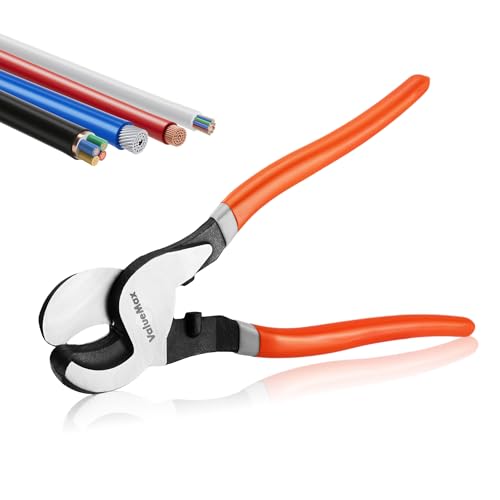
ValueMax 10-Inch Heavy Duty Cable Cutting Plier
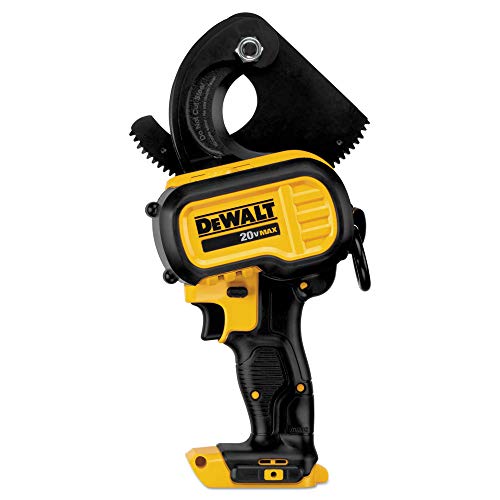
DEWALT 20V MAX Cordless Cable Cutter (DCE150B)

Yangoutool Ratchet Cable Cutter 240mm² Capacity
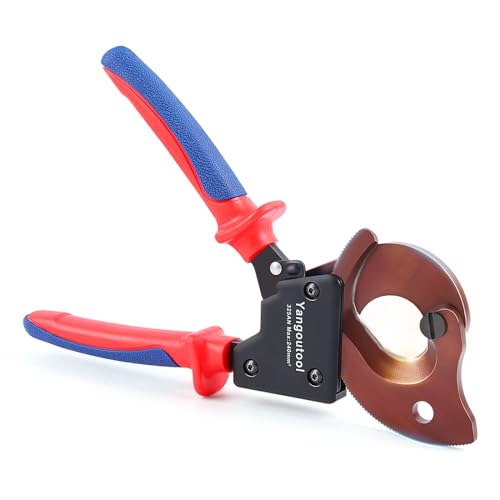
Yangoutool 240mm² Ratchet Cable Cutter for Copper and Aluminum

Mutt Tools 10-Inch Heavy Duty Electrical Cable Cutter

Veeloon Hammer Lug Crimper 16 AWG to 4/0 AWG

Veeloon Cable Cutter and Hammer Lug Crimper Kit 16 AWG to 4/0
A Deeper Look At The Lineup
The Veeloon 9.5-inch lands first because it covers the cables most home mechanics actually meet: 4/0 aluminum feeder runs, 2/0 soft copper battery leads, and the bundled communication wires that show up in low-voltage retrofits. Compared to the compact Tsunoda later in this list, this one trades pocket-friendliness for the leverage you want when the jaws bite into a thick gauge.
You feel that leverage as soon as you seat a cable. The handle geometry spreads the load across your palm, so a single firm squeeze finishes a cut instead of an awkward two-handed struggle. Chromium-vanadium steel (a tough alloy often shortened to Cr-V) keeps the cutting edges from deforming under repeated heavy use.
Features That Help
- Cr-V steel body, treated and ground for clean, burr-free cuts on thick cable
- High-leverage handle geometry reduces hand fatigue on repeat cuts
- Non-slip grip helps when your hands are dusty from under-hood work
- Handles 4/0 aluminum and 2/0 copper without needing a second tool
- Versatile across automotive, industrial, and home wiring projects
Worth Noting
- Not rated for steel cable, so it stays in the copper and aluminum lane
- At 9.5 inches, it can feel bulky inside tight electrical boxes
- Owners commonly recommend a light oil wipe on the pivot after heavy days
Right Fit For
Home mechanics and small-shop electricians who want one robust manual cutter for routine battery and feeder work.
Look Elsewhere When
Your work happens mostly inside cramped breaker panels, where the Tsunoda CA-22’s 6-inch frame reaches what this one cannot.
The Tsunoda CA-22 is built for finesse rather than brute force. Where the Veeloon above is happy chewing through 4/0 aluminum, this Japanese-made 6-inch tool focuses on clean cuts in copper up to 4 AWG, the size range you see on automotive harnesses and small battery leads.
That focus shows up in the blade geometry. The curved edges concentrate pressure at the contact point, so the cable shears instead of flattening. There’s an integrated spring that reopens the jaws after each cut, which keeps your rhythm steady when you trim a dozen leads in a row.
Well-Handled Touches
- Precision-ground curved blades cut without deforming copper ends
- Built-in spring returns the jaws, reducing repetitive hand strain
- 6-inch length slips into tool rolls and crowded junction boxes
- Lightweight design helps during long wiring sessions overhead
Things To Consider
- Capacity tops out around 4 AWG copper, so it won’t replace larger cutters
- Short handles mean more squeeze effort on the upper end of its range
Perfect Match For
Electricians and hobbyists doing detail work on smaller battery and signal cables in tight enclosures.
Consider Something Else When
You regularly cut 2/0 and 4/0 feeder cables, where the Yangoutool 240mm² ratcheting cutters further down this list save your hands.
Yangoutool’s ratcheting 400mm² cutter is the heavy in this lineup. The jaw capacity handles the thickest battery and service cables most people will ever meet, and the ratchet action turns a normally tiring cut into a series of small, controlled squeezes.
You see the difference the moment a 400mm² cable lands between the blades. The mechanism locks onto the conductor, holds it square, and advances the blade with each pump. Compared to the ValueMax 10-inch plier earlier, this one’s compound ratchet requires far less hand strength at the top end of its range.
What Stands Out
- 400mm² jaw capacity covers most copper and aluminum service cables
- Ratchet drive holds the cable aligned for straight, repeatable cuts
- Forged cutting edge rated for repeated heavy-gauge use
- Two-handed grip geometry keeps large cables from twisting mid-cut
Honest Caveats
- Not for steel or steel-reinforced cable
- Not intended for live wires, which limits some field troubleshooting
- Bulkier than 9- or 10-inch manual cutters, so it lives in the truck, not the pouch
Quick Facts
Whose Shelf It Belongs On
Trade electricians and solar installers who trim large copper and aluminum feeders on a regular schedule.
Swap It Out When
You mostly cut mid-gauge cables inside panels, where the smaller Yangoutool 240mm² ratchet offers more compact handling.
The ValueMax 10-inch sits in the comfortable middle of the manual cable-cutter category. It runs longer than the Veeloon above, which translates into more leverage, but it skips the ratchet hardware found on Yangoutool’s larger cutters. You get clean shear-action cutting without moving parts to maintain.
It reaches into the same conductor sizes that show up in most residential and light-commercial battery and feeder runs. Heat-treated shear-style jaws and a black oxide finish (a thin conversion coating that helps resist rust) keep the tool serviceable in a busy garage. For most weekend battery swaps and shop projects, this is a steady workhorse.
Key Advantages
- High-leverage design handles 4/0 aluminum and 2/0 soft copper in one motion
- 10-inch length gives extra reach into deep battery trays
- Ergonomic handle shape supports one-handed cuts when access is tight
- Shear-style blades leave a flat end that strips and terminates cleanly
Where It May Fall Short
- Not suitable for steel cable, so keep it away from guy wires and ACSR
- Plain shear jaws mean more squeeze effort than a ratcheting model on the largest gauges
Made For
Home garage owners and light-trade technicians who need a versatile, no-fuss cutter for routine battery and feeder work.
Reach For A Different Pick When
You cut 750 MCM and 1000 MCM service cable for a living, where the DEWALT DCE150B cordless cutter is in a different class.
The DEWALT DCE150B is the only cordless tool in this roundup, and it changes the rhythm of cutting day. Where every manual option above relies on your grip, this one trades in a battery-driven hydraulic head for 750 MCM copper and 1000 MCM aluminum cable. For crews running multiple service drops in a morning, that head start adds up.
You also get a couple of field-friendly details that manual cutters can’t offer. A bright LED lights the cut zone in dark panels, and the inline forward and reverse switch keeps one-handed operation simple. The cutting blade is field-replaceable, so a dull edge doesn’t retire the whole tool.
Standout Benefits
- Cuts 750 MCM copper and 1000 MCM aluminum in seconds, not minutes
- Replaceable hardened steel blade extends tool life in field conditions
- Padded shoulder strap with connection ring helps on tall ladder runs
- LED work light and accessible forward-reverse switch support one-handed use
Practical Considerations
- Tool-only listing means the battery and charger are separate purchases
- Heavier than any manual cutter on this list, so it’s overkill for occasional jobs
- Replacement blades add a long-term maintenance line to plan around
Feature Snapshot
Best Suited To
Utility and industrial crews who already run DEWALT 20V MAX batteries and cut large conductors daily.
Skip It When
You’re an occasional DIYer with one battery cable to trim, since the Veeloon 9.5-inch covers the same job at a fraction of the cost.
The Yangoutool 240mm² ratchet cutter fills the gap between mid-range manual pliers and the 400mm² heavy hitter earlier in this list. With a top rating around AWG 600 MCM, it handles most residential and light-commercial feeders without the bulk of its bigger sibling.
The ratchet locks the jaw around the cable and feeds the blade forward in small increments. That stepped action matters when you’re cutting overhead with one hand while steadying the cable with the other. Compared to the shear-style ValueMax, you trade raw cutting speed for much lower squeeze effort.
Practical Advantages
- Ratchet drive reduces hand fatigue on mid-to-large gauge cuts
- Cable grip stays aligned, producing straighter ends for lugs and terminals
- Compact enough for bench use and truck-side service work
- Handles copper and aluminum up to AWG 600 MCM
Some Limits To Know
- Not designed for steel or steel-reinforced cable
- Should not be used on energized conductors
- Ratchet mechanism benefits from occasional cleaning to stay smooth
Who It Suits Best
Workshop electricians and serious DIYers who want controlled, low-effort cuts on large residential and small commercial runs.
A Better Fit Elsewhere
Field crews already invested in cordless tool platforms, where the DEWALT DCE150B finishes the same cable in seconds.
This second Yangoutool 240mm² model shares the same capacity ceiling as the previous pick but leans into finish quality. The polished cutting edges are tuned for cleaner ends, and the centralized blade lets you cut from either side of the jaw. For electricians trimming SER cable (Service Entrance cable, the heavy feeder that runs from the meter to the panel) and armored conductors, that flexibility matters.
It’s also one of the few cutters here that explicitly lists armored Cu and Al cable in its compatible materials, alongside standard communication lines. The handle shape stays comfortable across many cuts, though you’ll still want to wipe down the pivot after a dusty day.
Strong Points
- Polished cutting edges leave smoother ends for terminating lugs
- Center-mounted blade accepts cuts from either direction
- Handles armored copper and aluminum cable, plus SER and communication lines
- Ergonomic grips support all-day panel and service work
Trade-Offs
- Not for steel or live wires
- 240mm² capacity is lower than the 400mm² ratcheting model
Feature Snapshot
Built With In Mind
Electricians installing service entrance cable and armored branch feeders in residential settings.
Where Another Pick Suits Better
Auto and marine battery cable work, where the Veeloon 9.5-inch above handles the typical 2/0 to 4/0 range more economically.
The Mutt Tools 10-inch cutter targets the automotive side of the cable world. It’s built for copper and aluminum wire up to 2/0 gauge, which covers most battery, starter, and ground-cable work in cars, trucks, boats, and light farm equipment.
Where this tool earns its spot is the environment it was designed for: emergency response and field service. The body is meant to keep cutting even when conditions get rough. Compared to the Veeloon above, it lands in a similar size class but is tuned for vehicle rescue kits and contractor bags.
Bright Spots
- Cuts copper and aluminum up to 2/0 gauge cleanly in a single motion
- Precision-ground blades hold their edge through repeated field use
- 10-inch length reaches into engine bays and behind dashboards
- Suitable for both contractor work and serious DIY battery projects
Less Ideal Details
- 2/0 capacity tops out below 4/0, so it’s not for the largest feeder runs
- Plain shear design needs more squeeze than a ratcheting model at the top of its range
Who Should Grab It
Auto technicians, off-road builders, and emergency responders who cut battery and starter cables in tough conditions.
Another Choice May Suit
Residential electricians working at the service entrance, where the Yangoutool 240mm² ratchet handles larger and armored cable.
The Veeloon hammer lug crimper is technically a crimper rather than a cutter, but it’s listed alongside battery cable cutters because battery cable work rarely ends at the cut. Once you’ve trimmed a 4/0 welding lead, you still need to attach a lug. This compact hardened-steel tool does exactly that, across 16 AWG to 4/0 AWG.
It’s not the main event on its own. Pair it with the Veeloon 9.5-inch cutter earlier in this list, or grab the bundled kit below, and you’ve covered the full fabrication chain for battery, welding, automotive, marine, and solar wiring.
Notable Upsides
- Indent crimping style produces secure, low-resistance connections
- Covers the full 16 AWG to 4/0 AWG battery and welding range
- Compact body fits in a drawer or rolling toolbox
- Hardened steel build suits repeated shop and field use
What To Weigh
- Does not cut cable on its own, so it pairs with a separate cutter
- Hammer-style indent crimping requires striking force and a solid surface
The Right Fit
DIYers and mobile technicians who already own a manual cable cutter and need a lug tool that handles the full battery cable range.
Not Your Match When
You want a single tool that does both jobs out of the box, in which case the Veeloon cutter and crimper kit below is the better pick.
The Veeloon cable cutter and hammer lug crimper kit bundles the 9.5-inch Cr-V cutter from pick one with the 16 AWG to 4/0 AWG crimper from pick nine. If you want to walk into a battery or solar job with one box and handle every step from cut to crimp, this kit is the obvious choice.
The cutter matches the heavy-duty manual feel of the standalone Veeloon, while the crimper rounds out the workflow without needing a second order. It covers the conductor sizes you’ll see most in automotive repair, marine work, industrial wiring, and solar installs.
Points In Its Favor
- Cutter and lug crimper ship together, simplifying battery cable projects
- Cr-V steel cutter with heat treatment for clean, burr-free cuts
- Crimper supports 16 AWG to 4/0 AWG across automotive, marine, and solar use
- Compact footprint fits in a service truck or rolling toolbox
Room For Improvement
- Two tools in a kit costs more than a single cutter if you only need to trim
- No ratchet mechanism on the cutter, so very large cables demand more squeeze
Feature Snapshot
Perfect Match For
Off-grid installers, marine technicians, and home mechanics who want a one-stop kit for battery and welding cable fabrication.
Look Elsewhere When
You’re running continuous commercial service cable, where the DEWALT DCE150B cordless cutter is sized for that workload.
What Matters Most Before Choosing Battery Cable Cutters
Cable capacity is the first filter, not the last. A cutter rated for 4/0 aluminum and 2/0 copper is the practical baseline for automotive battery and residential feeder work, but anything heavier pushes you toward ratcheting or cordless tools like the Yangoutool 400mm² or the DEWALT DCE150B.
Leverage and grip matter as much as capacity. High-leverage handles, ergonomic shapes, and non-slip coatings reduce fatigue during the kind of day where you trim thirty leads in a row. Ratcheting cutters spread the effort across many small pumps, which helps on the upper end of their range.
Build quality and finish influence how long the tool stays sharp. Look for forged Cr-V or hardened steel blades, heat treatment, and corrosion-resistant coatings. Steel cable is a separate category, and most battery cable cutters are not designed for it, so match the cutter to copper and aluminum and save steel for the right tool.
Key Considerations Across These Picks
Wrong Turns To Avoid
A common slip is buying a small precision cutter expecting it to handle 2/0 battery cable. The Tsunoda CA-22 shines at 4 AWG copper and below, but it stalls at heavier gauges. Match the cutter’s stated capacity to your largest cable, not your smallest.
Another mistake is choosing a manual cutter for high-volume commercial work. Repetitive cutting on 750 MCM and 1000 MCM cable wears hands fast, and a ratcheting or cordless model pays for itself in reduced fatigue and faster turnaround.
What The Higher Tier Buys
The jump from a manual cutter to the DEWALT DCE150B brings cordless speed, replaceable blades, and shoulder-strap support for overhead work. The price difference reflects the hydraulic cutting head and the battery platform, not just the brand on the side.
Premium ratcheting cutters from Yangoutool add forged blades, center-aligned accuracy, and a ratchet drive that holds the cable square. The upgrade is worth it when cuts per day climb and you want predictable, clean ends every time.
Frequently Asked Questions
What gauge battery cable can a 9.5-inch cutter handle?
A 9.5-inch manual cutter like the Veeloon typically handles 4/0 aluminum and 2/0 soft copper, which covers most automotive, marine, and residential battery applications. Larger service runs require ratcheting or cordless cutters with higher capacity ratings.
Are ratcheting cable cutters worth the extra cost?
For frequent cuts on mid-to-large gauge cable, yes. The ratchet locks onto the conductor and advances the blade in stages, which reduces hand strain and keeps cuts straight. For occasional small-gauge trimming, a manual shear-style cutter is usually enough.
Can battery cable cutters handle steel wire?
Most cutters in this category are designed for copper and aluminum only. Using them on steel or ACSR cable (Aluminum Conductor Steel Reinforced, common in utility lines) can damage the blade edges. Steel-rated cutters belong in a separate tool family.
Cordless or manual battery cable cutters?
Cordless models like the DEWALT DCE150B excel on heavy daily workloads and large conductors. Manual cutters are lighter, quieter, and easier to maintain, and they handle most home and small-shop battery work without needing a battery platform.
How do you maintain a battery cable cutter?
Keep the pivot joint lightly oiled, wipe the blades clean after each session, and store the tool dry. Ratcheting cutters benefit from occasional cleaning of the mechanism to keep the drive smooth. Replacing a worn blade early prevents ragged cuts and poor terminations.
Closing Remarks
The right battery cable cutter depends on the gauge in your hand and the pace of the work. For weekend battery swaps, a manual 9.5- or 10-inch cutter covers most cases. For daily trade cutting on large feeders, a ratcheting or cordless model keeps your hands and your schedule in better shape. Pick by capacity first, leverage second, and your cable ends will thank you.