A battery bus bar looks like a tiny accessory until you start building out a dual-battery setup, an off-grid solar cabinet, or a marine panel. Then it becomes the part that holds everything together: every accessory wire, every ground lead, every fused circuit lands on one tidy strip of copper instead of stacking up under a battery terminal like a small electrical jungle. The wrong bar means loose connections, corrosion where you can’t see it, and a fuse box that fights you every time you add a switch. The right one makes the whole install feel deliberate.
The ten options below cover the most common 12V to 48V builds, from compact van conversions to serious marine and solar arrays. Each one is rated honestly for the amps it can carry, sized for the wire gauges you’ll actually terminate, and built to handle vibration, salt spray, or a hot engine bay without drama.
The Leading Options At A Glance

DAIERTEK 12V Bus Bar 6 x M8 Terminal Studs Power Distribution Block

DAIERTEK 12V 150A Mini Power Distribution Block 4 x 5/16″ Posts

DaierTek 300A Marine 12V Power Distribution Block 6 x M10 Studs

IZTOSS 300A Power Distribution Block 4 x M8 Studs Waterproof Box
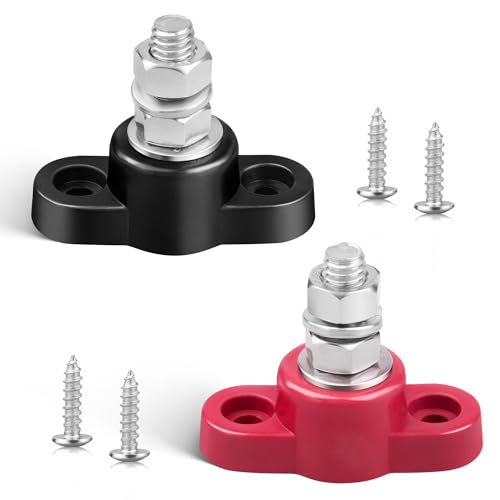
RED WOLF 12V 150A Single Stud Busbar M8 Terminal (2-Pack)

RVBOATPAT 250A Marine Bus Bar 12V Dual 3/8″ Studs with Lugs

RVBOATPAT 400A Bus Bar 12V 6 x M8 Terminal Studs

RVBOATPAT 400A 12V Bus Bar 4 x M10 Studs and 6 x #10 Screws

AMOMD 600A Heavy-Duty Bus Bar 2-Pack Nickel-Plated Copper

RVBOATPAT 250A Marine Bus Bar 12V 2 x 5/16″ Stainless Studs
The Strengths Of Each Pick
This DAIERTEK pair lands right in the middle of the category: six M8 (5/16″) terminal studs on each bar, a polycarbonate protective cover, and a max 48V DC / 300V AC ceiling with 150A continuous at DC. For most van, truck, and small marine builds, that’s the sweet spot between the entry-level mini blocks and the overkill 400A to 600A rigs further down the list.
You get a red positive bar and a black ground bar, which removes the guesswork when you’re labeling a fuse panel. Owners wiring dual-battery systems, light inverter setups, and rooftop solar charge controllers will find the six-post layout covers a starter, an inverter feed, two accessory circuits, and a shunt without anyone fighting for space.
Notable Gains
- Six M8 studs handle 1/0 and 2 AWG ring terminals cleanly.
- Included cover shields against dropped tools and accidental shorts.
- Round-corner base reduces stress cracks during vibration-heavy installs.
- Color-coded pair speeds up positive versus ground identification.
Things To Consider
- For inverter banks pulling more than 150A sustained, you’ll want a heavier option.
- Owners commonly report the included hardware is fine but worth checking torque after the first heat cycle.
Who It Suits Best
Weekend builders wiring a mid-size dual-battery setup, overlanding rig, or small solar cabinet will find the right balance of post count, amp rating, and price.
Where Another Pick Suits Better
If your inverter pulls heavy continuous current, the RVBOATPAT 400A Bus Bar 12V 6 x M8 Terminal Studs handles the load with more headroom.
When the install space is measured in inches, this DAIERTEK mini block earns its slot. Four M8 (5/16″) posts on a tin-plated copper bar, a stainless steel nut-and-stud package, and a nylon base under a polycarbonate cover. Rated to 150A continuous at 48V DC, the same as the larger six-post DAIERTEK above, just in a smaller footprint.
It fits where the full-size six-stud bar simply won’t, like behind a dashboard, inside a side-panel battery box, or strapped to the wall of a small boat cabin. For accessory-heavy but load-light circuits, four posts are usually enough: main feed, ground return, and two accessory taps.
Benefits That Matter
- Compact base fits inside tight electrical cabinets.
- Tin-plated copper resists oxidation in damp bilges.
- Same 150A rating as larger DAIERTEK models.
Worth Noting
- Four posts fill up fast on builds with multiple accessory circuits.
- For high-amperage inverters, the post count and copper mass are limiting.
Made For
Compact project boxes, motorcycle builds, and minimal accessory loads where space matters more than post count.
Skip It When
Anyone running a 2000W or larger inverter should look at the IZTOSS 300A Power Distribution Block 4 x M8 Studs Waterproof Box for more headroom.
Step up in wire gauge and you step up in stud size. This DaierTek block uses six M10 (3/8″) posts and is rated to 300A continuous, double the working capacity of the 150A models earlier in the list. It’s the natural jump once you’re terminating 1/0 or 2/0 cable on a serious inverter, bow thruster, or windlass feed.
You still get the red positive and black ground pairing, plus the protective cover, so the install stays organized when the wire count goes up. The larger studs accept bigger ring terminals that simply don’t fit on M8 hardware, which is the whole point of choosing this size class.
The Practical Payoff
- M10 studs accept 1/0 and 2/0 lugs comfortably.
- 300A continuous handles inverter and windlass loads together.
- Six posts cover main feed plus multiple high-draw branches.
Trade Offs
- Heavier and larger than M8 blocks, so plan panel space.
- For sub-150A accessory-only circuits, it’s overkill.
Key Specs
Best Suited To
Boat owners and off-grid builders running multi-branch high-amperage systems who need M10 hardware.
Consider Something Else When
Lightweight accessory wiring only deserves the lighter DAIERTEK 12V 150A Mini Power Distribution Block 4 x 5/16″ Posts instead.
The IZTOSS block wraps a 7mm thickened copper plate in a sealed enclosure rated to 300A continuous at 48V DC. Four M8 posts keep the footprint tight, while the gasketed cover keeps rain, spray, and dust off the bus when it’s mounted in an exposed engine bay, trailer tongue, or open boat compartment.
The trade-off shows up in post count: four studs force you to plan branch circuits more carefully than the six-post DaierTek model. For most 300A inverter or main-feed applications, that’s fine. For accessory-heavy panel builds, it tightens the planning stage.
Where It Excels
- Sealed cover tolerates splashes and road spray.
- 7mm copper plate handles sustained 300A without heat soak.
- Stainless hardware fights galvanic corrosion at the stud.
A Few Limitations
- Four posts limit branch circuit density.
- Bigger enclosure footprint than a basic mini block.
Whose Shelf It Belongs On
Riggers, overlanders, and trailer owners who need sealed protection against the elements in exposed locations.
A Better Fit Elsewhere
Shoppers wanting more branch positions in the same current class should look at the DaierTek 300A Marine 12V Power Distribution Block 6 x M10 Studs.
RED WOLF takes the opposite approach from the multi-post blocks. Each bar carries one M8 (5/16″) stud, a single junction point designed for the main battery feed or a single large-gauge ground. Two bars ship in the pack, one red and one black, for the basic positive and ground side of a small system.
This is the kind of part that shows up in custom battery trays, race-car kill-switch wiring, and minimal solar cabinets where you genuinely only need one clean connection point per pole. It also works as a tie-in for a secondary distribution fuse block downstream.
Strengths Worth Knowing
- Single large M8 post handles heavy-gauge battery cable.
- Compact bar fits any battery box or tray.
- Useful as a feeder junction for downstream fuse blocks.
Honest Caveats
- Continuous current drops as ambient temperature and humidity climb, worth noting for engine-bay installs.
- Not a multi-branch distribution solution on its own.
Feature Snapshot
Perfect Match For
Minimal wiring jobs, kill-switch installs, and battery tray junctions where one clean feed point per pole is enough.
Look Elsewhere When
Anyone running multiple accessory branches should step up to the DAIERTEK 12V Bus Bar 6 x M8 Terminal Studs Power Distribution Block.
RVBOATPAT packs more value into the box than most marine bars: two 3/8″ (M10) stainless studs per bar, plus two 1/0 AWG copper lugs and four 6 AWG copper lugs. The 250A continuous rating at 48V DC suits most trolling motor, house bank, and windlass feeds without going to full 400A territory.
The included lugs matter for first-time installers who don’t already own a copper lug assortment. You can land the main battery feed, an inverter tap, and accessory branches without a second trip to the hardware store.
The Helpful Details
- 304 stainless steel studs resist salt corrosion.
- 1/0 and 6 AWG copper lugs included in the box.
- 250A continuous handles house bank and inverter loads.
- Protective cover shields against accidental shorts.
Points To Note
- Two studs per bar mean careful branch planning.
- Owners commonly report the cover needs to be removed to torque larger lugs fully.
Right Fit For
Boat owners and trailer tinkerers who want a corrosion-resistant block with the lugs already included.
Swap It Out When
High-amperage inverter banks with many branches fit better on the RVBOATPAT 400A 12V Bus Bar 4 x M10 Studs and 6 x #10 Screws.
The first 400A entry on the list, this RVBOATPAT block pairs a tinned thickened copper plate with six M8 studs, max 48V DC and 300V AC. The amp rating gives real headroom over the 250A marine bars for inverter-driven systems that pull sustained current.
It’s a smart match for larger solar arrays feeding 3000W to 5000W inverters, especially when you want branch flexibility without jumping to M10 hardware. Owners running a hybrid marine-and-solar setup benefit from the same bar covering both environments.
The Upside
- 400A continuous covers heavy inverter loads.
- Tinned copper resists corrosion and oxidation.
- Six M8 posts balance post count and stud size.
Minor Gripes
- Larger copper mass means heavier bar than 150A models.
- For pure accessory builds, the rating is more than you need.
Spec Overview
Who Should Grab It
Solar and inverter owners running large 12V to 48V banks who want M8 convenience at a 400A rating.
Reach For A Different Pick When
Installs using larger 1/0 lugs benefit from the M10 hardware on the RVBOATPAT 250A Marine Bus Bar 12V Dual 3/8″ Studs with Lugs.
This is the mixed-gauge hybrid option from RVBOATPAT, built on an 8mm thickened copper plate. Four M10 (3/8″) studs handle the heavy feeders, while six #10 screws land smaller accessory wires like lighting, pumps, and electronics. 400A continuous covers the big stuff, and the small screws cover the dozens of smaller branches that usually pile up around a fuse panel.
For complex marine or off-grid builds where one bar has to handle both inverter cable and accessory wiring, this layout saves you from stacking a secondary terminal strip downstream.
Reasons It Performs
- Four M10 studs cover heavy inverter or windlass feeds.
- Six #10 screws handle small accessory branch wires.
- 8mm copper plate supports 400A without heat buildup.
Factors To Consider
- More mixed hardware means more tools on the bench during install.
- Slightly larger footprint than a single-spec bar.
Built With In Mind
Marine and solar cabinets where one bar needs to manage both high-amperage feeders and small accessory circuits.
Where A Sibling Pick Shines
Pure inverter banks without small accessory branches suit the RVBOATPAT 400A Bus Bar 12V 6 x M8 Terminal Studs better.
The AMOMD 2-pack tops the category for current handling: 600A continuous at up to 48V DC, four M10 studs, plus eight M4 screws on a nickel-plated copper plate measuring 128mm by 20mm. The nickel plating gives a different corrosion profile than the tin-plated bars elsewhere on the list, which can matter in coastal installs.
This is overkill for a starter battery, but exactly right for serious off-grid solar arrays, multi-inverter setups, and 48V server-battery banks. The included cover keeps the high-current bus protected once you’ve torqued everything down.
Positive Points
- 600A continuous handles the largest inverter banks.
- Nickel plating offers strong corrosion resistance.
- Eight M4 screws land small accessories alongside the studs.
Practical Considerations
- Premium build raises the cost vs. 400A alternatives.
- For typical van or boat loads, the rating is far beyond what’s needed.
The Right Fit
Professional installers and serious off-grid enthusiasts building 3000W+ inverter systems or 48V battery walls.
Another Choice May Suit
Standard dual-battery automotive builds get sufficient headroom from the DAIERTEK 12V Bus Bar 6 x M8 Terminal Studs Power Distribution Block.
The leanest RVBOATPAT option closes the list: two 5/16″ (M8) stainless steel studs per bar, 250A continuous at 48V DC, paired positive and ground bars in the box. Two studs force intentional wiring, which suits modest RV accessory loads and trailer battery trays where you genuinely only have a few circuits to terminate.
You get the same 304 stainless hardware used in the larger RVBOATPAT marine models, so corrosion resistance stays consistent across the brand. For small solar charge controllers and lighting runs, two studs plus a downstream fuse block covers most needs.
A Strong Showing
- 304 stainless steel studs resist rust in damp bays.
- 250A continuous handles typical RV accessory loads.
- Simple two-stud layout keeps wiring intentional.
Some Limits To Know
- Only two posts per bar limit branch count.
- Large inverter feeds want more copper mass.
Who Will Love This
RV and trailer owners with modest accessory loads who want stainless hardware at a reasonable price.
Not Your Match When
Anyone running multiple accessory branches should pick the DAIERTEK 12V Bus Bar 6 x M8 Terminal Studs Power Distribution Block instead.
Matching Bus Bar Specs To Your Build
A bus bar is a simple part with surprising depth, and choosing the right one saves you from redoing wiring later. The starting point is current, since that’s the rating most likely to be undersized: continuous draw matters more than peak draw, and heat is the silent killer of undersized bars. Match the bar’s continuous amp rating to the highest sustained load you expect, with margin for surges from inverters and motors.
Stud size is the next decision. M8 (5/16″) studs accept most standard automotive lugs and work for the majority of builds. M10 (3/8″) studs step up to 1/0 and 2/0 cable, which you need once the wire gauge crosses that threshold. Smaller #10 screws handle low-current accessory wires like lighting circuits, useful when you want one bar to manage everything.
Material and plating influence how the bar ages. Tinned copper is the most common choice, balancing conductivity and corrosion resistance for most installs. Nickel plating offers a similar profile with slight differences in salt-air performance. Stainless steel hardware matters as much as the bar plating: copper studs with stainless nuts prevent galling, a form of cold-welding that seizes fasteners over time.
Enclosure and mounting finish the picture. Covered bars reduce short-circuit risk in engine bays and bilges. Waterproof or sealed enclosures earn their keep on open trailers and exposed marine compartments. Plan mounting location first, then pick a bar that fits the space and environment.
Common Pitfalls Before You Order
Where Shoppers Go Wrong
The most common slip is matching the bar’s peak rating to your inverter’s peak rating instead of its continuous rating. A 2000W inverter can pull 170A continuously, which immediately rules out most 150A bars. Second on the list is stud count: six posts sounds like plenty until you add a shunt, an inverter feed, a starter isolation lead, and three accessory circuits. Plan branch count before post count, not after.
When Paying More Pays Off
Higher-tier bars earn their price through copper mass, plating quality, and enclosure sealing. A 400A or 600A bar runs cooler at the same load, which extends hardware life in tight engine bays. Marine-grade stainless hardware and sealed covers are the kind of upgrade that pays off over years of vibration and moisture, not months. For weekend warriors with modest loads, the mid-tier 150A to 250A options deliver more than enough.
Frequently Asked Questions
What does the amp rating on a battery bus bar mean?
The continuous amp rating is the current the bar can carry indefinitely without overheating. Pick a bar rated well above your highest sustained load, since undersized bars degrade connections over time.
Can I use a 12V bus bar for a 48V solar system?
Yes, as long as the bar’s max voltage rating covers 48V DC. Most bars in this list are rated to 48V DC and 300V AC, which covers the common 12V, 24V, and 48V battery configurations.
What is the difference between M8 and M10 studs?
M8 (5/16″) studs fit standard automotive ring terminals and lighter cable gauges. M10 (3/8″) studs accept larger 1/0 and 2/0 lugs needed for high-amperage inverter and windlass wiring.
Do I need a covered bus bar?
A cover protects against accidental shorts from dropped tools or loose wires. In engine bays, bilges, and any exposed location, a cover is worth the small extra cost for the safety margin it adds.
How many posts do I need on a bus bar?
Count every wire you’ll land on the bar: main feed, shunt, inverter, ground returns, and each accessory branch. Six posts handle most mid-size builds, while complex marine or solar cabinets often want eight or more.
Closing Remarks
The right battery bus bar turns a tangled cluster of ring terminals into a clean, serviceable panel you can actually troubleshoot later. Match continuous current to your heaviest sustained load, choose stud size for your cable gauge, and pick a cover or seal that suits the environment. Any of the ten options above will get you there; the best one depends on how much copper, how many posts, and how much protection your specific build actually needs.