Working from a café, flying cross-country, or just spending a long day between outlets means your laptop’s built-in battery eventually waves the white flag. A dedicated power bank keeps a MacBook, ultrabook, or workhorse PC topped off when you’re nowhere near a wall socket, and modern USB-C PD (Power Delivery, a fast-charging standard negotiated over USB-C) models push out enough wattage to replace the stock charger in many cases. These nine picks cover everything from ultralight 10,000mAh slips for a quick boost to high-capacity bricks built for two-laptop workflows.
The Picks In Brief
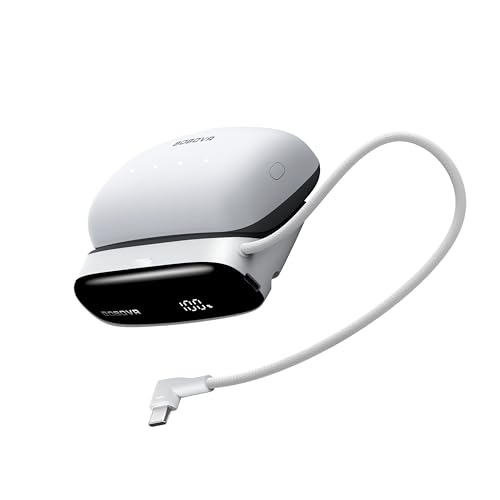
BOBOVR PD100 Combo 10000mAh Portable Power Bank 30W PD

JUOVI 90W Portable Charger for Laptop Power Bank 20000mAh with USB-C Cable

VENTION Powerhive 27000mAh Laptop Power Bank 200W

JUOVI 187W Portable Charger for Laptop Power Bank 25000mAh

JUOVI 65W Portable Charger for Laptop Power Bank 20000mAh

NOBIS Portable Charger 20000mAh 45W with Detachable C-Cable

INIU Slim 45W Power Bank with Built-in AC Wall Plug 10000mAh GaN

JUOVI 65W Portable Charger for Laptop Power Bank 20000mAh

JUOVI Power Bank 90W 20000mAh with Detachable Cable
Inside Each Recommended Option
The BOBOVR PD100 Combo breaks from the rest of this list by treating a power bank less like a single brick and more like a small system. A 10,000mAh cell pairs with a docking station, so once one pack drains you can swap in a fresh one without losing momentum. For extended VR sessions, long editing timelines, or remote shoots where shutting down means losing your place, that hot-swap approach is genuinely useful.
Output tops out at 30W over USB-C PD, which is enough to push a MacBook Air through a normal workday at a measured pace. Phones like the iPhone 17 and 16 family charge quickly from the same port. Compared with the larger JUOVI units ahead, the BOBOVR gives up raw wattage, but the swappable architecture trades raw power for uninterrupted uptime.
Standout Benefits
- Hot-swappable battery keeps sessions going past a single charge cycle.
- 30W USB-C PD handles a MacBook Air and modern iPhones comfortably.
- Dock-and-pack form factor reduces clutter on a packed desk.
- Compact 10,000mAh cell slips into a small bag pocket.
Things To Weigh
- 30W output will trickle-charge larger Pro-tier laptops rather than refuel them quickly.
- Buying spare batteries adds to the overall cost of ownership.
- Owners commonly report keeping track of multiple packs as the main friction point.
Quick Facts
Who It Suits Best
Creatives running long VR or editing sessions who value uptime over raw wattage.
Look Elsewhere When
The JUOVI 187W Portable Charger fits better for users running two laptops and a phone simultaneously.
Stepping up from the swappable BOBOVR concept, the JUOVI 90W keeps things simple and delivers exactly what most working professionals want: serious wattage in a familiar brick. Its 20,000mAh cell and 90W USB-C PD output charge a 13-inch MacBook Pro at near-wall speeds, so a lunch break can top the laptop back up enough to make it through an afternoon meeting marathon.
The included USB-C cable doubles as a carry strap, clipping to the unit for tangle-free travel and detaching whenever you actually need to plug in. That small design touch means one less cable rattling around your bag. For someone bouncing between home, the office, and a coworking space, the combination of capacity, wattage, and travel-ready ergonomics hits the mark.
What It Does Well
- 90W output refuels a MacBook Pro at near-wall-charger speeds.
- 20,000mAh carries a laptop through a full workday with juice to spare.
- Detachable cable-as-strap cuts accessory clutter.
- Single USB-C port keeps operation uncomplicated.
Trade Offs
- Only one high-output USB-C port limits multi-device scenarios.
- Heavier than pocket-friendly 10,000mAh picks.
- Built-in cable may not suit users who prefer standardized third-party cords.
Made For
MacBook-toting commuters who want one brick that behaves like the original charger.
Consider Something Else When
The VENTION Powerhive 27000mAh suits someone who charges two laptops at once on the same desk.
The Powerhive is the heavyweight champion of this list, in capacity if not in size. Its 27,000mAh cell (TSA-friendly at 99.9Wh) sits right at the airline carry-on ceiling, so you can fly with it and still arrive with power to spare. The real headline is 200W of combined output across dual USB-C ports, enough to drive two laptops simultaneously without either one complaining.
Built-in and bundled 240W-rated cables mean you don’t have to chase proprietary accessories. A small digital display shows remaining capacity at a glance, which beats guesswork from a four-LED strip. For hybrid workers, traveling creators, or anyone running a mobile dual-laptop rig, this is the closest thing to a desktop charger that fits in a backpack.
Useful Highlights
- 200W total across two USB-C ports fuels two laptops at once.
- 27,000mAh capacity hits the 99.9Wh TSA ceiling, so it flies with you.
- Includes both built-in and extra high-rated cables.
- Digital readout replaces vague LED indicators with real numbers.
Worth Bearing In Mind
- Larger and heavier than most 20,000mAh rivals.
- Premium wattage typically commands a premium price tier.
- Some users may not need two laptops’ worth of simultaneous output.
Feature Snapshot
Best Suited To
Mobile professionals running a two-laptop rig who can’t afford to take turns charging.
Where Another Pick Suits Better
The INIU Slim 45W is a better fit for someone who mostly tops up a phone on day trips.
Where the Powerhive specializes in dual laptops, the JUOVI 187W spreads its attention across three devices at once. Two USB-C ports and one USB-A port share 187W of total output, so a laptop, a tablet, and a phone can all draw current simultaneously without the dreaded rotation game at a crowded airport gate.
The 25,000mAh cell delivers a couple of laptop refuels before needing a wall outlet, and the included USB-C cable handles 100W fast charging when used alone. For field teams, traveling photographers, or families juggling several gadgets, the port mix feels more practical than a single-output brick in the same capacity range.
Notable Gains
- Three-port layout (2× USB-C, 1× USB-A) avoids device rotation.
- 187W shared output handles mixed laptop-and-phone loads.
- 100W single-port output refuels a MacBook quickly.
- 25,000mAh bridges the gap between portable and oversized bricks.
Points To Keep In Mind
- Heavier and bulkier than single-cable commuters.
- Shared wattage drops when three devices draw at once.
- May be overkill for solo-phone users.
Who Will Love This
Field teams and traveling families who pack multiple devices for the same trip.
Swap It Out When
The NOBIS 20000mAh with detachable cable is a friendlier everyday carry for solo flyers.
The JUOVI 65W sits in the comfortable middle of this lineup. 65W output is enough to charge a MacBook Air from low to full in just over an hour, while the 20,000mAh cell carries a typical ultrabook through a full workday with capacity left for a phone top-up. Compared with the 90W and 187W siblings ahead, the trade-off is slower charging on bigger laptops.
The included USB-C cable and integrated strap keep things travel-ready without extra accessories. For office-to-café-to-home workflows on a MacBook Air, a Dell XPS, or a thin ThinkPad, this is the kind of brick that disappears into the routine rather than dominating the bag.
Where It Delivers
- 65W handles MacBook Air and ultrabooks at full charge speed.
- 20,000mAh balances capacity with everyday portability.
- Integrated cable-and-strap design stays tidy in transit.
- Compatible with iPhone 16 and other USB-C PD phones.
Honest Caveats
- 65W will not fast-charge a 16-inch MacBook Pro at full tilt.
- Fewer ports than the port-rich JUOVI 65W four-port model.
Spec Overview
Right Fit For
Office-to-café workers carrying a MacBook Air or similar thin-and-light laptop daily.
Reach For A Different Pick When
The VENTION Powerhive 27000mAh better serves someone needing dual-laptop output on the road.
NOOBIS leans hard into portability. The 45W output is modest compared with the JUOVI siblings, but the trade shows up in the form factor: a detachable USB-C cable clips to the unit and doubles as a carry strap, so the brick hangs from a backpack loop without a separate pouch. That hands-free carry matters more than raw wattage on a long commute or a rushed airport walk.
Two-way 45W PD lets the brick refuel itself reasonably fast, so overnight wall time stays short. The 20,000mAh cell is generous for the weight class, and the cable design solves a frustration that most power banks quietly ignore: where do you put the cable when you’re not charging?
What Helps Most
- Detachable cable doubles as a hands-free carry strap.
- 20,000mAh in a travel-optimized shell.
- Two-way 45W PD speeds self-recharging.
- Resists tangles in a packed commuter bag.
Potential Drawbacks
- 45W output will throttle larger laptops.
- Single high-output cable limits multi-device workflows.
- Bend-resistant cable still benefits from gentle storage habits.
Perfect Match For
Daily commuters and frequent flyers who want one carry-and-charge solution in their bag.
Skip It When
The JUOVI 90W 20000mAh handles heavier laptops more comfortably on long workdays.
The INIU flips the script by folding an AC wall plug directly into the body. No separate wall charger, no hunting for an outlet-friendly cable; the unit itself becomes the charger. GaN (gallium nitride, a compact, efficient semiconductor that replaces older silicon in chargers) circuitry keeps the slim form factor honest, and the 45W output pushes a tablet or a phone at full speed.
10,000mAh is on the lower side for laptop work, so this is more of a phone-and-tablet first aid kit than a MacBook lifeline. For short-haul flights, weekend trips, or coffee-shop mornings where a top-up is enough, the all-in-one design is genuinely liberating. Owners get a 3-year care commitment from INIU.
What Pays Off
- Folding AC plug removes the need to carry a separate wall charger.
- GaN tech keeps the unit slim and light.
- 45W output suits modern phones and small laptops.
- 3-year care commitment from the manufacturer.
Points To Note
- 10,000mAh is light coverage for a full laptop workday.
- 45W will not sustain a 15-inch laptop under load.
- Light-pink finish is a matter of personal taste.
Built With In Mind
Phone-first users who want one compact charger-and-power-bank combo for short trips.
Not Your Match When
The BOBOVR PD100 Combo is a better match for someone who needs all-day laptop coverage with swappable cells.
Where the earlier 65W JUOVI sticks to a simpler cable-and-strap layout, this sibling doubles down on connectivity. Two USB-C ports and two USB-A ports share 65W of total output, which is enough for a laptop plus a tangle of phones, earbuds, and a smartwatch. Shared desks and family travel kits love this kind of layout.
20,000mAh of capacity handles a full workday on an ultrabook, and the four-port mix means nobody at the table has to wait their turn. For someone tired of daisy-chaining one brick between devices, this is a quiet upgrade that smooths out the day.
Strong Points
- Four ports (2× USB-C, 2× USB-A) cover mixed device fleets.
- 65W output sustains an ultrabook while charging accessories.
- 20,000mAh carries a full workday plus extras.
- Reduces cable juggling at shared workspaces.
A Few Limitations
- 65W shared across four ports means slower per-device speeds under heavy load.
- Larger footprint than single-cable commuters.
- No detachable strap-cable, unlike some JUOVI siblings.
Key Product Details
Whose Shelf It Belongs On
Shared-desk workers and families who want one charger for the whole device pile.
A Better Fit Elsewhere
The NOBIS 20000mAh suits solo commuters who prioritize a strap-style carry over port count.
The JUOVI 90W closes the list with a familiar but refined formula. Two USB-C ports each push 90W solo, supporting PD and QC (Quick Charge, a Qualcomm fast-charging protocol common in Android phones) protocols, so a 13-inch MacBook Air reaches roughly half capacity in half an hour. The detachable cable design echoes the earlier 90W sibling while stepping down slightly on cell capacity.
20,000mAh keeps weight manageable, and the dual-port layout covers a laptop and a phone in the same session. For professionals who carry one device at a time but want fast turnaround between meetings, the spec sheet reads exactly right.
Practical Advantages
- Dual USB-C ports each deliver up to 90W solo.
- Detachable cable design simplifies bag packing.
- 20,000mAh strikes a portable balance for daily carry.
- PD and QC compatibility covers modern phones and laptops.
Small Caveats
- 20,000mAh is smaller than the 25,000mAh and 27,000mAh rivals.
- Shared output drops when both USB-C ports are active.
- Less suited to two-laptop workflows than the 187W or 200W options.
Who Should Grab It
Pro laptop users who want fast single-device top-ups between meetings and travel days.
Where A Sibling Pick Shines
The VENTION Powerhive 27000mAh suits heavy multi-laptop workflows more comfortably.
What Matters Most When Choosing A Laptop Power Bank
Wattage And The PD Standard
Power Delivery is the USB-C fast-charging protocol that negotiates how much wattage flows from the bank to your laptop. A 45W output keeps phones and small tablets happy but throttles most 13-inch laptops under heavy loads. 65W handles MacBook Air and thin ultrabooks comfortably. Step up to 90W or 100W for Pro-tier machines, and look at 187W+ totals for dual-laptop workflows.
The honest read is that matching wattage to your real workload matters more than chasing the highest number on the box. A writer running a MacBook Air doesn’t need 200W, but a video editor driving a 16-inch Pro will notice the difference every single hour.
Capacity And Travel Reality
Capacity is measured in mAh (milliamp-hours) or Wh (watt-hours). The TSA carry-on limit for lithium power banks is 100Wh, which lines up with roughly 27,000mAh at standard cell voltage. Anything at or below that ceiling flies with you; anything above usually cannot. For most users, 20,000mAh covers a full workday with room to spare for a phone.
Higher capacity generally means heavier bricks, so weight matters as much as the number on the spec sheet. Carrying an extra 200g every day gets old fast.
Port Layout And Cable Strategy
USB-C PD handles most modern laptops, while USB-A covers older phones, earbuds, and watches. Single-port bricks keep things simple; multi-port layouts reduce cable juggling at shared desks or family tables. Built-in or detachable cables solve the “where do I put the cord” problem, but they lock you to a specific connector type unless you can detach and swap.
For frequent flyers, a model with both built-in and bundled cables saves the panic of leaving a charger behind at the hotel.
Build Quality And Real-World Reliability
Laptop power banks live hard lives: tossed in bags, charged in cafés, drained on flights. Aluminum shells resist scuffs better than plastic, but they add weight. Charging protocols and thermal management matter for battery longevity over years, not just the first month. Manufacturer-backed care programs (multi-year replacements or repairs) signal confidence in the cells inside.
Smart Habits Before You Buy
Common Shopping Slip Ups
Most shoppers fixate on mAh and forget about wattage, then discover their laptop charges at a trickle. The opposite mistake happens too: buying a 200W brick when a 65W unit would have handled the workload. Match wattage to your real device list first, then dial capacity to your travel pattern.
Another quiet trap is forgetting airline rules. Above 100Wh, lithium power banks typically cannot fly at all, even in checked luggage. Sticking to 27,000mAh or below keeps your bag carry-on friendly.
What The Higher Tier Buys
Stepping up to a premium-tier laptop power bank typically buys faster charging silicon, more durable cell packaging, and the kind of port layout that handles multiple devices without breaking a sweat. You also tend to get extras like digital readouts, dual high-rated cables, and longer manufacturer care windows. For heavy daily users, those upgrades compound quickly into fewer headaches over the life of the device.
Frequently Asked Questions
How many mAh do I need to fully charge a laptop?
A typical 13-inch laptop holds about 50Wh, which translates to roughly 13,000–14,000mAh at standard cell voltage. A 20,000mAh power bank refuel one full charge with some reserve for a phone. Larger 15- or 16-inch laptops with discrete GPUs draw more watt-hours and may need a 25,000mAh or higher bank to hit a full cycle.
Can I take a laptop power bank on a plane?
Yes, as long as the rated capacity stays at or below 100Wh (about 27,000mAh at standard voltage). Airlines require that limit for carry-on, and power banks must travel in the cabin, not checked luggage. Anything above 100Wh usually requires airline approval and often cannot fly at all.
Does higher wattage damage my laptop battery?
No. USB-C PD negotiates the correct wattage between the power bank and the laptop, so a 90W brick connected to a MacBook Air draws only what the Air requests. Running a higher-wattage bank than needed simply means the laptop tops up faster or maintains full speed under heavier loads.
How long does a laptop power bank itself take to recharge?
Recharge time depends on the bank’s input wattage and the wall charger’s output. A 20,000mAh bank with 65W input typically refills in 2–3 hours using a compatible PD wall adapter. Cheaper 10W inputs can stretch that to 8 hours or more, so check the input spec before relying on overnight turnaround.
Should I leave the power bank plugged in all the time?
Most modern banks include overcharge protection, so leaving them topped off short-term is fine. Long-term storage at 100% can stress the cells, so a partial charge (around 50–80%) is gentler on the battery chemistry if you plan to leave the unit idle for weeks.
Bottom Line
The right laptop power bank depends on what you carry and where you work. Match wattage to your real device list, keep capacity at or below 27,000mAh for travel, and lean on cable design details that match your bag routine. Any of these nine picks will solve the wall-outlet problem; the rest is just dialing in the size, port layout, and travel features that fit your day.