A storm rolls in, the lights flicker, and suddenly you’re rummaging for flashlights in a dark hallway. Battery backup LED bulbs solve that scramble by screwing into existing fixtures and lighting up automatically the moment power drops, no wiring, no separate lanterns, no setup when your hands are full. This roundup looks at ten options covering everyday homes, off-grid cabins, RVs, and hurricane prep kits, so you can match a bulb to the rooms and outages you actually care about.
The Leading Options At A Glance

BoRccdit KeepLit 8PK Emergency Rechargeable Light Bulbs (Daylight)
BoRccdit KeepLit 6PK Emergency Rechargeable Light Bulbs (Soft White)
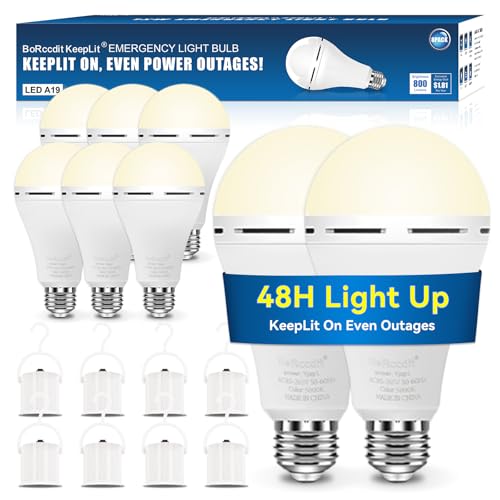
BoRccdit KeepLit 8PK Emergency Rechargeable Light Bulbs (Soft White)

BoRccdit KeepLit 10PK Emergency Rechargeable Light Bulbs (Soft White)

Taysing 12V A19 LED Bulb 9W 6000K (2-Pack)

BoRccdit KeepLit 6PK Emergency Rechargeable Light Bulbs (Daylight)

BoRccdit KeepLit 10PK Emergency Rechargeable Light Bulbs (Daylight)

SORHE LIDKO Rechargeable Emergency Light Bulb

BoRccdit KeepLit 8-Pack Emergency Rechargeable Light Bulbs (5000K)
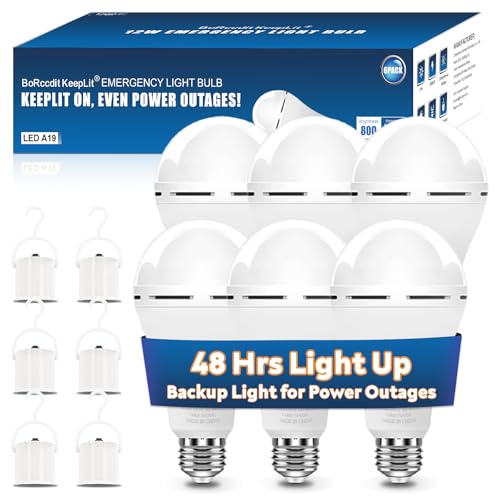
BoRccdit KeepLit 6-Pack Emergency Rechargeable Light Bulbs (5000K)
A Breakdown Of The Leading Choices
An eight-pack of A19 rechargeable bulbs (the standard household shape, about the size of a classic 60-watt incandescent) gives you enough coverage to outfit the rooms that matter most during a long outage: bedrooms, the kitchen, and a hallway or two. Each bulb runs as a normal 12W LED (roughly equivalent to a 65W incandescent) when grid power flows, then switches to internal battery backup automatically when the power cuts.
The crisp daylight color temperature suits task-heavy spaces like a kitchen counter or a workbench in the garage. Compared to the soft-white KeepLit pack below, this one reads brighter and more alerting, which many people prefer in rooms where they need to see clearly. For most families stocking a hurricane kit or prepping for storm season, this multipack is a sensible anchor purchase.
Practical Advantages
- Up to 48 hours of backup light at the dim 10% setting, enough to keep a bedroom glowing through a typical overnight outage.
- Three switchable brightness levels (10%, 50%, 100%) controlled by your existing wall or lamp switch, so no extra remotes or apps are needed.
- Standard A19 form factor with E26 base, the same screw socket used across most U.S. lamps and ceiling fixtures.
- Daylight color reads clean and alert, helping you sort supplies or read labels during an emergency.
- Eight bulbs let you cover an entire small home or stock multiple key fixtures in a larger one.
Things To Consider
- Daylight tone can feel cold and clinical in a bedroom or nursery where a warmer color is usually preferred.
- Battery life shrinks fast on the brightest 100% setting, often to just a few hours per bulb.
- Runtime claims assume the bulbs were fully charged before the outage, so periodic top-ups matter.
Quick Facts
Who It Suits Best
Families stocking a whole-home hurricane kit who want crisp, alerting light in kitchens, hallways, and workspaces.
Consider Something Else When
Pick the BoRccdit KeepLit 6PK Soft White (B0DNJG7RR5) instead, since warmer tones read more relaxing in bedrooms and living rooms.
This six-pack swaps the daylight tone for a soft-white color temperature, the kind of warm, slightly amber glow you’d expect from a living room lamp. The shape, wattage, and battery behavior match the daylight version above, so you’re really choosing atmosphere here rather than hardware.
A smaller multipack like this fits apartments or starter homes where you don’t need eight sockets filled. For parents setting up a nursery, this soft-white version is the more soothing option, especially when the bulb ends up doubling as a nightlight on its 10% setting.
Bright Spots
- Warm soft-white tone keeps bedrooms and nurseries calm during stressful outages.
- Same 48-hour ceiling on the dim setting, so runtime is unchanged from the daylight model.
- Smaller 6-pack reduces upfront commitment and storage bulk.
- Switch-controlled 10/50/100% levels work without apps or extra hardware.
Points To Note
- Six bulbs may run short in a multi-bedroom home that wants hallway and stairway coverage too.
- Soft white reads slightly dimmer than daylight at the same lumen count, which can matter in a kitchen.
- Runtime at 100% brightness is still only a few hours per charge.
Made For
Bedrooms, nurseries, and living rooms where warm light is preferred, especially for households that want emergency backup without harsh tones.
Look Elsewhere When
Reach for the BoRccdit KeepLit 8PK Daylight (B0DJW97XMX) if your priority is task lighting in kitchens or workspaces.
If the six-pack above leaves you a couple of bulbs short but you still want that warm tone, this eight-pack delivers the same soft-white atmosphere with broader coverage. The capacity matches the daylight eight-pack, so the only real variable is the color temperature.
For a typical three-bedroom apartment or a shared living space with hallways and a kitchen pass-through, eight soft-white bulbs covers most fixtures without leaving dark corners. Compared to the smaller warm pack, this gives renters and shared households more flexibility for the same per-bulb cost in many cases.
A Strong Showing
- Eight warm bulbs cover bedrooms, hallway, and living area without leaving gaps.
- Maintains the same 10/50/100% switch-controlled brightness scheme as other KeepLit packs.
- Soft-white tone suits evening and overnight use, which is when most outages happen.
- Single SKU simplifies restocking if you ever need a replacement.
Worth Noting
- Soft-white output reads less crisp than daylight in kitchens or bathrooms.
- Eight bulbs is overkill for a studio or one-bedroom space.
- Battery health depends on periodic charging, so leaving them in unused fixtures can shorten response time over the years.
Key Specs
Best Suited To
Multi-room households who want warm light in every fixture, particularly families with kids who nap or read in bedrooms.
Skip It When
Choose the BoRccdit KeepLit 6PK Daylight (B0DK14NQ1W) if your rooms lean toward task lighting or you prefer a cooler tone.
The largest of the soft-white KeepLit bundles, this ten-pack is the option for serious preppers or anyone outfitting a larger home in one go. Every bulb carries the same 48-hour ceiling, switch-controlled brightness steps, and warm color profile as the smaller warm bundles.
Ten bulbs lets you stretch into less obvious fixtures: laundry rooms, basement stairs, garage entries, even a hallway closet. For households that want a single purchase to cover nearly every socket in the home, this is the closest thing to a one-and-done solution in the lineup.
Where It Excels
- Ten soft-white bulbs cover large homes, basements, and outbuildings in one purchase.
- Identical 48-hour ceiling at the lowest brightness setting across all bulbs.
- Warm color reads consistently across rooms, avoiding patchy mixed-temperature lighting.
- Standard A19/E26 socket fits virtually any common household fixture.
Trade Offs
- Soft-white tone is less crisp than daylight for detailed tasks like food prep or reading fine print.
- Ten bulbs is more than most apartments need, so spares tend to sit in storage.
- Runtime at the 100% setting drops to a handful of hours, so brightest mode is best for short emergencies.
Feature Snapshot
Right Fit For
Large households and preppers building a complete hurricane or storm kit who want warm light throughout the home.
A Better Fit Elsewhere
Pick the BoRccdit KeepLit 10PK Daylight (B0DNJFXK4S) when you want the same wide coverage but with cooler task-ready light.
This is the odd one out in the lineup, and that’s the point. Where most picks here are designed to drop into standard 120V household sockets, Taysing’s bulb is built for low-voltage DC systems running anywhere from 12 to 48 volts. If you live off-grid or rely on a solar battery bank, this is the kind of bulb your system actually needs.
It also fits RVs, boats, and campers that run on 12V house batteries. The 6000K cold-white tone is closer to a shop-light feel, which is great for utility spaces but a bit harsh for bedside use. Compared to the KeepLit packs, this one expects a battery bank to do the “backup” work, not an internal cell.
A Few Strong Suits
- Accepts a broad 12V to 48V input range, covering most off-grid solar and marine setups.
- Works on both AC and DC low-voltage power, useful for mixed off-grid systems.
- Standard E26 screw base keeps it compatible with common household fixtures when used on a low-voltage line.
- 9W output (roughly 60W incandescent equivalent) suits cabin, RV, or boat interiors without overtaxing a small battery bank.
Honest Caveats
- Will short out and burn if accidentally installed in a 120V residential socket, so it must be clearly labeled for low-voltage use only.
- Cold-white 6000K tone is too clinical for most bedrooms and living rooms.
- No internal battery, so the bulb only stays lit while your battery bank keeps running.
Perfect Match For
Off-grid homes, RVs, boats, and solar-powered cabins running on 12V to 48V DC battery banks.
Swap It Out When
Pick the BoRccdit KeepLit 8PK Daylight (B0DJW97XMX) for standard 120V household outlets with internal backup instead.
A six-bulb daylight bundle hits a middle ground between minimal coverage and full-home stocking. It’s the right size for an apartment or a small home that wants backup light in the kitchen, the main hallway, and one or two bedrooms, with a couple of spares left over.
The crisp daylight tone helps in any space where you need to see details: a stairway, a bathroom mirror, a garage workbench. Compared to the larger eight-pack daylight version earlier, this one is the leaner choice for households that don’t need every socket covered.
Notable Upsides
- Crisp daylight tone reads well in kitchens, hallways, and bathrooms.
- Switch-controlled 10/50/100% brightness works with any existing wall switch.
- Up to 48 hours of light at the lowest 10% setting covers a typical overnight outage.
- A19 shape with E26 base fits standard U.S. fixtures without adapters.
Some Limits To Know
- Daylight tone can feel stark in a bedroom or nursery.
- Six bulbs is tight for larger homes with multiple hallways or finished basements.
- Highest brightness level drains the internal battery fastest.
Whose Shelf It Belongs On
Small homes and apartments that want bright, alerting backup light in key rooms without overbuying.
Where A Sibling Pick Shines
Choose the BoRccdit KeepLit 8PK Soft White (B0DNJHJV2T) for warmer light spread across more rooms.
The daylight counterpart to the largest soft-white bundle, this ten-pack brings the cool, alerting color profile to every fixture you want covered. For homeowners with multiple bathrooms, a long basement stairwell, or a garage workshop, the bigger daylight count often makes more sense than the warmer version.
Same hardware, same 12W draw, same 48-hour ceiling, just a different color temperature and a higher bulb count. It’s the right bundle when you want your emergency lighting to match the same daylight bulbs you might already use during normal hours.
Everyday Perks
- Ten daylight bulbs suit larger homes, finished basements, and outbuildings.
- Standard A19/E26 socket works in any common fixture without rewiring.
- Three brightness steps let you trade runtime for output as needed.
- Crisp daylight tone supports detail-heavy tasks during an outage.
Soft Spots
- Ten bulbs is more storage and more upfront commitment than smaller bundles.
- Daylight tone can feel too cold for living rooms or nurseries.
- High-output mode drains the internal battery faster than the dim setting.
The Right Fit
Homeowners outfitting every key fixture in daylight tone, especially those with basements or workshops.
Reach For A Different Pick When
Pick the BoRccdit KeepLit 6PK Soft White (B0DNJG7RR5) instead for smaller spaces that prefer warm light.
SORHE LIDKO’s rechargeable bulb is a simpler, more compact entry point into the category. It’s the right shape for a single-nightlight socket, a bedside lamp, or a small hallway fixture, and it follows the same pattern as the larger KeepLit packs: works like a normal bulb when power is on, switches to internal battery when the power cuts.
The trade-off is shorter total runtime, generally advertised at around 14 hours per charge, which is enough for a typical overnight outage but not multi-day storm coverage. For shoppers testing the concept in one or two rooms before committing to a full multipack, this is a sensible starter bulb.
Strengths Worth Knowing
- Low entry cost makes it easy to test rechargeable emergency lighting before buying a full bundle.
- Standard E26 base fits any common U.S. lamp or ceiling fixture.
- 12W output (around 60W incandescent equivalent) suits everyday sockets.
- Auto-on behavior during power cuts works without extra switches or remotes.
Points To Keep In Mind
- Backup hours are shorter than the KeepLit packs, so multi-day outages may outlast the bulb’s charge.
- Single-bulb format means you need to buy multiples to cover a whole home.
- Internal cell chemistry can degrade over years if the bulb sits unused for long stretches.
Who Should Grab It
First-time shoppers wanting to try rechargeable emergency lighting in one or two rooms before scaling up.
Another Choice May Suit
Choose the BoRccdit KeepLit 8PK Daylight (B0DJW97XMX) if you want full-home coverage in a single purchase.
This eight-pack lands in the middle of KeepLit’s color lineup at roughly 5000K, a balanced tone that reads crisp without feeling clinical. It’s the pick for households that don’t love the warmth of the soft-white bundles but want a slightly less aggressive tone than full daylight.
The runtime, wattage, and brightness steps match the other KeepLit packs. The only practical difference here is color, and that 5000K sweet spot happens to be the easiest to live with across mixed-use rooms like open-plan living areas.
Real-World Strengths
- 5000K color reads as a clean neutral that works in both task and living spaces.
- Eight bulbs cover a typical home’s key fixtures in a single purchase.
- Up to 48 hours of backup runtime at the 10% brightness level.
- Switch-controlled 10/50/100% levels need no extra hardware or remotes.
Trade-Offs To Consider
- Neutral tone is a compromise: not as cozy as soft white, not as crisp as daylight.
- Higher brightness levels cut total runtime noticeably.
- Battery longevity depends on periodic charging cycles.
Built With In Mind
Households with mixed-use rooms who want a single color tone that works in kitchens, hallways, and living areas.
Where Another Pick Suits Better
Choose the BoRccdit KeepLit 6PK Soft White (B0DNJG7RR5) for bedrooms where warmth matters more than neutrality.
Rounding out the list, this six-pack brings the same balanced 5000K tone to households that want a smaller starter bundle. The smaller count keeps the upfront size manageable while still covering the most important fixtures in a small home.
Same 12W draw, same switch-controlled 10/50/100% brightness scheme, same 48-hour ceiling on the dim setting. You’re essentially picking the count and the color temperature here, and 5000K is the safer middle road for shoppers who don’t want to commit to either warm or cool extremes.
Standout Benefits
- Neutral 5000K tone adapts to bedrooms, kitchens, and hallways without strong color bias.
- Compact six-pack lowers the upfront cost of entering the category.
- Standard A19 form factor fits typical U.S. fixtures.
- Internal battery recharges through normal use on grid power.
Possible Compromises
- Six bulbs may not stretch across a multi-bedroom home.
- Highest brightness mode shortens total runtime to a few hours per charge.
- Internal cells lose capacity over years if the bulb sits unused in storage.
Best Suited To
First-time shoppers wanting a balanced 5000K tone in a manageable starter bundle for a smaller home.
Not Your Match When
Pick the BoRccdit KeepLit 10PK Daylight (B0DNJFXK4S) if you want broader daylight coverage for a larger home.
What To Weigh Before Picking Battery Backup Led Bulbs
Runtime matters most in this category, and runtime is rarely a single number. Look for the dim-mode ceiling (often around 48 hours) and recognize that brightest-mode runtime is dramatically shorter. Brightness levels matter too: three switchable steps give you real flexibility between a nightlight glow and full-room output during an outage.
Color temperature is the next big lever. Soft-white reads warm and relaxing, daylight reads crisp and alerting, and 5000K sits in the middle. Match the color to the room: warm tones for bedrooms, daylight for kitchens and bathrooms, neutral for shared living spaces.
The socket type (most household fixtures use an E26 screw base, the standard U.S. bulb socket) and the form factor (A19 is the classic bulb shape, about the size of a traditional 60-watt incandescent) need to match your existing fixtures. Voltage is the easy-to-miss detail: standard household sockets run at 120V AC, while the Taysing pick is built for low-voltage DC systems (12V to 48V), so make sure the bulb matches your wiring.
Pack size should match your home’s footprint. A six-pack covers an apartment or a small home, while a ten-pack makes more sense for larger homes or households that want every key socket covered.
Common Shopping Slip Ups
A frequent mistake is buying low-voltage DC bulbs for a standard 120V household socket, which can short out the bulb immediately. Always confirm the voltage rating matches your fixture. Another slip is assuming every backup bulb will glow for two full days. The longest runtime numbers come from the dimmest 10% setting, so realistic plans for full brightness mean planning for shorter windows.
What The Higher Tier Buys
Bigger multipacks and larger internal batteries translate directly to more covered sockets and longer runtime, but the premium for a ten-pack over a six-pack is usually modest per bulb. The upgrade pays off in homes with finished basements, long hallways, or multiple bathrooms where a smaller bundle leaves dark spots.
Key Considerations Across These Picks
Pitfalls Shoppers Hit
Battery backup bulbs need periodic charging to stay topped off, and bulbs left in unused fixtures for months can show reduced response time. Owners commonly report that mixing color temperatures across rooms feels disjointed during a long outage, so picking a consistent tone (or a balanced 5000K) for your most-used fixtures makes the experience feel calmer.
When Paying More Pays Off
The jump from a small starter bundle to a full multipack usually costs less per bulb, and the extra coverage means you won’t be hunting for a flashlight when an outage hits a less obvious room like the laundry or the basement stairs. For multi-day outages, the larger bundles are the difference between riding out the night and stretching light across the household until the grid returns.
Frequently Asked Questions
How long do battery backup LED bulbs actually last during an outage?
Most rechargeable emergency bulbs run for roughly 48 hours on the lowest 10% brightness setting, with runtime dropping to just a few hours on the highest level. Plan your brightness to match the situation: dim mode for overnight, brighter settings for short emergency tasks.
Do these bulbs work in standard household sockets?
The KeepLit and SORHE LIDKO options all use a standard E26 screw base and run on regular 120V household current. The Taysing pick is the exception: it’s designed for low-voltage DC systems running 12V to 48V, so it must only be used with compatible solar, RV, or marine setups.
Can I leave these bulbs in the fixture all the time?
Yes, that’s the intended use. They behave like normal bulbs on grid power and only switch to battery mode when the power cuts. Periodic charging cycles happen automatically through regular use, so there’s no separate maintenance routine.
Will they work with dimmer switches?
Battery backup bulbs rely on standard on/off switches to cycle through their built-in brightness levels, so external dimmer switches can interfere with their operation. A standard wall switch gives the most reliable experience.
How do I know which color temperature is right for my home?
Soft white works best in bedrooms and living areas where a warm tone feels calming, daylight reads crisper in kitchens, bathrooms, and workspaces, and a 5000K neutral tone is the safe middle road for shared living spaces and open-plan rooms.
Closing Thoughts
The right pick comes down to where you need light when the grid goes dark. For whole-home coverage in one purchase, the larger KeepLit multipacks carry the day. For a single room or a quick test run, a smaller bundle or the SORHE LIDKO starter bulb is the lower-commitment route. Off-grid households, RV owners, and boaters will find the Taysing low-voltage option is in a category of its own. Pick the color temperature that matches your rooms, match the bulb count to your home’s footprint, and the rest takes care of itself.