A surprise outage, a remote worksite, a long weekend off-grid, these are the moments a battery backup generator earns its keep. Modern LiFePO4 portable power stations can run fridges, CPAP machines, and full home offices without the noise or fumes of a gas generator, which makes them a smart fit for renters, homeowners prepping for storm season, and anyone who wants quiet, indoor-safe power on demand. The picks below cover a wide range of capacities and use cases, so you can match the right unit to your real-world needs.
How The Shortlist Stacks Up

BLUETTI Elite 200 V2 Portable Power Station 2073.6Wh 2600W

Jackery HomePower 3600 Plus Portable Power Station 3600W 3584Wh

Jackery Explorer 2000 v2 Portable Power Station 2042Wh 2200W

EF ECOFLOW Delta 3 Portable Power Station 1024Wh 1800W

Jackery Explorer 1000 v2 Portable Power Station 1070Wh 1500W

BLUETTI AC200L Portable Power Station 2048Wh 2400W LiFePO4
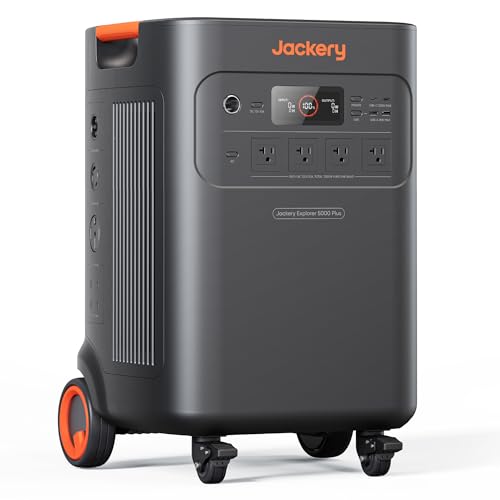
Jackery Solar Generator 5000 Plus 5040Wh 7200W

Jackery HomePower 3600 Plus with 2x 200W Solar Panels

Jackery Explorer 2000 v2 with 2x 200W Solar Panels

Jackery Solar Generator 1000 v2 with 200W Solar Panel
More On The Choices That Made The List
The BLUETTI Elite 200 V2 sits at the top of this roundup for a clear reason: it pairs a 2073.6Wh LiFePO4 battery (a lithium battery chemistry known for long cycle life and thermal stability) with a 2600W continuous AC output that lifts to 3900W for short surges. For a homeowner running a fridge, a Wi-Fi router, and a space heater during a winter outage, that headroom means fewer trade-offs about what stays on.
Compared to the lighter Jackery Explorer picks below, this unit is heavier and stationary-leaning, but the trade-off is genuine whole-room capability. You get nine output ports in total, including multiple AC outlets, USB-A, USB-C, and a 12V car port, so most home essentials can run from a single box.
The Value In It
- 2600W continuous output handles hair dryers, microwaves, and most kitchen appliances
- 3900W power-lifting mode bridges short startup spikes from compressors and pumps
- 2073.6Wh capacity covers roughly a day of essential home loads
- LiFePO4 chemistry typically delivers thousands of charge cycles before noticeable capacity loss
- Multiple USB-C ports support laptops and modern devices directly, no brick needed
Things To Consider
- Weight makes it a poor choice for tent camping or daily carrying
- Solar input caps below some dedicated off-grid setups in the same price range
Feature Snapshot
Who It Suits Best
Homeowners in storm-prone regions who want a single station to back up fridges, internet, and key appliances during multi-hour outages.
Consider Something Else When
The Jackery Solar Generator 5000 Plus makes more sense if you need 120V/240V split-phase output for a well pump or large air conditioner.
The Jackery HomePower 3600 Plus pushes into territory the smaller Explorer line never reaches: a 3600W AC output that doubles to 7200W in parallel, dual 120V/240V voltage, and a 3584Wh LFP (lithium iron phosphate, equivalent to LiFePO4) base expandable up to 21kWh. For a three-person household, that scaling potential matters more than any single spec, because it lets you start small and grow into a true whole-home backup over time.
Where the Elite 200 V2 above trades on raw output in a single box, this Jackery leans on modularity. It also weighs more than most picks on this list, so you will likely park it in a garage or utility room rather than carry it to a campsite.
A Few Highlights
- 3600W continuous output runs heaters, dryers, and sump pumps
- Dual voltage output (120V and 240V) supports heavier home appliances
- Expandable to 21kWh per unit with extra battery packs
- Ceramic-membrane cell design tolerates high temperatures during heavy use
Worth Noting
- Heavy and stationary, not a grab-and-go station
- Full expandability requires purchasing add-on battery packs separately
Made For
Families planning ahead for multi-day outages who want the flexibility to scale capacity as their backup needs grow.
Look Elsewhere When
The BLUETTI Elite 200 V2 is a smarter fit for anyone prioritizing single-unit portability over expansion potential.
The Explorer 2000 v2 is the rare middle-of-the-road pick that does not feel like a compromise. It packs a 2042Wh LiFePO4 battery and a 2200W AC output into a chassis that Jackery designed to be one of the lighter 2kWh stations on the market. That balance is what makes it work for both an apartment emergency kit and a weekend camping base camp.
Three AC outlets cover kitchen gear and tools, while a 100W USB-C PD (power delivery, a fast-charging standard for laptops and tablets) port charges a MacBook directly without a separate adapter. Against the BLUETTI Elite 200 V2, you give up some continuous output, but you gain meaningful portability.
A Favorable Mix
- 100W USB-C PD port handles laptops without extra adapters
- Three AC outlets let you run several appliances in parallel
- LiFePO4 chemistry holds up to thousands of cycles
- Lighter than competing 2kWh stations, easier to load into a trunk
Trade Offs
- Not expandable with add-on battery packs like the HomePower line
- 2200W output will not start every large window AC unit
Quick Facts
Best Suited To
Renters and hybrid users who split time between home backup and outdoor adventures and want one station to handle both.
Skip It When
The EF ECOFLOW Delta 3 makes more sense for buyers prioritizing the fastest possible recharge over raw capacity.
The Delta 3 from EcoFlow leans into a different strength than the larger picks on this list: speed. With up to 1500W AC input, the unit can reach a full charge in roughly 56 minutes, and an 80% top-up lands in about 30 minutes. For apartment dwellers who cannot store a giant battery but still want rapid recovery between outages, that recharge curve matters.
It also integrates with EcoFlow’s wider battery ecosystem, expanding up to 5kWh when paired with compatible Delta series packs. In real use, that means starting with a 1kWh unit today and growing into a multi-day backup later. Capacity is half what the Explorer 2000 v2 offers, so heavy loads are out, but for laptops, routers, and a fridge for several hours, the Delta 3 delivers.
The Upside
- Full recharge in about 56 minutes via AC, fast for the category
- Expansion path up to 5kWh across the Delta ecosystem
- 1800W output handles most kitchen and home-office appliances
- Compact form fits inside a closet or under a desk
Honest Caveats
- 1024Wh is enough for hours, not days, of whole-home use
- Full ecosystem expansion requires buying additional EcoFlow batteries
Whose Shelf It Belongs On
Urban apartment residents who need quick-recharge backup for short outages and remote-work setups.
Reach For A Different Pick When
The Jackery Explorer 1000 v2 fits better for buyers who want similar capacity with a lighter carry weight.
At roughly 23.8 pounds with a foldable handle, the Explorer 1000 v2 is the lightest 1kWh-class station in Jackery’s current lineup, and that single detail shapes who should buy it. You can move it from kitchen to car to tent without a second pair of hands, which opens up use cases the heavier Delta 3 or Elite 200 V2 cannot match.
It delivers 1500W AC output with a 3000W surge peak, enough for fridges, small AC units, and electric pots during an outage or a tailgate. The 100W USB-C port covers laptops and phones. Compared to the Explorer 2000 v2 above, you trade capacity for true portability.
Useful Strengths
- Under 24 pounds, genuinely portable for one person
- 3000W surge handles compressor startups in fridges and small AC units
- One-hour fast charge minimizes downtime between uses
- 100W USB-C output streamlines laptop and phone charging
Points To Note
- 1070Wh supports shorter runtimes than 2kWh-class stations
- Output tops out at 1500W, so it cannot drive large microwaves or dryers
Who Should Grab It
Road trippers, tailgaters, and RV owners who want a carry-friendly station that still handles real appliances.
Swap It Out When
The Jackery Explorer 2000 v2 is the smarter choice for buyers who plan to stay in one place during an outage and want more capacity.
The BLUETTI AC200L is the brand’s take on the modular 2kWh station, and the differentiator is the breadth of its expansion battery family. You can pair it with B300K, B210, B300, or B230 packs to push capacity up to roughly 8192Wh, more than four times the base. For shoppers who want a clear upgrade path without replacing the main unit, that flexibility is rare in this price range.
Out of the box, it delivers 2400W AC output and 2048Wh of LiFePO4 storage, slotting between the Explorer 2000 v2 and the HomePower 3600 Plus on capacity. Recharge times are competitive too. Where it differs from the Jackery Explorer 2000 v2 is in expansion support, not raw power.
What Pays Off
- Multiple compatible battery packs across BLUETTI’s B-series line
- 2400W continuous output covers most kitchen appliances
- 45-minute fast recharge minimizes downtime
- LiFePO4 cells rated for long-term daily cycling
Some Limits To Know
- Expansion packs add cost and storage space
- Heavier than single-purpose 1kWh stations like the Explorer 1000 v2
Spec Overview
Right Fit For
Shoppers planning a phased investment in home backup who want a station they can grow over several years.
A Better Fit Elsewhere
The Jackery HomePower 3600 Plus suits buyers who want native dual-voltage 120V/240V output from the main unit itself.
The Solar Generator 5000 Plus is the heaviest hitter in this roundup and arguably the only pick that can credibly back up major home appliances. With a 7200W rated output, a 14,400W surge, and genuine 120V/240V split-phase support, it can run a 5-ton central AC or a water heater. Most stations on this list could not dream of that.
The 5040Wh LiFePO4 base scales up to a staggering 60kWh with additional packs, enough for extended outages measured in days rather than hours. Against the BLUETTI Elite 200 V2 above, you trade single-box simplicity for serious whole-home capability. This is a stationary system first and a portable one second.
What Earns Its Place
- 7200W rated output covers central AC, well pumps, and dryers
- Native 120V/240V split-phase output in one unit
- Expansion to 60kWh for multi-day whole-home backup
- 14,400W surge handles the largest compressor startups
Practical Considerations
- Premium pricing reflects premium capability, not for casual users
- Stationary weight and footprint require a permanent spot
Who Will Love This
Homeowners in hurricane or wildfire zones who need a single system that handles central air and major appliances.
Not Your Match When
The BLUETTI Elite 200 V2 fits better for buyers who want serious output in a more movable form factor.
This bundle pairs the HomePower 3600 Plus station with two 200W solar panels, so you get solar charging hardware in the box instead of buying it separately. For off-grid cabin owners and RV travelers, that matters: there is no figuring out panel compatibility, and you can start harvesting sunlight on day one.
Specs match the standalone HomePower 3600 Plus covered above, including 3600W output, 3584Wh base capacity, and the same 21kWh expansion ceiling. Compared to the Solar Generator 5000 Plus, you give up raw power but gain a more balanced package for true mobile off-grid use. The trade-off is longer recharge times under partial sun.
The Helpful Details
- Two 200W panels included for immediate solar harvesting
- Same 3600W output and 21kWh expansion as the standalone unit
- Panel-and-station pairing removes compatibility guesswork
- Dual 120V/240V output runs well pumps and dryers off-grid
Factors To Consider
- Panels add storage and transport bulk
- Real solar input depends heavily on weather and angle
Built With In Mind
Off-grid cabin owners and RV travelers who want a turnkey solar-and-storage package ready to deploy.
Where A Sibling Pick Shines
The standalone Jackery HomePower 3600 Plus is the better pick if you already own compatible panels or plan to add them later.
This bundle dresses the Explorer 2000 v2 in two 200W solar panels, turning a capable portable station into a sun-first off-grid kit. If you have ever tried to research which panels play nicely with which station, you already know why bundles like this exist: they remove the friction entirely.
You still get the same 2200W AC output, 2042Wh LiFePO4 capacity, and 100W USB-C PD port described in the standalone review above. Against the HomePower 3600 Plus solar bundle, capacity is smaller, but the Explorer 2000 v2 is meaningfully easier to load into a vehicle for camping or short off-grid stays.
Everyday Advantages
- Two 200W panels deliver real daytime harvesting for campers
- Compact 2kWh station fits in most RV storage bays
- 100W USB-C port charges laptops without adapters
- Bundle pricing typically underbuying panels separately
Where It Is Less Suited
- 2042Wh supports a day or two of light loads, not extended outages
- Panels add transport weight to an already portable unit
Perfect Match For
Campers and weekend off-grid users who want solar-first charging without separate panel shopping.
A Better Fit Elsewhere
The Jackery Solar Generator 1000 v2 bundle is the right call for buyers with lighter needs and tighter storage space.
The 1000 v2 bundle pairs the lightest 1kWh Jackery station with a single 200W panel, making it the most grab-and-go solar kit on this list. For day trips, beach outings, or short power blips at home, the combination covers the essentials without the bulk of a 2kWh setup.
Performance matches the standalone Explorer 1000 v2, including 1500W output, 1070Wh capacity, and 100W USB-C. Compared to the Explorer 2000 v2 bundle, you trade roughly half the storage for a meaningfully lighter load. Most casual users will not need more than this for a single overnight camp.
Real Benefits
- Single 200W panel keeps the kit light and portable
- 23.8-pound station is easy to carry solo
- 1500W output handles fridges, lights, and small AC units
- 100W USB-C port covers laptop charging off-grid
Possible Compromises
- 1070Wh tops out at a day of light essentials
- Single panel means slower recharge than dual-panel bundles
Feature Card
Whose Shelf It Belongs On
Weekend campers and day-trippers who want a single-panel solar kit they can toss in the trunk without thinking.
Not Your Match When
The Explorer 2000 v2 solar bundle fits better if you regularly camp for multiple nights and want longer runtime.
What Matters Most Before Choosing Battery Backup Generators
Match Capacity To Your Real Load
Battery capacity is measured in watt-hours (Wh), and 1000Wh roughly covers a phone and laptop for a week or a fridge for several hours. Run the math on what you actually need during an outage rather than buying the largest unit you can afford.
A common mistake is choosing capacity based on wish-list appliances. Focus on essentials: fridge, internet, lights, medical devices. For most urban households, a 1kWh to 2kWh station covers a typical multi-hour outage comfortably.
Check Continuous Output And Surge
Continuous output, measured in watts, is what the station can run indefinitely. Surge or “power lifting” ratings cover short startup spikes from motors and compressors. If a fridge needs 700W to run but 2100W to start, your station must support the higher figure briefly.
Higher-end units like the BLUETTI Elite 200 V2 or the Solar Generator 5000 Plus offer headroom for these surges. Smaller stations work fine for electronics but may struggle with kitchen appliances that have motors.
Consider Expansion And Ecosystem
Several picks on this list grow with add-on battery packs. The BLUETTI AC200L expands to roughly 8kWh, the Jackery HomePower 3600 Plus scales to 21kWh, and the Solar Generator 5000 Plus reaches 60kWh. Starting smaller and adding capacity later often costs less than replacing a unit.
For shoppers who anticipate upgrading over several years, ecosystem compatibility matters more than any single spec. Compare panel connectors, expansion cable types, and brand-specific battery packs before committing.
Key Considerations Across These Picks
Mistakes Worth Dodging
The most common mistake in this category is buying a station based on advertised capacity without checking continuous output. A 2kWh unit with only 1000W output cannot run a hair dryer, no matter how large the battery. Match both numbers to the appliances you actually plan to use.
Another trap is ignoring solar panel compatibility. Some stations use proprietary connectors, while others accept generic MC4 plugs (a standard solar cable type used across most panels). Make sure panels and station speak the same language before you commit.
What The Higher Tier Buys
Premium models like the Jackery Solar Generator 5000 Plus and the HomePower 3600 Plus earn their higher cost through genuine capability: 120V/240V split-phase output, higher surge handling, and much larger expansion ceilings. For most urban apartments, that overhead is unnecessary.
The honest read is this: spend more when you need to run hardwired appliances like well pumps or central AC. For fridges, routers, and electronics, mid-tier 2kWh stations deliver everything most households actually use during an outage.
Frequently Asked Questions
How Long Will A 1000Wh Station Power A Fridge?
A typical full-size fridge draws 100 to 200W while running, so a 1000Wh station can keep it cold for roughly 8 to 12 hours, accounting for compressor cycling. Adding more battery packs extends that runtime proportionally.
Are These Units Safe For Indoor Use?
Yes. Unlike gas generators, battery backup generators produce no fumes and can be safely operated inside homes, garages, or apartments. They do generate some heat under heavy load, so ventilation around the unit is still wise.
Can Solar Panels Charge The Station During An Outage?
Yes, as long as sunlight is available. Most stations on this list accept solar input through DC ports, and the included bundles ship with panels ready to plug in. Recharge speeds vary with weather and panel wattage.
What Is LiFePO4 And Why Does It Matter?
LiFePO4 is a lithium battery chemistry that lasts significantly longer than older lithium-ion types, typically thousands of charge cycles before notable capacity loss. It also runs cooler, which improves safety during heavy use.
Do These Stations Work With Solar Panels From Other Brands?
Often yes, but connector type and voltage ranges matter. Most modern stations use MC4-compatible inputs, but maximum solar input wattage and voltage limits vary by model. Check the specs on both the station and any third-party panels before pairing.
Bottom Line
Your best pick comes down to the gap between convenience and capability. For most households, a 1kWh to 2kWh station like the Explorer 2000 v2 or Delta 3 covers everyday outages without dominating your living space. Homeowners facing longer blackouts or running central AC should look up the chain to the HomePower 3600 Plus or the 5000 Plus. Match the station to your real load, and you will be glad you have one when the lights go out.