Off-grid living, weekend road trips, and mobile workstations all lean on the same quiet hero: a dependable inverter that turns stored DC battery power into usable AC. The right match depends on how much wattage you need, how portable you want the unit, and whether you prefer hardwired installations or battery-tool convenience. The picks below cover everything from full-house backup to pocket-size power, so you can match the inverter to your actual lifestyle rather than the loudest spec sheet.
The Leading Options At A Glance

Renogy PUH 2000W Pure Sine Wave Inverter with UPS

Renogy P2 1000W Pure Sine Wave Inverter 12V DC to 120V AC

Renogy P2 2000W Pure Sine Wave Inverter 12V DC to 110V AC
2 AWG Battery Cable Set with 3/8 in Lugs (1ft, 2-pack)

Renogy PUH 1000W Pure Sine Wave Inverter with UPS

Renogy PUH 3000W Pure Sine Wave Inverter with UPS
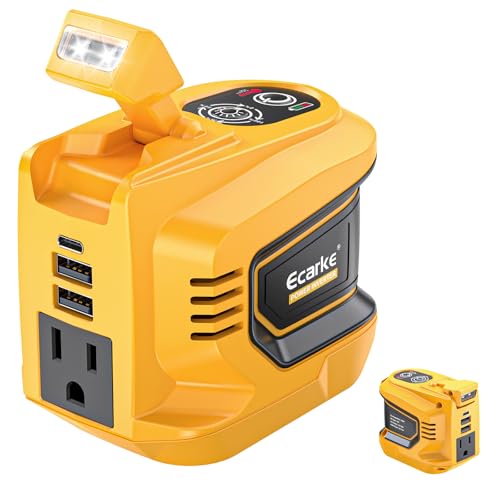
Ecarke 220W Portable Inverter for DeWALT 20V Batteries

Ecarke 220W Portable Inverter for Milwaukee 18V Batteries

Ecarke 220W Portable Inverter for Makita 18V Batteries
Inside Each Recommended Option
The Renogy PUH 2000W sits at the sweet spot where serious power meets daily usability. It produces pure sine wave output, which means it runs sensitive electronics like laptops, medical-style CPAP devices, and audio gear without buzzing or shutdowns, while delivering 4000W of surge capacity to handle startup spikes from motors and pumps. The built-in UPS transfer switch is the practical headline here: when shore power or generator juice flows in, the unit switches automatically, so your fridge or workstation never drops offline during a flick of the breaker.
Bluetooth monitoring adds a layer of confidence you do not usually see at this tier, letting you check voltage and load from a phone rather than crawling into a cabinet. For RVers and home backup users, that mix of capacity, clean output, and remote visibility is genuinely useful, and it edges out the smaller PUH 1000W below for anyone whose loads occasionally climb past 1500W.
Key Advantages
- Pure sine wave output protects sensitive electronics from buzzing, overheating, and early failure.
- Automatic UPS transfer keeps critical loads running through grid hiccups without manual switching.
- 4000W surge headroom handles compressor-driven appliances like microwaves and mini-fridges during startup.
- Bluetooth remote monitoring lets you track battery voltage and load from your phone in real time.
Trade-Offs To Consider
- Ventilation clearance matters; owners commonly mount it in open bays because the unit runs warm under sustained near-max loads.
- Wiring gauge needs careful sizing. Long battery cable runs can drop voltage noticeably without proper 2 AWG or heavier wire.
Key Specs
Right Fit For
Off-grid households and full-time RVers running a fridge, communications gear, and small kitchen appliances on a 12V battery bank.
Look Elsewhere When
The Renogy PUH 3000W Pure Sine Wave Inverter with UPS is the better call when your loads regularly approach 2500W, such as a window AC or a coffee maker plus microwave combination.
The Renogy P2 1000W is the smaller, lighter sibling of the 2000W P2 below, and it shines when space and weight matter more than raw output. With a built-in 5V/2.1A USB port and an AC hardwire terminal alongside the standard outlets, this unit quietly absorbs a lot of jobs. You can charge phones, run a laptop, and power a low-watt microwave in the same setup, which makes it feel more versatile than its modest wattage suggests.
Pure sine wave output (over 90% conversion efficiency per the spec sheet) keeps the energy waste low so battery banks last longer off solar. For van lifers who do not need to run a roof AC, the P2 1000W feels like the right size; heavier loads belong on its 2000W brother.
Notable Gains
- Built-in USB port eliminates the need for a separate 12V USB adapter when charging phones and tablets.
- Over 90% conversion efficiency translates to longer battery runtime on the same charge.
- Hardwire terminal offers a cleaner permanent install in a van or camper build.
- Compact and light enough for tight cabinets behind a dinette or under a bench seat.
Worth Noting
- Surge headroom tops out around 2000W, so leave room above 1000W before adding inductive loads.
- No Bluetooth, which means you will need a separate battery monitor if you want live stats.
Who Should Grab It
Van builders, weekend campers, and small cabin owners running personal electronics and light kitchen appliances on a modest battery bank.
A Better Fit Elsewhere
The Renogy PUH 1000W Pure Sine Wave Inverter with UPS is the more capable pick when you need automatic transfer switching during outages.
The P2 2000W takes the proven P2 platform and stretches it into real workhorse territory. Pure sine wave output at 4000W peak surge makes it comfortable to start a 1HP motor or a small air compressor, while the 2000W continuous rating comfortably covers power tools, induction cooktops, and entertainment setups together. The hardwire port and remote controller support keep the install tidy on permanent builds, which matters when the inverter lives under a workbench or inside a truck cab.
Compared to the Renogy PUH 2000W above, this P2 trades the UPS transfer switch and Bluetooth for a slightly lower price and simpler operation. For truckers, contractors, and serious off-gridders who already run their own battery monitoring, that trade feels reasonable.
Practical Advantages
- 2000W continuous output handles most job-site and small-workshop power demands.
- Hardwire terminal supports a clean permanent install without relying on adapter plugs.
- Wired remote controller lets you mount the inverter out of sight and still control it easily.
- Pure sine wave output with over 90% conversion efficiency for longer battery runtime.
Room For Improvement
- No automatic transfer switch, so backup transitions require manual intervention.
- No Bluetooth; you will need a third-party shunt or monitor for live data.
Feature Snapshot
Whose Shelf It Belongs On
Truckers, contractors, and serious DIY off-gridders running power tools, induction cooking, or heavy entertainment loads.
Swap It Out When
The Renogy P2 1000W Pure Sine Wave Inverter is plenty for van lifers and casual campers who rarely exceed 800W combined draw.
Cabling is the part of an inverter install everyone underestimates, and that is exactly why this 2 AWG set earns a spot on the list. The pure copper conductors are tinned for corrosion resistance, and the closed-end 3/8 inch lugs fit standard inverter and battery posts on most marine, solar, and RV banks. With polyolefin heat shrink already applied at each end, the install moves from unpack to wired in well under an hour.
At one foot per cable, this is a short-run solution for tight battery bays or jumpers between batteries in a parallel bank. For longer distances you will need to source additional cable, but as a starter pair, the build quality stands up to the rest of the picks in this list.
Useful Touches
- Pure copper with tinned coating improves corrosion resistance in marine and outdoor environments.
- Pre-installed heat shrink keeps moisture and abrasion away from the crimp joint.
- 3/8 inch ring terminals match most inverter and battery post sizes without adapters.
- One black and one red cable keeps polarity obvious during installs.
Points To Note
- One-foot length limits this to short jumpers and battery-to-inverter connections within the same bay.
- Two-pack means you may need additional cables for longer vehicle or boat runs.
Quick Facts
Built With In Mind
Installers and DIYers wiring up mid-size inverters in marine, solar, RV, or motorcycle setups who want a clean, corrosion-resistant connection.
Reach For A Different Pick When
The Renogy P2 2000W Pure Sine Wave Inverter package plus separately sourced longer cable is the better route for vehicles where battery and inverter live in separate compartments.
The PUH 1000W takes the same UPS-and-Bluetooth package that makes the 2000W stand out and scales it down to a more approachable size. For homeowners building a small backup panel, or RV owners who only need to keep a handful of essentials alive during a power blip, this hits a comfortable middle ground. The automatic transfer switch flips from battery to shore power seamlessly, so a router, lamp, and laptop stay on through storm season.
Bluetooth monitoring brings the same peace of mind as its bigger sibling, letting you check battery voltage without opening cabinets. Compared to the Renogy P2 1000W above, you trade the hardwire terminal and USB port for ATS convenience; pick whichever feature matters more for your build.
Where It Helps
- UPS transfer switching protects computers and communications gear during outages.
- Bluetooth monitoring keeps you informed on battery health and load without guesswork.
- 2000W surge capacity handles startup spikes from smaller pumps and motors.
- Compact chassis fits inside standard electrical enclosures for a tidy backup panel build.
Points To Keep In Mind
- Limited continuous capacity means you cannot run heavy appliances like microwaves at the same time as other loads.
- Without a hardwire port, integration into a sub-panel may require additional adapter wiring.
Best Suited To
Homeowners and RV owners wanting a compact automatic backup for routers, lamps, laptops, and small electronics.
Consider Something Else When
The Renogy PUH 2000W Pure Sine Wave Inverter with UPS fits better when you need to back up a fridge plus entertainment setup during outages.
The PUH 3000W is the largest of the PUH family, and it earns the premium badge for one clear reason: it covers the loads the smaller units cannot. Window units in the 8000 to 12000 BTU range, full-size microwaves, and induction cooktops all fall within its reach, and the 6000W surge rating leaves headroom for the compressor on a small fridge to start without tripping protection. For households wanting a real backup option rather than a partial one, this is the realistic step up.
The Bluetooth and UPS transfer features from the smaller PUH siblings carry over, and they matter more here because the loads being protected are more expensive. Compared to the Renogy P2 2000W reviewed earlier, the PUH 3000W adds capacity, automatic switching, and remote monitoring; the trade-off is higher cost and a heavier chassis that demands solid mounting.
The Practical Payoff
- 3000W continuous handles whole-room loads like a window AC plus electronics on one inverter.
- 6000W surge capacity starts compressor-driven appliances without manual intervention.
- UPS transfer switching keeps critical loads online during grid instability.
- Bluetooth monitoring adds visibility into battery state for large-capacity banks.
Things To Consider
- Heavier chassis requires secure mounting and vibration isolation in mobile installations.
- Higher current draw on the DC side demands appropriately sized battery cabling to avoid voltage drop.
Technical Highlights
Who It Suits Best
Homeowners and pros who want to back up kitchen appliances, communication hubs, or climate control during outages without splitting loads across multiple inverters.
Where A Sibling Pick Shines
The Renogy P2 2000W Pure Sine Wave Inverter is a lighter, simpler option for mobile pros who do not need automatic transfer switching.
The Ecarke 220W is built for a different audience than the rest of this list: people who already own a stack of DeWALT 20V batteries and want to repurpose them as a tiny power station. At under a pound, it slips into a glove box or backpack and turns one slide-on battery into AC power for phones, laptops, lights, or small fans. The 250W peak output covers most personal electronics, though heavier tools will not run on this platform.
It also includes two USB-A ports, a USB-C port, and a built-in LED light, which makes it feel more like a multi-tool than a strict inverter. Compared to the larger Renogy units, this trades real wattage for genuine portability, and that is exactly the trade many tailgaters and emergency preppers want.
Strengths Worth Knowing
- Slide-on design uses existing DeWALT batteries without extra cables or adapters.
- Under one pound, so it travels easily in a glove box, backpack, or job-site bag.
- Multiple ports let you charge a laptop and phones at the same time.
- Built-in LED light covers emergency lighting and campsite setups.
Honest Caveats
- Battery and charger are not included, which adds to total cost for shoppers without DeWALT packs.
- 220W continuous output means microwaves, kettles, and hair dryers are off the table.
Made For
DeWALT tool owners who want a pocket-size AC source for phones, laptops, and small electronics on camping trips and job sites.
Not Your Match When
The Ecarke 220W Portable Inverter for Milwaukee 18V Batteries is the better fit if your existing tool ecosystem runs on Milwaukee packs.
For Milwaukee M18 fans, this Ecarke variant brings the same pocket-size concept across the aisle. It slides onto any 18V Milwaukee pack and pushes out 220W of continuous AC, which is enough to charge a phone, top off a laptop, or run a small fan on a hot afternoon. The compact size and familiar slide-on form mean there is almost no learning curve: drop the battery, hit the switch, plug in.
Like the DeWALT version reviewed above, this is a tool-platform inverter rather than a serious off-grid system, and that is part of its appeal. For tailgaters, mobile creators, and emergency kits, it pays for itself the first time the power goes out.
A Few Highlights
- Native Milwaukee 18V compatibility for owners already invested in M18 batteries.
- Light enough to keep in a truck cab or glove box year-round.
- Two USB-A ports and a USB-C port for simultaneous device charging.
- LED light adds emergency functionality without a separate flashlight.
Less Ideal Details
- Battery sold separately, and higher-capacity M18 packs increase the total investment.
- 220W continuous rules out any appliance with a heating element or motor.
Perfect Match For
Milwaukee tool owners wanting a lightweight backup for personal electronics during camping trips, tailgates, and storm prep.
Skip It When
The Ecarke 220W Portable Inverter for DeWALT 20V Batteries is the matching pick if your workshop runs on DeWALT instead of Milwaukee.
The Makita 18V version rounds out the Ecarke lineup, and it follows the same script as the DeWALT and Milwaukee siblings. Slide on an 18V Makita pack, and you have 220W of AC plus USB charging for personal electronics and a built-in LED for low-light situations. For weekend warriors who already keep a couple of Makita batteries on the bench, this is a natural addition that costs less than a dedicated power bank of similar capacity.
Compared to the larger Renogy inverters above, this Makita unit is not built for home backup, and that is the point. It is a tool-platform convenience product, and it delivers on that promise without overreaching. If your battery ecosystem is Makita, this is the obvious pick.
Reasons It Performs
- Native compatibility with Makita 18V slide-on battery packs.
- Pocket-size design keeps it ready in a vehicle or backpack for unplanned power needs.
- Multiple USB ports cover phones, tablets, and modern USB-C laptops.
- Built-in LED light handles campsite lanterns and roadside emergencies.
Worth Bearing In Mind
- Battery sold separately, so first-time Makita buyers face a higher entry cost.
- Limited to 220W continuous, which means heavier kitchen appliances are out of reach.
The Right Fit
Makita tool owners looking for a lightweight inverter to keep personal electronics charged on camping trips, photo shoots, and weekend projects.
A Better Fit Elsewhere
The Renogy P2 1000W Pure Sine Wave Inverter is the upgrade for anyone running a van build or cabin with steady 12V battery storage.
Factors Worth Weighing Before Choosing Battery And Power Inverters
Continuous vs. Surge Wattage
The first spec to compare is continuous output, since that is the power the inverter can sustain without overheating. Surge wattage matters for the first few seconds of motor startup, when fridges and pumps draw extra current. Pick a unit whose continuous rating exceeds your largest appliance’s running draw, then confirm the surge headroom covers startup spikes. Skipping that math is the most common reason inverters trip in the first week.
Pure Sine Wave vs. Modified Sine Wave
Pure sine wave output closely mimics grid power, so sensitive electronics like laptops, audio gear, and modern appliances with variable-speed motors run cooler and quieter. Modified sine wave units cost less but can cause buzzing, heat, and reduced lifespan on those same devices. For most 2026 use cases, pure sine wave is the safer choice, and every Renogy in this list delivers it.
Hardwired vs. Plug-In vs. Slide-On
The install style changes everything about how the inverter lives in your setup. Hardwired units like the Renogy P2 2000W fit permanent builds with sub-panels and dedicated circuits. Plug-in models with standard outlets work for portable setups and quick installs. Slide-on tool-platform inverters from Ecarke skip wiring entirely, trading raw power for grab-and-go convenience that pairs with batteries you already own.
Monitoring, Protection, and Connectivity
Look beyond wattage to the protections on offer: under-voltage, over-voltage, over-temperature, and short-circuit indicators all matter. Bluetooth connectivity, like that on the Renogy PUH series, lets you monitor battery state from your phone and catch problems before they strand you. For larger battery banks and unattended installs, that visibility is worth real money.
Key Considerations Across These Picks
Pitfalls Shoppers Hit
The most common mistake is buying an inverter that is technically large enough but installed with undersized battery cabling, which causes voltage drop and overheating. Another trap is underestimating surge requirements: a fridge that pulls 200W running can spike to 1000W at startup, and if the inverter cannot handle that surge, the compressor never engages and the food spoils. Lastly, picking a modified sine wave unit to save money often costs more in the long run through damaged electronics and motor wear.
Where The Extra Money Goes
Stepping from a 1000W to a 3000W unit like the Renogy PUH 3000W means more robust internal components, larger heat sinks, and better surge headroom, which collectively extend the inverter’s working life. Premium tiers also tend to include automatic transfer switching, Bluetooth monitoring, and remote controllers, all of which add real convenience. Whether that upgrade is worth it depends entirely on how often the inverter runs and what it powers; for daily off-grid use, premium pays for itself quickly. For occasional weekend trips, an entry-level unit handles the job just fine.
Frequently Asked Questions
What size battery and power inverter do I need for a small RV?
Add up the running wattage of the appliances you plan to use at once, then add 20 percent headroom for surge. Most weekend RVers land between 1000W and 2000W continuous, which is why the Renogy P2 1000W and Renogy P2 2000W are popular choices.
Can a battery and power inverter run a refrigerator?
Yes, but the inverter needs enough continuous wattage to cover the running draw and enough surge capacity to handle compressor startup. A midsize fridge typically needs around 200W running and 600W to 1000W surge, so the Renogy PUH 1000W is a sensible baseline.
What is the difference between pure sine wave and modified sine wave?
Pure sine wave output matches the smooth waveform of grid power and is safe for sensitive electronics. Modified sine wave is a stepped approximation that can overheat or damage laptops, audio gear, and variable-speed motors over time.
How long can a battery and power inverter run on a single battery bank?
Runtime depends on battery capacity (measured in amp-hours), inverter efficiency, and load size. A 100Ah lithium battery at a 500W load typically runs for around two hours, while the same battery at 100W stretches well past eight hours.
Are tool-battery power stations worth it compared to traditional inverters?
For owners who already own compatible 18V or 20V tool batteries, slide-on inverters from Ecarke offer unmatched portability at a low entry cost. For sustained high loads or permanent installs, traditional inverters like the Renogy PUH series still win on capacity and durability.
Closing Remarks
The right battery and power inverter for your situation depends on three honest questions: how much wattage you actually use, where the unit will live, and which battery ecosystem you already own. Match the inverter to those answers rather than to the loudest spec sheet, and the rest of the build tends to fall into place. Whether you land on a full-house 3000W unit or a pocket-size tool-battery adapter, clean power and a sensible install go a long way.