Hunting season eats batteries. A trail camera that runs through November in the northern woods or sits through a humid August in the south needs a power plan that doesn’t fail quietly. The picks below cover cameras with built-in lithium packs, swappable rechargeable batteries, and solar panels that recharge a camera’s internal cell without direct powering. The right match depends on how remote your spots are and how often you want to visit them.
A Closer Look At The Lineup
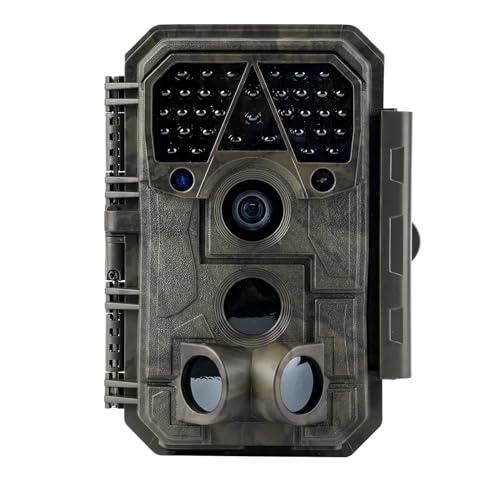
Meidase P70 Trail Camera 64MP 1296p No-Glow IR

Meidase P70 Trail Camera 2-Pack 64MP No-Glow IR

Meidase SP1000 10W Solar Panel for Trail Cameras

Meidase L800D 8000mAh Lithium Battery Pack Type-C

Cuddeback Solar Power Bank PW-3600 for CuddeLink

MagicEagle Cellular Trail Camera 4G 13000mAh Solar

Meidase P300 Pro WiFi Trail Camera 64GB Bundle

Meidase P300 WiFi Trail Camera 165ft Range

Meidase P300 Pro WiFi Trail Camera 7800mAh Solar-Ready
A Breakdown Of The Leading Choices
The P70 is built for hunters who want sharp evidence without spooking deer. Its 64MP sensor pairs with a wide f/1.6 aperture lens (a measurement that describes how much light the lens lets in; lower numbers mean brighter images in low light) so trails, scrapes, and food plots read cleanly even at dusk. The 0.1-second trigger catches deer mid-stride, and side sensors widen the catch zone for animals approaching from an angle.
For most backyards and edge-of-woods spots, the no-glow 940nm infrared LEDs (a wavelength invisible to most wildlife and humans) keep the camera hidden from wary bucks and trespassers alike. Power comes from standard AA cells, which makes field swaps quick when a battery finally quits.
A Few Strong Suits
- 64MP photo capture keeps antler detail readable when you blow up a still
- 0.1-second trigger keeps fast-moving does and yearlings in the frame
- 100ft no-glow night range reaches across open fields without a red flash
- Wide f/1.6 lens pulls in more light for cleaner dawn and dusk shots
Things To Consider
- Standard AA batteries drain quickly in heavy trigger traffic
- No cellular link means hands-on card pulls each visit
At A Glance
Made For
Solo deer hunters who check cards by hand and want sharp stills from a familiar format.
Consider Something Else When
The Meidase P300 Pro WiFi Trail Camera suits anyone who’d rather pull previews over a phone connection than walk to the camera.
The 2-pack stretches the same P70 sensor across two locations, which is how most hunters actually scout: a mock scrape here, a transition trail there. H.264 video compression (a codec that shrinks file size without losing much quality, so downloads stay quick) keeps card space open across both units, and the .mp4 format plays on most laptops without a codec hunt.
You may find two cameras share a card-swapping rhythm once you settle on a rotation. For properties with a few productive spots, the math works out: each camera pulls a similar load, and you only hike in when both need attention.
Key Advantages
- Two units means wider coverage on the same scouting dollar
- H.264 video saves space and speeds card downloads
- Shared settings mean you only learn one menu once
Worth Noting
- Both units still run on AA cells, so battery swaps roughly double
- No wireless link to either unit
Right Fit For
Hunters managing multiple entry points or food plots who want one purchase to cover the season.
Look Elsewhere When
The MagicEagle Cellular Trail Camera makes more sense for those who need remote previews and don’t want to walk to either unit.
The SP1000 plugs into a compatible Meidase camera’s internal lithium pack and trickles in sun throughout the day. IP65 weatherproofing (a rating meaning the panel resists low-pressure water jets and dust ingress, so rain and dust won’t kill it) keeps the panel running through rain and dust, and the 10W output is sized for cameras that trigger often. Worth knowing: it charges the battery only, not the camera directly, so the camera still relies on its own pack for night triggers.
For remote spots where you don’t want to hike batteries in every few weeks, the panel earns its place quickly. Mount it where the sun actually lands, not where shade lingers, and check the cable run for chew marks from rodents.
Practical Pluses
- 10W output matches the draw of Meidase’s higher-end cameras
- IP65 rating handles rain, snow, and dust at remote sites
- Trickle-charges the camera’s internal pack between triggers
Honest Caveats
- Does not power the camera directly during night triggers
- Limited to listed Meidase models, so check compatibility first
Feature Snapshot
Best Suited To
Hunters running compatible Meidase cameras at sites where walking batteries in is impractical.
Where Another Pick Suits Better
The Meidase L800D battery is the better move for short deployments where solar mounting isn’t worth the hassle.
The L800D swaps in for the factory battery on supported Meidase cameras and bumps capacity to 8000mAh. The Type-C charging port means the same cable you carry for a phone tops up the pack on the kitchen counter. Lithium chemistry holds voltage better in cold weather than alkalines, which matters once the mercury drops.
The honest read is that this pack works best as a second battery you rotate. Pull a drained pack, drop in the charged one, and the camera keeps running while the spare sits on a wall charger.
Features That Help
- 8000mAh capacity stretches deployment windows between swaps
- Type-C port reuses common phone cables
- Lithium chemistry holds up better in freezing temperatures
- Factory-matched for safe use with listed Meidase models
Small Caveats
- Only fits the listed Meidase cameras, so verify model numbers first
- Rechargeable packs lose capacity over years of deep cycles
Who Will Love This
Hunters who already run a compatible Meidase camera and want longer stretches between field visits.
Skip It When
The Cuddeback Solar Power Bank makes more sense for those running CuddeLink systems who want off-grid recharging instead of a swap schedule.
The PW-3600 leans on a built-in NiMH (nickel-metal hydride, a battery chemistry known for cold tolerance and recharge-friendly behavior) battery that pushes through sub-freezing nights better than alkalines. The 2W solar panel is modest, but combined with the NiMH cell, the system keeps cameras running through winter setups where lithium packs can falter. A status indicator on the unit lets you glance at charge state without pulling the camera down.
Mount it where winter sun reaches the panel for at least a few hours, and the camera stays alive through cold snaps that flatten standard cells.
Noteworthy Benefits
- NiMH chemistry handles sub-freezing temps better than most lithium packs
- Polycrystalline solar panel (a panel type that balances cost and efficiency for moderate sun) recharges in direct light
- Built-in status indicator shows charge at a glance
Points To Keep In Mind
- 2W panel output is modest, so shady sites underperform
- Designed for CuddeLink and Tracks cameras, not universal fit
Feature Card
Perfect Match For
Hunters running Cuddeback cameras in cold climates where lithium packs struggle.
Swap It Out When
The Meidase SP1000 suits anyone running a compatible Meidase camera who wants higher panel output for high-trigger setups.
This MagicEagle is the closest thing to a full scouting station in a single box. The 13,000mAh internal battery keeps the 4G radio humming for weeks between recharges, and the bundled solar panel keeps that pack topped up at sunny sites. IP66 waterproofing (a step above IP65, meaning the camera handles powerful water jets and heavier rain without issue) handles heavy weather, while 2K video and audible playback give you a fuller picture of what passed through.
The trade-off shows up in setup: cellular cameras always take more configuration than a memory-card model. Once it’s running, the previews on your phone become the only reason to hike in.
Positive Points
- 13,000mAh internal battery powers 4G radio for long stretches
- Bundled solar panel keeps the pack topped off at sunny sites
- 2K video and audible playback add context beyond stills
- IP66 rating handles rain, snow, and dust
Practical Considerations
- Cellular setup requires more configuration than memory-card units
- Network coverage dictates real-world performance
Whose Shelf It Belongs On
Property owners and hunters who want remote previews and don’t mind the setup overhead.
Reach For A Different Pick When
The Meidase P300 Pro WiFi Trail Camera is a calmer fit for anyone who’d rather skip cellular subscriptions and pull previews over a phone’s WiFi instead.
The P300 Pro pairs a 7800mAh internal battery with a bundled 64GB industrial SD card, so the camera is ready to deploy on day one. Dual antennas extend the WiFi handshake to about 165 feet in open air, which means you stand at the truck, pull up the app, and decide whether the hike in is worth it. The 64MP sensor and 0.1-second trigger carry over from the P70 line, with the same no-glow night vision behavior.
For first-time upgraders moving from an AA-powered unit, this bundle removes the friction of buying a card separately.
The Practical Payoff
- 7800mAh battery stretches time between recharges
- Bundled 64GB card means one box, no extra purchases
- 165ft WiFi range keeps the phone in your pocket for previews
- 0.1s trigger keeps fast deer in the frame
Trade Offs
- WiFi works only with a paired phone, not home routers
- Industrial card runs hot in summer heat over years
Feature Rundown
Who Should Grab It
First-time upgraders who want the convenience of a bundled setup and phone-based previews.
Not Your Match When
The Meidase P300 WiFi Trail Camera is a calmer choice for shoppers who don’t need the bundled card and want a tighter entry price.
The P300 keeps the dual-antenna 165ft WiFi handshake but trims the extras the Pro adds. You still get 64MP stills, 1296p video, and the same 100ft no-glow night vision. The 120° wide detection angle (the cone of motion the sensors actually see in front of the lens) widens the catch zone, which is useful for cameras mounted on pinch points or saddle crossings where deer approach from varied angles.
For new owners stepping into trail cameras for the first time, the simpler P300 trims the learning curve without stripping the core experience.
Real-World Strengths
- 120° wide detection catches deer approaching from varied angles
- Dual antennas stabilize the WiFi link at moderate ranges
- 64MP sensor and 1296p video share the Pro line’s quality
- Simpler bundle lowers the entry barrier
Room For Improvement
- No bundled SD card means buying storage separately
- No internal lithium upgrade versus the Pro
Built With In Mind
First-time trail camera owners who want strong core features without the bundled extras.
A Better Fit Elsewhere
The Meidase P300 Pro WiFi Trail Camera suits anyone who’d rather have the bundled card and 7800mAh battery in one box.
This version of the P300 Pro drops the bundled card but keeps the 7800mAh battery and adds solar panel compatibility with the SP300, SP350, and SP1000 panels. For set-and-forget sites where you mount once and only visit for camera checks, that solar pairing changes the math. Mount a panel, angle it south, and the camera essentially runs itself through most of the year.
You may find this configuration quieter than a cellular unit at sites with patchy signal, since WiFi previews happen when you visit rather than when the radio feels like cooperating.
The Upside
- 7800mAh battery pairs with compatible solar panels for long runtime
- Dual-antenna WiFi keeps previews reliable from the truck
- No subscription fees versus cellular models
- 100ft no-glow night vision holds up across open fields
Less Ideal Details
- Solar panels cost extra on top of the camera
- WiFi range drops through walls and dense vegetation
The Right Fit
Hunters setting up permanent or seasonal stands who want long runtime without monthly fees.
Where A Sibling Pick Shines
The MagicEagle Cellular Trail Camera works better for those who want previews arriving on a phone without hiking in at all.
Matching The Right Power Setup To Your Hunting Style
Battery Chemistry And Weather Behavior
Lithium packs hold voltage through cold snaps better than alkalines, which is why most modern cameras lean toward built-in lithium or NiMH (nickel-metal hydride). NiMH chemistry trades a little capacity for cold tolerance, which is why the Cuddeback power bank survives winter setups that flatten standard cells. Lithium-ion drops capacity faster once it sits below freezing, so a stored spare in a warm pocket extends its life at the camera.
Capacity, Triggers, And Field Time
mAh ratings translate directly to runtime, but only roughly. A camera triggering fifty times a night burns through power faster than one triggering ten times. For high-traffic sites, larger packs (7800mAh and up) or a solar panel make the difference between monthly visits and seasonal ones. For low-traffic scrapes or ridge-line cameras, smaller packs still hold up across a typical hunting season.
Solar Panel Reality Checks
A solar panel only charges when the sun actually hits it. Mount it in a clearing, angle it toward the equator, and clear fallen leaves after storms. Shady north-facing sites cut output dramatically, so the panel’s real-world value drops in those spots. IP65 or higher weather ratings (meaning the panel resists water jets and dust) keep the unit alive through rain and snow, but no panel survives complete burial under leaves.
Key Considerations Across These Picks
Wrong Turns To Avoid
Buying a solar panel without checking camera compatibility is the most common miss in this category. The Meidase SP1000 only charges the listed Meidase models, so an off-brand camera leaves you with a panel that does nothing useful. Same story with rechargeable batteries: the L800D fits specific Meidase units and nothing else. Always match the part to the camera’s make and model before you commit.
Where The Extra Money Goes
The premium in higher-tier cameras and panels comes down to three things: bigger battery capacity, weatherproofing, and connectivity. A 13,000mAh internal pack with bundled solar costs more than a 7800mAh unit, but it removes most of the field visits. For weekend hunters who don’t mind swapping batteries, the mid-tier holds up fine. For set-and-forget properties, the extra cost pays back in saved drive time.