You pull the key on your cart halfway down the first fairway and nothing happens. Or worse, you make it through nine holes and the cart starts dragging like a tired mule going uphill. Battery trouble shows up fast on the course, and swapping in the wrong setup means another season of mid-round anxiety. This roundup covers both full lithium conversions and the cabling parts you actually need to tie everything together, so your next round starts clean and ends clean.
The Essentials At A Glance

CLUBRALLY 48V 4 Gauge Cable Set for Club Car DS

LOSSIGY 48V Lithium Golf Cart Conversion Kit

Mehrpow 48V 100AH Lithium Battery Kit

OGRPHY 36V 100AH Lithium Battery 3.84KWh

OGRPHY 36V 150AH Lithium Battery 5.76KWh

ACDC 2 Gauge E-Z-GO TXT Battery Cable Set
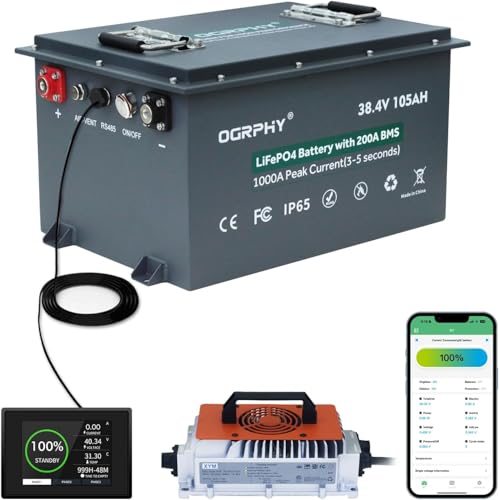
OGRPHY 36V 105AH Lithium Battery with Charger

OGRPHY 36V 102AH Lithium Battery with 12V Port

LOSSIGY 48V 100AH LiFePO4 Conversion Kit
Inside Each Recommended Option
Wiring rarely gets the spotlight until it fails, and by then you are stuck at the turn. The CLUBRALLY set exists for owners of 1995-Up 48V Club Car DS carts running six 8-volt batteries, replacing the factory cables with heavier 4-gauge conductors. Thicker copper strands handle current better, which matters once the cables start aging or the cart sees hills and heavy loads.
The kit includes five cables, and the heavier gauge is a meaningful step up over stock wiring in many DS carts. Owners rebuilding a tired electrical bay will appreciate that this targets one of the most common cart platforms still on the road today.
The Helpful Details
- 4-gauge conductors carry current more efficiently than thinner factory wires, supporting stronger cranking and accessory draw.
- Heavier insulation resists corrosion and short-circuit risk over years of under-seat moisture.
- Direct fit for 1995-Up Club Car DS carts with six 8V batteries, simplifying the swap.
- Five-cable set covers the main run without needing to source matching lengths separately.
Things To Consider
- Fitment is narrow: only the DS platform from 1995-Up with six 8V batteries, so Precedent or 36V owners look elsewhere.
- Cables alone won’t revive a battery pack that is already sulfated, so inspect cells before installing.
- Color-coded stock terminals may not match the new set, so plan on tagging or re-marking each lead.
Who It Suits Best
Owners of 1995-Up 48V Club Car DS carts replacing worn factory wiring during a battery service.
Consider Something Else When
E-Z-GO TXT owners should look at the ACDC 2 Gauge E-Z-GO TXT Battery Cable Set later in this roundup, which matches a different platform.
Anyone still running a bank of six 8V lead-acid batteries has probably watched watering, corrosion, and range slowly become part of the routine. The LOSSIGY 48V kit flips that equation by replacing the full pack with a single lithium unit, available in 100AH and 150AH configurations depending on how far you want to drive between charges.
The conversion ships with a charger and monitor so the swap is closer to a weekend project than a garage overhaul. For owners weighing whether to keep rebuilding their lead-acid pack one battery at a time, this is the cleaner long-term move.
Practical Pluses
- Single lithium pack replaces six lead-acid batteries, freeing up space and cutting total weight.
- Built-in BMS protects against common failure modes, extending useful lifespan.
- Included charger and monitor mean fewer extra purchases to get the cart rolling.
- Capacity options let you match range to the kind of driving you actually do.
Points To Note
- Lithium conversions cost more up front than a single lead-acid replacement, so the savings build over years.
- You may need a mounting bracket or tray modification depending on the cart’s original battery well.
- Owners on smaller 36V carts should verify voltage before committing to this 48V-specific kit.
Key Specs
Made For
48V cart owners ready to ditch a lead-acid bank for a single lithium pack with charger included.
Skip It When
36V system owners should look at the OGRPHY 36V 150AH Lithium Battery 5.76KWh instead for direct voltage match.
Some lithium conversions sound great on paper and then sit in the garage for months because the wiring looks intimidating. The Mehrpow 48V 100AH kit exists for the opposite case: drop it in, connect it, drive. One-time installation and plug-and-play wiring keep the project from turning into a week-long electrical study.
Long cycle life compared to AGM means owners stop planning battery replacements into their calendar. The complete upgrade framing appeals to first-time converters who don’t want to mix and match separate components.
What Earns Its Place
- Plug-and-play design avoids complicated rewiring during the conversion.
- Deep cycle rating far exceeds traditional AGM, so pack replacements stretch out over years.
- Complete kit framing reduces the parts list to track down separately.
- 100AH capacity fits typical neighborhood and course use without overspending.
Worth Noting
- Hazmat shipping rules apply, so delivery timing may be longer than a standard order.
- Once installed, the battery is non-returnable except for verified damage or defects.
- Mounting hardware may need adapting depending on the existing battery tray dimensions.
Best Suited To
First-time lithium converters on a 48V cart who want the shortest path from delivery to driving.
Look Elsewhere When
Off-grid and RV users get more flexibility from the LOSSIGY 48V 100AH LiFePO4 Conversion Kit, which targets multiple use cases.
The 36V cart crowd often gets overlooked in a sea of 48V listings, and OGRPHY leans into that gap directly. The 36V 100AH pack delivers 3.84KWh of usable capacity, sized for owners who don’t need marathon range but want lithium’s weight and maintenance advantages over their old six 6V lead-acid setup.
The built-in 200A BMS handles current spikes without flinching, and the 25A charger keeps charging times reasonable at home. It also doubles as a stationary power source for solar setups or trolling motors when the cart is parked.
Where It Delivers
- 3.84KWh capacity hits the everyday-use sweet spot for 36V carts without overpaying.
- 200A BMS supports sustained draw for hill climbs and accessory loads.
- Works as stationary storage for solar and trolling applications.
- 25A charger keeps charge times manageable on a standard outlet.
Room For Improvement
- 36V models won’t fit 48V carts, so verify your system voltage before ordering.
- Range is shorter than the higher-capacity OGRPHY 150AH sibling, so long-distance users may want more headroom.
- Mounting tray compatibility varies by cart brand, requiring minor fabrication in some setups.
Quick Facts
Right Fit For
36V cart owners seeking balanced capacity without paying for larger packs they won’t fully use.
A Better Fit Elsewhere
Long-distance riders should consider the OGRPHY 36V 150AH Lithium Battery 5.76KWh for extended range on a single charge.
The bigger sibling in OGRPHY’s 36V line trades capacity for distance, and the numbers add up fast. A 5.76KWh pack with a smart 200A BMS and 1000A peak headroom handles hill-heavy courses and long neighborhood routes without range anxiety creeping in.
What makes this kit stand out is the included touch monitor and mobile app, giving real-time visibility into voltage, current, and state of charge. For data-oriented owners, that visibility changes how the cart gets driven day to day.
The Case For It
- 5.76KWh capacity supports long-distance rounds without mid-trip charging stops.
- Smart BMS with app monitoring adds a layer of diagnostic visibility you don’t get from basic packs.
- Touch monitor included for at-a-glance status while parked in the garage.
- 4000+ cycle rating stretches ownership well past traditional lead-acid timelines.
Factors To Consider
- Larger capacity raises the entry cost compared to the 100AH sibling earlier in this list.
- 36V-only fitment rules out 48V cart owners looking for similar capacity.
- App connectivity requires a phone and adds another device to keep charged.
Perfect Match For
36V owners running long courses or hilly terrain who want range headroom and app-based monitoring.
Reach For A Different Pick When
Budget-focused shoppers on 36V systems get more usable capacity per dollar from the OGRPHY 36V 100AH Lithium Battery 3.84KWh earlier in this roundup.
E-Z-GO TXT carts have a loyal following, and they also have wiring that ages out faster than people expect. The ACDC 13-piece cable set rebuilds the main battery runs with 2-gauge EPDM-jacketed welding cable, the same flexible, heat-resistant construction used in heavy industrial settings.
The braided PET sleeve over each cable is a small touch that pays off in garages where tools rattle around and UV exposure is constant. For a full rewire during a battery swap, this set covers the full TXT platform.
Standout Benefits
- 2-gauge welding cable handles up to 200 amps, suitable for high-current TXT systems.
- EPDM jacket resists flame, oil, grease, and ozone damage under the seat.
- PET braided sleeve adds abrasion resistance and a clean color-coded look.
- 13-piece set covers the full cable run without piecing together separate orders.
Some Limits To Know
- Fitment targets E-Z-GO TXT specifically, so Club Car DS owners need a different kit like the CLUBRALLY set earlier.
- Custom length ordering means careful measurement is required before checkout to avoid mismatches.
- Heavy-gauge cable adds stiffness, so routing through tight factory channels takes patience during install.
Feature Snapshot
Who Will Love This
E-Z-GO TXT owners doing a full battery bay refresh who want heavy-gauge, color-coded cabling in one order.
Another Choice May Suit
Club Car DS owners should pick up the CLUBRALLY 48V 4 Gauge Cable Set for Club Car DS instead, which is platform-matched.
Sometimes the middle option is the smartest one. The OGRPHY 36V 105AH pack threads the needle between the smaller 100AH sibling and the larger 150AH long-range unit, giving owners a few extra amp-hours without stepping all the way up in price.
The kit ships with a 25A charger and touch LCD monitor, so charging and status checks stay straightforward. For daily drivers logging short commutes or two rounds of golf a week, this capacity hits the practical middle.
Everyday Advantages
- 105AH capacity covers typical daily cart use without overpaying for unused range.
- Touch LCD monitor gives clear status without pulling out a phone.
- 200A BMS handles 1000A peak for short bursts during hill starts.
- 25A charger included, removing the need to source compatible charging gear separately.
Honest Caveats
- Range falls short of the 150AH sibling, so back-to-back long rounds may need a top-up.
- 36V-only fitment excludes 48V cart owners.
- Touchscreen adds a small layer of complexity to monitor compared to basic LED indicators.
Built With In Mind
36V cart owners with predictable daily routes who want a balanced capacity-to-cost ratio.
Swap It Out When
Long-distance riders covering 30+ miles between charges should pick the OGRPHY 36V 150AH Lithium Battery 5.76KWh for the extra headroom.
Most lithium packs cover the motor and call it done. This OGRPHY 102AH unit adds an integrated 12V DC output port, which sounds small until you wire up lights, horns, or a USB charger without buying a separate voltage converter. The simplification matters on carts that already feel like a spaghetti bowl under the seat.
Like its siblings, it carries a 200A BMS with 1000A peak headroom and ships with a 25A charger and touch LCD monitor. Owners adding accessories to a 36V cart will appreciate skipping the converter step.
Why It Works Well
- Built-in 12V DC port powers lights, horns, and USB accessories directly from the pack.
- Removes the need to buy and wire a separate 36V-to-12V converter.
- Touch LCD monitor included for at-a-glance status checks.
- 200A BMS with 1000A peak handles accessory loads without throttling the motor.
Small Caveats
- 12V port draws from main pack, so accessories left on can shorten driving range.
- Discharge switch needs to be turned off after accessory use to prevent drain.
- Slightly heavier install planning is required when routing 12V accessory wiring.
Feature Rundown
The Right Fit
36V cart owners adding 12V accessories like lights or horns who want a cleaner wiring layout.
Where A Sibling Pick Shines
Long-range riders get more capacity from the OGRPHY 36V 150AH Lithium Battery 5.76KWh earlier in this roundup.
Carts are not the only thing drawing 48V these days. The LOSSIGY 100AH deep-cycle kit pulls double duty as a stationary battery for solar arrays and RV house banks, so it earns its keep even when parked for the season. The 5.12KWh capacity fits nicely in off-grid power budgets.
A Bluetooth-enabled BMS lets owners check state of charge from a phone, which removes guesswork in both cart and stationary setups. For people splitting their battery use across vehicles and remote properties, one pack covering both roles simplifies ownership.
Everyday Wins
- 5.12KWh capacity fits common solar and RV house-bank sizing.
- Bluetooth BMS lets you monitor state of charge from a phone.
- LiFePO4 chemistry supports long cycle life across cart and stationary use.
- 1000A peak current handles motor surges during cart starts.
Worth Bearing In Mind
- Multi-use framing means you may not fully use the capacity in a single application.
- 48V fitment excludes 36V cart owners without a converter setup.
- Solar integration may require additional wiring hardware beyond the included charger.
Whose Shelf It Belongs On
Off-grid, RV, and cart owners who want one LiFePO4 pack to move between roles without buying twice.
Not Your Match When
Cart-only shoppers on 36V platforms should pick the OGRPHY 36V 105AH Lithium Battery with Charger instead.
What Matters Most Before Choosing Batteries For Golf Carts
Match Voltage To Your Cart First
A 36V cart and a 48V cart look similar from the seat, but the battery packs are not interchangeable. Running the wrong voltage risks damaging the controller and motor, and the fix costs more than the battery itself. Always confirm your cart’s system voltage, which is usually printed on the original battery decals or listed in the owner’s manual, before browsing packs. Mismatched voltage is the most common mistake first-time upgraders run into.
Think About How Far You Actually Drive
Capacity ratings like 100AH or 150AH translate directly into miles per charge, but the conversion depends on motor size, terrain, and load. A flat neighborhood loop uses far less energy than a hill-heavy 18-hole course with two passengers. Estimate your typical daily distance first, then size the pack to cover it with about 20% headroom for unexpected detours or accessory loads.
Inspect The Wiring Before Swapping Packs
New batteries on old wiring is a recipe for underwhelming performance. Corroded terminals, cracked insulation, and undersized cables limit how much current the pack can actually deliver. The CLUBRALLY set for Club Car DS and the ACDC set for E-Z-GO TXT both exist for this reason. Checking cables before dropping in lithium saves the frustration of blaming the new pack for old wiring problems.
Plan For Charging And Storage
Lithium packs charge faster and hold their charge longer in storage than lead-acid, but the charger matters. Packs that ship with a matched 25A charger remove compatibility guesswork. If your cart sits for weeks at a time, look for a pack with a low self-discharge rate and Bluetooth or LCD monitoring so you can check status without pulling the seat off.
Key Considerations Across These Picks
Where Shoppers Go Wrong
The most common slip-up is treating a battery swap like a one-size-fits-all job. Cart platforms vary, voltage systems vary, and the accessories you want to run change what pack actually fits your life. Always cross-check your cart model, system voltage, and intended use before clicking through. Skipping that step leads to returns, adapter hacks, or worse, motor damage from the wrong voltage pack.
When Paying More Pays Off
Higher-capacity lithium packs cost more up front, but the math tends to favor them over time. Longer cycle life means fewer replacements, lighter weight reduces wear on suspension components, and built-in monitoring features catch problems before they leave you stranded. For owners who use their cart weekly rather than seasonally, the upgrade from a base 100AH pack to a 150AH or multi-use model typically pays back through fewer service trips and longer pack lifespan.
Frequently Asked Questions
How long do lithium golf cart batteries actually last?
LiFePO4 packs in this category typically deliver thousands of deep cycles before noticeable capacity loss, often translating into many years of regular use. The exact lifespan depends on how deeply you discharge the pack and how often you cycle it.
Can I mix lithium and lead-acid batteries in the same cart?
Mixing chemistries in a single system creates charging and balancing problems, and it is generally not recommended. Replace the full pack at once for reliable performance and to keep the BMS functioning as designed.
Do I need a special charger for lithium golf cart batteries?
Lithium packs use different charge profiles than lead-acid, so the included matched charger is the safest option. Using an old lead-acid charger can shorten pack life or trigger BMS protection modes during charging.
What happens if my cart sits unused for months?
Lithium packs hold their charge far longer than lead-acid during storage, with much lower self-discharge rates. Still, periodic top-ups and a quick state-of-charge check every few weeks keep the pack healthy through long off-seasons.
Are lithium golf cart batteries worth the higher cost?
For carts driven weekly or more, lithium usually pays back through reduced maintenance, lighter weight, and longer pack lifespan. For seasonal or occasional-use carts, lead-acid may still be a reasonable fit depending on your budget and usage pattern.
Wrap Up
The right battery pack comes down to matching your cart’s voltage, sizing capacity to your real driving habits, and not skipping the wiring underneath. Cables like the CLUBRALLY and ACDC sets often matter as much as the pack itself, especially on older carts. Pick the option that fits your platform today, and the rounds stay smooth from the first tee to the nineteenth green.