A dead battery on a frosty Monday morning is a special kind of misery. The right tender quietly tops off your charge over weeks of sitting, so the car, truck, or motorcycle fires up the moment you turn the key. This roundup walks through ten solid options, from compact motorcycle maintainers to heavy-duty 10-amp units, plus an extension cable and a multi-battery harness that solve common garage headaches.
A Quick View Of The Lineup

Battery Tender Plus 12V 1.25 AMP Car & Motorcycle Battery Charger and Maintainer

Battery Tender Junior 12V, 750mA Charger and Maintainer
Battery Tender Junior 12V, 800mA Battery Charger and Maintainer
Battery Tender 25 Foot Extension SAE Cable

BatteryMINDer 210-AY SmarTECHnology Multiple Battery Charger Connector

Optimate 7 Select 12V 10A 9-Step Battery Saving Charger

Battery Tender 5 AMP 12V Battery Charger and Maintainer

Battery Tender Plus 12V – 1.25 AMP Battery Charger and Maintainer

JMR 12V Battery Charger for McLaren, 12V Cig. Port, Add Lithium Mode

OptiMate3 0.8A Smart Battery Saving Charger for 12V Powersports
A Breakdown Of The Leading Choices
This is the workhorse most people picture when they hear the word “tender.” It delivers 1.25 amps at 12 volts and adapts to whatever battery chemistry sits under the hood, so a single unit can babysit a daily-driver car, a snowbound ATV, or a classic motorcycle through winter. The four-stage charging routine moves from bulk charge to absorption, then settles into a float (a maintenance trickle that holds voltage without overcharging) mode that won’t cook a battery left unattended for months.
Compared to the gentler 750 mA Junior below, this Plus version pushes current faster and tolerates deeper discharged batteries without a fuss. Anyone juggling multiple vehicle types in a single garage will appreciate that flexibility, and the LED status indicators make it obvious whether the system is in bulk, absorption, or float mode at a glance.
Positive Points
- Adaptive smart charging automatically adjusts to battery needs, so you don’t have to babysit the process
- Four-stage program with float mode protects batteries during long winter storage
- 1.25 amp output balances recovery speed with safe overnight charging
- Spark-resistant design and reverse polarity detection keep first-timers from frying anything
- Works across cars, motorcycles, lawn tractors, and ATVs without adapters
Trade Offs
- No lithium battery mode, so LiFePO4 (lithium iron phosphate, a lightweight, long-cycle battery chemistry) owners need a chemistry-specific unit like the Junior 800 mA reviewed later
- Bulk charging a deeply discharged truck battery takes patience compared to the 5-amp version
Quick Facts
Who It Suits Best
Garage owners with a mixed fleet of cars, bikes, and ATVs who want one reliable charger that handles seasonal storage without constant attention.
Consider Something Else When
Drivers running lithium LiFePO4 batteries should reach for the Battery Tender Junior 12V, 800mA Battery Charger and Maintainer, since it adds a switchable lithium profile.
The Junior line earns its reputation by being the gentlest way to keep a small battery topped off. At 750 milliamps (0.75 amp), it’s noticeably slower than the Plus reviewed above, but that lower current actually suits motorcycle, scooter, and ATV batteries that don’t want a heavy pour of energy. The four-step charging program walks through initialization, bulk, absorption, and float without forcing you to think about any of it.
Beginners usually click with this unit because the connection process is straightforward and the included ring-terminal or alligator-clip harness makes setup feel foolproof. For most riders parking a bike for a few cold months, it simply does the job in the background.
Points In Its Favor
- Compatible with flooded (standard wet-cell), AGM (absorbed glass mat, a sealed, spill-resistant battery type), and gel cell batteries, covering most powersport setups
- Lightweight and small enough to toss in a saddlebag for travel
- Float mode prevents overcharging if you forget to disconnect it
Things To Consider
- Not designed to recover a deeply discharged battery; recovery usually needs a stronger unit like the Optimate 7 Select
- The short stock cable pushes some owners toward the 25-foot extension reviewed next
Best Suited To
New motorcycle, scooter, and ATV owners who just need a no-fuss tender to leave plugged in over winter.
Look Elsewhere When
Daily drivers with larger automotive systems will recharge faster on the Battery Tender 5 AMP 12V Battery Charger and Maintainer.
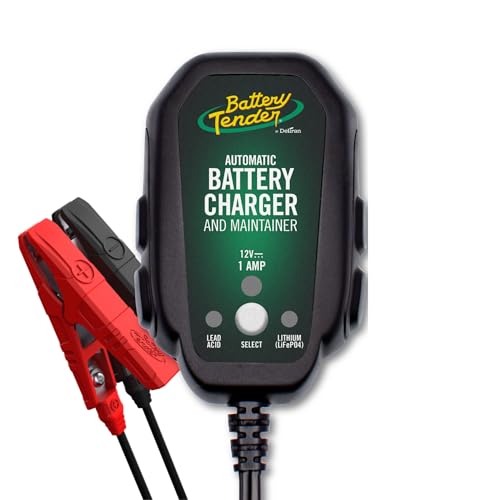
This Junior variant borrows the compact chassis of its 750 mA sibling and adds a feature that matters more than the small current bump: a switchable lead-acid/lithium mode. Press one button and it tailors the charge profile to LiFePO4 chemistry, which has stricter voltage limits than traditional flooded or AGM packs. The microcontrolled charging algorithm (a tiny processor that adjusts voltage and current throughout each stage) handles the rest.
Garages with mixed chemistry, say a lead-acid motorcycle next to a lithium-equipped UTV, will find this especially handy. You may find the extra output useful on slightly larger batteries where the older 750 mA version felt sluggish.
Useful Strengths
- Lead-acid or lithium switching handles newer LiFePO4 batteries without dedicated hardware
- Push-button chemistry selection removes the guesswork from settings
- 800 mA output revives small batteries faster than the older Junior
- Compact body fits tight garage corners and powersport storage compartments
Worth Noting
- Selecting the wrong chemistry mode by accident can undercharge lead-acid batteries, so owners should double-check the LED indicator
- Still a maintenance-grade current, so it’s not the right tool for jump-reviving a dead truck battery
Right Fit For
Multi-chemistry households running powersport vehicles with newer lithium batteries alongside older lead-acid gear.
A Better Fit Elsewhere
Anyone needing 10 amps of bulk recovery should jump to the Optimate 7 Select 12V 10A 9-Step Battery Saving Charger instead.
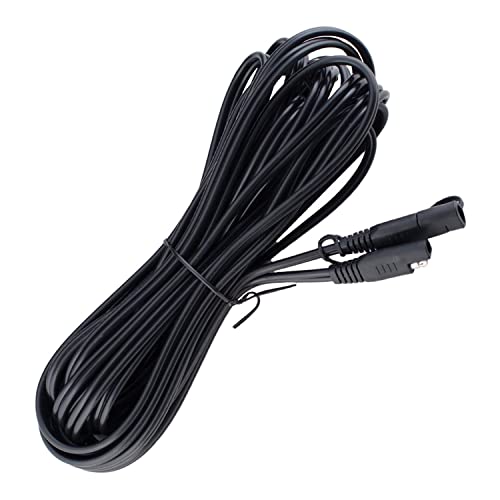
Cable length doesn’t sound exciting until you crawl across a garage to plug in a tender. This 25-foot SAE (a common two-pin flat connector standard for 12V accessories) extension plugs into any Battery Tender charger and gives you the slack to reach vehicles parked in awkward corners. Quick-connect plugs on both ends mean you can daisy-chain it or swap between rigs without tools.
It’s a practical add-on rather than a charger, but pairing it with the Junior or Plus above solves a real layout headache. For detached garages, long driveways, or shared parking situations, that reach often matters more than another amp of charging power.
Notable Upsides
- 25-foot reach turns tight garage layouts into manageable setups
- SAE quick-connect plugs snap in and out without rewiring
- Compatible with the Junior, Plus, and multi-bank Battery Tender units
Honest Caveats
- Long cable runs can introduce a small voltage drop (a slight reduction in delivered voltage over distance), though maintenance charging currents are forgiving
- Not a charger by itself; useless without a tender on the other end
Whose Shelf It Belongs On
Multi-vehicle homeowners whose outlet sits far from where the cars and bikes actually park.
Swap It Out When
Drivers who only ever charge inside a small garage may prefer a simple hardwired setup without the extra cable clutter.
When one charger isn’t enough, this dual-battery harness lets you maintain two vehicles from a single BatteryMINDer unit. The SmarTECHnology moniker refers to the brand’s charging algorithm, but the harness itself is straightforward: dual cords split off to ring terminals, battery clips, or insulated clips. Built-in 15-amp fuses protect each branch, which matters when you’re hooking up a pair of vehicles unattended.
Collectors with three or four toys in the garage can stack these harnesses to scale up. Just remember the harness needs a compatible multi-battery charger to function; it doesn’t generate current on its own.
Everyday Perks
- Connects two batteries to one compatible charger, reducing clutter
- 15-amp fuses add a layer of safety against shorts
- Works with ring terminals, standard clips, or insulated clips depending on your battery setup
Points To Note
- Ring terminals and battery clips often require a separate purchase
- Tied to the BatteryMINDer ecosystem, so swapping brands means starting over
Built With In Mind
Hobbyists and collectors who already run a multi-bank BatteryMINDer and want to expand to another vehicle without buying a second full charger.
Another Choice May Suit
Single-vehicle owners should ignore this and grab a dedicated Battery Tender Plus 12V 1.25 AMP Car & Motorcycle Battery Charger and Maintainer instead.
This is the heaviest hitter in the lineup. At 10 amps with a nine-step charging profile (a detailed multi-stage process that tests, recovers, charges, and maintains a battery), the Optimate 7 Select does things smaller units can’t, including rescuing deeply discharged batteries that other chargers refuse to even start. A selectable 14.7-volt program targets premium AGM cells like Odyssey and Optima, while a power supply mode supplies stable voltage during ECU (engine control unit, the computer that manages engine functions) programming and diagnostic work.
Compared to the 5-amp Battery Tender reviewed next, this unit cuts charge times roughly in half on full-size automotive batteries. The temperature compensation (automatic voltage adjustment based on ambient temperature) feature makes a real difference in unheated shops where winter swings can throw off fixed-voltage chargers.
What Makes Sense
- 9-step program recovers deeply discharged batteries other units walk away from
- Selectable 14.7V mode handles premium AGM batteries without overcharging
- Power supply mode stabilizes voltage during ECU flashing and diagnostics
- Temperature compensation adjusts output for cold garages and hot summers
Where It Is Less Suited
- Bulkier than motorcycle-friendly units, so it lives on a workbench rather than in a saddlebag
- Higher amp output can overwhelm very small batteries if you forget to switch modes
Feature Card
Who Will Love This
Performance enthusiasts and shop owners who regularly rescue deeply discharged AGM batteries and need a stable power supply for tuning work.
Reach For A Different Pick When
Motorcycle owners parking a bike for the season will find the OptiMate3 0.8A Smart Battery Saving Charger more appropriately sized.
Step up to 5 amps and the tender world opens up. This high-frequency switch-mode unit (a design that uses rapid electronic switching to deliver cleaner, more efficient charging power than older transformer-based chargers) handles full-size car, SUV, and truck batteries without the long overnight waits smaller units require. The four-stage charging routine covers qualification, bulk, absorption, and float, so once a battery is full, it just holds there indefinitely.
It’s specifically dialed in for AGM batteries but covers flooded and gel cells too, plus a lithium switch that adapts to LiFePO4 packs. Drivers with bigger electrical loads, think trucks with accessories, work vans, and dual-battery setups, get faster recovery without giving up the safety of an automatic float.
The Case For It
- 5 amp output recharges large automotive batteries several times faster than 1-amp maintainers
- AGM-optimized charging handles premium absorbed glass mat packs
- Flooded, gel, AGM, and lithium compatibility covers a household fleet
- High-frequency switch-mode design runs cooler than older transformer chargers
A Few Limitations
- 5 amps is overkill for tiny powersport batteries and may stress them with extended bulk stages
- Still no diagnostic recovery mode like the Optimate 7 Select
Perfect Match For
Truck, SUV, and work-van owners who want a daily-driver charger that finishes bulk charging in an afternoon rather than overnight.
Where A Sibling Pick Shines
Recovering a deeply discharged battery calls for the diagnostic algorithms in the Optimate 7 Select 12V 10A 9-Step Battery Saving Charger.
This is essentially the same Plus formula as the unit reviewed first, with the same 1.25-amp output and four-stage charging, but it ships with a California-compliant charger designation for areas with stricter energy efficiency rules. For most shoppers it’s a regional variant of the popular Plus; for anyone in California, it sidesteps compliance friction at purchase time.
The advanced charging algorithms suit both AGM and flooded batteries. Owners commonly leave these units plugged in for months on end with no noticeable battery degradation, which is the whole point of a tender.
Everyday Advantages
- California-compliant charging meets strict efficiency standards
- Four-stage program protects batteries through long storage periods
- 1.25 amp output suits mixed garages with cars, motorcycles, and ATVs
- Proven Plus architecture with a long track record of reliable float behavior
Possible Compromises
- No lithium chemistry mode, which limits it for newer LiFePO4 battery owners
- Region-specific labeling confuses shoppers who don’t realize it’s functionally similar to the standard Plus
Who Should Grab It
California-based drivers who want the proven Plus performance in a compliance-friendly package.
Not Your Match When
Lithium-battery owners should grab the Battery Tender Junior 12V, 800mA Battery Charger and Maintainer for its switchable chemistry profiles.
McLaren cars use a designated 12-volt charging port accessed via the cigarette lighter, not direct battery terminals, which means most universal tenders simply don’t fit. This Juice My Ride unit solves that with a McLaren-specific plug-and-play adapter that drops into the 12V port without opening any panels. It supports lithium, AGM, lead-acid, wet, gel, EFB (enhanced flooded battery, a stop-start-friendly flooded design), and calcium batteries, so any non-electric McLaren in the lineup is covered.
It’s a niche product, but for the niche it’s perfect. Skipping the battery access step protects door panels and trim from the wear that comes from repeated hood-opening and clamp-on-routine use.
A Few Strong Suits
- Plug-and-play cigarette lighter adapter avoids removing body panels to reach the battery
- Compatible with nearly every non-electric McLaren model, including 720S, 750S, and GT variants
- Lithium mode supports newer LiFePO4 battery upgrades
- Wide chemistry support covers older and current McLaren battery specs
Trade-Offs To Consider
- Vehicle-specific design has no utility outside the McLaren ecosystem
- Lacks the recovery and diagnostic depth of a general-purpose 10-amp unit
Made For
McLaren owners who want battery maintenance without the ritual of popping panels and attaching clips every storage season.
Skip It When
Anyone outside the McLaren world will get more value from a universal Battery Tender Plus 12V – 1.25 AMP Battery Charger and Maintainer.
The OptiMate3 rounds out the list with a recovery-first approach aimed squarely at motorcycles, ATVs, side-by-sides, and personal watercraft. Its claim to fame is the ability to save deeply discharged 12V batteries that other chargers walk away from, including starter, deep-cycle, AGM, gel, and standard flooded cells. The 0.8-amp output is gentle enough for small powersport packs but steady enough for long-term float maintenance.
Riders who store bikes in unheated garages or travel through cold winters will appreciate that recovery focus. The fully automatic “connect and forget” operation means it can stay on the bike year-round without overcharging the battery into early retirement.
Strengths Worth Knowing
- Rescues deeply discharged batteries other maintainers refuse to start
- Compatible with AGM, gel, standard, starter, and deep-cycle batteries
- Fully automatic operation suits year-round plug-and-forget use
- Compact 0.8-amp design fits motorcycle battery compartments without strain
Small Caveats
- Lower output means bulk charging takes longer on partially drained automotive batteries
- Doesn’t cover lithium LiFePO4 chemistry, unlike the Junior 800 mA reviewed earlier
Right Fit For
Powersport riders who need a charger that revives neglected batteries as well as maintains healthy ones across long winters.
A Better Fit Elsewhere
Full-size automotive and truck batteries get faster, more appropriate charging from the Battery Tender 5 AMP 12V Battery Charger and Maintainer.
What To Weigh Before Picking A Tender
Battery chemistry leads the decision tree. Flooded lead-acid remains the cheapest and most forgiving, AGM (absorbed glass mat) handles deeper discharges and vibration better, and lithium LiFePO4 packs the most energy density but demands tight voltage control. Pick a charger that matches the chemistry actually sitting in the vehicle, or pick one with selectable modes like the Junior 800 mA reviewed above.
Output current shapes how the unit feels day-to-day. Sub-1-amp chargers like the Junior or OptiMate3 handle motorcycles and ATVs without breaking a sweat but crawl through full-size car batteries. A 5-amp unit covers most daily drivers in a reasonable window, while 10-amp workhorses like the Optimate 7 Select revive deeply discharged packs in a fraction of the time. Match current to the largest battery in your fleet.
Connectivity and reach matter more than spec sheets suggest. Short leads force awkward garage layouts; long extension cables like the Battery Tender 25-foot reviewed earlier fix that without buying a new charger. Battery-specific plugs, such as the McLaren cigarette-port adapter, solve access problems that no universal clamp can address. Plan for where the unit will actually live before buying.
Safety features worth prioritizing include reverse polarity protection (which prevents damage if the clamps are attached to the wrong terminals), spark-resistant clamps, and temperature compensation for unconditioned shops. These details don’t show up in charging speed but prevent the kind of garage mishaps that ruin weekends.
Things To Keep In Mind Across This List
Where Shoppers Go Wrong
The most common slip is buying a tender with the wrong chemistry profile and forcing a lithium battery into a lead-acid charge curve, or vice versa. Match the charger’s output to the battery type sitting in the vehicle. Another pitfall is underestimating cable reach and ending up with a charger that can’t physically reach the battery without an extension. Measure the distance before checking out, and consider an SAE extension if needed.
What Separates Premium From Basic
Higher-tier models like the Optimate 7 Select add diagnostic recovery modes, temperature compensation, and power supply features that justify the step up for serious battery work. Basic units maintain a healthy battery beautifully but can’t bring a deeply discharged one back from the dead. The premium tier buys recovery capability, broader chemistry support, and faster bulk charging on larger packs.
Frequently Asked Questions
How long can a battery tender stay connected? A smart tender with float mode can stay connected indefinitely, automatically dropping to a maintenance voltage once the battery reaches full charge. Just confirm the unit actually has a true float stage rather than a continuous bulk charge.
Can one tender handle multiple vehicles? A multi-bank charger or a dual-battery harness like the BatteryMINDer 210-AY lets one power supply maintain two or more batteries at once. A single 1-amp maintainer is best reserved for one battery at a time.
Do lithium batteries need a special tender? Yes. Lithium LiFePO4 batteries require chargers with a lithium-specific profile and tighter voltage limits. Standard lead-acid tenders can overcharge lithium cells, so look for switchable chemistry models like the Battery Tender Junior 800 mA.
Is a tender the same as a trickle charger? No. A trickle charger delivers a constant low current that can overcharge a battery left connected for weeks. A tender uses a multi-stage program that drops to float mode once the battery is full, making it safe for long-term storage.
Will a tender start a dead battery? Most tenders are designed to maintain, not jump-start. High-amperage models with recovery modes like the Optimate 7 Select can sometimes revive deeply discharged batteries, but for a fully dead battery, a dedicated jump starter remains the safer tool.
The Takeaway
Any of these tenders will protect a stored battery through the off-season, but the right match depends on chemistry, current, and how the vehicle actually sits in your garage. Spend a moment identifying your largest battery and the plug layout before committing. Once the right unit is plugged in, the dead-battery mornings quietly fade away.