Swapping an auto battery size 24 isn’t glamorous, but the right box changes how your vehicle or rig behaves on a cold morning or a long weekend off-grid. Lithium has quietly taken over this category, while the older group 24 footprint still rules under the hood. This roundup covers ten options worth your time, from full LiFePO4 drop-ins to cables, boxes, and chargers that finish the install.
The Essentials At A Glance
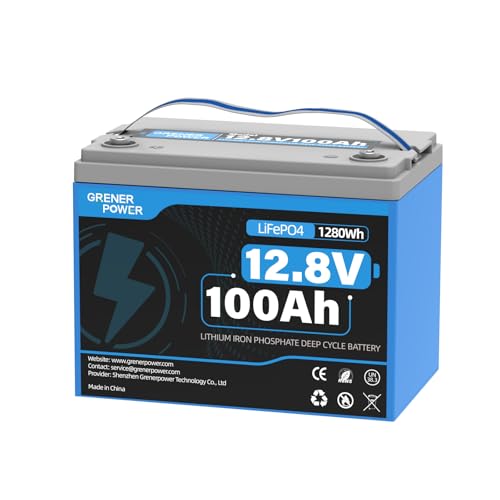
GrenerPower 12V 100Ah LiFePO4 Group 24 Battery

SOK 12V 100Ah LiFePO4 Group 24, IP65

VATRER POWER 24V 300Ah LiFePO4 with APP

TOPDC 4 AWG Battery Cable Pair, 24″

Bonsicoky 4 AWG Battery Cable, 24″, Red
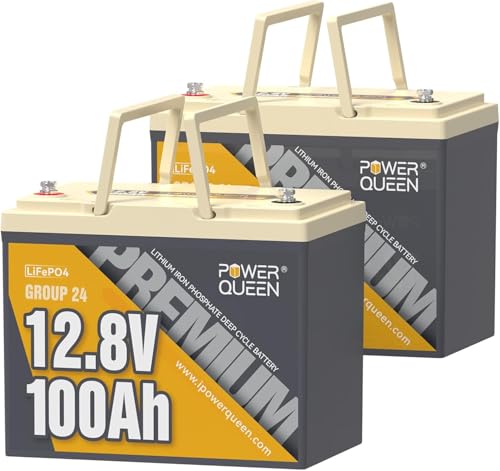
Power Queen 2-Pack 12V 100Ah LiFePO4 Group 24
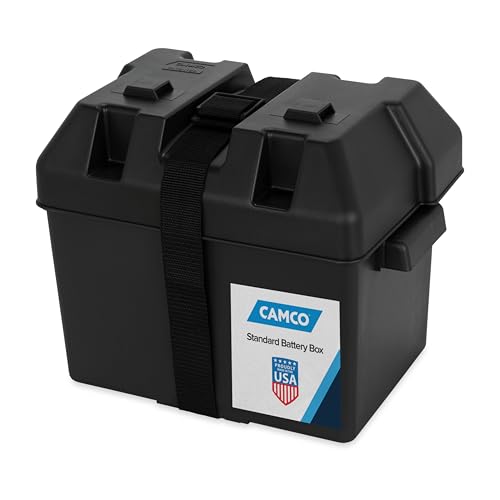
Camco Group 24 Marine RV Battery Box

Litime 12V 100Ah Self-Heating LiFePO4 Group 24

PZP 0-15A 12V/24V Manual Battery Charger
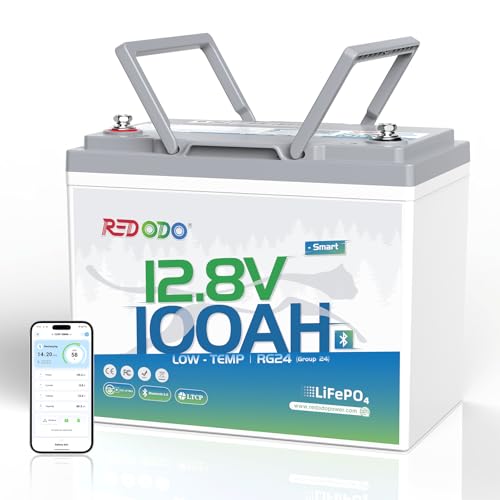
Redodo 12V 100Ah Group 24 LiFePO4 Bluetooth
The Strengths Of Each Pick
The GrenerPower 12V 100Ah fits the standard BCI group 24 footprint (a battery case size standard, roughly 10.25 x 6.8 x 8.9 inches), so it drops into most RV trays, marine compartments, and off-grid enclosures that already accept a group 24 box. LiFePO4 chemistry here means you get the full 100Ah of usable capacity rather than the half you’d pull from a lead-acid, which matters on a long weekend without shore power.
Inside, cylindrical Grade A+ cells (factory-graded lithium cells built for higher cycle life) feed a 100A BMS (battery management system, the electronic brain that guards against overcharge, deep discharge, and shorts). For most RV and trolling motor scenarios, that’s enough headroom to run a small inverter and accessories without tripping protections.
Everyday Advantages
- Group 24 fit removes the need for tray modifications in standard installations.
- Cylindrical cells and a 100A BMS layer in five protection paths: overcharge, overdischarge, short, overcurrent, and thermal.
- LiFePO4 chemistry delivers essentially the full 100Ah versus the half you can safely pull from lead-acid.
- One-pack or two-pack options let you scale a bank without mixing different cells.
Things To Consider
- Charging below freezing requires a heated battery or low-temp charger, which this unit does not advertise.
- Owners commonly report that a low-cost LiFePO4-compatible charger is a separate purchase for proper topping off.
Who It Suits Best
Anyone running a single group 24 battery in an RV, marine start, or modest solar bank who wants safe lithium chemistry without oversizing the system.
Where Another Pick Suits Better
Cold-weather campers should look at the Litime 12V 100Ah Self-Heating instead, since it heats itself before charging in freezing conditions.
The SOK 12V 100Ah stands apart with a translucent case that lets you visually check internal connections without cracking anything open. For marine installs where corrosion creep is the slow killer, that single feature quietly saves hours over the life of the bank.
The IP65 rating (a seal standard meaning dust-tight and resistant to low-pressure water jets) covers spray and dust, which is the realistic ceiling for any boat or open RV compartment. Pair that with the BCI group 24 form factor and you get a drop-in that survives splash zones, engine bays near saltwater, and dusty overland builds.
Useful Strengths
- Translucent shell removes guesswork during inspections and torque checks.
- IP65 sealing resists splashes, washdowns, and grit typical of marine use.
- Group 24 size means existing trays and the Camco battery box from this list accept it without mods.
Worth Noting
- The translucent shell may yellow over years of UV exposure in open-deck installs.
- Like most LiFePO4 units, charging below freezing still needs a low-temp charger.
Key Specs
Made For
Boat owners and saltwater-RV travelers who want a sealed, service-friendly lithium battery in a familiar group 24 shape.
Skip It When
If your priorities lean toward Bluetooth monitoring and app control, the Redodo 12V 100Ah Bluetooth is the smarter fit.
VATRER POWER’s 24V 300Ah unit steps outside the 12V group 24 convention entirely. You’re getting a 24V system with a 200A BMS and an APP module for monitoring. That’s a serious pack for a serious load: inverters, off-grid cabins, and overland rigs that want to skip generator noise.
The BMS handles overcharge, over-discharge, over-current, thermal, and short-circuit events. High-temp cutoff activates around 167°F and a low-temp cutoff protects the cells in cold conditions. For installations where the battery sits in an unheated compartment through winter, that low-temp guard is genuinely useful.
Strengths Worth Knowing
- 200A BMS handles heavy inverter loads without throttling mid-cycle.
- High and low temperature cutoffs add a layer of protection for unheated bays.
- APP monitoring keeps state of charge and current visible from a phone, handy when the pack lives in a sealed compartment.
Trade Offs
- 24V output means you may need a 24V-compatible inverter or DC-DC charger, raising total project cost.
- Physically larger than a group 24 12V, so it won’t drop into a standard tray without rebuilding the mount.
Best Suited To
Off-grid homeowners, full-time overlanders, and workshop builders who want a single high-capacity lithium bank rather than a string of 12V units.
Look Elsewhere When
Standard RV and marine users running 12V accessories should stick with the GrenerPower or Power Queen 12V units to keep their existing chargers and wiring.
A battery swap is incomplete without the right cables, and TOPDC’s 4 AWG pair covers most starter and inverter runs cleanly. At 24 inches with 3/8-inch ring lugs, these are the lengths that reach between a battery post and a typical in-cabin inverter or distribution block without coiling excess copper behind a panel.
4 AWG is the practical sweet spot for mid-current applications (a wire gauge, where lower numbers mean thicker wire and higher current capacity). The pure copper construction is the real story here: CCA (copper-clad aluminum) cables are cheaper but lose more voltage over distance, especially on long inverter runs.
What Makes Sense
- Pure copper strands keep voltage drop low over typical battery-to-load distances.
- 3/8-inch ring lugs fit common inverter and starter studs without adapter shims.
- Pair format (positive and negative) keeps the install symmetrical and clean.
Room For Improvement
- PVC insulation is service-grade; it can stiffen in extreme cold and needs careful routing near heat sources.
- 24-inch length is fine for most trunks and cabins, but longer wheelbase trucks may need extension runs.
The Right Fit
DIYers wiring a 12V battery bank to a mid-size inverter, and anyone replacing crusty factory starter cables on a daily driver.
Swap It Out When
Tight under-dash accessory work that demands a shorter 5/16-inch lug favors the Bonsicoky 4 AWG cable instead.
The Bonsicoky cable keeps things compact: a single 4 AWG run at 24 inches with a 5/16-inch ring lug, sold for tight accessory work where the larger 3/8-inch TOPDC lug won’t physically fit. The red PVC jacket makes the polarity obvious inside crowded engine bays.
It’s a small-diameter lug choice for smaller studs, like accessory fuse blocks, low-amperage inverters, or secondary ground points. The copper core handles typical accessory loads without overheating.
Practical Pluses
- 5/16-inch lug fits accessory studs the 3/8-inch alternatives can’t.
- Single-cable format works for spot repairs or supplemental ground runs.
- Red jacket aids polarity identification inside dark engine bays.
Honest Caveats
- Single-cable sale means the matching negative is a separate order.
- 5/16-inch lugs won’t suit heavy starter or inverter studs, so high-current use cases should look elsewhere.
Perfect Match For
Tinkerers adding accessory circuits, lighting relays, or secondary grounds in compact installs.
Reach For A Different Pick When
Starter and main inverter runs need the 3/8-inch lug and matched pair of TOPDC’s set.
Power Queen’s 2-pack turns the lithium upgrade into a one-step bank replacement. Two matched 12V 100Ah LiFePO4 cells sit in a group 24 footprint, ready for parallel wiring to double your amp-hours without mismatched cell stress.
Compared to a single GrenerPower unit, the value angle shows up when you actually need both batteries: one listing, one shipment, identical cells. For trailer and overland builds that draw more than 100Ah a day, that’s a clean answer.
Real-World Strengths
- Matched pair eliminates cell-mismatch concerns during parallel wiring.
- Group 24 form keeps each unit swappable with standard trays and the Camco box on this list.
- LiFePO4 chemistry makes both packs essentially full-capacity, not the half-capacity lead-acid behavior.
Points To Keep In Mind
- Two batteries means double the upfront cost versus a single-pack option.
- Parallel wiring still requires correctly sized cabling, like the TOPDC pair, for balanced current flow.
Feature Snapshot
Who Will Love This
RV and trailer owners upgrading from a single group 24 lead-acid to a 200Ah lithium bank in one transaction.
Consider Something Else When
Single-battery projects or anyone on a tighter budget should start with the single-pack GrenerPower instead.
Any lithium upgrade should land inside a proper enclosure, and Camco’s group 24 box is the long-time favorite for marine and RV use. The polypropylene shell resists corrosion, fuel, and acid splash, and the woven strap keeps the battery planted under rough water or washboard roads.
It meets USCG (United States Coast Guard) CFR 183.420 and ABYC (American Boat and Yacht Council) E-010.7 specifications, which matters if your insurance surveyor ever asks about your battery mount. Foot clamps and stainless screws ship in the box, so the install needs nothing extra.
Points In Its Favor
- Corrosion-resistant polypropylene shrugs off marine splash and battery off-gassing.
- USCG and ABYC specification compliance simplifies insurance surveys.
- Woven hold-down strap and stainless hardware ship with the box.
Minor Gripes
- Lid lift-off design means it isn’t tamper-resistant, so curious kids or pets can pop it open.
- Inside dimensions are tailored to group 24 specifically, so larger group 27 batteries won’t fit.
Whose Shelf It Belongs On
Anyone installing a group 24 lithium or AGM (absorbed glass mat, a sealed lead-acid variant) in a boat bilge, RV bay, or truck toolbox.
A Better Fit Elsewhere
The Power Queen 2-pack may need a larger or doubled enclosure if both batteries sit in the same compartment.
Cold weather is the silent killer of LiFePO4: charge a frozen lithium cell and you can plate permanent damage. Litime solves that with an internal heater and two heating modes. Regular mode kicks in below 41°F when charging, then stops once the cell reaches 50°F. Energy-efficient mode draws less current while warming up slowly.
The group 24 footprint is unchanged, so it slides into the same tray as any other 100Ah lithium on this list. Bluetooth 5.0 ties into the LiTime app for state-of-charge, current, and voltage readouts from inside the cab.
Where It Delivers
- Internal heater eliminates the need for an external warming pad or heated compartment.
- Two heating modes let you tune current draw versus warm-up speed.
- Bluetooth 5.0 monitoring works without opening the battery bay.
Potential Drawbacks
- Heating function draws from the cells during warm-up, slightly reducing net charging efficiency in extreme cold.
- Internal heater is a small extra repair surface compared to non-heated lithium packs.
Quick Facts
Who Should Grab It
Snowbird RVers, ice-fishing campers, and northern marine users who camp or cruise below freezing without a heated compartment.
Not Your Match When
Mild-climate users who never see freezing temps and want maximum capacity per dollar will do fine with the GrenerPower unit instead.
The PZP charger is the workshop counterpoint to the lithium picks. With a manual knob, you can set current anywhere from 0 to 15 amps on either 12V or 24V systems. That flexibility matters when reviving a deeply discharged AGM (absorbed glass mat) or topping off a small lithium bank without saturating the BMS.
It’s not an automatic smart charger. The tradeoff is intentional: a manual control lets you see exactly what current is flowing, which is useful for older flooded lead-acid batteries and for diagnostics on stubborn cells.
Useful Highlights
- 0 to 15A adjustable output suits batteries from small motorcycle to mid-size RV banks.
- 12V/24V switch covers nearly every automotive and light industrial system.
- Manual operation makes the charge rate visible and controllable.
Where It May Fall Short
- Lacks automatic lithium profile detection, so you need to monitor charge termination manually.
- Enclosure is workshop-grade; permanent under-hood mounting isn’t the intended use.
Built With In Mind
Home mechanics and garage tinkerers maintaining a fleet of mixed automotive and marine batteries.
Another Choice May Suit
Full-time RVers who want a plug-and-forget lithium charger should match their battery with a dedicated LiFePO4 profile charger instead.
Redodo leans into the app side of lithium ownership. The BMS pairs with a Bluetooth 5.0 module, so your phone becomes the dashboard: voltage, current, remaining capacity, and remote power-off. For tech-comfortable RVers and boat owners, that’s the kind of visibility that catches a problem before it strands you.
Like the GrenerPower unit, the form factor is standard group 24, so it shares trays and the Camco box with anything else in this size. Remote shutoff through the app is the headline feature if you leave a rig parked for weeks and want to silence parasitic draws.
The Value In It
- Bluetooth 5.0 monitoring cuts out physical gauge checks on hard-to-reach batteries.
- Remote power-off through the app helps manage parasitic loads during storage.
- Group 24 form factor keeps the install flexible across RV and marine trays.
Less Ideal Details
- Bluetooth adds a small electronic surface that can fail over the battery’s lifespan.
- App-dependent monitoring is less useful for anyone keeping their phone in airplane mode off-grid.
Spec Overview
Right Fit For
Data-friendly RV and boat owners who want battery telemetry without pulling out a multimeter every weekend.
Where A Sibling Pick Shines
Cold-climate users get more usable protection from the heated Litime unit, which adds warming without sacrificing the Bluetooth readout.
What To Weigh Before Choosing Auto Battery Size 24
Group 24 is a battery case standard defined by the Battery Council International (BCI), roughly 10.25 inches long, 6.8 inches wide, and 8.9 inches tall. That footprint appears across cars, marine applications, and RV house banks, which is why so many lithium drop-ins target it. Anything labeled BCI Group 24 should land in the same tray as your old lead-acid, though minor terminal post differences can complicate cabling.
Match The Chemistry To The Climate
LiFePO4 has largely displaced flooded lead-acid and AGM in this category for good reason: deeper usable capacity, longer cycle life, and roughly a third of the weight. But LiFePO4 cells do not like being charged below freezing. For cold-climate users, a heated battery like the Litime self-heating unit, or a charger with low-temperature cutoff, is a near-mandatory pairing.
Capacity, BMS, And Real Loads
A 100Ah LiFePO4 gives you essentially the full 100 amp-hours to use, versus about 50Ah on a lead-acid rated at the same number. That doubles your effective runtime before recharge. The BMS rating matters too. A 100A continuous BMS handles most RV and trolling motor loads, while high-inverter setups (1500W and up) may want a 200A BMS or multiple paralleled packs, like the VATRER 24V 300Ah unit.
Wiring, Enclosures, And Safety Margins
Battery swaps almost always need new cables. A 4 AWG pure copper pair with the right lug size, such as the TOPDC set with 3/8-inch lugs, covers most installs. Smaller accessory work can step down to the Bonsicoky 5/16-inch cable. Add a proper box like the Camco enclosure to keep terminals covered, especially in marine or RV environments with foot traffic and splash exposure.
Key Considerations Across These Picks
Pitfalls Shoppers Hit
The most common error is treating group 24 as a perfect universal fit. Some vehicles use group 24F or 24H with reversed terminals; always check post orientation before ordering. Another mistake is ignoring the charger’s lithium profile: a stock lead-acid charger can undercharge or, worse, fail to terminate correctly on LiFePO4 chemistry.
Where The Extra Money Goes
Higher-tier lithium batteries tend to invest in stronger BMS protection, better cell grading, and extras like Bluetooth or heating. That upgrade pays off when you actually use those features: cold-weather camping, remote monitoring, or pulling large inverter loads. For temperate, low-demand installs, a basic 100Ah LiFePO4 like the GrenerPower unit covers the bases without the premium.
Frequently Asked Questions
What Does Group 24 Mean For A Battery?
Group 24 is a BCI-defined case size, roughly 10.25 x 6.8 x 8.9 inches, used across many cars, boats, and RVs. Any battery labeled group 24 should physically fit the same tray, though terminal orientation can vary.
Can A Group 24 Lithium Battery Replace Lead-Acid Directly?
In most cases yes, especially for deep-cycle house applications like RVs and boats. Some vehicles with sensitive alternators or charging systems may need a DC-DC charger to manage lithium’s lower resting voltage.
Do LiFePO4 Batteries Need A Special Charger?
A lithium-profile charger is strongly recommended. Lead-acid chargers often fail to reach the correct absorption voltage or lack the low-temperature protection LiFePO4 needs to charge safely below freezing.
How Long Does A Group 24 LiFePO4 Battery Last?
Quality LiFePO4 cells commonly reach several thousand cycles, translating to many years of regular use. Lifespan depends on depth of discharge, charge rate, and operating temperature.
Is Group 24 The Same As Group 34?
No. Group 34 is a different BCI size, generally longer and used in some cars and trucks. Group 24 covers a broader range of marine, RV, and automotive applications but is not interchangeable with group 34 trays.
Closing Remarks
The right auto battery size 24 upgrade depends on what you actually plug into it. Cold-weather travelers, marine users, and app-driven RVers each get more value from a specialized pick, while the GrenerPower and Power Queen units serve the everyday crowd well. Match the chemistry, the BMS, and the wiring to your real load, and the rest of the install usually falls into place.