A dead battery ends a trail day faster than anything else, and figuring out which replacement actually fits your machine takes more than guesswork. Riders searching for a new ATV battery run into the same wall: model numbers, CCA ratings, and chemistry jargon that don’t line up with the ATV sitting in the garage. This guide cuts through that with nine concrete picks that map to real machines, real climates, and real riding habits.
How The Shortlist Stacks Up

KMG YT12C Battery for Yamaha YFA-1 Breeze 125cc

Mighty Max YTX7A-BS GEL Battery
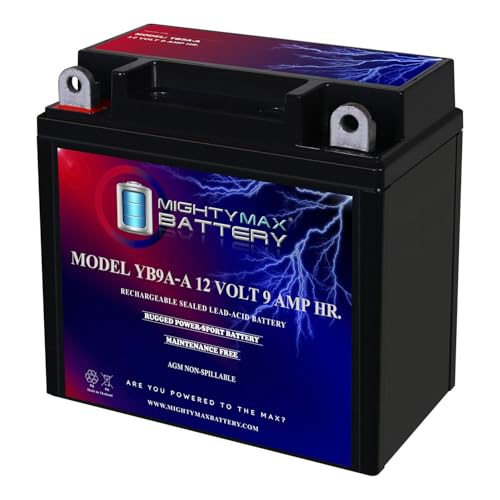
Mighty Max YB9A-A 12V 9AH Battery

BRS U1 AGM 12V 300 CCA Battery

Mighty Max YTX6.5L-BS 12V 6.5AH Battery

UPLUS YTZ14S AGM Battery 210CCA

TYKOOL LFP9-BS Lithium Powersports Battery

TYKOOL LFP14-BS Lithium Battery 400CCA
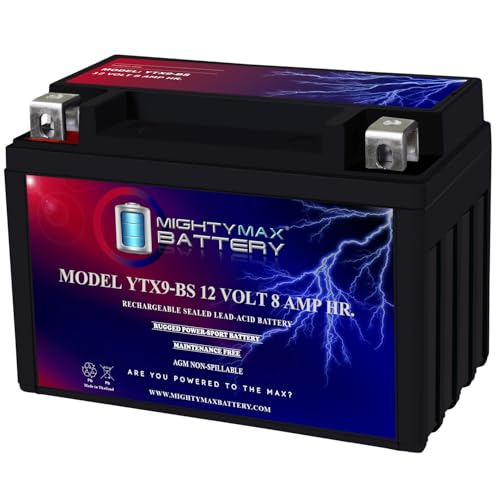
Mighty Max YTX9-BS SLA Battery 135CCA
What Each Pick Brings To The Table
Vintage Yamaha Breeze 125 owners know how thin the replacement-part market gets once a machine passes its 20th birthday. The KMG YT12C sits in that narrow slot, built to match the Breeze’s stock battery tray without modification, so a swap takes minutes rather than a fabrication session.
It’s a sealed AGM (Absorbent Glass Mat, meaning the acid is held in fiberglass mats so the unit won’t leak if tipped) unit, which means no water top-offs and no acid residue on the frame. Compared to the lithium options coming up later, it’s heavier and slower to recharge, but for a casual trail loop or weekend ride, the trade-off rarely matters.
The Practical Payoff
- Drop-in fit for 1989-2004 Breeze 125 models saves hours of cross-referencing
- Sealed AGM construction means zero watering and corrosion-free terminals in storage
- Lead-calcium plates hold voltage longer between rides, helpful for seasonal machines
- Vibration resistance suits the choppy trails Breeze riders tend to hit
Things To Consider
- Heavier than lithium alternatives, which adds noticeable mass on a small quad
- CCA rating is modest compared to the BRS and UPLUS options reviewed later
Whose Garage It Belongs In
This is the right shelf pick for someone restoring or maintaining a stock Yamaha YFA-1 Breeze from the 1989-2004 run who wants a no-fuss replacement.
Where Another Pick Suits Better
Riders running a modern sport quad should skip ahead to the TYKOOL LFP9-BS-STD Lithium option, which shaves far more weight off a chassis that actually benefits from it.
GEL chemistry (where the electrolyte is suspended in a silica paste rather than liquid) sets this Mighty Max apart from typical AGM powersport batteries. The thicker paste holds charge through long winters better than liquid-rich AGM designs, which is the exact use case owners cite when buying one for a Suzuki LTZ90 or LTR450 Quad Racer that sits for months at a time.
Rated at 12V, 6Ah, and 105 CCA (Cold Cranking Amps, the battery’s ability to deliver starting current in cold weather), it delivers enough punch for small-to-mid displacement quad staters. For most riders running a sport quad through shoulder-season riding, the slower self-discharge rate alone justifies the upgrade over a standard AGM.
Useful Highlights
- GEL paste resists leaks on aggressive lean angles, a real plus on sport quads
- Holds charge longer in storage than comparable AGM units
- Wide operating-temperature tolerance handles hot summers and frozen garages
- Non-spillable design reduces corrosion around terminals over time
Honest Caveats
- Charging profile differs from AGM, so an older trickle charger may underfill it
- 105 CCA is on the modest side for very cold-climate morning starts
- Slightly heavier than lithium equivalents at the same capacity
Feature Snapshot
Built With In Mind
Suzuki LTZ90 and LTR450 Quad Racer owners who store the bike over winter and expect a strong first-start in spring benefit most from this chemistry.
Skip It When
If you ride a larger utility quad in sub-zero mornings, the BRS U1 AGM Battery is a better match thanks to its much higher 300 CCA rating.
The Suzuki LT-F 160 is one of those workhorse quads from the early 1990s that still shows up on farms and small properties, often with a battery that hasn’t been replaced in a decade. The Mighty Max YB9A-A targets exactly that situation, packaging an SLA (Sealed Lead Acid, a maintenance-free subtype of AGM) design with a generous 9Ah capacity to replace tired original equipment.
With 130 CCA, it has more cranking muscle than the smaller KMG unit reviewed first, and the spill-proof case means the quad can sit on uneven ground without venting concerns. For a farm quad that starts a few times a week and never sees a track day, it’s a sensible match.
Everyday Advantages
- 9Ah capacity gives meaningful reserve for winches or accessory lighting
- 130 CCA handles cool-morning starts on small Suzuki engines
- Sealed case can be mounted in various orientations during a custom fit
- One-year manufacturer coverage on the unit
Room For Improvement
- No wire harness or mounting bracket is included, so plan to reuse your old hardware
- Larger footprint than compact options, so measure the tray first
Who It Suits Best
LT-F 160 owners maintaining a 1991-spec Suzuki or anyone running a small-displacement utility quad with a stock YB9A-A battery tray.
Look Elsewhere When
Riders who want a meaningful weight drop on a sport-leaning quad should reach for the TYKOOL LFP9-BS-STD Lithium option, which is purpose-built for that goal.
The BRS U1 sits in a different size class than the other batteries on this list, and that’s exactly its appeal. Group U1 (a BCI standardized case size commonly used in lawn tractors and small UTVs) means it drops into ride-on mowers, generators, UTVs, and larger ATVs without adapter plates, and it arrives fully charged so the install is genuinely plug-and-play.
300 CCA is the standout number here, almost triple what the small-displacement batteries deliver, which matters most for riders in climates where sub-zero mornings are routine. The trade-off is bulk: this is a lawn-tractor-sized unit, so it suits full-size utility quads more than compact sport machines.
Real-World Strengths
- 300 CCA handles deep-cold starts that smaller batteries struggle with
- Sealed AGM construction eliminates watering and acid spills
- Arrives fully charged, so you ride the same day you install
- Vibration resistance suits rough trail work and utility use
Some Limits To Know
- Group U1 footprint is too large for sub-250cc sport ATVs
- Heavier than the lithium options in this lineup
At A Glance
Made For
Full-size utility ATV or UTV owners in northern climates who need reliable cold-weather starts and a battery that crosses over to garden equipment.
Consider Something Else When
Compact sport-quad riders on a 250cc or smaller chassis should look at the Mighty Max YTX6.5L-BS instead, which fits where the BRS physically cannot.
Small-displacement ATVs from 50cc up to about 125cc share a common problem: the battery tray wasn’t designed with much margin, so a unit that’s even slightly too tall won’t seat properly. The Mighty Max YTX6.5L-BS measures roughly 5.4 x 2.6 x 4.0 inches, which keeps it inside that narrow envelope while still delivering a usable 70 CCA.
It’s a sealed SLA/AGM hybrid build, so the maintenance story is identical to the larger Mighty Max units reviewed above. For a youth quad or a 110cc pit bike that needs a basic, no-fuss refresh, this is a sensible compact pick.
Real Benefits
- Compact case fits tight battery trays on small ATVs and pit bikes
- Sealed design works in any mounting orientation for custom builds
- Resists shocks and vibration, important on smaller frames with stiff suspension
- SLA/AGM chemistry tolerates a wide temperature range
Factors To Consider
- 70 CCA is modest; very cold climates may push it on startup
- No harness or mounting accessories included in the box
Right Fit For
Owners of light-duty 50-125cc ATVs, youth quads, or pit bikes who want a compact, sealed replacement that won’t fight the battery tray.
Not Your Match When
Riders on a full-size utility quad should jump to the BRS U1 AGM Battery, which delivers 300 CCA in a larger case built for that application.
Stepping up to 210 CCA puts the UPLUS YTZ14S in the mid-displacement range where it earns its keep on utility quads with winches, lighting bars, and other accessory loads. AGM construction (where electrolyte is absorbed into fiberglass separators rather than pooling as liquid) keeps the unit sealed and tolerant of off-camber riding, while the 11.2Ah capacity gives the reserve needed for those add-ons.
At roughly 8.4 pounds, it’s heavier than the lithium options further down the list, but for a working machine where weight is less critical than amp-hour reserve, that trade-off reads as reasonable.
The Good Stuff
- 210 CCA starts mid-to-large displacement engines in cool weather
- 11.2Ah reserve supports accessories like winches and lighting bars
- Sealed AGM build tolerates rough trails and off-camber angles
- Maintenance-free design means no scheduled top-offs
Points To Keep In Mind
- Heavier than lithium equivalents at similar CCA ratings
- Larger case may not fit compact sport-quad trays
Who Will Love This
Mid-to-large displacement utility quad owners running accessories who want AGM reliability without committing to lithium pricing.
Reach For A Different Pick When
Riders prioritizing weight savings on a sport quad will get more value from the TYKOOL LFP9-BS-STD Lithium battery reviewed next.
Lithium is where the powersports battery category is heading, and the TYKOOL LFP9-BS-STD shows why. LiFePO4 chemistry (Lithium Iron Phosphate, a safer and longer-lasting lithium variant than older Li-ion formulas) delivers 240 CCA from a case roughly one-third the weight of a comparable lead-acid unit, which on a sport quad is the difference between sluggish direction changes and a chassis that snaps into corners.
The IP66 rating (a standard that certifies dust-tight construction and protection against powerful water jets) and built-in digital voltage readout address the two most common lithium concerns: weather sealing and state-of-charge visibility. Compared to the smaller Mighty Max units reviewed earlier, this is a genuine step up in technology for riders who plan to keep their machine a while.
Positive Takeaways
- 240 CCA from a much lighter case improves sport-quad handling
- IP66-rated casing resists water intrusion on wet trails
- Onboard digital voltage readout shows state of charge at a glance
- Deep-cycle life exceeds lead-acid, lowering long-term replacement frequency
Trade Offs
- Requires a lithium-compatible charger for full longevity
- Higher upfront cost than equivalent lead-acid options
Quick Facts
Best Suited To
Sport quad riders running Ninja 400, Z650, CBR600F4i, KTM 390 Duke, GSX-R600, GSXR750, or Predator 500 platforms who want a noticeable handling upgrade.
A Better Fit Elsewhere
Farm and utility riders running larger machines like the Honda Rancher 420 or Kawasaki Brute Force 750 should pick the TYKOOL LFP14-BS-STD Lithium battery, which delivers 400 CCA in the larger case those bikes require.
Big-bore utility quads pull noticeably harder on the starter than small sport machines, and the TYKOOL LFP14-BS-STD delivers 400 CCA to match. At just 2.49 pounds, it sheds close to 8 pounds versus a comparable YTX14-BS lead-acid unit, which lowers the quad’s center of gravity and improves how it feels in technical terrain.
Compatibility is broad, covering Honda Rancher 420, Foreman 500, and Kawasaki Brute Force 750 among others. The same onboard voltage readout found on the smaller TYKOOL LFP9-BS keeps state-of-charge checks simple.
Benefits That Matter
- 400 CCA cranks large-displacement engines in cold weather
- Sub-3-pound weight meaningfully improves quad handling
- Replaces YTX14-BS footprint without tray modifications
- Digital readout simplifies voltage checks before trail rides
Honest Caveats
- Premium price compared to lead-acid equivalents
- Lithium-compatible charger required to protect cell longevity
Perfect Match For
Owners of Honda Rancher 420, Foreman 500, or Kawasaki Brute Force 750 quads who want premium cranking power without the lead-acid weight penalty.
Swap It Out When
Budget-focused riders on smaller platforms like the LT-F 160 reviewed earlier will find the Mighty Max YB9A-A a more practical fit at a fraction of the cost.
The YTX9-BS is one of the most common powersport battery footprints in the world, which is why this Mighty Max variant fits so many Kawasaki Ninja 300 and ABS models from 2015-2016. At 12V, 8Ah, and 135 CCA, it sits in the comfortable middle of the spec range, offering more cranking muscle than the smaller units reviewed earlier without crossing into the heavier Group U1 size class.
SLA/AGM construction keeps it sealed and orientation-tolerant, which matters on a sport bike that leans through corners. For someone who wants a proven chemistry without the lithium price step, this is a sensible middle ground.
What Stands Out
- 135 CCA handles cool-morning starts on mid-displacement machines
- YTX9-BS footprint fits a wide range of Kawasaki and similar sport bikes
- Sealed case can be mounted in any position during custom installs
- One-year manufacturer coverage included
Softer Spots
- No wire harness or mounting hardware included in the box
- Heavier than lithium alternatives at the same footprint
Feature Rundown
Who Should Grab It
Kawasaki Ninja 300 and ABS owners from the 2015-2016 production run who want a proven, mid-priced replacement without stepping into lithium.
Where A Sibling Pick Shines
Riders chasing the lowest possible weight should swap to the TYKOOL LFP9-BS-STD Lithium battery, which fits the same YTX9-class footprint at a fraction of the mass.
Choosing The Right Battery For Your ATV
Picking the right battery starts with three numbers that come directly off your old unit or your owner’s manual: voltage (almost always 12V), the case size (often a YTX code or a BCI Group), and the CCA rating. Voltage and case size are non-negotiable, since a mismatch means the battery physically won’t seat or won’t connect. CCA is the variable you adjust for climate, and riders in colder regions benefit from higher numbers even when their stock battery was lower-rated.
The chemistry decision comes next. Lead-acid in its AGM or SLA form is the budget-friendly baseline and works fine for most casual riding. GEL chemistry, like the Mighty Max YTX7A-BS above, holds charge longer in storage, which helps seasonal riders. Lithium (LiFePO4) costs more upfront but cuts significant weight, lasts longer in cycle terms, and delivers stronger cranking, which is why sport and premium utility riders lean that direction.
Match the battery to the riding pattern. A weekend trail machine that sits all week doesn’t need the same cranking amps as a daily ranch quad that starts in zero-degree mornings. Accessories matter too: winches, light bars, and heated grips pull reserve capacity, so bikes with extra electrical gear need higher amp-hour ratings to keep the battery healthy.
Smart Considerations Before You Buy
Pitfalls Worth Dodging
The most common mistake is buying on CCA alone and ignoring the case size, which leads to a battery that fits loosely, vibrates on rough trails, and wears its terminals prematurely. Measure the tray and check the existing battery’s model number before anything else. Another trap is assuming lithium is always the upgrade: lithium needs a compatible charger, and using a lead-acid charger on a lithium unit can shorten its life. Riders who plug into whatever charger is on the shelf are better served sticking with AGM or GEL.
Where The Extra Money Goes
Higher-tier batteries earn their price through chemistry and construction. Lithium costs more because LiFePO4 cells and the battery management systems that protect them are inherently more expensive to produce, and the weight savings translate directly into how a quad handles. Premium AGM and GEL options, like the Mighty Max GEL unit, use thicker plates and slower self-discharge rates, which extend lifespan on machines that sit in storage. For riders who keep a quad long-term or who ride hard enough to wear out a basic battery in a season or two, the upgrade pays for itself.
Frequently Asked Questions
How do I know which battery fits my ATV?
Check the existing battery’s model number (often a YTX or YB prefix) and cross-reference it with the listing’s compatibility list. When in doubt, measure the tray’s length, width, and height so you can confirm the new case fits without modification.
What does CCA actually measure?
CCA stands for Cold Cranking Amps, the current a battery can deliver for 30 seconds at 0°F without dropping below a usable voltage. Higher CCA means easier cold-weather starts and more headroom for accessories that pull current at idle.
Are lithium ATV batteries worth the higher cost?
For sport and premium utility quads, yes. Lithium saves weight, holds charge longer in storage, and outlasts lead-acid in cycle terms. For casual riding on smaller machines, a quality AGM battery is often the better value.
How long should an ATV battery last?
Lead-acid batteries typically last three to five seasons with proper storage and charging. Lithium batteries often extend past that, sometimes doubling the lifespan, especially when paired with a compatible charger and stored at moderate temperatures.
Can I use a regular battery charger on a lithium battery?
No. Lithium batteries require a charger with a lithium-compatible profile to avoid overcharging or damaging the cells. Using a lead-acid charger can shorten the battery’s life or, in worst cases, cause permanent damage.
The Takeaway
Nine batteries, three chemistries, and one core question: what do you actually ride, and how do you ride it? Match the chemistry to your climate and storage habits, match the case size to your tray, and match the CCA to your engine and accessory load. The right pick for a vintage Breeze is the wrong pick for a Brute Force 750, and the article above walks through those trade-offs one machine at a time so the final swap feels obvious.