A dead battery ends the day before it starts, and that’s especially true with ATVs sitting through long winters, weekend layups, or rough trail dust. Picking the right replacement matters more than most owners expect: the wrong chemistry or cold-cranking spec turns a quick start into a frustrating wrestle with cables.
This roundup covers nine batteries spanning sealed lead-acid, AGM, gel, and lithium chemistries, with options for small-displacement quads, mid-size utility rigs, and high-output UTVs. You will find honest trade-offs on weight, longevity, cold-weather performance, and fitment so the choice lines up with how you actually ride.
A Closer Look At The Lineup

KMG YT12C Battery for Yamaha YFA-1 Breeze

Mighty Max YTX7A-BS GEL Powersport Battery
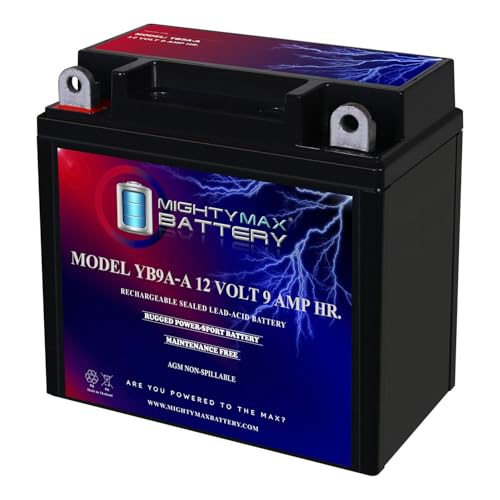
Mighty Max YB9A-A 12V 9AH SLA Battery

BRS U1 AGM Battery 12V 300 CCA

Mighty Max YTX6.5L-BS 12V AGM Battery

TYKOOL LFP9-BS-STD Lithium Battery 240CCA

TYKOOL LFP14-BS-STD Lithium Battery 400CCA

TYKOOL LFP20L-BS-PRO Lithium Battery 12Ah
TYKOOL LFP20L-BS-PRO 600CCA Lithium Battery
Taking A Closer Look At The Options
Older ATVs sit through long stretches of inactivity, and the KMG YT12C is built for exactly that kind of neglect. It is a sealed lead-acid unit designed as a direct replacement for the 1989 to 2004 Yamaha YFA-1 Breeze 125, so installation is a bolt-in swap for owners keeping these vintage quads alive.
Because the case is fully sealed, there is no acid to top off and no routine maintenance beyond keeping the terminals clean. For riders who store their Breeze through winter and want a battery that holds voltage without babysitting, the sealed design is a practical match.
Practical Pluses
- Sealed maintenance-free construction means no fluid checks or refills
- Direct fitment for Yamaha YFA-1 Breeze models from 1989 through 2004
- Resists shock and vibration from rough trails better than flooded designs
- Holds charge well during long storage periods between rides
Worth Noting
- Lead-acid chemistry weighs more than lithium alternatives like the TYKOOL LFP9-BS-STD
- Fitment is very specific to the Yamaha Breeze, limiting cross-compatibility
Feature Snapshot
Best Suited To
Vintage Yamaha Breeze owners who want a no-fuss replacement that drops straight into the original battery tray.
Skip It When
You need a lighter lithium upgrade for a modern ATV, where the TYKOOL LFP14-BS-STD serves weight-conscious riders better.
The Mighty Max YTX7A-BS GEL is sized for smaller sport quads and youth machines like the Suzuki LTZ90 and LTR450, where space and weight matter. Gel batteries use a thickened electrolyte paste rather than liquid acid, which changes how the battery behaves once installed.
For riders in regions with real winter cold or long off-seasons, the gel chemistry tends to hold its charge longer in storage compared to standard AGM designs. It also tolerates repeated vibration on rocky trails without the electrolyte sloshing around inside the case.
Where It Excels
- Gel paste resists leaks and spills even if the case is mounted at an angle
- Slower self-discharge rate keeps charge through winter storage
- Handles temperature swings from summer heat to winter chill
- Lower maintenance profile than older flooded batteries
Trade Offs
- 105 CCA is modest, so very cold mornings may require a brief warm-up
- Charging needs careful voltage control, which some older chargers do not provide
Built With In Mind
Owners of youth-sized quads and sport ATVs who want a set-and-forget battery that survives long winters in the garage.
Look Elsewhere When
You run a larger utility ATV needing stronger cranking, where the BRS U1 AGM Battery delivers 300 CCA.
The Mighty Max YB9A-A is a sealed lead-acid battery built for older Suzuki LT-F 160 quads, and it delivers a healthy 130 cold cranking amps. That extra CCA over typical 100-amp units means easier cold-morning starts, especially if the quad sits outside between rides.
SLA (sealed lead-acid) AGM construction means the case can be mounted in multiple positions without leaking, and the design resists shocks from rough terrain. For a budget-conscious owner of a 1990s-era Suzuki, this hits a sweet spot of capability and price.
Useful Highlights
- 130 CCA provides reliable starts even in moderately cold weather
- AGM spill-proof design allows flexible mounting orientation
- Wide operating temperature range suits varied riding climates
- Recovers well from deep discharge cycles
Minor Gripes
- Heavier than lithium equivalents like the TYKOOL LFP9-BS-STD
- Comes with screws only, no wire harness included
Right Fit For
Owners of older Suzuki LT-F 160 quads who need a straightforward replacement with solid cranking power.
A Better Fit Elsewhere
Riders chasing weight savings should consider the TYKOOL LFP9-BS-STD Lithium Battery instead.
The BRS U1 AGM Battery is a Group U1 size, which means it crosses over between lawn tractors, generators, UTVs, and ATVs. With 300 cold cranking amps on tap, it delivers the kind of cranking muscle that smaller powersport batteries simply cannot match.
It arrives fully charged, so installation skips the initial charging step that catches many first-time ATV owners off guard. The AGM (Absorbed Glass Mat) construction seals the electrolyte in fiberglass mats, which means no spills even if the rig tips on a steep incline.
Reasons It Performs
- 300 CCA handles cold-weather starts on larger displacement engines
- Sealed AGM design means zero water top-ups over the battery’s life
- Vibration resistance suits off-road and rough-terrain use
- Arrives fully charged for immediate installation
Room For Improvement
- Larger physical footprint than typical ATV-specific batteries like the Mighty Max YTX7A-BS
- Group U1 size may require bracket modifications on some ATVs
Quick Facts
Perfect Match For
Utility ATV and UTV owners who need a battery that doubles as a reliable starter for seasonal equipment like mowers and generators.
Not Your Match When
You ride a compact sport quad with limited battery space, where the Mighty Max YTX6.5L-BS fits tighter compartments.
The Mighty Max YTX6.5L-BS is one of the smallest sealed AGM batteries in the powersport category, designed for tight battery compartments where space is at a premium. Measuring roughly 5.4 by 2.6 by 4 inches, it fits smaller sport quads and lightweight ATVs that would struggle to accommodate a full-size battery.
With 70 cold cranking amps and 6.5 amp-hours, it targets smaller-displacement engines rather than big-bore twins. The polarity is positive on the right and negative on the left, so confirming terminal orientation against the existing wiring prevents a frustrating swap-day surprise.
Everyday Advantages
- Compact dimensions fit cramped battery trays on smaller ATVs
- AGM construction resists vibration and allows flexible mounting
- Maintenance-free operation means no fluid checks
- Rechargeable design supports repeated deep discharge recovery
Things To Consider
- 70 CCA is modest for very cold climates or larger engines
- Listing includes battery and screws only, so no wire harness or hardware extras
Whose Shelf It Belongs On
Owners of compact sport ATVs with limited under-seat space who need a drop-in sealed replacement.
Another Choice May Suit
Riders needing stronger cold cranking should step up to the BRS U1 AGM Battery with its 300 CCA output.
Lithium powersport batteries change the ownership experience in ways that lead-acid designs cannot match, and the TYKOOL LFP9-BS-STD is a clear example. It uses LiFePO4 cells, a lithium chemistry known for thermal stability and long cycle life, which translates to roughly a third of the weight of a comparable lead-acid unit.
The built-in digital voltage readout is a practical touch that lets you check state of charge without a multimeter, and the IP66 rating means the case resists dust and water jets. At 240 CCA with only 4Ah capacity, it delivers strong cranking bursts while remaining light enough to notice during installation.
What It Does Well
- Significant weight reduction improves handling on smaller ATVs and sport quads
- 2,000-plus deep cycles outlast traditional lead-acid batteries
- Integrated voltage display simplifies state-of-charge checks
- IP66 sealing handles wet trail conditions and pressure washing
Softer Spots
- Requires a lithium-compatible charger for optimal longevity
- Higher upfront cost than SLA alternatives like the Mighty Max YB9A-A
Feature Rundown
Made For
Riders who want to shed weight from their sport ATV or quad without sacrificing cranking strength.
Consider Something Else When
You run a larger utility ATV needing higher capacity, where the TYKOOL LFP14-BS-STD fits the bill.
Mid-size ATVs and UTVs need more cranking muscle than compact sport quads, and the TYKOOL LFP14-BS-STD delivers 400 cold cranking amps from a lithium pack that weighs roughly a third of a comparable lead-acid battery. The weight savings matter most when the rig handles technical terrain, where every pound affects how the suspension reacts.
It replaces the common YTX14-BS form factor used in machines like the Honda Rancher 420, Foreman 500, and Kawasaki Brute Force 750. The digital readout on top of the case confirms voltage at a glance, which is helpful on multi-day trips where charging conditions vary.
What Helps Most
- 400 CCA delivers confident cold starts on larger utility engines
- Substantial weight reduction improves handling on rough trails
- Wide vehicle compatibility covers popular Honda and Kawasaki models
- Integrated voltage display simplifies field checks
Points To Note
- Lithium chemistry requires compatible charging equipment
- Physical dimensions should be confirmed against the existing battery tray
Who Should Grab It
Adventure riders running mid-displacement ATVs and UTVs who want lithium benefits without moving up to the larger 20-series case.
Reach For A Different Pick When
You need maximum cranking for a modified V-twin build, where the TYKOOL LFP20L-BS-PRO at 600 CCA is the stronger choice.
The TYKOOL LFP20L-BS-PRO steps into territory where battery capacity matters as much as cranking amps. With 12 amp-hours of storage, this lithium pack supports machines with higher electrical demands, including touring rigs with accessories like heated grips, auxiliary lighting, and GPS units.
It weighs roughly 4.2 pounds, which is a dramatic drop from a typical lead-acid 20L battery that often tips the scales at 15 pounds. That kind of weight reduction matters on larger touring quads and adventure builds where unsprung mass affects handling on long trips.
Points In Its Favor
- 12Ah capacity supports accessories without voltage drop
- Dramatic weight savings compared to lead-acid equivalents
- Designed for high-torque starter systems on large engines
- Long cycle life reduces replacement frequency over years of use
Honest Caveats
- Larger case size requires confirming tray dimensions before purchase
- Premium pricing relative to smaller lithium and SLA options
Key Product Details
Who It Suits Best
Touring and adventure riders running high-output electrical systems who need reliable capacity along with cranking strength.
Where Another Pick Suits Better
You primarily ride a smaller ATV without electrical accessories, where the TYKOOL LFP9-BS-STD covers the basics at a lower price.
The TYKOOL LFP20L-BS-PRO at 600 cold cranking amps sits at the top of this list for a reason. It targets high-displacement engines, modified builds, and large touring quads that demand serious cranking power from a compact lithium package.
It replaces the GYZ20L, GYZ20HL, and YTX20HL-BS form factors used in big V-twin applications, including Harley Softail, Dyna, and Yamaha 1800cc machines. At roughly 4.2 pounds, it weighs a fraction of the lead-acid GYZ20L it replaces, which makes a tangible difference on longer rides.
Real-World Strengths
- 600 CCA handles large-bore and high-compression engines with confidence
- LiFePO4 chemistry delivers thousands of cycles compared to lead-acid alternatives
- Replaces multiple heavy OEM battery part numbers for cross-platform fitment
- Digital voltage readout confirms state of charge at a glance
Potential Drawbacks
- Higher price point than entry-level SLA options
- Lithium charging requirements differ from stock lead-acid systems on older machines
Who Will Love This
Riders running large V-twin quads, modified touring builds, or any application where 600 CCA matters more than upfront cost.
Swap It Out When
You ride a smaller utility ATV with modest electrical needs, where the BRS U1 AGM Battery at 300 CCA covers the job without the premium.
What To Weigh Before Picking Atv Batteries
Cold Cranking Amps Versus Capacity
Cold cranking amps (CCA) measure how much current a battery delivers for 30 seconds at zero degrees Fahrenheit without dropping below a set voltage. Capacity, measured in amp-hours (Ah), describes how much energy the battery stores for running accessories when the engine is off. A battery built for starting a big V-twin needs high CCA, while a touring rig with heated grips and lighting needs higher Ah. Matching the spec to the use case matters more than chasing the highest number on the box.
Sealed Lead-Acid, AGM, Gel, And Lithium Compared
Sealed lead-acid (SLA) batteries are the traditional workhorses, affordable and reliable but heavy. AGM (Absorbed Glass Mat) batteries suspend the electrolyte in fiberglass mats, reducing spills and improving vibration resistance. Gel batteries use a thickened paste that handles deep cycles and slow self-discharge well. Lithium LiFePO4 batteries weigh the least, last the most cycles, but require compatible chargers and cost more up front.
Physical Fitment And Terminal Orientation
Battery dimensions and terminal polarity vary more than most owners expect. A battery that is half an inch too tall or too wide simply will not seat in the tray. Polarity, meaning which side is positive and which is negative, matters at install time. Always cross-check the existing battery’s group size, CCA, and terminal layout before ordering, especially when stepping up from SLA to lithium.
Climate And Storage Habits
Cold climates punish weak batteries, so higher CCA pays off where winter mornings drop well below freezing. Hot climates shorten battery life through fluid loss and plate corrosion, which favors sealed designs. Owners who store ATVs for months between rides benefit from gel or lithium chemistries that hold charge longer in storage, reducing the need for periodic top-up charging.
Key Considerations Across These Picks
Where Shoppers Go Wrong
The most common mistake is buying a battery based on price alone without checking the group size, terminal layout, and CCA rating for the specific machine. A battery that does not physically fit or does not deliver enough cranking amps turns into a return trip and a wasted weekend. Always verify the replacement matches the OEM spec sheet before clicking through.
Another trap is assuming lithium is always the upgrade. Lithium batteries need lithium-compatible chargers, and older charging systems may not reach the voltage required to top off a LiFePO4 cell fully. Riders running vintage quads with stock electrical systems often find a quality AGM or gel battery is the more compatible choice.
The Upgrade Payoff
Higher-tier batteries earn their premium through longer cycle life, lower weight, and stronger cold-weather performance. A lithium battery that costs more up front can outlast two or three lead-acid replacements, which shifts the math for frequent riders. For touring and adventure builds where weight and reliability compound over thousands of miles, the upgrade typically pays back in fewer roadside headaches and lighter handling.
Frequently Asked Questions
How long do ATV batteries typically last?
Most sealed lead-acid ATV batteries last three to five years with regular use and proper storage charging. Lithium LiFePO4 batteries can stretch that to five to eight years or more, depending on charge cycles and climate.
Can you use a lithium battery in an older ATV?
In many cases, yes, but the charging system must be lithium-compatible or supplemented with a lithium-specific charger. Some older stators do not reach the voltage needed to fully top off a LiFePO4 cell, so checking the bike’s charging output is worth the effort.
What does CCA actually tell you?
CCA, or cold cranking amps, measures how much current the battery delivers for 30 seconds at zero degrees Fahrenheit without dropping below 7.2 volts. Higher CCA means stronger starting performance in cold conditions, which matters most for larger displacement engines.
Are maintenance-free batteries really maintenance-free?
Sealed lead-acid and AGM batteries do not need fluid top-ups, but they still benefit from clean terminals, secure mounting, and periodic charge checks during storage. The “maintenance-free” label refers to fluid servicing, not total hands-off ownership.
What size battery does my ATV need?
The safest path is to match the OEM group size, CCA, and physical dimensions listed in the owner’s manual. Cross-referencing the existing battery’s part number with the replacement’s spec sheet prevents fitment surprises at install time.
Bottom Line
Matching the battery to the engine, climate, and riding style matters more than chasing a single spec. Vintage quad owners, mid-size UTV riders, and high-output touring builders each have a clear winner in this lineup, and the right pick depends on how you actually use your rig. Start with fitment, confirm the chemistry suits your charging system, and the rest tends to fall into place.