Picking the right house battery shapes every hour you spend off-grid. The right choice keeps your fridge cold, your lights on, and your coffee hot without constantly worrying about a recharge. This guide walks through ten options that cover the most common RV setups, from weekend warriors running a single Group 24 box to full-timers living out of a coach with solar.
A Snapshot Of The Selections

Litime 12V 100Ah Trolling Motor LiFePO4 Battery
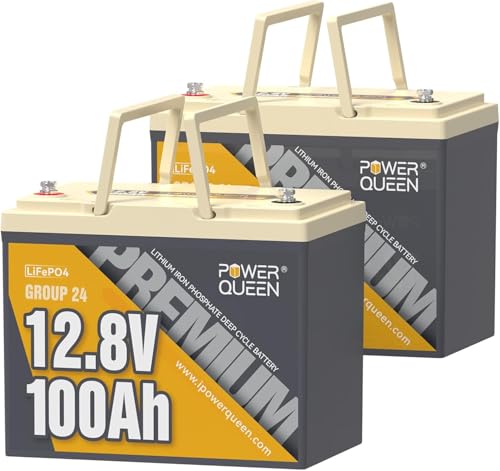
Power Queen 2-Pack 12V 100Ah LiFePO4 Battery Group 24

Power Queen 12V 100Ah Trolling Motor LiFePO4 Battery

Renogy 12V 100Ah Deep Cycle AGM Battery

TEMGO 12V 300Ah LiFePO4 Battery with Bluetooth

Power Queen 12V 100Ah LiFePO4 Battery Group 31

Power Queen 12V 100Ah LiFePO4 Battery Group 24

ACDelco Gold 51RAGM BCI Group 51R Battery

Renogy 12V 200Ah Deep Cycle AGM Battery
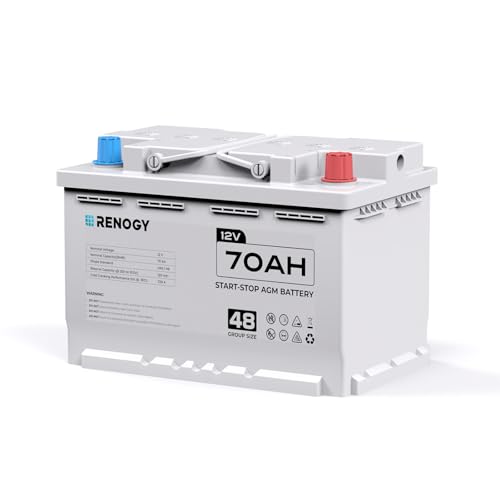
Renogy 12V 70Ah AGM H6 Car Battery
Taking A Closer Look At The Options
Winter camping pushes most lithium batteries past their comfort zone, and that’s exactly where this Litime unit earns attention. It uses LiFePO4 chemistry (lithium iron phosphate, a safer and longer-lasting lithium variant) housed in a standard Group 31 case, so it slides into trays sized for traditional lead-acid boxes. Built-in Bluetooth talks to a phone app, letting you check state of charge without climbing into a storage bay.
Where it separates from a basic Group 24 lithium like the Power Queen reviewed later is the cold-weather guardrail. Charging stops below 32°F and discharging shuts off under -4°F, which matters for snowbird RVers and shoulder-season travelers. The IP65 rating (a dust-tight seal that resists low-pressure water jets) keeps spray and dust at bay when routed near wheel wells or under-belly compartments.
Strong Points
- Bluetooth readout saves trips to the battery bay for routine state-of-charge checks.
- Low-temp cutoff prevents cell damage during unexpected cold snaps.
- Group 31 footprint swaps directly for many stock RV trays with no bracket mods.
- Long cycle rating translates to multi-year use before capacity drops noticeably.
Things To Consider
- The built-in heater (where applicable) draws power from the pack in freezing weather.
- Lithium pricing sits above basic lead-acid options like the Renogy 100Ah AGM.
Who Will Love This
Anyone who camps through shoulder seasons or parks at elevation where overnight temperatures dip low.
Consider Something Else When
RVers running a tight two-battery bank should look at the Power Queen 2-Pack 12V 100Ah LiFePO4 Battery Group 24 for a matched pair out of one order.
Trailers with a dual-battery compartment rarely need fancy Bluetooth dashboards. They need two batteries that drop into Group 24 trays, deliver full usable capacity, and run cool under load. This Power Queen pair arrives pre-matched from one shipment, which removes the headache of buying separate units and hoping the internal cells balance the same way.
The 1280Wh usable figure per battery roughly doubles the energy you can pull from a comparable 70Ah AGM (a sealed lead-acid battery with absorbed glass mat construction, rated for ~500Wh at half-depth). For most weekenders running a fridge, lights, and phone chargers, that surplus is the difference between boondocking two nights or four. Owners commonly report the lighter weight, roughly one-third of lead-acid, makes seasonal swaps much easier.
Everyday Advantages
- Two matched units arrive in one box, simplifying bank upgrades.
- Standard Group 24 footprint fits the most common RV battery trays.
- Full depth-of-discharge capability outclasses AGM at the same amp-hour rating.
Trade Offs
- No Bluetooth means state-of-charge checks require a shunt or voltmeter.
- Lithium cells need a charging source that supports LiFePO4 profiles.
Made For
RVers upgrading a tired AGM pair in a single shopping trip, especially those running moderate loads on weekend trips.
Look Elsewhere When
Full-time solar users who want capacity headroom will get more from the TEMGO 12V 300Ah LiFePO4 Battery with Bluetooth further down this list.
Some RVers split their weekends between the campground and the boat ramp. This Power Queen trolling motor battery was tuned for both, with a built-in TVS surge protector (a transient voltage suppressor that clamps sudden spikes from the motor) covering motors up to 120 lb of thrust. ABYC E-13 compliance (a marine electrical standard covering lithium installations on boats) is the kind of detail that makes a marine surveyor nod approvingly.
The same low-temperature cutoff found in the Litime above carries over here, stopping charge under 32°F and discharge under -4°F. Compare that to a basic AGM like the Renogy 100Ah further down, which tolerates cold but loses capacity fast once temperatures plummet. For boondocking anglers who tow a launch-rig travel trailer, this single battery handles the coach and the trolling motor in turn.
What Earns Its Place
- Built-in surge protection shields sensitive electronics from trolling motor spikes.
- ABYC E-13 compliance simplifies insurance conversations for marine use.
- Low-temperature cutoff prevents cold-weather cell damage on shoulder-season trips.
Honest Caveats
- Single unit means a separate second battery is needed for high-demand RV banks.
- The marine focus pushes it into a higher cost band than the Group 24 Power Queen pack.
Right Fit For
Anglers who split use between a trolling boat and an RV coach and want one battery platform that handles both.
A Better Fit Elsewhere
Pure-RV owners chasing maximum amp-hours per dollar will do better with the Renogy 12V 200Ah Deep Cycle AGM Battery in slot nine.
Not every rig needs lithium. The Renogy 100Ah AGM has earned its place in countless RV bays because it does the boring work reliably without exotic chargers. AGM stands for absorbed glass mat, where the acid is held in fiberglass separators rather than pooled at the bottom, so the case can sit on its side and survive rougher roads than a flooded battery would.
It plays nicely with the converter/charger that came with your RV from the factory, no firmware updates or lithium-profile menus to navigate. Renogy supports up to four units in parallel (wired positive-to-positive and negative-to-negative for more capacity at the same voltage), which lets you grow a 200Ah bank to 400Ah over time. The widely reported trade-off is depth-of-discharge: pulling past 50% regularly shortens service life, so usable energy per cycle is closer to 50Ah than 100.
What Stands Out
- Works with conventional RV converters without lithium-profile chargers.
- Maintenance-free sealed design tolerates tilted mounting in battery bays.
- Supports parallel expansion up to four units for growing banks.
Points To Note
- Heavier than a lithium equivalent at roughly 60+ pounds per unit.
- Half the usable energy per cycle compared to LiFePO4 picks above.
Built With In Mind
First-time RV owners and casual weekenders running modest loads like LED lights and a small fridge.
Reach For A Different Pick When
Full-timers pulling 100+ amp-hours nightly should consider the Power Queen 12V 100Ah LiFePO4 Battery Group 31 in slot six for deeper cycling.
Full-time RVers running residential refrigerators and induction cooking pull serious energy. A single 100Ah lithium barely covers a day’s draw, which is why the TEMGO 300Ah exists. It triples the capacity in roughly the same footprint family as three Group 31 batteries wired in parallel, minus the cable clutter.
The Bluetooth app surfaces state-of-charge, cell balance, and charge cycle data so you can spot imbalance before it strands you. A low-temp cutoff protects cells in freezing weather, similar to the Litime reviewed earlier. The widely noted reality of large lithium packs is that charging speed matters: pulling 300Ah back from solar requires a sizable array and a charge controller rated for the amperage.
Notable Upsides
- 300Ah covers residential fridge loads plus lighting, water pumps, and electronics in one box.
- Bluetooth monitoring cuts down on manual voltage checks at the bay.
- Low-temp cutoff prevents cold-weather cell damage during winter travel.
Small Caveats
- Charging requires a sizable solar array or generator run time to refill from empty.
- Single large battery creates a single point of failure for the whole house bank.
Perfect Match For
Full-time RVers and serious off-grid setups running high continuous loads from solar arrays in the 600W+ range.
Swap It Out When
Weekenders with modest loads will find the Power Queen 12V 100Ah LiFePO4 Battery Group 24 in slot seven easier to handle and easier to replace.
Group 31 is the sweet-spot size for many motorhome battery trays: bigger than a Group 24, smaller than a golf-cart battery, and standard enough that trays are easy to source. This Power Queen fits that envelope while delivering the deep-cycling lithium advantage over the Renogy AGM reviewed above.
The 100A BMS (battery management system, the internal board that prevents overcharge, over-discharge, and short circuits) covers typical inverter draws up to about 1200W without tripping. You can run a 4P4S configuration (four parallel strings of four batteries in series) for high-voltage builds, though most RV applications stick to 12V banks. The widely reported upside is the cycle life: thousands of full cycles before capacity meaningfully degrades.
Reasons It Performs
- Group 31 footprint matches common motorhome trays without modification.
- 100A BMS supports typical inverter loads for microwave and coffee makers.
- High cycle rating spreads the lithium cost over many years of use.
Things To Consider
- No Bluetooth readout, so a shunt or meter is needed for accurate state-of-charge.
- Single-unit purchase means a second battery adds cost for bigger banks.
Best Suited To
Mid-size motorhome owners running moderate inverter loads and wanting a familiar tray size.
Consider Something Else When
Trailer owners with a smaller Group 24 bay will find the Power Queen 12V 100Ah LiFePO4 Battery Group 24 in slot seven a tidier swap.
Small trailers, camper vans, and teardrops rarely have room for a Group 31 box. This Power Queen keeps the Group 24 footprint that countless smaller RVs ship with, while upgrading the chemistry from lead-acid to lithium. The drop-in dimension means no tray fabrication, no cable extensions, and no surprises during installation.
It’s roughly one-third the weight of a comparable 100Ah AGM like the Renogy reviewed in slot four, which matters when you’re loading batteries into a tongue compartment. The trade-off shows up if you want app-based monitoring: this single unit doesn’t include Bluetooth, so a separate shunt or meter handles state-of-charge reporting.
The Good Stuff
- Group 24 size drops into most compact trailer and van battery bays.
- One-third the weight of a comparable lead-acid battery eases installation.
- Full depth-of-discharge usable capacity extends off-grid runtime.
A Few Limitations
- No Bluetooth readout for at-a-glance state-of-charge checks.
- Single battery means modest capacity for high-demand users.
Who Should Grab It
Compact trailer and camper van owners who want a clean lithium swap without modifying existing trays.
Another Choice May Suit
RVers who want Bluetooth convenience in a similar size should look at the Litime 12V 100Ah Trolling Motor LiFePO4 Battery at the top of the list.
This pick breaks the mold because it isn’t a house battery at all. The ACDelco Gold 51RAGM is an AGM starter battery designed to crank engines, not to be deep-cycled for hours. That matters because the tow vehicle that pulls your RV still needs a reliable battery, especially one that sits between uses and depends on start-stop electronics.
The Group 51R footprint fits many Toyota, Nissan, Honda, and Subaru applications. Owners commonly choose an AGM for vehicles with start-stop systems, which place extra cycling demands on the battery each time the engine restarts. The widely reported downside is cost versus a flooded equivalent, though the sealed maintenance-free construction justifies the premium for vehicles parked long-term.
What Makes Sense
- AGM construction tolerates the constant cycling of start-stop vehicle systems.
- Maintenance-free sealed design suits vehicles that sit between uses.
- Common Group 51R size fits many popular tow vehicles.
Where It Is Less Suited
- Not designed for deep cycling, so it shouldn’t replace a house battery.
- Vehicle-specific fit means it may not match your particular tow vehicle.
Whose Shelf It Belongs On
Tow vehicle owners who need a reliable AGM replacement for start-stop trucks and SUVs.
Where A Sibling Pick Shines
For actual house-bank duty, the Renogy 12V 100Ah Deep Cycle AGM Battery in slot four is a far better fit.
For owners who don’t want to chase lithium charging profiles, the Renogy 200Ah AGM doubles the capacity of its 100Ah sibling without changing chemistry. That means it works with stock RV converters, charges from a tow vehicle alternator without special regulators, and survives the occasional over-discharge without becoming a brick.
The sealed AGM design uses absorbent glass mat separators that hold the electrolyte in place, reducing the risk of acid spills during off-road travel. At roughly 130 pounds, this is a serious piece of hardware best installed once and left in place. Owners widely report running a residential fridge for two to three days before needing a generator or solar top-up, depending on ambient conditions.
Real Benefits
- 200Ah in a single battery cuts down on parallel wiring complexity.
- Charges from stock RV converters without lithium-profile hardware.
- Sealed AGM construction tolerates rough roads and tilted mounting.
Practical Considerations
- Heavier than a comparable lithium battery at roughly 130 pounds.
- Only half the rated capacity is usable per cycle without shortening life.
Who It Suits Best
Long-stay RV owners running higher loads who want lead-acid simplicity without managing lithium charging.
Not Your Match When
Weight-conscious van builders should look at the Power Queen 12V 100Ah LiFePO4 Battery Group 31 in slot six for a lighter equivalent in capacity.
The H6/Group 48 footprint fits a long list of modern SUVs and crossovers, including many that tow travel trailers. This Renogy brings AGM durability to that form factor with 720 cold-cranking amps (the rating of starting power delivered at 0°F) for confident cold-weather starts and 120 minutes of reserve capacity (RC) for running accessories with the engine off.
The operating range covers brutal cold and scorching engine-bay heat, which matters for vehicles parked outdoors through winter. Owners widely report the sealed construction eliminates the corrosion that plagues flooded batteries in start-stop vehicles. Compare this to the ACDelco in slot eight, which targets a different size class: this one fits the H6/Group 48 trays common in larger trucks and SUVs.
The Value In It
- Group 48 H6 size matches many modern SUV and truck battery trays.
- Wide operating temperature range handles harsh climate conditions.
- AGM sealed design resists corrosion common with flooded batteries.
Points To Keep In Mind
- Not designed as a deep-cycle house battery, so RV house use is limited.
- 70Ah capacity sits below typical RV house battery sizes.
The Right Fit
Tow vehicle owners needing a durable AGM replacement for start-stop trucks and SUVs in the H6 size class.
Skip It When
RVers replacing a house battery should turn back to the Renogy 12V 100Ah Deep Cycle AGM Battery in slot four instead.
What Really Matters In A Coach Battery
Three numbers tell most of the story. Capacity in amp-hours (Ah) defines how long your fridge runs between charges. Cold cranking amps (CCA) only matters for engine-starting batteries, not house banks. Reserve capacity (RC) tells you how long the battery can carry a load before voltage drops too low, useful as a sanity check on inverter runtime.
Battery group size determines whether the box physically fits your tray. Group 24, 27, and 31 cover the vast majority of RV installations. Measure your existing tray before ordering, then confirm terminal orientation, since reverse-polarity posts won’t reach your existing cables.
Lithium and lead-acid behave differently under load. LiFePO4 delivers nearly full rated capacity at any discharge rate, while AGM and flooded batteries see effective capacity drop when you pull heavy inverter loads. For high-demand setups (residential fridges, induction cooking, microwaves), the lithium advantage shows up immediately.
Cold-weather use changes the calculus. Standard AGM works fine down to freezing and below, with some capacity loss. Lithium without a heater stops accepting charge below 32°F and stops discharging under -4°F, which can leave you stranded. Heated lithium models like the Litime at the top of this list solve that, at the cost of slightly reduced capacity.
Key Considerations Across These Picks
Pitfalls First-Timers Hit
The most common mistake is buying a lithium battery without confirming the converter will charge it. Stock RV converters often default to lead-acid profiles, which undercharge lithium and over time can leave cells unbalanced. Upgrading the converter, adding a lithium-profile charger, or accepting reduced charging performance are the three real options.
Another trap is assuming a deep-cycle battery doubles as a starter battery. House batteries are built for sustained low-current draw; starter batteries are built for brief high-current bursts. Substituting one for the other shortens life in both directions. Match the battery to the job.
Where The Extra Money Goes
Stepping up to lithium mostly pays for cycle life and usable capacity. A premium LiFePO4 battery lasts many times longer than a comparable AGM and lets you use most of its rated capacity per cycle. That longer service spreads the upfront cost across more years, which improves the value calculation if you camp frequently.
Higher-tier picks also tend to include integrated heating, Bluetooth monitoring, or marine-grade protections like the surge suppression on the Power Queen trolling motor unit. Those features are worth it for full-timers and frequent travelers, less critical for occasional weekend use. Match the upgrade to how often and how hard you actually camp.