A dead battery is one of the most disruptive car problems you can run into. Skip a slow crank on a January morning and you’re stranded, hunting for jumper cables in the cold. AGM (absorbent glass mat) batteries handle that scenario far better than older flooded designs, since the electrolyte stays locked in fiberglass mats instead of sloshing around as liquid. That same construction also resists vibration, recharges faster, and holds up under the constant cycling that start-stop vehicles demand.
This roundup covers ten AGM batteries built for everything from compact sedans to heavy-load trucks. Each one is matched to a specific group size, so the first step is always checking your owner’s manual or measuring your existing battery tray. From there, the trade-offs come down to cold-cranking amps (CCA, the burst of power needed at 0°F), reserve capacity (RC, how long the battery can run accessories if the alternator fails), and the warranty length that protects your investment.
A Snapshot Of The Selections

HQST 12V 60Ah AGM Car Battery Group 47 H5

Interstate Batteries MT-51R 12V 500 CCA

Goodyear 48-H6-AGM BCI Group 48 12V 70Ah

Weize Platinum AGM Battery BCI Group 94R H7
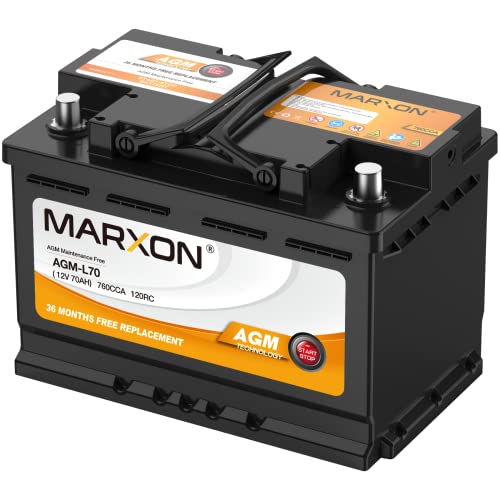
MARXON Group 48 H6 L3 AGM Battery 12V 70Ah
Goodyear 47-H5-AGM BCI Group 47 12V 60Ah

Goodyear 49-H8-AGM BCI Group 49 12V 95Ah

ACDelco Gold 51RAGM BCI Group 51R

Weize Platinum AGM Battery BCI Group 48 H6
Weize Platinum AGM Battery BCI Group 47 H5
What Each Pick Brings To The Table
Start-stop commuting punishes ordinary batteries, and that’s exactly the scenario HQST engineered this Group 47 (also called H5) battery to handle. The 680 CCA rating covers most cold mornings without complaint, while the absorbed-glass-mat construction accepts recharges faster than older flooded units. Owners commonly report that the sealed, maintenance-free design frees them from the periodic water-topping chore that traditional batteries demand.
Compared with the Interstate unit that follows, this one leans toward higher cycling capability rather than bare-bones simplicity, which suits newer vehicles with brake-energy regeneration. The footprint runs 9.5 x 6.9 x 7.6 inches, matching the standard H5 tray found in many Honda, Toyota, and Volkswagen applications.
What It Does Well
- Start-stop ready, with faster energy recovery than flooded designs
- Wide operating range from -40°F to 140°F for extreme climates
- Sealed AGM construction prevents acid spills on rough roads
- Compact H5 footprint fits many popular sedans without modification
Trade Offs
- Warranty terms are shorter than the three-year coverages on the Weize lineup
- CCA trails higher-output batteries like the Goodyear 48-H6-AGM, so it’s less ideal for sub-zero regions
Right Fit For
Daily commuters driving start-stop-equipped sedans who want a sealed, set-and-forget replacement.
Reach For A Different Pick When
You drive a larger truck or SUV and need the higher reserve capacity of the Weize Platinum AGM Battery BCI Group 94R H7.
Group 51R batteries tend to fit compact Japanese vehicles, and the Interstate MT-51R keeps the swap simple. The 500 CCA output handles temperate climates comfortably, though you may find it shy for sustained sub-zero mornings. Where it really earns its place is the straightforward fitment, which makes a weekend DIY install realistic for someone who has never touched a battery before.
Compared with the HQST reviewed earlier, this battery targets a smaller case and a milder electrical load. The 85-minute reserve capacity means accessories like headlights and the radio can stay on a reasonable amount of time if the alternator ever drops out.
Strong Points
- Compact Group 51R case fits over 250 common year/make/model applications
- Maintenance-free sealed design eliminates terminal corrosion checks
- Lower entry price than larger AGM batteries makes ownership approachable
Points To Keep In Mind
- 500 CCA trails most competitors and may struggle in very cold regions
- Two-year warranty is shorter than the three-year coverage on Weize units
- Not engineered for start-stop systems the way the HQST or MARXON batteries are
Feature Snapshot
Made For
First-time installers with compact Japanese sedans who want a no-fuss replacement.
Swap It Out When
You drive a start-stop-equipped car and need the faster charge recovery of the HQST 12V 60Ah AGM Car Battery Group 47 H5.
Cold-climate commuters get a strong ally in the Goodyear 48-H6-AGM. With 760 CCA on tap, it starts confidently even when temperatures drop well below freezing, and the 120-minute reserve capacity keeps cabin electronics humming if the alternator ever falters. The Platinum-series construction uses absorbed glass mat separators that hold up against repeated cycling, which matters on long commutes and short-trip errands alike.
The Group 48 (H6) case shares dimensions with the MARXON and Weize 48 batteries later in this list, but the Goodyear pairs higher output with that mid-size footprint. Owners commonly report that the sealed terminals stay clean longer than older flooded designs, reducing routine maintenance.
The Value In It
- 760 CCA provides confident cold-weather starts down into single-digit temperatures
- 120-minute reserve capacity supports accessory loads during alternator issues
- Maintenance-free sealed design cuts time spent on terminal cleaning
- Multiple mounting orientations (except upside down) simplify installation
Honest Caveats
- Heavier than the smaller Group 47 units, so check vehicle weight limits for performance applications
- Costs more than the Weize Platinum AGM Battery BCI Group 48 H6 for similar capacity
Best Suited To
Drivers in cold regions who want stronger cranking without jumping to a full-size truck battery.
Where Another Pick Suits Better
You need maximum reserve capacity for winches or aftermarket audio and should look at the Goodyear 49-H8-AGM BCI Group 49 12V 95Ah instead.
Full-size trucks and large SUVs need more than a mid-size battery can deliver, and the Weize Platinum Group 94R (H7) steps up with the kind of capacity those vehicles demand. The 850 CCA rating provides confident starts in cold weather, while 140 minutes of reserve capacity keeps the cabin and accessories powered if the alternator decides to retire. The 80Ah capacity reflects the deeper electrical loads that trucks tend to carry.
Compared with the Goodyear 48-H6-AGM reviewed earlier, this battery trades a slightly larger footprint for noticeably more headroom. The 12.4 x 6.89 x 7.48-inch case fits common H7 trays found in many domestic trucks.
Reasons It Performs
- 850 CCA delivers strong cold-weather starts for large-displacement V8 engines
- 140-minute reserve capacity covers extended accessory loads
- Sealed AGM construction resists vibration damage on rough terrain
- Three-year warranty provides longer ownership protection than mid-tier options
Trade-Offs To Consider
- Size and weight require careful handling during installation; tray fitment must be verified first
- Higher price tier than the Group 47 and 48 options in this list
Feature Snapshot
Whose Shelf It Belongs On
Owners of full-size pickups and SUVs who tow or carry heavy electrical accessories.
A Better Fit Elsewhere
You drive a compact sedan and don’t need this much capacity, so the Weize Platinum AGM Battery BCI Group 47 H5 would suit your application better.
Start-stop crossovers place repeated cycling stress on a battery, and the MARXON Group 48 (H6/L3) is built specifically with that workload in mind. The 760 CCA output keeps engines turning over in cold weather, and the absorbed glass mat design accepts charges faster than conventional flooded units. At roughly 46.5 pounds, it’s manageable for a single installer working in a tight engine bay.
Where this battery stands out from the Goodyear 48-H6-AGM reviewed earlier is the price-to-coverage ratio: you get similar core specs with a three-year warranty. Owners commonly report that start-stop cycling no longer triggers the battery warning light that plagued their previous flooded unit.
Good Reasons To Consider
- 760 CCA handles cold-weather starts and start-stop cycling demands
- AGM construction recovers charge roughly 40 percent faster than SLA designs
- Three-year warranty provides solid ownership protection
- Sealed terminals reduce corrosion and the related voltage drop
Some Limits To Know
- Group 48 dimensions (10.95 x 6.89 x 7.48 in) require tray verification before ordering
- Reserve capacity is not specified in source data, which complicates direct comparison
Who Will Love This
Start-stop crossover owners seeking AGM performance at a friendlier entry price than premium-tier units.
Skip It When
You want the stronger cold cranking of a Group 49 battery like the Goodyear 49-H8-AGM BCI Group 49 12V 95Ah.
Daily-driver sedans don’t always need the highest CCA or the largest case, and the Goodyear 47-H5-AGM fits that middle ground. The 680 CCA handles most climate conditions, while the 100-minute reserve capacity keeps cabin electronics running during a brief alternator hiccup. The Platinum-series build signals absorbed glass mat construction throughout, which tends to extend service life in stop-and-go traffic.
Compared with the HQST Group 47 reviewed first, this one trades the start-stop focus for a slightly more traditional fitment profile. The Group 47 (H5) case fits many Honda, Hyundai, and Volkswagen applications where the AGM upgrade replaces a smaller flooded unit.
Real Benefits
- 680 CCA covers most moderate-climate starts without hesitation
- 100-minute reserve capacity is solid for a compact Group 47 case
- Sealed AGM design eliminates routine water-topping chores
- Flexible mounting orientations simplify installation in tight engine bays
A Few Limitations
- Cold-weather CCA trails the larger Goodyear Group 48 and 49 units
- Specific warranty term is not listed in available source data
Perfect Match For
Sedan commuters in moderate climates who want a quiet upgrade from their factory flooded battery.
Consider Something Else When
Your vehicle has a start-stop system that demands the faster recharge profile of the MARXON Group 48 H6 L3 AGM Battery 12V 70Ah.
Heavy electrical loads, winches, aftermarket audio, and large luxury vehicles all push a battery to its limits, and the Goodyear 49-H8-AGM stands at the top of this list for that kind of demand. The 900 CCA figure is the highest here, and 160 minutes of reserve capacity means the cabin can stay powered for an extended period without the engine running. At 95Ah, the total energy storage reflects real depth.
The Group 49 (H8) case is bigger than everything above it, so installation needs careful measurement. Where it differs from the Weize Platinum Group 94R earlier is sheer output: more CCA and longer reserve capacity for the heaviest loads.
Real-World Strengths
- 900 CCA delivers confident cold-weather starts even for large-displacement engines
- 160-minute reserve capacity handles long accessory loads during alternator downtime
- 95Ah capacity supports winches, amplifiers, and other high-draw accessories
- Platinum-series AGM construction tolerates deep discharge cycles better than flooded units
Worth Bearing In Mind
- Larger and heavier than mid-size batteries; ensure your tray and hold-down fit the H8 footprint
- Premium-tier pricing may be more than what compact-sedan drivers need
Feature Snapshot
Built With In Mind
Owners running heavy accessory loads who need both maximum cranking and deep reserve capacity.
Not Your Match When
You drive a compact or mid-size sedan and should choose the Goodyear 47-H5-AGM BCI Group 47 12V 60Ah instead.
ACDelco’s Gold line carries the original-equipment heritage, and the 51RAGM continues that approach for compact vehicles. The Group 51R case matches the form factor on the Interstate unit reviewed earlier, but the ACDelco adds a 36-month warranty for longer ownership protection. Owners commonly report clean fitment on import and domestic vehicles where OE-style construction is valued.
Where it differs from the Interstate MT-51R is the longer coverage term and the OE positioning. If your vehicle’s original battery was an ACDelco, the swap stays consistent with what the manufacturer specced at the factory.
Useful Touches
- Three-year warranty provides longer coverage than the Interstate 51R alternative
- OE-style construction suits General Motors vehicles and many imports
- Sealed AGM design removes the periodic water-level checks older batteries required
- Group 51R case fits compact applications like Civics, Accords, and similar sedans
Trade Offs
- CCA rating is not specified in the available source data, so direct output comparison is limited
- Smaller case means smaller reserve capacity than full-size truck batteries
Who Should Grab It
Compact-sedan owners who want OE-style construction and a three-year warranty in a familiar case.
Where Another Pick Suits Better
You need confirmed high-CCA output for very cold climates and should consider the Goodyear 48-H6-AGM BCI Group 48 12V 70Ah instead.
The Weize Platinum Group 48 (H6) sits right in the popular middle ground, sharing dimensions with the MARXON and Goodyear Group 48 batteries reviewed earlier. The 760 CCA output matches what those competitors deliver, and the 120-minute reserve capacity handles typical sedan electrical loads comfortably. The three-year warranty is the same coverage Weize offers across its Platinum line.
Where this battery differs from the MARXON above is the build consistency across the Weize lineup, which makes cross-shopping within a brand easier if you have multiple vehicles. Owners commonly report that the H6 case fits without modification in many mid-size sedans and crossovers.
Where It Excels
- 760 CCA balances cold-weather performance with reasonable price
- 120-minute reserve capacity covers typical commuter electrical demands
- Three-year warranty provides consistent coverage across the Weize lineup
- Common H6 dimensions simplify cross-vehicle fitment
Soft Spots
- Mid-tier output means sub-zero regions may want the Goodyear 49-H8-AGM instead
- Tapered terminal layout (left negative, right positive) must match your vehicle’s cable reach
Feature Snapshot
The Right Fit
Mid-size sedan and crossover owners looking for a balanced H6 battery with a solid warranty term.
Look Elsewhere When
You need higher reserve capacity for accessories and should consider the Weize Platinum AGM Battery BCI Group 94R H7.
The Weize Platinum Group 47 (H5) closes out this list with the same compact case size that started it, but with the longer warranty that the Weize lineup is known for. The 680 CCA output matches what the HQST Group 47 delivers, and the 100-minute reserve capacity keeps accessories running during brief alternator dips. The three-year coverage is the strongest warranty term in the Group 47 segment of this roundup.
Where it differs from the HQST is the warranty length and the brand-agnostic positioning. If you shop across multiple vehicles and value consistent warranty terms, the Weize lineup makes that simple.
Features That Help
- 680 CCA delivers consistent cold-weather performance for compact cars
- 100-minute reserve capacity supports typical sedan accessory loads
- Three-year warranty is the longest coverage in the Group 47 segment here
- Sealed AGM construction reduces terminal maintenance over the life of the battery
A Few Limitations
- Lower CCA than mid-size Group 48 units means sub-zero regions may want more headroom
- Tapered terminal polarity (left negative, right positive) must match existing cables
Feature Snapshot
Who It Suits Best
Compact and mid-size car owners who want solid AGM performance backed by the longest warranty in this size class.
Another Choice May Suit
You need start-stop-specific cycling performance and should consider the HQST 12V 60Ah AGM Car Battery Group 47 H5 instead.
Matching An AGM Battery To Your Vehicle
The single biggest factor in choosing among these batteries is the BCI group size, which is a standardized case dimension assigned by the Battery Council International. Group 47 (H5), Group 48 (H6), Group 49 (H8), and Group 94R (H7) each correspond to specific trays, terminal positions, and hold-down styles. A battery that’s too tall won’t seat against the hood; one with reversed terminal polarity simply won’t reach your cables. Always check your owner’s manual or measure the existing battery before ordering.
Once the case fits, think about CCA. As a rule, colder climates benefit from higher ratings, since engine oil thickens and cranking requires more energy. A 500 CCA unit like the Interstate MT-51R handles temperate regions well, while the Goodyear 49-H8-AGM at 900 CCA is built for sub-zero mornings and heavy electrical loads.
Reserve capacity matters more than many shoppers expect. It’s the runtime the battery provides if the alternator fails, and it determines how long you can run accessories without the engine running. Short-trip city drivers see more alternator downtime than highway commuters, so higher RC helps in stop-and-go traffic.
Start-stop systems deserve their own consideration. Vehicles that shut off the engine at traffic lights cycle the battery far more aggressively than older designs, and AGM construction handles that workload much better than flooded units. The HQST, MARXON, and Weize batteries reviewed here are all engineered with start-stop use in mind.
Warranty length signals expected service life. The three-year coverages on Weize and ACDelco products suggest the manufacturer expects solid longevity, while shorter terms like the Interstate’s 24 months reflect a more conservative estimate. In most cases, AGM batteries outlast flooded units, but climate, driving habits, and accessory load all influence how long any individual unit lasts.
Practical Angles Before You Commit
Common Shopping Slip Ups
The most frequent mistake is buying on CCA alone. A 900 CCA battery in the wrong group size simply won’t fit, and a perfect-fit unit with adequate CCA serves you better than a paper-spec monster that won’t drop into the tray. Always verify dimensions first, then CCA second.
Another pitfall is overlooking terminal polarity. Many import vehicles have reversed terminals compared to domestic layouts, and installing a battery with the wrong orientation leaves you unable to reach the cables without modification. Check the existing battery for left-negative or right-negative layouts before ordering.
Forgetting to register the battery with the vehicle’s charging system can shorten service life. Modern cars monitor battery age and adjust charging behavior, and a fresh battery that isn’t registered may receive the wrong charge profile.
Where The Extra Money Goes
Stepping up from a budget-tier AGM to a mid-tier model typically buys more CCA, more reserve capacity, or a longer warranty term. The jump from the Interstate MT-51R to the Goodyear 47-H5-AGM, for instance, costs more but adds reserve capacity and a more robust build.
Premium-tier batteries like the Goodyear 49-H8-AGM earn their higher prices through output that handles heavy electrical loads. Winches, aftermarket audio systems, and large luxury vehicles with lots of accessories stress batteries in ways smaller units can’t sustain. Paying more here pays off in reliability under heavy demand.
Frequently Asked Questions
How long do AGM car batteries typically last?
Most AGM batteries last three to five years in typical driving conditions, though extreme climates and heavy accessory loads can shorten that window. Vehicles with start-stop systems tend to see the upper end of that range because AGM construction tolerates cycling better than older flooded designs.
Can I replace a flooded battery with an AGM battery?
Yes, as long as the group size and terminal layout match, AGM batteries drop into trays originally designed for flooded units. Many vehicles benefit from the upgrade, especially those with start-stop systems or heavy accessory loads. The charging system in most modern cars already supports AGM profiles.
What does CCA actually measure?
CCA stands for cold cranking amps, the amount of current a battery can deliver at 0°F for 30 seconds while maintaining at least 7.2 volts. Higher numbers mean stronger cold-weather starts, though anything well above your engine’s actual demand is overkill for moderate climates.
Do AGM batteries require special maintenance?
AGM batteries are sealed and maintenance-free, meaning you never need to add water or check electrolyte levels. Keeping the terminals clean and ensuring the battery stays charged during long periods of inactivity will help maximize service life. A trickle charger is helpful for vehicles stored for weeks at a time.
Is a higher reserve capacity always better?
Higher reserve capacity means longer accessory runtime if the alternator fails, but it also typically means a larger, heavier, and more expensive battery. Compact sedans rarely need the 160-minute reserve capacity of the Goodyear 49-H8-AGM, while trucks with winches and aftermarket audio benefit greatly from that headroom.
Final Verdict
The right AGM battery comes down to matching your vehicle’s group size, climate, and electrical demand. Compact sedan owners get a balanced fit from the Weize Platinum Group 47 or HQST Group 47, cold-climate commuters benefit from the Goodyear 48-H6-AGM, and heavy-load applications demand the output of the Goodyear 49-H8-AGM. Verify your tray dimensions first, then choose the battery that matches your real-world workload.