A dead house battery is the fastest way to kill an RV weekend. Cabin lights flicker, the fridge shuts off, and that weekend at the lake suddenly involves a long drive home. Choosing the right deep-cycle battery means quiet nights, a cold fridge, and outlets that actually work when you need them. This roundup breaks down ten options worth your attention, from classic lead-acid AGM workhorses to lighter lithium iron phosphate (LiFePO4) packs that shrug off deep discharges.
The Main Contenders
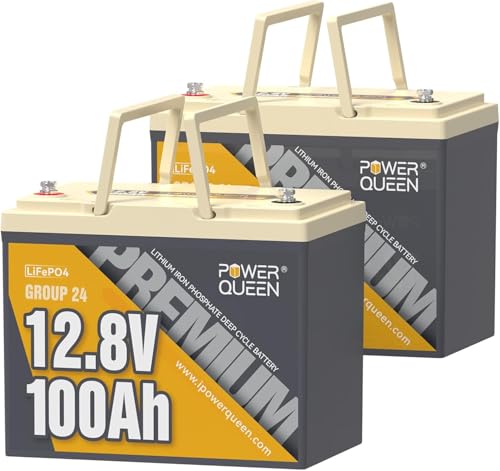
Power Queen 2PACK 12V 100Ah LiFePO4 Group 24 for RV Trailer

Redodo 12V 100Ah Ultra-Mini LiFePO4 Bluetooth Battery
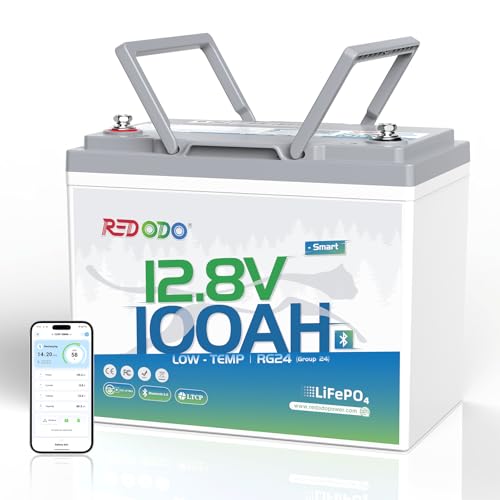
Redodo 12V 100Ah Group 24 LiFePO4 Bluetooth for RVs

Renogy 12V 100Ah Deep Cycle AGM Battery

TEMGO 12V 300Ah LiFePO4 Bluetooth & App Battery
Redodo 12V 100Ah Dual Purpose Group 27 Lithium Marine Battery

Redodo 12V 100Ah Dual Purpose Group 27 Marine Battery (900CCA)
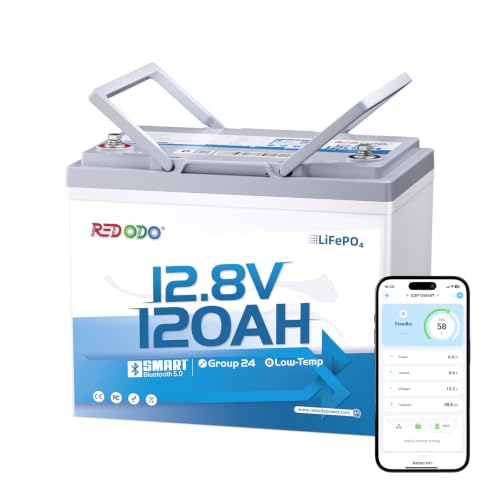
Redodo 12.8V 120Ah Bluetooth LiFePO4 Group 24

Renogy 12V 200Ah Deep Cycle AGM Battery
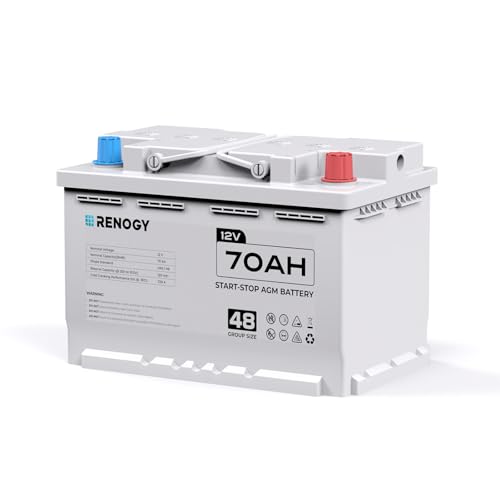
Renogy 12V 70Ah AGM Car Battery H6, Group 48 (720 CCA)
A Closer Look At Each Pick
Two batteries for one job sounds like overkill until you remember that a single lead-acid AGM only delivers about half its rated capacity. The Power Queen pack ships as a matched pair of 12V 100Ah lithium iron phosphate cells in the standard Group 24 case, so they slide into the same trays that previously held AGM batteries, with no rewiring required for most RV setups.
For full-time RVers running induction cooktops, residential-style fridges, or rooftop AC through a soft starter, the extra usable capacity matters. At roughly one-third the weight of a comparable Group 24 AGM, you shed meaningful pounds off the tongue or chassis, which compounds over a long trip.
Strong Points
- Group 24 form factor drops straight into existing trays with no rewiring for most rigs.
- Two-pack delivers double the usable amp-hours compared with a single AGM of the same group size.
- LiFePO4 chemistry holds voltage steady under load, so your lights stay bright when the fridge kicks on.
- Lower total weight frees up payload for water, gear, or a second passenger.
Things To Consider
- Charging setup may need a lithium-profile converter or solar charge controller upgrade.
- Two batteries increase upfront cost compared with one AGM replacement.
Built With In Mind
Full-time RV owners upgrading from lead-acid who want more runtime without rewiring the bay.
Swap It Out When
The Redodo 12.8V 120Ah Bluetooth LiFePO4 Group 24 is a better match when one slightly larger battery fits your tray better than a matched pair.
Van conversions and Class B motorhomes rarely leave room for a standard Group 24 box. The Redodo Ultra-Mini solves that by shrinking the case to roughly 9 by 5.4 by 8.2 inches, opening up under-floor cubbies and side compartments that a normal-sized lithium pack would never fit.
Bluetooth monitoring pairs with a phone app to surface state of charge, voltage, and temperature from inside the van. Built-in battery management protects against the usual culprits, overcharge, deep discharge, short circuits, and overheating, so you can leave it tucked away without checking on it constantly.
Useful Touches
- Compact footprint opens up storage in tight van and camper builds.
- Bluetooth module reports real-time state of charge without crawling into the battery bay.
- Built-in battery management system guards against overcharge and short circuits.
- Lighter than typical 100Ah lithium packs, easing one-person installation.
Worth Noting
- Smaller case may not accept standard Group 24 hold-down hardware without an adapter.
- Bluetooth signal can drop when the battery is mounted inside a metal enclosure.
Made For
Sprinter, Transit, and ProMaster van owners with shallow battery trays who still want 100Ah of usable capacity.
Look Elsewhere When
The Power Queen 2PACK 12V 100Ah LiFePO4 Group 24 is the smarter pick for larger RVs with room for two standard-size batteries.
Group 24 batteries slot into countless RV bays built around flooded or AGM cells. The Redodo Group 24 LiFePO4 keeps that familiar footprint, so swapping it in rarely requires new brackets, cables, or tray modifications. You pull the old battery, drop the new one, and reconnect.
Bluetooth 5.0 ties into a phone app for live state-of-charge readings, voltage, and current draw. Compared with the Redodo Ultra-Mini reviewed earlier, this model trades a fraction of compactness for a case that matches OEM hold-downs across more RV brands.
Real Benefits
- Standard Group 24 case fits OEM trays in most Class A, B, and C motorhomes.
- Bluetooth app removes guesswork about remaining runtime during overcast solar days.
- Higher usable capacity than lead-acid means longer time between charges.
Room For Improvement
- Existing converter may need a lithium charge profile to hit full capacity.
- Heavier than Redodo’s Ultra-Mini option for vans with strict weight limits.
Right Fit For
Weekend and seasonal RVers replacing a tired Group 24 AGM who want app-based monitoring without any rewiring.
Consider Something Else When
The Renogy 12V 100Ah Deep Cycle AGM is a friendlier replacement for owners who want to keep their existing lead-acid charger unchanged.
Absorbed glass mat, or AGM, batteries have powered RV house banks for decades, and Renogy’s 100Ah unit leans into that familiarity. The sealed design means no spilled acid if the road gets rough and no topping off with distilled water during long trips.
Renogy supports both series and parallel wiring, with up to four batteries in parallel for expanded banks. Compared with the lithium options earlier in this roundup, the heavier weight matters for tow vehicles with tight tongue ratings, but the lower upfront cost eases sticker shock on first battery swaps.
Benefits That Matter
- Sealed AGM construction means no acid spills or water top-ups during travel.
- Plays nicely with most factory-installed RV converters and solar charge controllers.
- Parallel wiring up to four units gives room to grow capacity over time.
Points To Keep In Mind
- Only about half the rated capacity is usable without shortening cycle life.
- Heavier than lithium equivalents, which adds up in larger banks.
Feature Snapshot
Best Suited To
Seasonal campers and first-time battery swappers who want a familiar chemistry at a friendlier price point.
Reach For A Different Pick When
The TEMGO 12V 300Ah LiFePO4 makes more sense for off-grid travelers who routinely discharge below 50 percent.
Off-grid boondocking in desert or mountain camps means relying on solar alone, and a small battery bank runs flat long before sunrise. The TEMGO 300Ah LiFePO4 triples the capacity of a typical 100Ah pack, giving you enough stored power to run a 12V fridge, lights, fans, and device charging through several cloudy days.
The built-in low-temperature cutoff protects the cells when you camp in shoulder-season cold, a useful guard for winter travelers. App monitoring over Bluetooth keeps tabs on state of charge from inside the RV, so you know when to throttle usage before the battery dips too low.
What Helps Most
- 300Ah capacity stretches runtime for off-grid setups running multiple appliances.
- Low-temp cutoff prevents cell damage when camping near or below freezing.
- Bluetooth app delivers live state-of-charge updates without opening the bay.
- LiFePO4 cells tolerate deep discharges far better than lead-acid chemistry.
Trade Offs
- Single 300Ah unit weighs more than two smaller lithium batteries and may need a second pair of hands to position.
- Larger footprint demands careful measurement of the battery bay before ordering.
Who Should Grab It
Off-grid boondockers and full-time travelers who depend on solar and need ample reserve capacity for cloudy stretches.
Not Your Match When
The Redodo 12V 100Ah Ultra-Mini LiFePO4 fits better when space is tight and 100Ah of capacity is plenty for your travel style.
Many RVers tow a boat or run a generator that also needs reliable starting power. A dual-purpose battery handles both roles, cranking an engine when called on and supplying steady current to onboard electronics. This Redodo unit delivers around 900 cold cranking amps along with 100Ah of deep-cycle capacity, blurring the line between starting and house battery.
Bluetooth integration lets you monitor state of charge from your phone, helpful when the battery lives under a seat or in a stern compartment. The Group 27 case size lands between Group 24 and the larger Group 31, fitting many marine and RV trays without modification.
Advantages To Know
- Strong cranking amps support outboard motors up to a sizable horsepower range.
- Bluetooth app monitors both starting readiness and house-bank state of charge.
- Group 27 case fits many marine and RV trays that reject smaller batteries.
Honest Caveats
- Dual-purpose design means slightly less deep-cycle capacity than a dedicated house battery.
- Heavier than single-purpose lithium packs, weighing about 26 pounds in this class.
Who Will Love This
RV owners who also tow a boat or run an onboard generator that needs dependable starting amps.
Where A Sibling Pick Shines
The Redodo 12V 100Ah Group 24 LiFePO4 Bluetooth for RVs suits pure house-bank setups that never need to crank an engine.
This Redodo dual-purpose unit covers much the same ground as the model reviewed just above, with 900 cold cranking amps and 1000 marine cranking amps for fuel-powered outboards. Where it differs is in subtle discharge behavior, delivering up to 12C instant current for short bursts when the engine demands it.
Smart Bluetooth monitoring tracks state of charge and lets you shut the battery down remotely from the app. Group 27 sizing keeps the fit familiar for marine and RV owners who already run that case format across multiple vehicles.
Where It Helps
- High burst current supports reliable starts for fuel-powered outboard engines.
- Bluetooth app allows remote shutdown to preserve charge during storage.
- Group 27 universal fitment reduces tray modification headaches.
Possible Compromises
- Bluetooth range can drop through metal compartments, requiring a quick visual check during long trips.
- Premium dual-purpose pricing exceeds single-purpose deep-cycle lithium options.
The Right Fit
RV travelers with a tow-along boat or generator who want one battery that handles both starting and house duties.
A Better Fit Elsewhere
The Renogy 12V 100Ah Deep Cycle AGM is a simpler, more familiar replacement for owners who do not need cranking amps.
Capacity matters when you camp without shore power, and the Redodo 120Ah squeezes more energy into the same Group 24 footprint. Roughly 1536 watt-hours of stored energy gives you extra margin over a standard 100Ah lithium, which translates into longer evenings of lighting and fridge runtime between charges.
Bluetooth 5.0 connects via QR code on the top of the case, surfacing state of charge, voltage, current, temperature, and any protection alerts. Compared with the Redodo 100Ah Group 24 reviewed earlier, this model trades slightly more weight for 256Wh of additional usable energy.
What Makes Sense
- Standard Group 24 case fits OEM trays across most RV brands.
- Extra 20Ah over typical 100Ah lithium packs extends off-grid runtime.
- Bluetooth app displays detailed metrics including temperature and protection alerts.
- LiFePO4 chemistry tolerates deep discharges for long cycle life.
Points To Note
- Slightly heavier than 100Ah Group 24 lithium alternatives.
- Higher upfront cost than standard-capacity lithium upgrades.
Quick Facts
Perfect Match For
Long-stay RVers who want extra amp-hours without stepping up to a physically larger battery.
Skip It When
The TEMGO 12V 300Ah LiFePO4 is the stronger choice when maximum capacity matters more than tray fitment.
Solar-powered RVers running larger arrays often need a battery bank that can absorb meaningful charge current without complaint. The Renogy 200Ah AGM doubles the capacity of the 100Ah model reviewed earlier, giving your charge controller more room to dump harvested energy.
Thick absorbent glass mat separators and valve-regulated design minimize acid leaks and routine maintenance. Proprietary quinary alloy plates keep internal resistance low, supporting higher discharge currents when inverters pull hard through the evening.
Useful Strengths
- 200Ah capacity suits larger solar arrays and higher inverter loads.
- Sealed AGM construction removes the need for water top-ups during long trips.
- Low internal resistance supports steady high-current draws from inverters.
Some Limits To Know
- Significantly heavier than lithium equivalents, often over 130 pounds per unit.
- Usable capacity caps out around 100Ah to preserve cycle life.
Whose Shelf It Belongs On
RV owners with sizable solar banks who prefer proven AGM chemistry and do not mind the extra weight.
Another Choice May Suit
The Power Queen 2PACK 12V 100Ah LiFePO4 Group 24 fits travelers who want comparable capacity without the weight penalty.
House batteries get most of the attention, but the chassis battery that starts your motorhome or tow vehicle matters just as much. This Renogy H6 fits Group 48 automotive trays, delivering 720 cold cranking amps and 120 minutes of reserve capacity for accessories when the engine is off.
Sealed AGM construction keeps acid contained even on rough roads, and the wide operating temperature range handles everything from sub-freezing mornings to summer desert heat. Compared with the deep-cycle house batteries in this roundup, this model focuses squarely on starting power.
Where It Delivers
- Strong 720 CCA supports dependable starts for cars, SUVs, and trucks.
- Sealed design minimizes acid leak risk during off-road travel.
- Wide operating temperature range covers freezing winters and hot summers.
Small Caveats
- Not designed for deep cycling, so it pairs with a separate house battery.
- 70Ah rating is smaller than typical house banks, which limits accessory runtime with the engine off.
Built With In Mind
RVers focused on the chassis or starting battery who need a reliable replacement for a worn Group 48 cell.
Skip It When
The Redodo 12V 100Ah Group 24 LiFePO4 Bluetooth for RVs is a better match when the priority is house-bank capacity, not engine starting.
Picking The Right Battery For Your RV Setup
Match the battery to your travel style before anything else. Weekend campers with shore-power hookups can get by with a familiar AGM, while full-time boondockers need lithium’s deeper discharge tolerance and lighter weight.
Capacity and usable energy matter more than the headline amp-hour rating. A 100Ah lead-acid battery delivers only about 50Ah in practice, while a 100Ah LiFePO4 battery gives you closer to 90 to 100Ah before its management system taps the brakes.
Chemistry Trade-Offs
AGM batteries cost less up front and play nicely with factory RV converters, but they weigh more and punish deep discharges. Lithium iron phosphate costs more initially yet lasts longer, weighs less, and tolerates deep cycles without complaint.
Size and Tray Fitment
Group 24, 27, 31, and 48 all describe case footprints, not just battery types. Measure your existing tray, including height under any lid, before choosing so you do not end up with a battery that does not seat properly.
Charging System Compatibility
A standard lead-acid charger often undercharges lithium or fails to fill it completely. Many lithium batteries need a charger with a dedicated LiFePO4 profile or a solar charge controller that supports lithium settings.
Real-World Ownership Notes
Where Shoppers Go Wrong
A common slip is buying a larger battery than the existing charger can refill overnight. Confirm your converter or solar controller can deliver the right voltage and current before upgrading, or plan on replacing it. Forgetting about cold-weather performance is another trap, as some lithium chemistries struggle to charge below freezing without a low-temperature cutoff.
When Paying More Pays Off
Higher-tier lithium packs justify their cost through longer cycle life, lighter weight, and built-in monitoring. Owners who dry-camp frequently or rely on solar tend to recoup the extra cost through longer service life and more usable capacity per charge. Bigger AGM banks make sense for those who already own compatible chargers and prefer to keep familiar lead-acid chemistry.
Frequently Asked Questions
How long does an AGM battery usually last in an RV?
Most AGM house batteries deliver three to five years of dependable service when kept reasonably charged and not deeply discharged on a regular basis. Frequent deep discharges shorten that window considerably.
Is a LiFePO4 battery worth the higher cost for RV use?
Lithium iron phosphate batteries cost more initially but tolerate deeper discharges and last more cycles than AGM. Full-time boondockers and solar-heavy travelers usually recoup the difference through longer service life.
Can I replace my AGM with lithium without changing the converter?
Some factory converters charge AGM and lithium at similar voltages, so you may get acceptable performance without swapping hardware. A lithium-profile converter or solar charge controller unlocks the full capacity of the new pack.
What size battery bank do I need for off-grid camping?
A weekend setup with LED lights and a 12V fridge often runs comfortably on 100 to 200Ah of usable capacity. Extended off-grid travel with induction cooking or residential-style fridges usually benefits from 300Ah or more.
How cold is too cold for lithium RV batteries?
Most LiFePO4 cells avoid charging below freezing to prevent permanent damage. Batteries with low-temperature cutoffs handle cold-weather charging automatically and protect the cells.
The Takeaway
Your travel style drives the right pick more than any spec sheet. Seasonal campers with hookups often do fine with a familiar AGM like the Renogy 100Ah, while full-time boondockers benefit from the usable capacity and lighter weight of a lithium upgrade. Measure your tray, confirm your charger compatibility, and match the chemistry to how you actually travel.