If you’re tired of single-use alkalines draining your wallet, a solid rechargeable setup pays for itself in a few months. The trick is matching charger capacity, chemistry support, and indicator clarity to the devices you actually power, from TV remotes to Xbox controllers. The picks below cover compact 4-bay options for small apartments, bulk stations for gadget-heavy families, and specialty units built around high-capacity NiMH cells.
A Closer Look At The Lineup

Eneloop Panasonic K-KJ55MCA4BA Advanced Individual Battery Charger 4-Pack (White)

Eneloop Panasonic K-KJ55MC84CZ Power Pack Charger with 8AA and 4AAA Batteries

BEVIGOR 4-Bay AA AAA Charger with Type-C and Fault Detection

Ostation 2 Pro AA AAA Charging Station with 24 Batteries
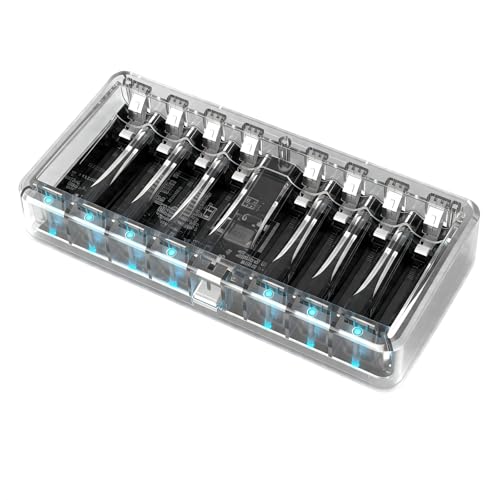
BEVIGOR 8-Bay AA AAA Charger (Transparent)

BEVIGOR 16-Bay AA AAA Charger with 9V Support

Eneloop Panasonic CC55 Charger with 8 AA and 8 AAA Batteries

Eneloop Panasonic CC55 Charger with 8 Pro AA and 8 Pro AAA Batteries
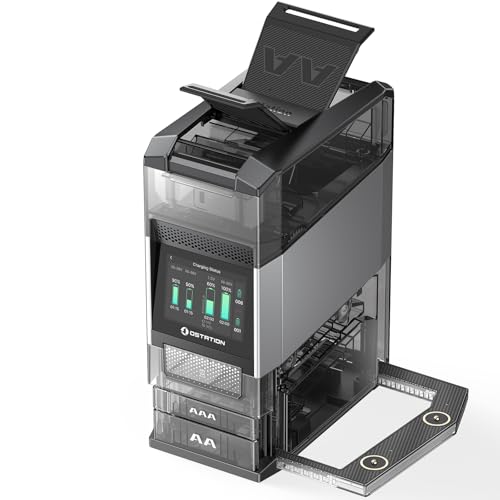
Ostation 2 Pro Charging Station for NiMH and Lithium Batteries

Ostation 2 Smart Charging Station for NiMH and Lithium Batteries
More Details On Our Top Picks
The K-KJ55MCA4BA kit is the kind of package you hand to someone who’s never owned rechargeables: four cells in the shrink wrap, a slim white charger, and a roughly three-hour top-up cycle that gets a controller back in action before dinner. Individual slot charging means a single dead AA won’t idle the rest, which matters when a kid’s toy and a TV remote compete for attention. Compared to bare-bones two-bay units, this one gives you room to rotate spares without babysitting pairings.
For a small apartment or a dorm, the footprint is forgiving, and the four included cells cover the most common household needs. You may find the four-bay limit tight if your household runs lots of gadgets, but that’s a problem the higher-capacity kits in this list solve later.
A Strong Showing
- Pre-charged cells arrive ready for first use, no waiting on an initial fill.
- NiMH chemistry (nickel-metal hydride, the rechargeable standard that replaced older NiCd) holds 70 percent of capacity over long storage, so spares don’t go flat sitting in a drawer.
- Individual bay management prevents one weak cell from blocking the others.
- Up to 2,100 recharge cycles per cell, meaning years of swapping before replacement.
Things To Consider
- Only four cells ship in the box, so households with many devices will need extras fast.
- No LCD readouts, just simple indicator lights, which limits insight into individual cell health.
Who It Suits Best
First-time recharge users running a handful of remotes, wireless mice, and small electronics.
Where Another Pick Suits Better
The Eneloop K-KJ55MC84CZ Power Pack serves larger families who need eight AAs and four AAAs in the box from day one.
The Power Pack skips the “buy extras later” step entirely: eight AAs, four AAAs, and the same quick charger from the smaller kit. For a family juggling game controllers, flameless candles, and a string of remote controls, the bundled count covers most evenings without a second purchase. The 2,000 mAh typical AA capacity (the standard measure of how much energy a cell stores) keeps high-drain devices like camera flashes running longer per charge than entry-level cells.
Where this kit differs from the four-pack is breadth rather than speed. Charge times stay in the same three-hour range, so you’re trading simplicity for inventory. Owners commonly rotate the AAAs through TV remotes while AAs feed bulkier gadgets.
Well-Handled Touches
- Twelve total cells cover a typical household’s charging backlog in a single purchase.
- Up to 2,100 recharge cycles extend the kit’s lifespan well beyond casual use.
- Cells arrive pre-charged and ready to deploy, helpful for emergency setups.
- AAA 800 mAh typical capacity handles remote controls and small electronics with steady output.
Honest Caveats
- Eight AAAs would have been a better balance for households with more small-device demand.
- Storage takes planning, since loose cells need a case or dedicated drawer to stay organized.
Made For
Whole-household setups that want a complete charging kit the day it arrives.
Not Your Match When
The BEVIGOR 4-Bay Type-C charger suits a single traveler who values USB power over bundled cell count.
The BEVIGOR 4-Bay leans modern in a way the Eneloop kits don’t: USB-C input instead of a wall wart, plus an LED indicator that flashes red when you accidentally drop a non-rechargeable cell into the slot. That fault detection alone saves the slow, frustrating realization that a cell you thought was charging is actually dead. Each bay runs independently, so a mixed load of two AAs and two AAAs charges simultaneously.
It also supports C and D-size NiMH cells when you need them, which broadens the use case beyond typical remotes. You’ll want to buy batteries separately, since this unit ships as a charger only.
The Upside
- Type-C input means a single laptop cable or power bank runs the charger, useful on the road.
- Fault detection prevents damage from alkaline or worn-out cells inserted by mistake.
- Independent bays handle any mix of AA, AAA, C, or D NiMH cells.
- LED per slot gives at-a-glance progress without an LCD panel.
Points To Note
- Batteries are not included, so the total cost climbs once you add NiMH cells.
- Four bays may feel cramped for households running ten or more devices.
Best Suited To
Travelers, minimalists, and anyone tired of proprietary wall adapters for small charging duties.
Consider Something Else When
The BEVIGOR 8-Bay Transparent charger makes more sense for mixed-device families needing more capacity.
The Ostation 2 Pro reframes the whole “charger” category. Rather than four slots you babysit, this is a station that holds, charges, sorts, and tests up to 24 cells at once. Thermal-adaptive charging adjusts power delivery based on cell temperature, which matters when you fill the bay with partially used batteries pulled from a junk drawer. The included 24 batteries mean you skip the “buy cells separately” step that holds back cheaper chargers.
It also pulls double duty as a battery organizer, so the corner of your desk stops looking like a recycling bin. The trade-off shows up in price and footprint, two areas where this unit asks more than a basic four-bay.
Practical Pluses
- Up to 24 batteries handled in a single station, removing constant load rotation.
- Built-in battery tester means you stop guessing which drawer cells are still good.
- Thermal-adaptive charging reduces the heat stress that ages NiMH cells faster.
- 24 included cells make the package complete from the first day.
Trade-Offs
- Larger footprint demands real desk or shelf space, not a junk drawer.
- Premium pricing puts it out of reach for anyone only running a few devices.
Right Fit For
Gadget-heavy households with gaming gear, smart-home sensors, and a steady rotation of charged cells.
Look Elsewhere When
The Eneloop K-KJ55MCA4BA kit is a better match for casual users with just a handful of devices.
The transparent body is the small touch that makes this BEVIGOR easier to live with than opaque eight-bay rivals. You can see at a glance which slots are filled and which are mid-cycle, without leaning over the unit. Eight independent slots handle any combination of AA and AAA NiMH or NiCD cells, so a chaotic mix from a house full of toys charges without sorting first.
Smart-trickle charging keeps cells topped off once full, a real-world benefit if you tend to forget charged batteries in the unit for days. Owners commonly report the lightweight shell feeling less rugged than premium alternatives, so placement matters.
Positive Takeaways
- Eight independent bays remove the need to charge in matched pairs.
- Trickle mode maintains cells at full capacity without overcharging.
- Transparent casing makes slot status instantly visible.
- Mix-and-match NiMH and NiCD support broadens cell compatibility.
Worth Noting
- Charging speed is moderate compared to higher-end quick chargers.
- Plastic housing may not survive rough handling or frequent travel.
Perfect Match For
Mixed-device families running a wide variety of AA- and AAA-powered electronics.
A Better Fit Elsewhere
The Ostation 2 Pro fits heavy users who want storage, testing, and charging in one box.
The 16-bay BEVIGOR targets the workshop, studio, or classroom shelf where dead cells arrive faster than they leave. Sixteen isolated circuits let every slot charge independently, so a slow AA next to nine-volt rechargeable cells doesn’t slow the whole bank. Smart-chip trickle charging kicks in near full capacity, preventing the slow overcharge damage that ages NiMH cells prematurely.
Automatic power-off and thermal protection add a safety layer that matters when the charger runs overnight. You may find the sheer size impractical for a kitchen counter, but a basement workbench is a different story.
Good Reasons To Consider
- Sixteen slots handle large-scale charging without staging cycles.
- 9V support covers smoke detectors and specialty audio gear in the same unit.
- Trickle near full and thermal protection reduce long-term cell wear.
- Independent circuits keep slow cells from blocking the others.
Points To Keep In Mind
- Footprint and weight rule out portable use, so this is a stationary charger.
- Batteries not included, meaning the total bill climbs once NiMH cells are added.
Who Will Love This
Workshop and studio users running microphones, instruments, and specialty tools that drain cells fast.
Skip It When
The BEVIGOR 4-Bay Type-C charger suits anyone whose charging needs fit in a backpack.
The CC55 charger is the upgrade over the older Eneloop kits, with color-coded LEDs that read each cell individually. Green means 80 percent or more charged, orange means mid-cycle, red means under 20 percent, a far more useful signal than a single blinking light. Sixteen bundled cells mean the box covers a real household’s worth of remotes, mice, and controllers in one go.
Each of the four bays charges independently, so you can run two AAs and two AAAs side by side without juggling. Compared to the original K-KJ55MCA4BA, this kit trades the slim entry-level body for a clearer status display.
What It Does Well
- Individual LEDs remove the guesswork from per-cell charge progress.
- 2,000 mAh typical AA capacity supports camera flashes and game controllers.
- Up to 2,100 recharge cycles extend the kit’s working life substantially.
- Sixteen pre-charged cells deliver immediate use on day one.
Possible Compromises
- Four charging slots create a queue when all sixteen cells eventually run flat.
- No LCD readout on the charger itself, so cycle counts require cell-side tracking.
Who Should Grab It
Long-cycle value seekers who want color-coded feedback and a generous cell bundle in a single box.
Another Choice May Suit
The Ostation 2 Pro works better for households that need charging, testing, and storage combined.
The “pro” version of the CC55 kit swaps the standard cells for high-capacity variants built for power-hungry gear. Pro AA cells deliver 2,500 mAh typical, roughly 25 percent more energy per cell than the regular kit, which matters for camera flashes, flashlights, and RC controllers that drain cells fast. The charger itself stays the same trusted CC55 with per-cell LED readouts.
The honest trade-off is cycle life: pro cells are rated for around 500 recharge cycles versus 2,100 on the standard eneloop line. That’s still years of use, but it’s worth knowing you’re trading longevity for capacity.
Everyday Wins
- 2,500 mAh typical AA capacity extends runtime in high-drain devices noticeably.
- Color-coded LED indicators match the regular CC55, removing the learning curve.
- Sixteen pre-charged pro cells cover flash and flashlight use out of the box.
- Charges eneloop and eneloop pro batteries alike, so future cell swaps stay simple.
A Few Limitations
- Around 500 recharge cycles per cell, lower than the standard eneloop 2,100 figure.
- Premium cell pricing raises the upfront cost compared to the standard kit.
Built With In Mind
Flash photographers, flashlight fans, and RC hobbyists who need every extra milliamp-hour.
Reach For A Different Pick When
The Eneloop K-KJ55MC84CZ Power Pack serves households that want maximum cycle life over peak capacity.
Feature Snapshot
Polarity-free loading is the headline feature here. Most chargers demand you match positive and negative ends to the markings on the bay, and you can almost guarantee someone in the house will get it wrong. The Ostation 2 Pro accepts either orientation, so dropping cells in a hurry stops being a guessing game. Combined with thermal-adaptive charging and a 24-cell capacity, it’s a low-fuss solution for a smart home with sensors, remotes, and controllers scattered across rooms.
The unit is also designed to charge select Olight flashlights via magnetic ports, which is a niche bonus for owners of those specific lights. NiMH compatibility covers the standard rechargeable cells, while lithium support opens the door to newer 1.5V rechargeable chemistries.
Practical Advantages
- Polarity-free loading eliminates the most common household charging mistake.
- Real-time monitoring tracks each cell’s progress without manual checks.
- 24-cell capacity covers a multi-room smart-home inventory in one station.
- NiMH and lithium support broadens the unit’s reach across battery types.
Less Ideal Details
- No batteries ship with the unit, so first-time use requires a separate cell purchase.
- Magnetic flashlight charging only works with specific Olight models.
Whose Shelf It Belongs On
Busy smart-home households juggling dozens of remotes, sensors, and battery-powered devices.
Swap It Out When
The BEVIGOR 8-Bay Transparent charger is a lighter, less expensive alternative for smaller setups.
Feature Snapshot
The Ostation 2 Smart targets console and controller users who burn through AAs in marathon gaming sessions. The 3-in-1 design charges, tests, and stores up to 24 cells, which means you keep a full rotation of charged batteries ready next to the console instead of scrambling mid-match. Broad NiMH and lithium compatibility covers the rechargeable cells most people already own.
Smart sorting drops cells into the right charging circuit based on detected type, so you don’t have to babysit which slot is which. The catch is the footprint, which expects a real corner of a room rather than a drawer.
What Works In Its Favor
- 24-cell station keeps a steady supply of charged batteries ready for controllers.
- Auto-detection routing removes the need to manually pair chemistries to slots.
- Tester function flags weak cells so you stop blaming the controller for lag.
- Storage organizer keeps charged and depleted cells separated without extra bins.
Where It Is Less Suited
- Larger footprint expects a permanent spot on a desk or shelf.
- Smart features take time to learn compared to a basic four-bay charger.
Whose Setup It Matches
Console and controller households running multiple Xbox, PlayStation, or other wireless gamepads.
Where A Sibling Pick Shines
The Eneloop K-KJ55MC84CZ Power Pack fits smaller households that don’t need 24-cell capacity.
Choosing The Right Charger For Your Household
Picking an AA and AAA battery charger comes down to three honest questions: how many cells you cycle through in a week, whether you want batteries in the box or already on the shelf, and how much feedback you need per cell.
Match Capacity To Your Device Count
Count the AA and AAA devices you actually use, not the ones in a drawer you never reach. Households running under six devices usually find a four-bay charger sufficient, especially if you rotate cells on a weekly cadence. Larger families with multiple game controllers, wireless keyboards, and a string of remote controls benefit from eight-bay or larger units that handle the full rotation without staging.
Decide On Bundled Cells Or Charger-Only
Kits that ship with pre-charged batteries remove the “what do I buy to actually use this” friction. Charger-only units cost less up front, but you’ll spend on cells separately and wait for the first charge cycle. For first-time recharge users, bundled kits tend to land better; for households that already own a stash of NiMH cells, charger-only units make sense.
Weigh Indicators And Smart Features
Basic LED lights tell you charging has started and finished. Color-coded per-cell indicators reveal which one is actually full versus stuck at 80 percent. LCD-equipped stations add tester functions, sorting, and storage, useful for anyone with a large inventory to manage. For most households, per-cell color LEDs are the sweet spot between insight and complexity.
Factor In Chemistry Support
NiMH (nickel-metal hydride) covers the bulk of rechargeable AA and AAA cells on the market. NiCD (nickel-cadmium) is older and less common, but some workshop and specialty gear still uses it. Newer 1.5V lithium rechargeables show up in premium stations like the Ostation 2 Pro. Pick a charger that handles the chemistry you already own or plan to buy.
Key Considerations Across These Picks
Common Buying Mistakes
The most frequent trap is choosing a charger with no battery included and forgetting to budget for cells, which can double the effective price. Another slip is buying a four-bay charger for a household running ten devices, then realizing rotation becomes a daily chore. Finally, ignoring indicator quality leads to the slow discovery that one cell in a set has quietly failed, dragging device performance down without warning.
Where The Higher Tier Pays Off
Premium stations earn their price by combining charging, testing, and storage in one box, removing the need for separate tools and loose battery bins. Thermal-adaptive charging and per-cell smart routing also extend the working life of NiMH cells, which over time offsets the upfront cost. For households running dozens of battery-powered devices, the upgrade typically pays for itself in convenience within the first year.
Frequently Asked Questions
How long do rechargeable AA and AAA batteries last per charge?
Most NiMH AA cells deliver several hours of use in game controllers and several weeks in low-drain remotes, depending on the device’s power draw.
Can I mix AA and AAA cells in the same charger?
Yes, as long as the charger has independent bays and clearly labeled slots, like the BEVIGOR and Eneloop models above.
Are NiMH batteries better than regular alkaline ones for everyday use?
NiMH cells cost more up front but recharge hundreds to thousands of times, making them cheaper over years of household use.
What does “pre-charged” mean on rechargeable batteries?
It means the cells ship with a usable charge from the factory, so you can install them in a device without waiting for an initial fill cycle.
Do I need a special charger for 1.5V lithium rechargeable batteries?
Yes, lithium rechargeables require a charger with lithium chemistry support, like the Ostation 2 Pro or Ostation 2 Smart, since standard NiMH chargers won’t handle them safely.
Wrap Up
The right charger depends less on spec sheets and more on the rhythm of your household. Casual households thrive on a simple four-bay kit with bundled cells, while gadget-heavy homes benefit from stations that charge, test, and store in one place. Pick the capacity that matches your device count, the indicator depth that suits your curiosity, and the chemistry support that fits the cells you plan to buy, and you’ll stop thinking about batteries for years.