10 Best 9 Volt Rechargeable Battery for 2026: Power That Pays for Itself
A chirping smoke detector in the middle of the night is never fun, and it’s almost always a dead 9V. Swapping one alkaline after another gets old fast, and that’s exactly where rechargeable 9V batteries earn their place: you charge them in an hour or two, drop them back in, and stop buying disposables in bulk. The picks below cover a wide spread of household setups, from single-detector homes to workshop benches with multimeters and guitar pedals, so you can match capacity, chemistry, and pack size to the devices you actually use.
A Side-By-Side Look

Enegitech 9V Lithium Battery 1200mAh 4 Pack

Quzmo Rechargeable 9V Lithium-ion 2-Pack

Quzmo Rechargeable 9V Lithium-ion 3-Pack
Quzmo Rechargeable 9V Lithium-ion 4-Pack

Quzmo Rechargeable 9V Lithium-ion 5-Pack

Quzmo Rechargeable 9V Lithium-ion 6-Pack

Quzmo Rechargeable 9V Lithium-ion 8-Pack

HW 9V Rechargeable NiMH 4-Pack 200mAh


EBL 9V Alkaline 8-Pack 7-Year Shelf
More Details On Our Top Picks
Most people shopping for a 9V battery want it to sit quietly in a smoke alarm for years at a time and still be ready when the alarm chirps at 3 a.m. Enegitech’s 1200mAh lithium option fits that brief: it ships as a four-pack, which covers the typical home’s installed detectors with spares left over. You also get enough left in the pack for low-drain oddities like a keyless entry lock or a metal detector, since lithium chemistry holds voltage well under those slow, steady draw conditions.
The honest read is that this is a non-rechargeable cell, so once it’s spent, it’s done. For users who like the throw-in-and-forget-it simplicity, that’s a feature. For everyone else, the rechargeable Quzmo options below make more long-term sense.
Benefits That Matter
- 1200mAh capacity doubles what older 600mAh lithium cells offered, so a single swap in an AC-powered detector can run for years.
- Stable voltage output suits low-drain safety devices that don’t tolerate sagging power.
- Four-pack covers most households’ full detector array without a second purchase.
- Multi-purpose chemistry works in keyless locks, multimeters, and metal detectors beyond smoke alarms.
Things To Consider
- Non-rechargeable format means replacement costs recur over the life of the device.
Made For
Homeowners who want a set-and-forget backup for ceiling-mounted smoke and CO detectors.
Consider Something Else When
Anyone cycling batteries through high-drain gear like guitar pedals or wireless mics should reach for the Quzmo 9V Lithium-ion 4-Pack instead, since rechargeability cuts long-term cost.
Two cells are the right size for someone running a small household with just one or two alarms, or for a musician tired of swapping fresh alkalines into a wireless mic every month. Quzmo builds these as lithium-ion cells with a 1300mAh capacity, which sits above older 9V rechargeables and noticeably extends runtime between top-ups. The integrated USB-C port means no separate charger is required; any USB-C cable you already own works.
The 2-in-1 cable in the box is a thoughtful touch for someone who needs to charge both at once, although owners commonly find the LED indicators easiest to read in a dim hallway. A small charge indicator on each cell beats guessing when a battery is full.
A Few Highlights
- 1300mAh capacity outpaces many earlier-generation 9V rechargeables.
- Built-in USB-C port removes the need for a dedicated charging dock.
- 2-in-1 cable lets both cells charge simultaneously from a single outlet.
- Wide device compatibility covers smoke alarms, meters, mics, walkie-talkies, and toys.
Worth Noting
- Only two cells means rotating spares gets tight in larger homes.
- Charging speed depends on the USB-C power source used.
Best Suited To
Studio musicians and small-space dwellers who need a small, reliable rotation of two cells.
Skip It When
Anyone running more than two alarms at once should step up to the Quzmo 9V Lithium-ion 4-Pack for practical spares.
Three cells is the sweet spot for a household with a smoke alarm, a CO detector, and one extra device like a digital multimeter. The Quzmo trio mirrors the same 1300mAh lithium-ion build as the smaller 2-pack, so you get identical performance, just with one more cell ready for rotation. For users who currently swap alkalines every few months, the math works out fast: three rechargeables replace a sizeable stack of disposables over their lifespan.
Owners commonly rotate cells in and out of devices without babysitting them, since the on-cell LED shows charging state at a glance. The 2-in-1 cable in the box is still limited to two at a time, so plan on running charges back-to-back if all three drain together.
Practical Advantages
- 1300mAh lithium-ion capacity delivers steady runtime in safety devices.
- Direct USB-C charging removes the need for an external cradle or charger.
- Three cells cover the typical alarm-and-meter pairing in most apartments.
- LED indicators make charge state easy to confirm at a glance.
Trade Offs
- Two-at-a-time charging means topping up the full set takes a little longer.
- Only slightly more value than the 2-pack if you don’t need the third cell.
Key Specs
Who Will Love This
Mid-size households that want a steady rotation between ceiling detectors and a workshop meter.
Where Another Pick Suits Better
Anyone outfitting a four-alarm home or a small studio will find more headroom in the Quzmo 9V Lithium-ion 4-Pack.
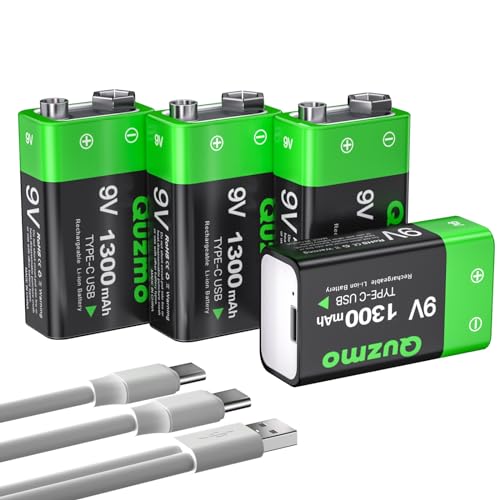
Four cells hits the exact number most homes actually need: one for each ceiling detector, with nothing left over. The Quzmo 4-pack shares the same 1300mAh lithium-ion core as the smaller sizes, so users stepping up from disposables get familiar runtime without a learning curve. Charging through the built-in USB-C port means no bulky cradle sits on the kitchen counter, which keeps the setup tidy for renters and small apartments.
In our view, this is the most pragmatic Quzmo size for the average detached home. You may find the cable’s two-at-a-time limit mildly annoying when all four cells deplete at once, but staggering top-ups is simple enough.
Notable Upsides
- 1300mAh capacity extends service life between charges.
- USB-C direct charge works with phone chargers, laptops, and power banks.
- Four cells match typical residential detector counts.
- No memory effect allows partial top-ups without harming long-term capacity.
Points To Note
- Charging all four at once requires a second pass or a multi-port USB hub.
- Slightly heavier than alkaline 9V cells due to the lithium-ion housing.
Right Fit For
Owners outfitting a complete home alarm array plus one or two spare cells for handheld devices.
A Better Fit Elsewhere
Anyone running workshop or stage gear that drains cells quickly will benefit from the Quzmo 9V Lithium-ion 8-Pack’s larger rotation pool.
Five cells starts to feel like a real rotation system rather than a one-to-one replacement for disposables. You get the same 1300mAh lithium-ion chemistry as the rest of the Quzmo family, with one extra cell kept charged in reserve so a chirping detector never catches you off guard. The setup suits households with multiple alarms plus a wireless microphone, a guitar pedal, or a digital camera that prefers 9V over AA.
Owners commonly keep a labeled “in-use” set and a “charging” set, which keeps confusion low. The trade-off is that the 2-in-1 cable can’t top up five cells at the same speed, so a busy week may mean rotating one extra cell each evening.
What Stands Out
- 1300mAh capacity keeps cells in service across long workdays.
- USB-C direct charging means any phone charger works.
- Fifth cell provides true spares so a chirping alarm never leaves you flat.
- Compatible with smoke alarms, multimeters, mics, walkie-talkies, and toys.
Honest Caveats
- One odd-size pack means slightly less value-per-cell than the larger bundles.
- More cells to track; labeling helps avoid mixing charged and depleted units.
Who Should Grab It
Households juggling detectors, a wireless mic, and an occasional multimeter at the same time.
Look Elsewhere When
Anyone running a full eight-detector system will stretch capacity further with the Quzmo 9V Lithium-ion 8-Pack.
Six cells bridges the gap between a small home backup set and a true multi-room fleet. The Quzmo 6-pack uses the same 1300mAh lithium-ion cell as the rest of the lineup, so swapping sizes doesn’t change how each one performs. For users running detectors across two floors plus a basement workshop, this gives enough ready spares that no one needs to wait around for a charge cycle.
The on-cell LED indicator still confirms top-ups at a glance. The cable is the same 2-in-1 design, so owners commonly pair it with a multi-port USB wall charger to keep the rotation moving.
The Upside
- 1300mAh capacity aligns with the rest of the Quzmo 9V family.
- USB-C charging means no special cradle or charger to lose.
- Six cells comfortably cover two-floor homes plus a hobby device or two.
- Grade A+ cells reduce the risk of premature voltage drop.
Room For Improvement
- 2-in-1 cable tops up two at a time, so charging all six takes staggered sessions.
- Slightly redundant for users who only own a couple of 9V devices.
At A Glance
Built With In Mind
Two-floor households and basement workshops that need detector coverage plus a couple of spares for hobby gear.
Not Your Match When
Someone who only runs a single alarm and a thermometer will find the Quzmo 9V Lithium-ion 2-Pack plenty.
Eight cells is overkill for one alarm but exactly right for anyone running a fleet: a full detector set, plus guitar pedals, plus a wireless mic rack, plus a multimeter that lives on the bench. Quzmo’s 8-pack tops the lineup with the same 1300mAh lithium-ion cell that runs through the whole family, so performance stays consistent even at scale. Owners commonly split the pack into “installed” and “shelf” sets so depleted cells never wander off.
Charging logistics matter at this scale: a multi-port USB wall adapter turns a 2-in-1 cable limitation into a non-issue. The cells themselves don’t require babysitting, just a steady rotation habit.
Everyday Wins
- Eight cells support whole-home detector coverage plus hobby gear.
- USB-C charging works with any standard phone charger.
- 1200+ recharge cycles per cell stretch the value across years of use.
- LED indicators confirm charge status on each cell independently.
A Few Limitations
- More cells to track than casual users realistically need.
- 2-in-1 cable means charging speed depends on how many USB ports you free up.
Whose Shelf It Belongs On
Busy households and part-time creators running multiple 9V devices at once.
Reach For A Different Pick When
Apartment dwellers with just two alarms will do better with the Quzmo 9V Lithium-ion 2-Pack and save the extra cells for later.
NiMH chemistry (nickel-metal hydride) is the older workhorse of rechargeable cells, and HW packages it in a familiar 9V brick at a friendlier cost than lithium-ion. The 200mAh rating looks low compared to Quzmo’s 1300mAh numbers, but NiMH and lithium-ion aren’t directly comparable: the 9V NiMH form factor uses a stacked cell design that delivers lower total capacity but works in gear that explicitly calls for NiMH, like certain two-way radios and pro audio meters. Users running older multimeters that warn against lithium chemistry should default here.
Owners commonly keep these in a workshop drawer, charging them every few months rather than weekly. The trade-off shows up in pure runtime per charge, but the refill cost over years stays small.
What It Does Well
- Lower upfront cost than lithium-ion 9V packs.
- NiMH chemistry suits meters and radios that prefer it over lithium.
- Recharges up to 500 times, which covers years of casual use.
- Pre-charged and shelf-ready out of the package.
Points To Keep In Mind
- 200mAh capacity is much lower than the 1300mAh lithium-ion alternatives above.
- Self-discharges faster than lithium-ion, so cells left on a shelf lose charge over months.
Quick Facts
Perfect Match For
Workshop owners running multimeters, two-way radios, and similar intermittent-use 9V devices.
Swap It Out When
Anyone powering ceiling detectors will get much longer runtime per charge from the Quzmo 9V Lithium-ion 4-Pack.
Eight NiMH cells build the rotation system that a busy garage deserves. The HW 8-pack doubles the count of the 4-pack at the same 200mAh rating, so the choice really comes down to whether you want a smaller starter set or a full workshop fleet from day one. For anyone juggling several multimeters, a couple of handheld radios, and a TENS unit on the same counter, eight cells stops being luxury and starts being necessity.
Users running these in cold garages will appreciate that NiMH chemistry handles wider temperature swings than lithium-ion without dramatic voltage sag. The cost stays manageable compared to buying two 4-packs separately.
The Good Stuff
- Eight cells support multi-device workshops with a true rotation set.
- NiMH chemistry suits older meters and radios that prefer non-lithium cells.
- Recharges up to 500 times, which keeps replacement costs low over years.
- Pre-charged cells are ready to deploy right out of the package.
Small Caveats
- 200mAh rating is much lower than lithium-ion options in this list.
- More cells to track than single-device households realistically need.
Right Fit For
Garage and workshop owners running several meters, radios, and occasional cordless devices on 9V.
A Better Fit Elsewhere
Anyone replacing alkaline cells in ceiling alarms will find longer runtime from the Quzmo 9V Lithium-ion 8-Pack.
Not everyone needs a rechargeable. A stash of alkaline 9V batteries still earns its place in earthquake kits, glove boxes, and basement shelves, and the EBL 8-pack is built for exactly that job. Its seven-year shelf life claims mean the cells you tuck into a drawer today will still hold useful charge years from now, which is the real point of an emergency stash.
The honest read is that the EBL pack isn’t a recharge option, so it complements rather than competes with the Quzmo and HW cells above. For a household that already runs rechargeable cells in primary devices, this is the safety net.
A Few Strong Suits
- Long claimed shelf life suits emergency kits and rarely used gear.
- Eight-cell count covers a small preparedness bundle in one purchase.
- Alkaline chemistry works in any 9V device without compatibility caveats.
- Pre-packaged format keeps spare cells organized in a single drawer.
A Few Limitations
- Single-use design means replacement costs recur over time.
- Alkaline cells can occasionally leak in devices left untouched for years.
Built With In Mind
Preparedness-focused households that want a shelf-stable backup alongside their everyday rechargeable rotation.
Reach For A Different Pick When
Anyone trying to escape recurring battery costs altogether should choose the Quzmo 9V Lithium-ion 4-Pack as their primary workhorse.
What Matters Most Before Choosing a 9 Volt Rechargeable Battery
Chemistry and Capacity in Context
Lithium-ion 9V cells typically advertise 1300mAh and hold voltage well under steady drain, which suits ceiling detectors and pro-audio gear. NiMH 9V cells land closer to 200mAh but excel in older meters and two-way radios that expect NiMH voltage curves. Picking chemistry to match the device is more useful than chasing the largest mAh number, since a meter that warns against lithium won’t accept a lithium-ion cell no matter how big it claims to be.
Charging Style and Convenience
Built-in USB-C charging has become the default for modern 9V rechargeables, and the appeal is real: any phone charger or power bank tops the cell up. Older NiMH packs still rely on a separate charger cradle, which costs extra and takes up counter space. A 2-in-1 cable in the box is a small bonus, but a multi-port USB wall adapter becomes essential once you cross the four-cell mark.
Pack Size and Rotation Habits
A pack size should match how many 9V devices you actually run, with one or two spares on the side. A two-cell pack suits one or two devices, a four-pack covers a typical detector array, and six- to eight-cell bundles support workshops, studios, and rotation-heavy households. Buying more cells than you’ll rotate just means more time spent charging, not more convenience.
Real-World Use Scenarios
Most ceiling-mounted smoke alarms sip power, so a rechargeable in a low-traffic hallway can last many months between charges. Wireless microphones and guitar pedals draw harder, and a 1300mAh lithium-ion cell will still need topping up after a handful of rehearsals. Multimeters and infrared thermometers sit in the middle, draining slowly but steadily during regular use. Matching the cell to the draw pattern matters more than chasing any single spec.
Where Shoppers Go Wrong
Mistake: Buying the Largest mAh Number Without Checking Chemistry
A 200mAh NiMH cell is not “worse” than a 1300mAh lithium-ion cell, since they target different voltage curves and device needs. Always confirm what the device accepts before assuming more mAh is automatically better.
Mistake: Ignoring Charging Logistics
A 2-in-1 cable is fine for two cells, but a six-pack without a multi-port wall adapter turns into a constant rotating door. Plan your charging setup before committing to a large pack, or you’ll find yourself with depleted cells and no place to plug them in.
Frequently Asked Questions
How long do 9 volt rechargeable batteries last per charge?
Most 1300mAh lithium-ion cells power a typical AC-wired smoke detector for many months between charges, while 200mAh NiMH cells may need topping up after a few weeks of steady use in a multimeter.
Can I use rechargeable 9V batteries in any device that takes a 9V?
Most modern devices accept either alkaline or rechargeable chemistries, but some older meters and radios specifically require NiMH, so check the device manual before swapping in lithium-ion cells.
How many times can a 9 volt rechargeable battery be recharged?
Lithium-ion 9V cells in this list are rated for 1200+ recharge cycles, while NiMH versions typically reach around 500 cycles before noticeable capacity loss.
Do rechargeable 9V batteries leak less than alkaline ones?
Rechargeables tend to leak less often because they’re not under the same long-term internal pressure as stored alkalines, although any battery can leak if left installed in a device for years past its service life.
Is it cheaper long-term to use rechargeable 9V batteries?
For any device that chews through cells regularly, rechargeables pay for themselves within the first year or two. For rarely touched emergency gear, a long-shelf alkaline stash still has a role.
Closing Remarks
A 9 volt rechargeable battery earns its place the moment you stop replacing alkalines every few months. The right pick depends on the devices you actually run, the chemistry they prefer, and how many spares you want within arm’s reach. Match those three to the options above, and you’ll spend less time hunting for batteries at the worst possible moment.