Compact sealed lead-acid batteries power more gear than most people realize, from alarm panels and UPS backup boxes to kids’ power wheels and gate openers. Picking the right 7ah 12 volt battery matters because the wrong terminal size, capacity, or chemistry can leave you stranded or constantly swapping cells. This lineup covers the core options, plus a few accessories that make installation safer and longer-lasting.
The Picks In Brief

UltraTech 1272F1 12 Volt 7.0 Ah SLA Battery (F1 Terminal)
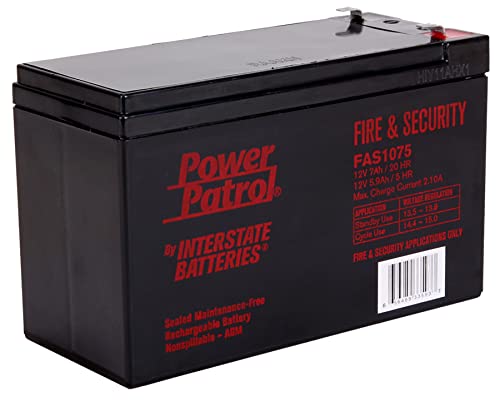
Interstate Batteries 12V 7Ah AGM Power Patrol FAS1075

Powerextra HPB12 Replacement Battery for Black & Decker

Yuasa NP7-12 12V 7Ah SLA Battery (F1 Terminal)

PulseTech XC450 Xtreme Charge 4-Amp Smart Charger

Motobatt MBTX4U 12V 4.7Ah AGM Motorcycle Battery

Motobatt MBTX4U Battery (Maintenance-Free)

Ghost Controls ABBT Battery Box for Swing Gates

Steel Battery Box for 12V 7Ah Gate Opener Batteries
A Deeper Look At The Lineup
The UltraTech 1272F1 is a sealed lead-acid (SLA) unit built for stationary backup roles where reliability matters more than portability. It carries the F1 spade terminal layout and is specifically marketed as a swap-in replacement for the older UT-1270, so anyone pulling a dead cell from a control panel can usually drop this one in without rewiring anything.
Most owners place it inside uninterruptible power supplies, alarm panels, or access control cabinets where it sits for months on a float charge. At roughly 7 amp-hours, it gives small electronics a healthy run time without forcing a jump to a heavier, more expensive battery.
Noteworthy Benefits
- Direct UT-1270 form factor means no tray modifications are needed.
- SLA construction is spill-proof, so it can mount sideways inside tight enclosures.
- Float-charge friendly design suits always-on backup applications.
- 7Ah capacity covers typical alarm and access control loads for several hours.
Points To Note
- SLA chemistry is heavier than lithium options, which matters in portable builds.
- Capacity drops noticeably in cold storage areas if the enclosure is unheated.
- Spade terminals can loosen over years of thermal cycling, so periodic retightening is wise.
Quick Facts
Built With In Mind
Alarm installers, security hobbyists, and anyone replacing a tired UT-1270 in a UPS or panel.
Skip It When
Yuasa NP7-12 is the better choice if your load is mission-critical and you want the brand that’s set the industry benchmark for decades.
Interstate’s Power Patrol FAS1075 is built around AGM (absorbent glass mat) chemistry, where the electrolyte is held in fiberglass mats rather than free-floating liquid. That makes the battery tougher under vibration and completely sealed against spills, a real plus for fire panels mounted in utility rooms or vehicles.
The FAS1075 is sold as a multi-pack aimed at professional installations, so contractors stocking up for service calls get better per-unit pricing. Owners commonly use it for fire alarms, security panels, emergency lighting, and similar low-draw backup duties where predictable discharge matters.
Benefits That Matter
- AGM construction resists vibration damage better than flooded cells.
- Multi-pack format lowers the cost per cell for service shops.
- Standardized size swaps into most FAS-series equipment without bracket changes.
- Spill-proof seal allows installation near electronics without venting concerns.
Trade Offs
- AGM pricing runs higher per amp-hour than conventional SLA.
- Multi-pack quantity may be more than a single homeowner needs.
- Charging voltages are stricter, so pairing with a generic float charger can shorten service life.
Feature Snapshot
Whose Shelf It Belongs On
Security and fire alarm installers stocking service vehicles, plus facility maintenance teams running larger panel networks.
A Better Fit Elsewhere
The UltraTech 1272F1 is the simpler single-pack option for homeowners who only need one battery for a single UPS or panel.
Powerextra’s HPB12 pack steps outside the SLA category into Ni-MH chemistry (nickel-metal hydride), which is the format Black & Decker chose for its 12V cordless tool line years ago. The 3.7Ah rating gives a healthy bump over the original 2.4Ah cells, so a tired drill finally feels like a real drill again.
The two-pack format makes sense for anyone who actually rotates batteries mid-project: one in the tool, one on the charger. Ni-MH cells also handle partial charges gracefully, so leaving a half-used pack on the bench overnight is far less damaging than it would be with older Ni-Cd chemistry.
Notable Upsides
- Higher 3.7Ah capacity roughly doubles the original tool run time.
- Two-pack delivery covers spare-battery workflows without ordering twice.
- Ni-MH chemistry tolerates partial charging, great for hobby shop habits.
- Compatible across the older Black & Decker 12V cordless range.
Practical Considerations
- Capacity figure is smaller than the SLA units above, so it is not a like-for-like swap for backup panels.
- Ni-MH self-discharges faster during storage, so stored spares lose charge over weeks of idle time.
- Compatibility is limited to the specific Black & Decker 12V models listed, not a universal fit.
Perfect Match For
DIYers and weekend woodworkers still running older Black & Decker 12V cordless drills, saws, and flashlights.
Swap It Out When
The Interstate Batteries Power Patrol is the right pick for stationary alarm or UPS use, where a 7Ah SLA outruns a small Ni-MH pack.
Yuasa is the brand other SLA makers compare themselves to, and the NP7-12 is the model most spec sheets reference. It is a valve-regulated sealed lead-acid battery, maintenance-free and shipped fully activated, so it drops into a panel and starts holding charge right away.
You find NP7-12s in security systems, UPS units, emergency lighting, telecom gear, and medical carts where downtime is not an option. The F1 terminal matches most aftermarket wiring, and the consistent internal quality is why hospitals and telecom rooms stick with it decade after decade.
Useful Strengths
- Yuasa’s manufacturing consistency is widely recognized across backup-power industries.
- Valve-regulated design eliminates water top-offs and acid leaks.
- Drop-in F1 terminal layout fits the broad NP-series equipment family.
- Reliable float behavior extends service life in always-on panels.
Where It Is Less Suited
- Premium pricing puts it noticeably above generic 7Ah competitors.
- Capacity is identical to cheaper cells, so the value lies in longevity, not raw output.
- Still an SLA, so weight rules it out for any portable, person-carried application.
Technical Sheet
Who Should Grab It
Facility managers, IT closets, and telecom pros who need a battery that quietly performs for years on float charge.
Not Your Match When
The UltraTech 1272F1 is the smarter spend for a one-off UPS swap where Yuasa’s longevity premium does not pay off.
The XC450 is not a battery, it is what keeps one healthy. PulseTech’s Xtreme Charge line is built around a patented high-frequency pulse that conditions lead plates, the idea being that desulfating a slightly tired cell can return capacity that a plain charger would leave on the table.
The 4-amp output handles 6V and 12V lead-acid formats plus AGM, wet, gel, and LiFePO4 packs, so one unit covers the gate opener, the lawn tractor, and the motorcycle without swapping gear. For anyone whose gate batteries sit for weeks without activity, a maintenance routine can stretch service life considerably.
Practical Pluses
- Multi-chemistry support covers SLA, AGM, gel, and LiFePO4 cells.
- Patented pulse circuit actively works against plate sulfation.
- 4-amp rate handles small backup batteries and larger motorcycle banks.
- Maintainer mode is safe for long-term connection without overcharging.
Honest Caveats
- Premium price reflects the conditioning circuitry, not raw charging speed.
- Cannot rescue a fully dead or physically damaged battery.
- Not a fast charger, so topping off a deeply discharged unit takes patience.
Made For
Garage owners, gate-opener households, and powersports riders who want to recover and maintain batteries they would otherwise throw away.
Look Elsewhere When
The Motobatt MBTX4U is the right call for replacing a dead motorcycle cell outright rather than reviving it.
The MBTX4U is MotoBatt’s answer to the popular YB4L-B and YTX4L-BS motorcycle cells used in small-displacement bikes and scooters. It arrives factory activated and sealed, so installation skips the acid-fill ritual that older flooded batteries required.
The standout trick is MotoBatt’s quad-terminal layout, which puts spade connections on the top, front, and side of the case. That flexibility matters when retrofitting older bikes whose wiring was never standardized, and the higher lead-per-cell design is meant to crank harder than typical replacement batteries.
Where It Helps
- Multi-directional terminal layout adapts to quirky OEM wiring.
- AGM construction arrives fully charged and ready to install.
- Replaces several common OEM part numbers, simplifying cross-referencing.
- Higher lead content supports stronger cranking on cold mornings.
Things To Consider
- 4.7Ah capacity is well below the 7Ah SLA units, so it is not a stationary backup substitute.
- Premium pricing compared to generic motorcycle replacements.
- Physical dimensions still need to be checked against the specific battery tray before ordering.
Right Fit For
Small motorcycle and scooter owners who want a maintenance-free AGM swap that installs without tools or acid.
Consider Something Else When
Powerextra’s Ni-MH pack suits Black & Decker cordless tools, while the Yuasa NP7-12 fits fixed backup loads better.
This second MBTX4U listing carries the same MotoBatt part number but is sold through a different distribution path, so worth comparing for price if you have already decided on this specific model. The specs match the sibling entry above: factory sealed, valve regulated, maintenance free, with the patented multi-directional terminal design.
The listing highlights compatibility across a long list of small powersports applications, from Aprilia scooters to Arctic Cat 90cc ATVs. If your garage has a mix of older two-stroke bikes and small ATVs, this one cell often crosses several platforms.
What It Does Well
- Sealed construction means no acid spills when a bike tips over in the driveway.
- Maintenance-free format removes the monthly inspection chore.
- Multi-terminal layout keeps the same battery flexible across different bikes.
- Broad OEM-equivalent compatibility across scooter and small ATV lines.
Soft Spots
- Listing has limited published specs compared to the primary MotoBatt page.
- Capacity stays modest at 4.7Ah, so runtime is shorter than larger 7Ah units.
Who Will Love This
Powersports enthusiasts with mixed small-bike inventories who want a single replacement cell on the shelf.
Reach For A Different Pick When
Yuasa NP7-12 is the better choice for stationary alarm or UPS loads where 7Ah and float stability matter more than cranking amps.
The Ghost Controls ABBT is an accessory, not a battery: a weather-resistant enclosure designed to hold up to two AXBT 7Ah batteries for vehicular swing gates or remote deer feeders. For anyone who has watched a gate opener battery corrode from rain exposure, a sealed box quickly pays for itself.
The removable lid allows fast swap-outs when the cells finally die, and the design accepts a padlock so curious hands or backyard wildlife cannot pry the lid off. A built-in strain-relief fitting on the bottom protects the wire runs from being yanked or cut.
Useful Highlights
- Lockable design keeps battery connections safe from tampering.
- Strain-relief fitting protects wiring from physical damage.
- Holds two batteries, allowing 12V doubled capacity for longer backup.
- Removable lid simplifies seasonal battery swaps.
Things To Weigh
- Batteries are not included, so budget for cells on top of the enclosure.
- Lock and padlock are sold separately, a small but real added cost.
- Mounting location needs to be accessible for occasional service checks.
Best Suited To
Rural property owners with solar-powered gate openers or remote deer feeders who need protected, accessible battery storage outdoors.
Where Another Pick Suits Better
The MAYICHUAN steel box is the smarter choice for 24-volt dual-battery gate setups that need a parallel harness included.
MAYICHUAN’s steel battery box is purpose-built around the common 12V 7Ah lead-acid cell, with internal dimensions (5.94″D x 2.56″W x 3.74″H) that fit most garden-gate and access-control batteries. The included wire harness supports both parallel and series wiring, letting you build either a 12V doubled-capacity bank or a true 24V system from two cells.
For anyone whose gate opener or remote equipment has outgrown a single battery, this enclosure keeps the cells organized, contained, and ventilated while letting the chemistry do its job. Owners commonly pair it with Ghost Controls or Mighty Mule gate openers, which run on exactly this dual-battery format.
Strengths Worth Knowing
- Dual-battery capacity extends run time for solar-tough gate installations.
- Steel construction resists physical impact far better than plastic enclosures.
- Series/parallel harness included saves buying wiring separately.
- Acid-leak tray protects the gate control board from corrosion damage.
Practical Caveats
- Batteries sold separately, so the total spend climbs quickly.
- Steel adds weight, so wall-mounting needs solid anchors into wood framing or masonry.
- Internal dimensions are tight, so check battery specs before committing.
Who It Suits Best
Property owners running Ghost Controls or Mighty Mule gate openers who want a tidy, weather-resistant dual-battery setup.
Skip It When
The Ghost Controls ABBT is a lighter, more affordable alternative if you only need a single-battery enclosure and value built-in tamper protection.
Matching 7Ah Batteries To Real Gear
A 12V 7Ah SLA battery is a specific size and capacity family, and the wrong match is a common frustration. Knowing the few attributes that actually change fit will save you a return trip and a lot of guesswork.
The terminal type matters more than people expect. F1 (small spade) terminals are the most common in this size, but F2 (wider spade) variants exist on heavier gear. Always check the existing wiring’s tab width before ordering, because a half-millimeter difference can mean forcing a connector that should just slide on.
Capacity ratings tell you how long the battery will run a given load, but only if you do the math. A 7Ah cell at a 1-amp draw gives roughly 7 hours, while a 5-amp draw cuts that to barely 90 minutes. For alarm panels drawing half an amp, expect days of standby. For a small inverter running a CPAP, hours, not days.
Chemistry choice changes both weight and maintenance. SLA cells are the cheapest and most common, AGM (absorbent glass mat) costs more but tolerates vibration and mounts in any orientation, and lithium chemistries (LiFePO4 especially) cut weight in half but need different chargers.
Physical dimensions decide fit before anything else. Measure the tray you are filling, then measure the new battery, then check the terminal position. Swapping a battery that is 5mm too tall or whose posts land 10mm off from the harness is a surprisingly common return reason.
For standby and float applications, slow self-discharge is the quiet hero. An SLA sitting unused still loses a few percent of charge per month, so a battery tender or maintenance charger (like the PulseTech XC450) can stretch service life meaningfully for gate openers and seasonal equipment.
What To Watch Before You Click Buy
Traps First Timers Fall Into
Buying a battery with the wrong terminal type is the most common first-timer mistake. The cells in this list all use F1 spade terminals, but generic look-alikes sometimes ship with F2 or screw posts, and the difference is not obvious from a thumbnail. Always cross-check the terminal spec against your wiring harness before ordering, especially for older alarm panels where the original documentation may be lost.
Another frequent miss is ordering a battery that physically does not fit. Tray dimensions in this 7Ah class are similar but not identical, and a battery that is 5mm taller than the old one can press against a lid or cover plate. A quick measurement of length, width, and height, plus the terminal orientation, prevents the most frustrating kind of return.
The Upgrade Payoff
Premium batteries like the Yuasa NP7-12 cost noticeably more than off-brand equivalents, but the difference shows up in float life, not initial capacity. Both deliver 7Ah out of the box, but after two years on a constant trickle charge, the Yuasa typically holds more usable capacity than a generic cell that started at the same number. That gap widens the longer the battery stays in service, which matters most for hard-to-access installs like telecom closets and attic-mounted alarm panels.
For gate opener and outdoor applications, paying more for a proper enclosure with a harness often matters more than the battery inside. A quality battery box protects against the rain, sun, and vibration that kill cells faster than age does, and the included wiring harness can save an afternoon of fiddling with ring terminals and butt connectors.
Frequently Asked Questions
How long does a 12V 7Ah battery actually last on standby?
In a typical alarm panel drawing around 250 milliamps, a healthy 7Ah SLA cell can sit on standby for roughly 20 to 30 hours before reaching the low-voltage cutoff. The runtime shrinks quickly with heavier loads, so a 1-amp draw cuts that figure to about 7 hours.
Can I replace a 7Ah SLA with a smaller lithium battery?
A LiFePO4 cell rated at 7Ah will drop into the same space, but the charging circuit in older SLA equipment may not play well with the lithium chemistry’s different voltage curve. Most drop-in lithium replacements include a built-in battery management system, but the host charger should be confirmed as lithium-compatible first.
What is the difference between F1 and F2 terminals?
Both are spade-style connectors, but F1 tabs measure about 4.75mm wide while F2 tabs are around 6.35mm. A battery with F2 posts will not accept the smaller F1 connector without an adapter, so matching the existing terminal is essential before ordering.
Do I need a special charger for AGM batteries?
AGM batteries charge at slightly higher voltages than flooded cells, and a generic low-cost charger can undercharge them over time. Most modern smart chargers advertise AGM support on the label, and PulseTech’s XC450 covers AGM alongside other chemistries.
Why do gate openers use two 7Ah batteries instead of one?
Two batteries wired in series deliver 24V, which is what most heavy-duty gate motors need to pull the heavy leaf open under load. Wiring the same pair in parallel doubles capacity at 12V for installations with very long cable runs where voltage drop matters.
The Takeaway
For most stationary backup needs, the UltraTech 1272F1 or Interstate Power Patrol covers the basics well, and the Yuasa NP7-12 earns its premium when longevity matters. For powersports, Motobatt’s sealed AGM cells skip the acid-filling chore. For outdoor gate setups, a real battery box makes any 7Ah cell last far longer in the weather.