Cold mornings have a way of finding a weak battery. Whether you park a daily driver, a weekend motorcycle, a tractor, or a boat, the right charger keeps those vehicles starting cleanly without the hassle of jump cables. A modern 6v 12v battery charger does more than top off voltage, since most include float maintenance, desulfation, and protection against overcharging. Garage hobbyists, fleet operators, and folks storing seasonal vehicles all benefit from owning one. The ten options below cover everything from gentle trickle maintenance to heavy workshop use.
The Shortlist At A Glance

Schumacher Electric 10A 6V/12V Charger & Maintainer – DSR125

Tecmate Optimate 1 VoltMATIC TM-401a 6V/12V 0.6A

NOCO GENIUS1 1A 6/12V Smart Battery Charger
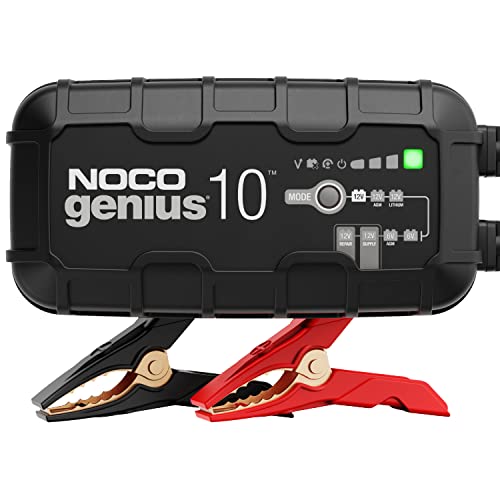
NOCO GENIUS10 10A 6/12V Smart Battery Charger

NOCO GENIUS5 5A 6/12V Smart Battery Charger

Schumacher Electric 1.5A 6V/12V Charger – SC1355

Schumacher Electric 6A 6V/12V Charger – SC1308

Schumacher Electric 6A 12V Charger & Starter – SC1361

CRAFTSMAN 12A 6V/12V Charger & Maintainer – CMXCESM258

Schumacher Electric 6A 6V/12V Charger & Starter – SC1281
More On The Choices That Made The List
The Schumacher DSR125 is built around a four-bank layout, so four batteries can ride on a single unit at once. Each bank independently accepts 6V or 12V input, which is a real timesaver for shops juggling a mix of motorcycles, lawn tractors, and customer cars overnight.
For a busy bay or seasonal fleet, that parallel workflow replaces four separate tenders sitting on the bench. The trade-off is physical size; this is a shop-floor tool, not a glovebox companion.
Everyday Wins
- Charges up to four batteries simultaneously, cutting clutter on the bench.
- Each bank accepts both 6V and 12V, so mixed fleets stay flexible.
- Two banks can be paired for a faster top-off on a single battery when speed matters.
- Maintains stored batteries without manual cycling between charge and float.
Things To Consider
- Larger footprint than a single-bank charger, so plan some shelf space.
- Output per bank is lower than a dedicated 10A unit, which lengthens recovery time on deeply discharged batteries.
Key Product Details
Made For
Auto shops, dealership bays, and small fleet operators juggling multiple stored vehicles on a single workbench.
Where Another Pick Suits Better
Homeowners with only one or two vehicles will find the NOCO GENIUS5 a tidier, lighter everyday option without the multi-bank overhead.
Tecmate’s Optimate 1 VoltMATIC leans on a quiet 0.6A output, which is gentle enough for batteries that sit unused for months. The VoltMATIC program adapts automatically between 6V and 12V once connected, so there is no dial to read or mode to memorize.
Owners commonly leave it clipped to a battery through the off-season without worry. The catch is patience: at 0.6A, a deeply drained battery needs a long evening on the clamps before it is road-ready.
What Pays Off
- Auto-detects 6V or 12V on connection, removing guesswork.
- Supports AGM, GEL, and standard lead-acid chemistries in one unit.
- Continuous operation is safe on healthy batteries, ideal for stored classics.
Worth Noting
- Slow recovery on large, deeply discharged automotive batteries.
- Lower output means it cannot revive a heavily sulfated battery the way a 5A or 10A unit can.
Right Fit For
Vintage car collectors and motorcycle owners who store their vehicles through winter and want a quiet, unattended maintainer on the battery.
Swap It Out When
Folks charging a daily-driver car on a tight schedule should reach for the Schumacher SC1355, which delivers a more practical 1.5A rate for smaller vehicles.
The NOCO GENIUS1 is the smallest entry in the GENIUS family, and it suits anyone dipping a toe into charger ownership. It recognizes 6V and 12V chemistries including AGM, gel, flooded, deep-cycle, and lithium-iron packs, then runs a fully automatic program once the clamps are on.
Compared with the Tecmate Optimate reviewed earlier, the GENIUS1 packs a slightly faster 1A output into a similar palm-sized shell. Most owners tuck it into a drawer between uses, which makes it a tidy fit for an apartment shelf.
Advantages To Know
- Compatible with both lead-acid and lithium-ion batteries up to 30Ah.
- Compact housing stores easily in a trunk or utility drawer.
- Automatic program means no mode switching once connected.
Honest Caveats
- 1A is too slow for reviving a dead full-size car battery in any reasonable time.
- Best reserved for smaller batteries or long maintenance windows.
Who It Suits Best
Newcomers, apartment dwellers, and owners of small batteries who want a compact charger they can leave connected without supervision.
Not Your Match When
Drivers reviving a deeply discharged full-size car battery benefit more from the NOCO GENIUS5 and its 5A output.
The NOCO GENIUS10 steps up output to 10A and supports batteries up to 230Ah, which puts it squarely in shop-grade territory. It runs an overcharge protection routine, includes a desulfation mode for neglected batteries, and adjusts for ambient temperature automatically.
Versus the GENIUS5 below, this is the unit to reach for when recovery speed matters. Owners of larger vehicles or deep-cycle banks will appreciate how much shorter the sessions feel at this output level.
A Few Strong Suits
- 10A output shortens recovery time on large automotive batteries.
- Handles lead-acid and LiFePO4 packs up to 230Ah.
- Temperature compensation and Force Mode help with stubborn batteries.
Trade Offs
- Larger and heavier than the GENIUS5 or GENIUS1.
- 10A is overkill for small motorcycle or lawn-tractor batteries.
Feature Snapshot
Whose Shelf It Belongs On
Owners of trucks, SUVs, marine banks, and lithium upgrades who want the fastest path back to a full charge without babysitting the process.
A Better Fit Elsewhere
Shop owners who need to charge four vehicles at once will prefer the Schumacher DSR125 multi-bank workflow.
The NOCO GENIUS5 is the sweet spot of the line: 5A of output in a chassis smaller than the GENIUS10. It supports lead-acid and lithium batteries up to 120Ah, which covers most cars, crossovers, and small marine applications.
Compared to the GENIUS1, it charges roughly five times faster. Compared to the GENIUS10, it is noticeably lighter to carry between the garage and the workbench.
Positive Takeaways
- 5A output revives most dead automotive batteries in a few hours.
- Works with AGM, gel, flooded, deep-cycle, and LiFePO4 batteries.
- Automatic maintenance mode runs safely through long storage periods.
Points To Note
- Not ideal for very large 200Ah-plus deep-cycle banks that benefit from higher amperage.
- Lead-acid and lithium support requires reading the manual carefully to avoid chemistry mismatch.
Perfect Match For
Daily-driver households and weekend DIYers who want a versatile charger that handles most batteries without overpaying for shop-grade output.
Look Elsewhere When
Shop owners with multi-vehicle workflows will benefit more from the Schumacher DSR125 and its four-bank design.
The Schumacher SC1355 keeps things simple: a 1.5A output, 6V and 12V support, and a three-in-one charging, maintaining, and reconditioning routine. It targets cars, motorcycles, ATVs, trucks, SUVs, and boats, so most household vehicles are within reach.
The reconditioning step is the headline feature, since it works on sulfated batteries that lighter chargers tend to ignore. Owners of older vehicles find this useful for reviving batteries before a replacement decision.
Strengths Worth Knowing
- Reconditioning mode helps recover lightly sulfated batteries.
- Compatible with standard, AGM, and deep-cycle battery types.
- Compact housing travels easily between vehicles.
Practical Considerations
- 1.5A limits how fast a deeply discharged full-size car battery recovers.
- Reconditioning cycles add time compared with straightforward maintenance charging.
Best Suited To
Budget-minded owners who store seasonal vehicles, motorcycles, or small equipment and want a no-frills maintainer that does the basics well.
Reach For A Different Pick When
Drivers wanting faster recovery on full-size automotive batteries should step up to the Schumacher SC1308 and its 6A output.
The Schumacher SC1308 packs six functions into one bench tool: 6V and 12V charging, maintaining, engine starting, battery testing, alternator testing, and desulfation. That makes it a strong fit for hobbyists who want diagnostics alongside charging.
Versus the SC1355 reviewed earlier, this unit trades reconditioning simplicity for a broader diagnostic toolkit. The added features raise the learning curve, but the bundled alternator and battery tests remove the need for separate tools.
Where It Helps
- Six-in-one design reduces the number of separate garage tools.
- Engine start mode rescues deeply drained batteries quickly.
- Alternator testing helps spot charging-system faults early.
Where It Is Less Suited
- More buttons and modes mean a longer initial setup read.
- Heavier than maintenance-only chargers, so it stays on the bench rather than the trunk.
Quick Facts
Who Should Grab It
DIY garage owners who want charging, testing, and engine starting in a single bench tool without buying separate equipment.
Skip It When
Storage-only owners will find the NOCO GENIUS1 a simpler, lighter option for unattended maintenance.
The Schumacher SC1361 focuses on 12V work with 6A charging and an engine start boost. It targets garages, farms, and workshops where vehicles sit for long stretches between use.
Unlike the SC1308, this model skips the 6V support and the alternator testing, which keeps the controls simpler. For pure 12V environments, that focus pays off in a more straightforward workflow.
The Good Stuff
- Engine start function helps revive trucks and farm equipment quickly.
- 6A charging rate trims recovery time on full-size batteries.
- Compact form fits easily on a workshop shelf.
Factors To Consider
- 12V-only design rules out classic 6V vehicles.
- Lacks the diagnostic extras found on the SC1308.
Who Will Love This
Farm and workshop owners running modern 12V trucks and equipment who want reliable engine-start muscle between maintenance sessions.
Another Choice May Suit
Owners with classic 6V vehicles in the mix should consider the Schumacher SC1281, which keeps 6V and 12V flexibility alongside engine starting.
The CRAFTSMAN CMXCESM258 brings 12A of rapid charging to a household-friendly 4-in-1 design. It handles standard, AGM, 12V lithium, and deep-cycle batteries, and uses a microprocessor-controlled program to switch between charge and maintain stages automatically.
Compared with the NOCO GENIUS10, the CMXCESM258 offers slightly more current in a similar mid-size shell. Owners who want the shortest possible recovery time on full-size batteries will find that extra amperage useful.
Useful Strengths
- 12A rapid charge cuts recovery time on standard automotive batteries.
- Supports 12V lithium (LiFePO4) batteries alongside AGM and flooded types.
- Automatic switching removes the need to monitor charge stages manually.
Some Limits To Know
- Larger heat output during long rapid-charge sessions requires some ventilation around the unit.
- 12A may be too aggressive for very small batteries.
The Right Fit
Drivers who want fast recovery on a daily-driver car or SUV and are willing to keep the unit on a workbench rather than the glovebox.
Consider Something Else When
Small-battery owners maintaining lawn tractors or motorcycles will get better results from the lighter Schumacher SC1355.
The Schumacher SC1281 pairs a 6A automatic charger with a 100A engine start boost. It works on both 6V and 12V batteries, covering cars, trucks, and SUVs alongside older vehicles in the same garage.
Versus the SC1361 reviewed earlier, this unit adds 6V support, which broadens its usefulness for mixed fleets. The trade-off is a slightly larger footprint.
The Practical Payoff
- 100A engine start rescues deeply drained vehicles in cold weather.
- Automatic 6V/12V detection simplifies connections across vehicle types.
- Suited to routine maintenance and emergency starts in one unit.
Possible Compromises
- Bench tool size rather than a portable carry-along.
- Output and features favor mixed-fleet owners over single-battery households.
Built With In Mind
Truck and SUV owners in cold climates who want one unit for both routine charging and emergency engine starts.
Where A Sibling Pick Shines
Shop owners running multiple vehicles simultaneously will benefit more from the Schumacher DSR125 multi-bank setup.
Choosing A Charger That Fits Your Garage
A charger is only useful when it matches the batteries you actually own, so the first decision is voltage range. Most modern vehicles run 12V, but classic cars, some golf carts, and certain motorcycles still rely on 6V systems, which makes a dual-voltage unit the safer pick for mixed garages. Output current matters next: 1A trickle chargers suit stored batteries, while 5A to 12A units recover dead batteries within a single afternoon.
Battery chemistry is the third filter. AGM (Absorbent Glass Mat, a sealed lead-acid design), gel, flooded lead-acid, and LiFePO4 (lithium iron phosphate) each behave differently, and the right program prevents overcharging. Look for automatic detection, desulfation, and temperature compensation if you own a wide mix of vehicles. Engine-start capability adds a layer of insurance for trucks and SUVs, while shop owners benefit most from multi-bank designs like the Schumacher DSR125.
Key Considerations Across These Picks
Where Shoppers Go Wrong
A common trap is buying the highest-amperage charger available, only to discover it is too aggressive for a small motorcycle battery. Match output to battery size, not the other way around. Another misstep is ignoring chemistry, since a charger without AGM or lithium support can shorten battery life even when it appears to charge normally.
The Upgrade Payoff
Higher-tier models earn their keep through faster recovery, broader chemistry support, and extras like desulfation and engine starting. For most households, the jump from a 1.5A unit to a 5A or 6A charger is the practical sweet spot, and anything beyond that fits a workshop rather than a kitchen drawer.
Frequently Asked Questions
What Is The Difference Between 6V And 12V Chargers?
A 6V charger delivers current at a lower voltage for older vehicles and certain equipment, while a 12V charger serves modern cars and trucks. Dual-voltage units detect the connected battery automatically.
Can I Leave A Battery Charger Connected For Months?
Many modern chargers run an automatic float mode that tops off the battery without overcharging. Still, periodic checks on connections and ventilation are wise, especially in warm environments.
How Long Does It Take To Charge A Dead Battery?
A 1A trickle charger can take 24 hours or longer on a full-size car battery, while a 6A to 12A unit often recovers the same battery in 4 to 8 hours.
Do I Need A Special Charger For Lithium Batteries?
Yes, lithium iron phosphate (LiFePO4) batteries require a charger with a lithium-specific program to avoid damage. Lead-acid chargers deliver too high a resting voltage for safe long-term lithium use.
Is An Engine Start Feature Necessary?
For most daily drivers, no. For trucks, SUVs, or farm equipment in cold climates, an engine-start boost helps recover deeply drained batteries faster than a maintenance-only unit.
The Takeaway
The right 6v 12v battery charger depends less on specs and more on the vehicles you actually own. Storage-only batteries thrive on gentle maintenance units, while daily drivers and deep-cycle banks benefit from faster 5A to 12A outputs with chemistry detection. Match the tool to the garage, and your vehicles start smoothly year-round.