There’s a particular kind of dread reserved for turning a key on a frosty morning and hearing nothing. A 650 CCA (cold cranking amps, the rating that measures how much current a battery can deliver at 0°F for 30 seconds) battery is the sweet spot for most mid-size cars, crossovers, and light trucks, and choosing the right one comes down to fitment and build chemistry rather than chasing the biggest number. After sorting through the noise, this list pulls together the AGM (absorbed glass mat, a sealed design where electrolyte is held in fiberglass sheets, making the unit spill-proof and vibration-resistant) and flooded options that consistently deliver on cold mornings without overpromising. Whether you’re chasing a direct fit for a Honda CR-V or a heavy-duty Group 35 workhorse, the picks below cover the bases.
The Essentials At A Glance

Autocessking Group Size 35 AGM Battery 12V 55Ah 650 CCA

Goodyear 35-AGM Platinum Series Battery 650 CCA
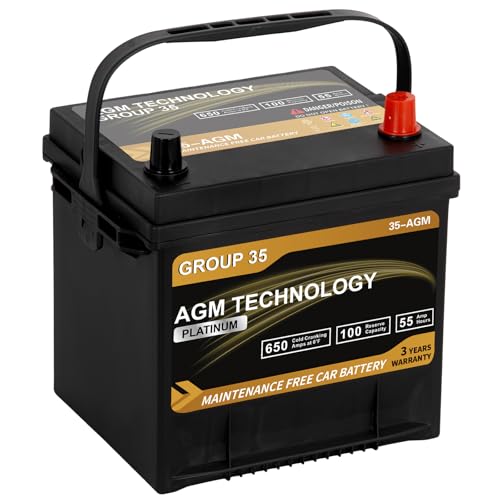
Daakmax Platinum AGM Battery Group 35 36-Month Warranty

Mighty Max MM-G35 Group 35 AGM Battery 650 CCA

Interstate Batteries Group 75 MT-75 650 CCA
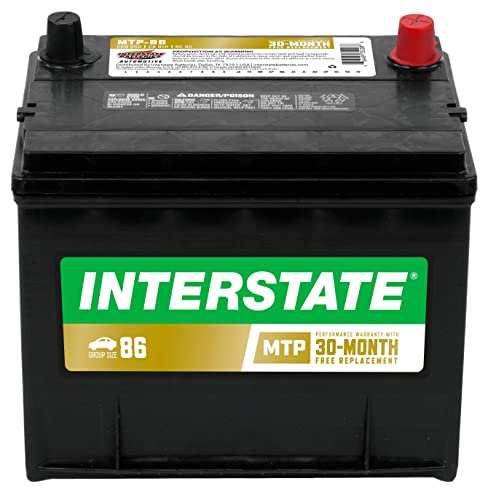
Interstate Batteries Group 86 MTP-86 650 CCA
Mighty Max MM-G35 for Subaru Forester 19-23
Mighty Max MM-G35 for Nissan Altima 15

Weize Platinum AGM Battery BCI Group 35 650CCA
Mighty Max MM-G35 for Honda CR-V 14-16
More Details On Our Top Picks
The Autocessking Group 35 AGM is a confident opening pick because it answers the question most shoppers are actually asking: will it start my car next January without drama. The sealed absorbed glass mat design holds electrolyte in fiberglass sheets, so there’s no sloshing acid to worry about on tilted mounts or rough roads. You also get a generous 100 RC (reserve capacity, the number of minutes a battery can run essential accessories if the alternator fails) to keep accessories alive during long idles.
For most daily commuters logging moderate miles, this hits a familiar sweet spot of dependable cold starts without overspec’ing the wallet. It mounts cleanly in standard Group 35 trays, which keeps installation drama-free. Compared with the Goodyear entry below, the Autocessking leans on the same sealed-AGM philosophy but trades some brand familiarity for a more flexible fitment list.
The Practical Payoff
- Spill-proof AGM construction tolerates rougher roads and off-camber mounting
- 650 CCA delivers confident cold morning starts in most climates
- 100 RC keeps accessories running if the alternator struggles
- Group 35 sizing covers a wide swath of mid-size cars and crossovers
Things To Consider
- AGM pricing sits above conventional flooded batteries
- Terminal orientation and exact dimensions should be cross-checked against your existing battery before ordering
Who It Suits Best
Daily commuters and suburban drivers who want a sealed, low-maintenance battery that just handles cold mornings.
Consider Something Else When
If you drive a heavier truck or SUV and want a more rugged OEM-spec option, the Interstate MTP-86 Group 86 likely suits you better.
Goodyear carries weight in the tire and rubber world, and its Platinum series AGM aims to bring that same reputation for durability into the battery bay. The maintenance-free sealed design means you install it once and largely forget about it, which is a real perk for anyone tired of topping off cells. Flexible mounting orientations (anywhere except fully inverted) give installers a bit more leeway in cramped engine compartments.
The 650 CCA output matches what most stock 4-cylinder and small V6 engines actually demand on a cold morning, so you’re not paying for power you’ll never use. Compared with the Autocessking above, the Goodyear leans on brand recognition and a slightly broader mounting flexibility as its real differentiators. For drivers who name-brand shop and want a recognizable label under the hood, that may matter more than a few extra amp-hours.
What Earns Its Place
- Recognizable Goodyear branding with a maintenance-free sealed build
- Multi-orientation mounting helps in tighter or oddly shaped battery trays
- 100 RC keeps cabin accessories and infotainment running during parked idles
Worth Noting
- Pricing trends higher than lesser-known AGM alternatives in the same group size
- Performance is tuned for stock electrical loads rather than heavily modified sound systems or aftermarket accessories
Feature Card
Made For
Stock-spec commuters and small SUV owners who want a name-brand maintenance-free battery with predictable cold weather performance.
Look Elsewhere When
Drivers who need a vehicle-specific fitment for a Subaru or Nissan should check the Mighty Max MM-G35 Subaru Forester entry instead.
The Daakmax Platinum AGM earns its slot mostly on paperwork, and that’s not a complaint. A 36-month warranty on a Group 35 AGM is a meaningfully long commitment from a manufacturer, and it suggests internal confidence in plate quality and separator longevity. The sealed absorbed glass mat design also pairs naturally with start-stop vehicle systems that cycle the engine aggressively in city traffic.
The Group 35 footprint (around 9.06″ long, 6.89″ wide, 8.82″ tall) is a common BCI (Battery Council International, the group that standardizes case dimensions and terminal placement) sizing, which makes it a drop-in candidate for many Honda, Subaru, and Toyota applications when terminal polarity matches. Compared with the Goodyear entry, the Daakmax trades brand familiarity for a longer warranty window. For shoppers who plan to keep their car three or more winters, that warranty math tends to favor Daakmax.
Bright Spots
- 36-month warranty window outperforms most Group 35 competitors
- AGM chemistry handles the frequent cycling demands of start-stop systems
- Sealed design means no periodic water top-offs in hot climates
Honest Caveats
- Brand recognition lags behind Goodyear or Interstate in many markets
- AGM pricing can climb higher than equivalent flooded units
Right Fit For
Long-term owners who plan to keep their vehicle past the warranty window and want stop-start friendly AGM chemistry.
Skip It When
Drivers shopping on tight budgets who don’t need start-stop compatibility should look at the Weize Platinum AGM Group 35 entry instead.
The Mighty Max MM-G35 is the unsung workhorse of this list. It ships with the same 650 CCA / 100 RC envelope as the more expensive AGM entries, and the sealed absorbed glass mat construction shrugs off vibration that would slowly fatigue a flooded plate design. For vehicles that see rough roads, potholed commutes, or gravel driveways, that vibration tolerance quietly extends service life.
One of the more interesting attributes is its deep discharge recovery, which matters for anyone who occasionally leaves an interior light on or runs accessories with the engine off. The battery takes a hit and bounces back rather than permanently losing capacity. Compared with the Daakmax above, the Mighty Max gives up warranty length for stronger recovery characteristics. For drivers who treat their battery roughly, that tradeoff can pay off.
Notable Upsides
- Strong deep discharge recovery for drivers who occasionally drain the battery
- Spill-proof sealed AGM design tolerates off-camber mounting
- Standard Group 35 case fits a wide range of mid-size vehicles
Trade Offs
- Brand visibility is lower than Goodyear or Interstate in some regions
- Warranty terms vary by seller and may not match the 36-month coverage seen elsewhere on this list
Feature Card
Best Suited To
Suburban drivers and light-duty fleet operators who want vibration-tolerant AGM construction without the top-shelf price.
A Better Fit Elsewhere
Buyers who want vehicle-specific fitment for a Honda CR-V should consider the Mighty Max MM-G35 Honda CR-V 14-16 listing below.
Interstate has spent decades building relationships with shops and installers, and the Group 75 MT-75 carries that reputation for fitment coverage into the retail market. Group 75 is a slightly smaller BCI case than Group 35, so it slots cleanly into compact cars and several sedans where tray space is at a premium. The 650 CCA rating remains consistent with the rest of this list.
One honest wrinkle worth flagging: the manufacturer description references 700 CCA in one spot, while the official specifications listed for this Group 75 model are 650 CCA. Always cross-check the spec sheet on the actual product page before ordering. The 24-month warranty is shorter than the Daakmax offering above, but for a vehicle that runs modest electrical loads, that’s typically enough coverage for most ownership cycles.
Practical Advantages
- Compact Group 75 case fits many sedans and smaller cars
- Interstate’s installer network simplifies warranty claims in many regions
- 650 CCA output suits typical 4-cylinder commuter engines
Points To Keep In Mind
- 24-month warranty is shorter than several AGM competitors on this list
- Group 75 footprint is not interchangeable with Group 35; confirm your tray before purchasing
Who Will Love This
Sedan owners and compact car drivers looking for a known-quantity replacement with broad fitment coverage.
Swap It Out When
Drivers who need the longer Group 35 form factor should consider the Weize Platinum AGM Group 35 entry below instead.
The Interstate MTP-86 is the bigger sibling in the lineup, and it leans into OEM-matching intent. Built to align with original equipment manufacturer specifications for trucks and larger SUVs, this Group 86 case delivers 650 CCA alongside a 95 RC reserve capacity that gives trucks a bit more headroom for winches, lighting, and accessory circuits. A 30-month warranty sits between the Group 75 Interstate entry above and the 36-month Daakmax AGM.
You may find this is the right choice when your truck sees heavier accessory loads or you occasionally run the engine with high-draw electronics. Compared with the Mighty Max MM-G35 above, the MTP-86 steps up to heavier-duty construction at a higher price tier. For a daily-driven F-150 or comparable SUV that demands more from its electrical system, that upgrade math usually pencils out.
The Good Stuff
- OEM-spec construction tuned for trucks and larger SUVs
- 95 RC reserve capacity supports higher accessory loads
- 30-month warranty offers solid mid-tier coverage
Possible Compromises
- Group 86 footprint will not fit vehicles designed for Group 35 or Group 75 trays
- Pricing runs higher than compact Group 75 alternatives
Perfect Match For
Truck and SUV owners who run accessory-heavy electrical setups and want OEM-matched output.
Not Your Match When
Compact sedan drivers should consider the Interstate Group 75 MT-75 entry above as a more size-appropriate option.
This listing targets a specific crowd, and if you’re a 2019 to 2023 Subaru Forester owner, that crowd is you. Mighty Max curates a version of its MM-G35 platform with confirmed fitment for that generation, taking the guesswork out of terminal polarity and tray dimensions. The AGM sealed construction handles the deep temperature swings that Forester owners see from mountain winters to summer road trips.
For most Foresters running stock electrical loads, the 650 CCA and 100 RC envelope is exactly matched to engine demand without overpaying for unused capacity. Compared with the standard MM-G35 above, this version adds fitment confidence for a specific chassis. The honest read is that owners who want a no-drama swap and don’t want to measure terminals themselves will appreciate the curated approach.
Useful Highlights
- Pre-validated fitment for 2019 to 2023 Subaru Forester models
- Sealed AGM design tolerates temperature swings from cold winters to hot summers
- 650 CCA output matches stock Forester starter demands
Small Caveats
- Vehicle-specific listing, so it only helps Forester owners in this generation range
- Warranty terms may vary by seller; verify coverage length before purchase
Who Should Grab It
Subaru Forester drivers from model years 2019 through 2023 who want a curated, drop-in replacement without measuring terminals.
Reach For A Different Pick When
Honda CR-V owners from 2014 to 2016 should look at the Mighty Max MM-G35 Honda CR-V 14-16 entry below.
Altima owners shopping for a 2015 model replacement get a similarly curated MM-G35 with confirmed chassis fitment, eliminating the trial-and-error that sometimes comes with Group 35 swaps. The 650 CCA output is well-matched to the 2.5-liter four-cylinder and 3.5-liter V6 variants from that generation. As with the broader MM-G35 line, the absorbed glass mat design brings vibration tolerance that matters on rough commuter roads.
For most Altima drivers running stock audio and lighting, the 100 RC envelope leaves comfortable headroom for accessory loads during parked idles. Compared with the Forester-specific MM-G35 above, this version targets a sedan audience with similar fitment confidence. You may find the curated approach is most valuable when you’re not inclined to measure terminals or research BCI specs yourself.
Strengths Worth Knowing
- Pre-validated fitment for 2015 Nissan Altima
- Vibration-tolerant AGM chemistry suits daily commuter use
- Sealed design eliminates periodic water checks
Details To Watch
- Niche fitment listing helps only 2015 Altima owners in this exact range
- AGM pricing tends to sit above equivalent flooded Group 35 alternatives
Feature Card
Built With In Mind
2015 Nissan Altima owners who want a confirmed-fit replacement and prefer AGM construction over flooded batteries.
Where A Sibling Pick Shines
Drivers needing a more universal Group 35 option without vehicle-specific curation should consider the Autocessking entry at the top of this list.
The Weize Platinum AGM earns its spot largely through clear, usable dimension information. At 9.06 inches long, 6.89 inches wide, and 8.82 inches tall, it falls cleanly within the standard Group 35 envelope, with tapered terminals arranged left-negative and right-positive. For shoppers who measure their tray before buying, that kind of upfront dimensional transparency removes a lot of friction.
The 36-month warranty also holds its own against the longer entries on this list, and the sealed AGM chemistry handles the charge-cycling demands of stop-start systems. Compared with the Daakmax above, the Weize delivers a similar warranty window with more explicit dimension documentation. The honest read is that Weize caters to the spec-conscious shopper who wants to verify fit before clicking.
Noteworthy Benefits
- Clearly documented dimensions support confident fitment checks
- 36-month warranty window matches the longer-coverage AGM picks
- Tapered terminal layout suits a wide range of Group 35 vehicles
A Few Limitations
- Brand visibility lags behind major national labels like Interstate or Goodyear
- AGM pricing can climb above flooded Group 35 alternatives with the same CCA
Feature Card
The Right Fit
Spec-conscious shoppers who want explicit dimensions and a 36-month warranty before committing to a Group 35 AGM upgrade.
Where Another Pick Suits Better
Truck and SUV owners needing a heavier-duty Group 86 case should look at the Interstate MTP-86 entry higher on this list.
The CR-V entry closes out the list with another curated MM-G35 variant, this one confirmed for 2014 through 2016 Honda CR-V models. That generation runs a 2.4-liter four-cylinder engine with moderate starter demands, and the 650 CCA envelope is well-matched to those requirements. The AGM construction also tolerates the kind of short-trip, stop-and-go driving that city-bound crossovers typically accumulate.
For most CR-V owners in this range, the 100 RC reserve capacity comfortably supports cabin accessories during parked idles. Compared with the Forester and Altima entries above, this MM-G35 follows the same fitment-curated playbook for a different chassis. You may find the biggest payoff is simply skipping the part of the install where you double-check terminal polarity against your old battery.
What Works In Its Favor
- Pre-validated fitment for 2014 to 2016 Honda CR-V models
- AGM chemistry handles frequent short-trip cycling
- Sealed design removes the need for periodic maintenance checks
Things To Weigh
- Listing applies specifically to CR-V 2014 to 2016; not a universal Group 35 option
- Warranty coverage is shorter than the 36-month Daakmax or Weize entries
Whose Shelf It Belongs On
Honda CR-V owners from 2014 through 2016 who want a drop-in replacement with validated fitment and AGM chemistry.
Another Choice May Suit
Buyers shopping for a more universal Group 35 fitment should consider the Weize Platinum AGM Group 35 entry above instead.
What To Weigh Before Choosing a 650 CCA Battery
Match The Group Size First
The single most common mistake is grabbing a battery with the right CCA but the wrong BCI group number. Group 35, 75, and 86 cases have different physical dimensions and terminal orientations, and a battery that’s even a few millimeters too tall may not seat properly in the tray. Measure your existing battery or check the owner’s manual before ordering.
Decide Between AGM and Flooded
AGM batteries cost more up front, but they bring real advantages: sealed construction, better vibration tolerance, and stronger deep-discharge recovery. For vehicles with start-stop systems or heavy accessory loads, AGM chemistry typically earns its premium. For older vehicles with minimal electronics, a conventional flooded battery can still get the job done at lower cost.
Look Beyond The CCA Number
Cold cranking amps tell you about cold starts, but reserve capacity tells you about accessory runtime if the alternator fails. A battery with 650 CCA and 100 RC handles most commuter scenarios, but if you run high-draw electronics, prioritize reserve capacity. Warranty length is the third leg of the stool and worth weighing against expected ownership duration.
Confirm Terminal Polarity And Orientation
Left-negative, right-positive is the most common layout, but some vehicles reverse it. Mismatched terminals can mean return shipping, downtime, and frustration. Verifying this detail on the product page before purchase is one of the easiest ways to avoid install-day headaches.
Key Considerations Across These Picks
Common Shopping Slip Ups
The biggest trap is assuming all 650 CCA batteries are interchangeable across group sizes. A Group 75 case physically won’t fit a Group 35 tray, even if the CCA rating matches. The second mistake is ignoring terminal polarity until the new battery is already on the garage floor. Always cross-check group size, terminal orientation, and physical dimensions against your existing battery before you commit. A five-minute measurement saves a return trip.
What The Higher Tier Buys
Stepping up to premium AGM batteries typically adds sealed construction, longer cycle life, and stronger warranty coverage. For vehicles with start-stop systems or heavy accessory loads, the upgrade pays off through longer service intervals and better deep-discharge recovery. For an older commuter car with modest electrical demands, the AGM premium is harder to justify, and a well-built conventional battery often delivers enough performance at lower cost. Match the battery to the vehicle, not the other way around.
Frequently Asked Questions
What does 650 CCA actually mean for my car?
CCA measures the amps a battery can deliver at 0°F for 30 seconds while maintaining at least 7.2 volts. For most 4-cylinder and small V6 engines, 650 CCA is enough headroom for cold morning starts. Larger engines or extreme climates may benefit from higher CCA ratings.
How long should a 650 CCA battery last?
With typical use and a healthy charging system, expect 3 to 5 years from a quality AGM battery. Flooded batteries often run 3 to 4 years. Short trips, extreme heat, and frequent deep discharges shorten that window noticeably.
Can I use a 650 CCA battery in a vehicle that requires more?
It’s generally fine as long as the physical group size and terminals match. CCA is a minimum spec; exceeding it never hurts. Going significantly below the manufacturer’s recommendation can lead to hard starts in cold weather and shorter battery life.
Do AGM batteries need a special charger?
AGM batteries charge at slightly different voltages than flooded units, so a smart charger with an AGM mode is ideal. Standard chargers still work but may not fully optimize AGM lifespan. Most modern vehicles with smart alternators handle AGM charging without issue.
Is a higher RC rating worth paying for?
Reserve capacity matters most if you run accessories with the engine off or rely on the battery during long parked idles. For typical commuters, 100 RC is comfortable headroom. Frequent campers, rideshare drivers, and audio enthusiasts benefit from higher RC.
Wrap Up
A 650 CCA battery covers the realistic needs of most mid-size cars, crossovers, and light trucks without overspending on capacity you’ll never use. The right pick comes down to matching the BCI group size, confirming terminal orientation, and choosing AGM chemistry when your vehicle’s electrical demands warrant the upgrade. Start with the picks table, narrow to your vehicle’s group size, and the rest usually sorts itself out.