Households run on small batteries more than most people realize. From the trail camera in the backyard to the heated vest on a cold morning commute, the right 5V rechargeable battery changes how smoothly your gear actually performs. This lineup covers household cells, heated apparel power banks, and DIY charger modules, so you can match capacity, form factor, and chemistry to the devices that matter to you.
The Lineup, Simplified

M2CSMK 12 Pack Rechargeable AAA Lithium Batteries with USB-C Charger

Glaais 5V 7.4V 18400mAh Heated Vest Battery Pack
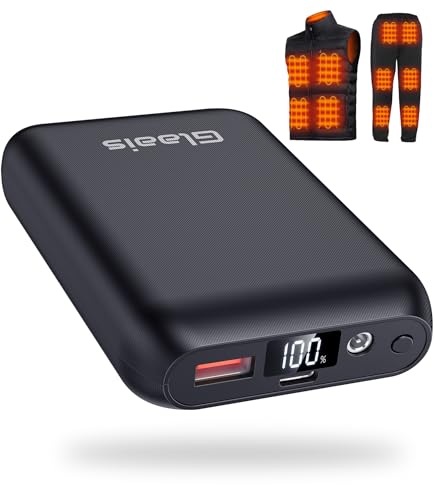
Glaais 5V 7.4V 16000mAh Heated Vest Battery Pack

Glaais 20000mAh 7.4V 5V Heated Vest Battery Pack

AKTTKA Rechargeable C Batteries 4 Pack 7400mWh

ColdBye 12V Battery Pack with Built-in USB-C Cable

HiLetgo 10pcs 5V 1A 18650 TP4056 Charging Board

imuto Rechargeable AA Batteries with Charger 12 Pack

AKTTKA Rechargeable AAA Lithium Batteries 8 Pack USB-C

QLRR Rechargeable AA Lithium Batteries 8 Pack 1.5V 3600mWh
A Closer Look At Each Pick
This twelve-pack earns the top slot because it solves the most common household headache: a drawer full of dead AAAs and no idea which ones still work. The bundled dock recharges lithium cells at 1.5V, so you can swap them into remotes, wireless mice, and small toys without thinking about chemistry differences. Compared to the imuto AA set later in the list, this one targets the smaller form factor that most people reach for more often.
The LCD panel on the charging base shows remaining capacity at a glance, which removes the guesswork from staggered top-ups. For most homes, a fresh set of twelve covers the household’s AAA-needing devices for months between full recharges.
Positive Points
- Twelve-cell bundle covers remotes, toys, and clocks without buying more
- LCD dock displays per-battery charge status during the cycle
- Lithium chemistry holds voltage longer than alkaline under consistent draw
- USB-C input means a single cable works with modern phone chargers
Honest Caveats
- Higher upfront cost than alkalines, though lower long-term per-use cost
- The dock adds counter clutter; the AKTTKA 8-pack later is simpler if space is tight
Whose Shelf It Belongs On
Busy households with a rotating cast of remotes, game controllers, and kids’ toys benefit most from this format.
Where Another Pick Suits Better
The AKTTKA 8-pack makes more sense for someone who prefers individual USB-C ports over a shared dock.
Moving from household cells to apparel, this Glaais pack is built around the 7.4V DC standard that most heated vests use. The 18400mAh capacity sits in the middle of the heated-gear range, giving several hours of warmth on medium settings. Unlike the ColdBye multi-voltage option, this unit focuses on heated clothing specifically.
Three output ports cover USB, USB-C, and the barrel-style DC plug common to ORORO-style gear. The integrated LED readout lets you check remaining charge without pulling the pack out of your vest pocket, which is a small but appreciated touch on cold mornings.
What Makes Sense
- Three-port output supports vest, phone, and accessories from one pack
- 7.4V DC output matches the dominant heated-apparel standard
- LED battery indicator removes guesswork in cold conditions
- Mid-range capacity balances weight and runtime for most commutes
Points To Keep In Mind
- Owners commonly report the 5V USB port running slower than dedicated phone power banks
- Bulkier than the smaller household cells reviewed earlier; not pocket-friendly for daily carry
Made For
Outdoor workers, winter commuters, and anyone whose ORORO-style vest needs a dedicated, mid-weight power source.
Consider Something Else When
The Glaais 20000mAh pack works better for users prioritizing longer warmth over a lighter carry weight.
Slightly smaller than its 18400mAh sibling, this Glaais pack trades raw capacity for a more adaptable plug design. The DC barrel connector accepts 3.5mm, 3.8mm, and 4.0mm tips, which covers most brands of heated clothing on the market. For households that own vests from different makers, this flexibility matters more than a few extra milliamp-hours.
At 16000mAh, you trade some warmth hours for a noticeably lighter pocket. The display remains a clear LED readout, and the unit is specifically labeled as not suited for 12V gear, so anyone with a higher-voltage system should skip ahead.
Advantages To Know
- Three plug diameters cover most 7.4V heated brands out of the box
- Lighter carry weight than the larger Glaais units
- LED display shows remaining charge in clear increments
- Stable DC output specifically tuned for apparel heating elements
Practical Considerations
- Not compatible with 12V heated gear; verify your vest’s voltage first
- Capacity drops below the 18400mAh and 20000mAh options, so very long outings may need a top-up
Right Fit For
People who own heated apparel from multiple brands and want one pack that travels between vests without adapter juggling.
Skip It When
The Glaais 20000mAh version suits users with single-brand gear who prioritize maximum warmth duration.
At 20000mAh, this is the largest of the Glaais heated-apparel packs, and the runtime numbers follow suit. On a low heat setting, owners can expect double-digit hours of warmth, which makes this the right pick for hunting trips, long stadium events, or anyone working outside through a full shift. Two DC adapter cables ship in the box, covering both 4.0mm and the smaller 3.5/3.8mm plugs.
The trade-off is weight. Pocket carry is possible but noticeable, and most users will tuck this into an inner vest pocket or a belt pouch rather than jeans. Compared to the 16000mAh unit, you gain roughly 25% more capacity for a meaningful step up in stamina.
A Few Highlights
- Largest capacity in the heated-vest category at 20000mAh
- Two DC adapters included for multi-brand compatibility
- Dual output supports vest plus a phone or accessory at once
Less-Strong Areas
- Heavier than the smaller Glaais packs, so casual users may find it excessive
- Charging the pack from empty takes several hours; not ideal for quick turnarounds
- Limited to 7.4V gear; not a fit for 12V heated products like the ColdBye unit
Feature Snapshot
Best Suited To
Ski patrollers, construction crews, and serious outdoor enthusiasts whose vests run on high settings for hours.
A Better Fit Elsewhere
The Glaais 16000mAh pack is the more practical carry for short commutes where weight matters more than endurance.
Few products on this list solve a more specific problem: gear that takes C cells, which most modern battery packs ignore. Lanterns, portable radios, and some automatic soap dispensers need this form factor, and these AKTTKA cells deliver 7400mWh rated energy with a stated 500+ cycle life. For an emergency-preparedness kit, this chemistry outlasts disposable alkalines by years.
The 1.5V output matches standard C cells, so no device modifications are needed. Storage is straightforward, and the cells hold charge well between uses, which matters for gear that sits in a closet most of the year.
Notable Upsides
- Rechargeable C cells fill a form factor that most packs skip
- 500+ cycle rating supports years of regular use
- Drop-in 1.5V replacement for disposable C batteries
- Low self-discharge keeps emergency lanterns ready for months
Things To Consider
- Higher per-cell cost than standard C alkalines; value comes from repeated use
- Requires a compatible charger; check before purchasing
Who Should Grab It
Camping households, preppers, and anyone running lanterns or radios on C cells benefits most from this format.
Another Choice May Suit
The M2CSMK AAA pack serves homes whose devices run on the smaller cell size, which is far more common today.
The ColdBye pack stands out for one specific reason: it spans 5V and 12V output in a single brick, which the Glaais units do not. That dual-voltage design makes it a fit for heated camping chairs, LED strips, and certain breast pumps alongside standard USB-C phones. The integrated USB-C cable, rated for 10,000 bends, removes one more cable from your bag.
Capacity splits between 20000mAh at 5V and 6500mAh at 12V, reflecting the higher draw of 12V gear. For most heated-vest users on 7.4V, this is not the right match, but for 12V appliances it solves a real gap in the lineup.
The Practical Payoff
- Built-in USB-C cable doubles as a tested lanyard strap
- 12V DC output supports higher-draw heated furniture and appliances
- USB-C PD 18W output handles fast-charging phones
Where It Is Less Suited
- 7.4V heated vests draw less efficiently through the 12V port
- 12V capacity is much smaller than 5V capacity; runtime drops fast on high-draw gear
Perfect Match For
Campers and travelers who run a mix of 12V heated chairs, LED strips, and phones from one power source.
Reach For A Different Pick When
The Glaais 18400mAh pack is the smarter buy for vests running on the more common 7.4V standard.
This is not a battery at all but a charger module, included here because DIY builders searching for 5V rechargeable power end up here too. The TP4056 chip is the workhorse of the 18650 charging world, with built-in protection against overcharge and over-discharge. A ten-pack means you can build multiple projects or keep spares when one module inevitably gets fried on the workbench.
Input is micro-USB at 5V, so any phone charger powers it. Charging cuts off at 4.2V, the standard full-charge threshold for lithium cells, which extends cell longevity when paired correctly.
Useful Touches
- Ten-pack supports multiple builds or bench-test spares
- Built-in protection circuitry safeguards bare 18650 cells
- 5V micro-USB input works with common phone chargers
Trade-Offs To Consider
- Requires soldering skills and 18650 cells, which are sold separately
- 1A maximum charge current is slow for high-capacity cells
- Not a finished consumer product; not appropriate for non-technical shoppers
Built With In Mind
Makers, robotics hobbyists, and flashlight modders who already work with 18650 cells benefit most from this format.
Not Your Match When
The imuto AA pack is the friendlier option for households that just need working batteries with no soldering required.
AA cells still dominate game controllers, VR grips, and smart-home sensors, which is why the imuto 12-pack earns its spot. The 4200mWh rating per cell exceeds standard NiMH rechargeables, and the 2A output supports higher-drain devices that older AA chemistries struggled with. Compared to the QLRR AA pack later in the list, this one pushes more current under load.
The bundled charger handles all twelve cells in a single bay, and the constant 1.5V output means controllers see full power for the entire cycle rather than the gradual fade that NiMH cells produce.
Benefits That Matter
- 2A output supports Xbox, Meta Quest, and Blink camera demands
- Twelve cells keep a household’s worth of controllers running
- Constant 1.5V holds performance through full discharge cycle
- Bundled charger handles the whole pack at once
Possible Compromises
- Larger charger footprint than the AKTTKA 8-pack with built-in USB-C ports
- Higher price per cell than basic NiMH AAs; savings come over time
Quick Facts
Who Will Love This
Gamers, VR users, and smart-home owners running multiple controllers and battery-powered sensors.
Where Another Pick Suits Better
The QLRR AA pack is the more economical pick for households with mostly low-drain AA devices.
The selling point here is simplicity. Each cell has its own USB-C port, and the included 1-to-4 cable charges four batteries at once from any 5V source. No dock, no separate charger brick, and no need to find an outlet near the kitchen drawer where you store batteries.
The 1100mWh capacity sits in a sensible middle ground for AAA cells, and the LED flash indicator on each battery confirms charging progress without any extra app or display. Compared to the M2CSMK 12-pack at the top of the list, this trades raw count for portability of the charging kit.
Everyday Wins
- No charging dock required; USB-C cable does the work
- Built-in LED on each cell shows charging status
- 1-to-4 cable charges four cells from one USB port
- Compact kit fits in a drawer or travel pouch
Small Caveats
- Only eight cells versus twelve from the M2CSMK option
- Per-cell capacity is lower than the larger household packs reviewed earlier
The Right Fit
Travelers and small households who value charging simplicity over maximum cell count.
Swap It Out When
The M2CSMK 12-pack is the stronger pick for households with a higher AAA demand across many devices.
The QLRR 8-pack closes the list as a sensible, no-frills AA option for households that don’t need controller-grade output. The 3600mWh capacity handles remote controls, clocks, and small flashlights comfortably, and the constant 1.5V output prevents the slow performance drop that frustrates users of older rechargeables.
Eight cells is enough for most low-drain AA setups, and the bundled charger manages the full pack in one bay. For users who want a balance between cost and capability, this is a measured step above disposable alkalines without the higher price of the imuto set.
Well-Handled Touches
- 3600mWh capacity outlasts standard alkaline AAs in regular use
- Constant 1.5V keeps devices performing consistently
- Eight-cell pack with bundled charger for immediate use
Areas To Watch
- Lower output current than the imuto AA set; not suited for high-drain gaming controllers
- Eight cells may fall short for households with many AA devices
Who It Suits Best
Households running remotes, clocks, and flashlights on AA cells who want rechargeable convenience without paying for high-drain capability.
Look Elsewhere When
The imuto 12-pack is the stronger choice for gamers and VR users who need higher sustained current.
Choosing the Right Capacity and Format for Your Gear
Match the cell format to the device, not the other way around. AAA remains the most common household size and covers remotes, small toys, and wireless mice. AA handles controllers, smart-home sensors, and flashlights. C cells, like the AKTTKA set, fill a niche for lanterns and portable radios. Heated apparel needs a different conversation entirely, since those packs output at 7.4V or 12V through a barrel plug, not a standard cell slot.
Capacity numbers translate differently across formats. A 7400mWh C cell and a 1100mWh AAA cell are not directly comparable; the C cell simply has more physical volume for active material. Think in terms of how long you want the device to run between charges rather than chasing the highest milliamp-hour figure.
Chemistry matters too. Lithium cells hold voltage longer under continuous draw than NiMH, and the lithium AAAs reviewed here generally last more cycles than older rechargeables. For heated apparel, higher mAh means longer warmth but heavier carry. Choose capacity based on your typical outing rather than maximum possible endurance.
Connector compatibility catches many first-time buyers off guard. Heated vests from different brands use different barrel plug sizes, and a pack designed for 7.4V gear will not work on 12V chairs or LED strips. Check your device’s voltage and plug diameter before committing.
Key Considerations Across These Picks
Pitfalls Shoppers Hit
Buying a 12V battery pack for a 7.4V vest is the most common mismatch, and it usually results in no power at all. Skipping the plug-size check is the next frequent error; heated apparel from ORORO uses 4.0mm, while several other brands use 3.5mm or 3.8mm. Verify both voltage and barrel diameter before adding a heated-apparel battery to your cart. For household cells, confusing mAh with mWh leads to wrong comparisons, since the two measure different things.
Where The Extra Money Goes
Higher-capacity heated-vest packs command more because they use larger lithium cells and sturdier housing. The jump from 16000mAh to 20000mAh roughly tracks a 25% increase in runtime at the cost of noticeable pocket weight. For household cells, the upgrade from basic rechargeables to lithium chemistry delivers better voltage retention and more cycles, which pays off for heavy users who would otherwise burn through disposables quickly.
Frequently Asked Questions
How long do 5V rechargeable batteries typically last?
Lithium household cells commonly deliver 500 or more charge cycles before significant capacity loss, which often means several years of regular use. Heated-apparel packs vary more because they sit on the body and see more temperature stress, but 300 to 500 cycles is typical.
Can I mix lithium and NiMH batteries in the same device?
It is best to keep chemistries consistent within a single device. Lithium cells hold 1.5V longer while NiMH gradually drops, and mixing them can lead to uneven performance or, in some devices, charging errors if a charger expects one chemistry.
Do heated-vest batteries work in the rain?
Most heated-apparel packs carry basic splash resistance but are not fully waterproof. Owners commonly tuck the pack into an inner pocket to keep it dry, since water intrusion can damage the output circuitry even when the cells themselves are sealed.
Why does my heated vest battery die so fast on high?
High heat settings pull the maximum current the vest allows, often 2A or more, and runtime shrinks accordingly. Most packs deliver 5–7 hours on high but stretch to 11–16 hours on low, so dialing down the setting dramatically extends a single charge.
Can I take rechargeable lithium batteries on a plane?
Lithium household cells in carry-on luggage are generally permitted under most airline rules, but spare cells must stay in carry-on rather than checked bags. Heated-apparel power banks fall under larger lithium battery rules, so capacity matters and you should check your airline before flying with a 20000mAh pack.
The Takeaway
The best 5V rechargeable battery for your situation depends entirely on what you need to power. Household cells in AAA and AA formats cover the most ground for daily life, while dedicated heated-apparel packs handle the colder months and outdoor work. Match the format, check the plug, and choose capacity based on your typical session length rather than the largest number on the spec sheet.