A dead battery has a way of ruining a perfect weekend. Trailheads turn into walk-backs, plowing days stall mid-driveway, and a kid’s Power Wheels sits lifeless in the garage. The right replacement turns all of that around, but the category is crowded with model numbers, CCA ratings, and battery chemistries that sound interchangeable until they aren’t.
This roundup sorts ten current options by the kind of riding you actually do, from vintage Honda restorations to full-size UTV workhorses and kids’ ride-on toys. Each pick below matches a specific fitment and use case, so you’re choosing on what matters: terminal layout, dimensions, cold-cranking output, and whether the chemistry is AGM or gel.
The Leading Options At A Glance
The Leading Options At A Glance

Polaris Battery Box, Genuine OEM Part 5434037

Caltric AGM Battery for Honda TRX125 Fourtrax

Mighty Max 6V 4.5AH Battery for Power Wheels
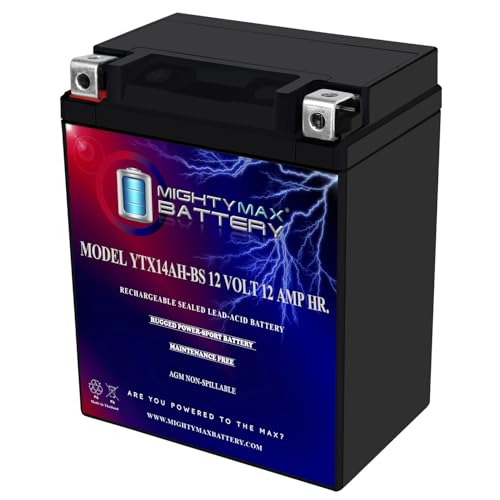
Mighty Max YTX14AH 12V 12AH Battery for Yamaha YFM225

Mighty Max YTX14AH-BS GEL 12V Battery for Polaris Sportsman 450

Caltric AGM Battery for Honda Rancher 350

ExpertPower YTX7A-BS 12V 7Ah AGM Battery
Goodyear GYTX14 12V 16AH 210 CCA AGM Battery

Goodyear GYTX12 12V 14AH 190 CCA AGM Battery

Goodyear GYTX9 12V 10AH 135 CCA AGM Battery
More Details On Our Top Picks
Unlike the other items on this list, this entry is a battery box, not a battery itself. Polaris RANGER owners dealing with a cracked, corroded, or missing factory enclosure will recognize the problem immediately: a battery sitting loose under the seat is a vibration hazard waiting to happen. Part 5434037 is the genuine OEM housing engineered for specific RANGER fitments, which means the mounting tabs and vent routing line up with the factory wiring harness.
The honest read is that you only need this part if your existing box is damaged or you’ve swapped to a battery size that won’t seat correctly in the original tray. For most casual trail riders, the stock plastic box holds up for years. This is the fix when it doesn’t, and it arrives built specifically for your machine rather than a generic aftermarket substitute.
Where It Excels
- Genuine OEM fitment removes the guesswork from installation on supported RANGER models
- Factory-matched mounting points preserve the wiring layout and vent routing
- Restores the original containment and protection around the battery
- Avoids the vibration-related terminal wear that comes with a loose battery
Things To Consider
- Not a battery, so you’ll still need to source a separate 12V unit to fill it
- Fitment is locked to specific Polaris RANGER models, not a universal tray
Whose Trail Rig It Belongs On
RANGER owners with a cracked or missing factory battery tray who want a guaranteed OEM replacement without fabrication work.
A Better Fit Elsewhere
For a battery replacement that fits the same RANGER platform, the Mighty Max YTX14AH-BS GEL option covers the 12V power side.
Restoring a mid-eighties Honda TRX125 means sourcing parts that nobody stocks at the local dealership anymore. Caltric’s AGM (Absorbed Glass Mat, where the electrolyte is held in fiberglass mats rather than pooled liquid) unit is built around that exact 1985 to 1986 Fourtrax fitment, so the terminals, case dimensions, and venting line up with the factory tray. You get a sealed, maintenance-free cell where the original bike took a serviceable flooded unit.
The trade-off shows up in cranking output, which is modest by modern standards. That’s fine for a restored trail machine that starts easily on warm summer weekends, but if you’re still using the TRX125 as a winter work quad, expect slower cold-starts. For restoration projects and weekend trail use, the chemistry upgrade alone is worth the swap.
The Helpful Details
- Direct-fit AGM for the 1985-1986 TRX125 Fourtrax 2×4, removing terminal adapter headaches
- Sealed construction means no electrolyte top-offs during long winter storage
- Cross-listed fitment for older Suzuki, Aprilia, and Piaggio applications adds flexibility
Worth Noting
- Lower cold-cranking output than modern YTX-series batteries, depending on your climate
- Specific fitment means you must verify your exact model year before ordering
- Image listings for this model often don’t render, so dimension checks rely on the posted specs
Right Fit For
Honda TRX125 restorers and owners of vintage 1985-1986 Fourtrax quads who want a sealed upgrade over the original flooded battery.
Look Elsewhere When
Caltric’s Rancher 350 battery is the better pick for anyone working on a 2000-2006 Honda Rancher platform instead of the vintage TRX line.
Power Wheels toys chew through batteries faster than adults expect, and the OEM replacements are notoriously expensive. This Mighty Max six-pack is built around the small-form-factor 6V 4.5Ah SLA (Sealed Lead Acid) cell that fits the Fisher-Price Harley Rocker and similar ride-on machines. Because it ships as a six-pack, you’re essentially stocking a multi-year supply for the cost of two OEM units.
The trade-off is that the listing ships cells only, with no wire harness or mounting hardware, so you’ll be reusing your existing connectors. For most parents, that’s a five-minute swap. The dimensions land at 2.76 by 1.89 by 4.21 inches with F1 terminals, and the listing notes UL certification on the cells themselves.
A Few Strong Suits
- Six-cell bulk pack keeps spare batteries on hand for years of ride-on toy use
- Compact footprint fits the Fisher-Price Harley Rocker and similar 6V toys
- Sealed lead-acid construction is spill-proof and safe around kids
- Cells arrive UL Certified for basic safety verification
Points To Note
- Battery and screws only, no wire harness or mounting accessories included
- Shorter cycle life than larger AGM batteries designed for adult powersports use
Made For
Parents with multiple Power Wheels machines or anyone wanting backup 6V cells in the garage before the next birthday.
Consider Something Else When
For an adult-sized powersports application, the Goodyear GYTX14 is the stronger choice with much higher cold-cranking output.
Yamaha’s 1986 to 1988 YFM225 Moto 4 has a devoted following, but finding a battery that drops into the original tray without terminal adapters is a regular headache. Mighty Max’s YTX14AH AGM is sized for that exact fitment, and the 210 cold-cranking amps (CCA, the measure of how much current a battery can deliver at 0°F for 30 seconds) easily turn over the Moto 4’s 225cc four-stroke. The case measures 5.20 by 3.50 by 6.40 inches, which matches the factory battery hold-down.
The catch is that this is a battery-only listing. You reuse your existing terminal hardware and mounting brackets. For a vintage quad that hasn’t seen hard service in decades, expect a faster, more reliable start compared to whatever old flooded cell is still in there. Polarity is positive-on-left, negative-on-right, so double-check against your existing configuration before you splice.
What Pays Off
- 210 CCA delivers reliable cold-starting for the 225cc four-stroke engine
- Direct-fit dimensions eliminate the need for shims or spacer fabrication
- Sealed AGM chemistry means no acid spills during off-camber trail riding
- Wide operating temperature range handles cold-weather garage starts
Trade Offs
- Listing ships battery and screws only, no wire harness included
- AGM chemistry has higher self-discharge than gel, depending on storage conditions
Feature Snapshot
Best Suited To
Yamaha YFM225 Moto 4 owners from 1986 through 1988 who want a direct-fit replacement without fabrication or adapter cables.
Not Your Match When
The Mighty Max YTX14AH-BS GEL battery is a better choice for newer Polaris Sportsman 450 riders seeking slower self-discharge.
Polaris Sportsman 450 HD 2×4 riders from 2016 through 2019 have a fairly common winter problem: the AGM battery loses charge in the off-season and won’t turn over the engine come spring. The Mighty Max GEL (a chemistry where the electrolyte is suspended in a silica-based gel rather than absorbed in mats, giving lower self-discharge) version of the same YTX14AH form factor is built to address exactly that. The slower self-discharge rate means it holds charge longer when the machine sits in storage for weeks at a time.
Same 210 CCA output as the AGM sibling, same 12Ah capacity, but the gel construction has practical ownership benefits worth mentioning. You get a maintenance-free cell that resists vibration damage on rough trails, and you don’t have to think about venting the battery compartment as carefully as you would with flooded units.
Useful Touches
- Slower self-discharge rate keeps the battery ready after long winter storage
- Gel chemistry handles trail vibration better than standard flooded batteries
- Maintenance-free design removes electrolyte top-off from your spring checklist
- Direct-fit for 2016-2019 Polaris Sportsman 450 HD 2×4 applications
Things To Weigh
- Gel cells can be sensitive to overcharging from older unregulated charging systems
- Slightly higher cost than the equivalent AGM version of the same form factor
Perfect Match For
Polaris Sportsman 450 HD owners who store their machines through winter and want a battery that holds charge between rides.
Skip It When
The Goodyear GYTX14 makes more sense for larger ATVs or UTVs that need a higher amp-hour capacity than this 12Ah cell provides.
The Honda Rancher 350, especially the TRX350TE and TRX350TM ES variants from 2000 through 2006, is one of those workhorse quads that keeps running long after newer machines have given up. Caltric’s AGM replacement matches the factory battery dimensions and terminal layout, so the install drops into the stock tray without shimming. The sealed AGM construction means you stop worrying about electrolyte levels on a tilted machine.
Compare that to the original flooded battery, which required periodic water checks and venting. The honest read is that owners commonly report this swap as a set-it-and-forget-it upgrade, especially for utility quads that see mud, water crossings, and dusty trails. Always cross-check the posted image against your existing battery before ordering.
Noteworthy Benefits
- AGM absorbed glass mat design wicks electrolyte for spill-proof operation
- Maintenance-free chemistry removes the need for periodic water service
- Direct-fit replacement for 2000-2006 Rancher 350 ES and S models
- Better vibration tolerance than flooded batteries for trail and utility use
A Few Limitations
- AGM cells require proper voltage regulation, so older charging systems may need inspection
- Posted product image must be matched against the existing battery before purchase
Spec Overview
Who Should Grab It
Rancher 350 ES and S owners running 2000-2006 model years who want a sealed upgrade over the original flooded battery.
Where Another Pick Suits Better
The Caltric battery for the TRX125 is a stronger match for vintage Honda restorers working on pre-1990 four-wheelers.
Compact 50cc to 150cc powersports applications need a battery that fits the small factory tray without modification, and ExpertPower’s YTX7A-BS is sized for exactly that class. The 180 CCA output is well above what most small displacement quads and mopeds actually require, which translates to confident cold-weather starts on smaller engines that struggle with marginal batteries.
The OEM-style fitment means the terminals, vent ports, and mounting brackets line up with the factory configuration. For most backyard swaps, you’re looking at a 10-minute job with basic hand tools. Just verify your machine’s required battery model number against the YTX7A-BS spec before ordering, since the 7Ah capacity is lower than larger quad batteries on this list.
Well-Handled Touches
- 180 CCA output exceeds the typical demand of 50cc-150cc powersports engines
- OEM-fit form factor drops into factory trays without spacer work
- Sealed AGM construction means no acid venting in tight battery compartments
- Versatile fitment covers mopeds, quads, and small powersports machines
Honest Caveats
- 7Ah capacity is on the low end for larger utility quads with winch accessories
- Compact dimensions mean it doesn’t physically interchange with larger YTX-series batteries
Who Will Love This
Riders of small displacement 50cc-150cc ATVs, mopeds, and quads who want an OEM-spec battery that exceeds the factory’s starting-power requirements.
Another Choice May Suit
The Goodyear GYTX9 is the step-up pick for riders needing slightly more amp-hour capacity in a similar compact footprint.
Larger ATVs, UTVs, and 4-wheeler machines with accessories like winches and auxiliary lighting need a battery that delivers more than just a quick start. Goodyear’s GYTX14 lands at the top of the amp-hour scale on this list, with 16Ah capacity paired with the same 210 CCA output as smaller batteries. That reserve capacity matters when you’re running heated grips, light bars, or a winch on a cold morning.
Built around a sealed and maintenance-free AGM design, this unit can be mounted in flexible positions (except upside down, which is true for most AGM batteries of this type). It handles shock and vibration from rough trails, and the high discharge rate with deep discharge recovery means it recovers well from accessory drain.
Why It Works Well
- 16Ah capacity supports accessory loads like winches and auxiliary lighting
- 210 CCA output handles cold-weather starting on larger displacement engines
- Flexible mounting positions except upside down for varied installation layouts
- Resistant to shocks, vibration, and extreme temperature swings
Practical Considerations
- Larger physical footprint requires verification against your existing battery tray
- Higher capacity comes with added weight compared to compact 7-10Ah options
Feature Rundown
Built With In Mind
Owners of larger ATVs, UTVs, and 4-wheelers running winches, light bars, or other accessories that demand more reserve capacity.
Reach For A Different Pick When
The Goodyear GYTX12 is the better step-down choice for mid-size quads that don’t need the full 16Ah reserve.
Mid-size ATVs and snowmobiles occupy the middle ground where 12Ah batteries feel underbuilt but the full 16Ah units feel like overkill. Goodyear’s GYTX12 slots into that range with 14Ah capacity and 190 CCA output. The trade-off is balanced: enough reserve for a moderate accessory load, without the extra weight of the larger GYTX14.
The sealed and maintenance-free AGM design installs in flexible positions except upside down, which gives you options in tight battery compartments. Same shock and vibration resistance as the heavier sibling, with deep discharge recovery for accessories that occasionally drain the cell below optimal levels.
The Case For It
- 14Ah capacity hits the middle ground for mid-size quads and snowmobiles
- 190 CCA output balances cold-starting power with reasonable weight
- Flexible mounting orientation (except upside down) for tight compartments
- Deep discharge recovery helps recover from accessory drain situations
Where It May Fall Short
- Capacity is below what heavy winch users typically want for sustained loads
- Mid-size footprint still requires measurement verification for older battery trays
Quick Facts
The Right Fit
Mid-size ATV and snowmobile owners who want a balance between the compact GYTX9 and the higher-capacity GYTX14.
A Better Fit Elsewhere
The Goodyear GYTX9 makes more sense for compact quads where weight and dimensions matter more than reserve capacity.
Smaller displacement quads, youth-sized ATVs, and lightweight trail machines benefit from a battery that doesn’t add unnecessary mass to the chassis. Goodyear’s GYTX9 lands at the compact end of the Goodyear powersports line with 10Ah capacity and 135 CCA output, sufficient for engines up to mid-displacement without the bulk of larger form factors.
The same maintenance-free AGM construction runs through this unit, so you get flexible mounting orientation and spill-proof operation in a smaller package. For trail riders who count grams on their machines or who run a compact snowmobile setup, this is the sensible size match.
Real-World Strengths
- Compact 10Ah form factor suits smaller quads and youth-sized machines
- 135 CCA output handles starting demands of mid-displacement engines
- Maintenance-free AGM construction for spill-proof trail use
- Flexible mounting orientation simplifies installation in tight compartments
Details To Watch
- 10Ah capacity limits how long accessories can run with the engine off
- Lower CCA output may struggle in extreme cold-weather starting conditions
Feature Snapshot
Whose Shelf It Belongs On
Compact ATV and small-displacement riders who want a lightweight replacement without overbuilding for their machine’s actual demands.
Swap It Out When
The ExpertPower YTX7A-BS is a reasonable alternative for 50cc-150cc applications needing an even more compact footprint.
What To Weigh Before Choosing a New 4 Wheeler Battery
Cold-cranking amps tell you how hard a battery can push during startup, and that rating matters most for machines stored in unheated garages or ridden through winter. A 210 CCA battery like the Mighty Max YTX14AH or Goodyear GYTX14 will crank over a stubborn engine when a 135 CCA unit hesitates on a freezing morning. Match the rating to your climate and engine size rather than chasing the highest number on the shelf.
Amp-hour capacity is the second spec to watch. Think of it as the fuel tank for electrical accessories: a winch, light bar, or heated grips will drain a 7Ah cell fast, while a 16Ah unit gives you enough reserve for a full day of accessory use with the engine off. Riders running stock electrical systems with no extras can safely drop to the smaller-capacity batteries in this roundup.
Chemistry matters for storage behavior and maintenance. AGM (Absorbed Glass Mat) batteries are sealed and spill-proof, which makes them the practical default for most off-road machines that see tilting, water crossings, and vibration. Gel batteries hold charge longer in storage, which is the deciding factor for seasonal riders who don’t touch their machines for months at a time. Flooded batteries, which the OEM units often are, require periodic electrolyte checks and aren’t on this list because the sealed designs have largely replaced them.
Fitment is where most buying mistakes happen. A battery that matches the voltage and capacity but misses the dimensions, terminal layout, or polarity will sit in your garage forever. Always cross-check the model number against your machine’s factory battery specification before ordering, and pay attention to terminal polarity (positive-on-left versus positive-on-right) since reversing that wiring damages the electrical system.
Key Considerations Across These Picks
Common Buying Mistakes
The most frequent mistake is matching on voltage alone. A 12V battery with the wrong physical dimensions won’t seat in the tray, and a unit with the wrong terminal polarity forces rewiring that most riders would rather avoid. Always verify model number, dimensions, and polarity before completing a purchase.
A second trap is overbuilding for a small engine. A 16Ah battery in a 50cc quad adds weight and cost without delivering any practical benefit. Match the battery to the machine’s actual demand rather than the highest-capacity option on the shelf.
What The Higher Tier Costs More
The jump from a 10Ah to a 16Ah battery isn’t just about capacity. Higher-tier units typically add stronger vibration resistance, deeper discharge recovery, and better cold-weather performance. For utility quads running winches or riders in genuinely cold climates, that extra cost pays back in fewer dead-battery mornings and longer service life between replacements.