A dead battery on a Saturday morning is the kind of small disaster that ruins plans fast, especially when the cables holding everything together are undersized, corroded, or just plain wrong for the current draw. The 4 AWG (American Wire Gauge) class hits a sweet spot for car audio, solar banks, marine trolling motors, inverter hookups, and small welding leads, balancing current capacity with cable you can still route through tight engine bays and battery boxes. Choosing the right 4 Ga Battery Cables comes down to conductor quality (oxygen-free copper vs. CCA, or copper-clad aluminum), insulation type (PVC vs. EPDM rubber, which is ethylene propylene diene monomer, a flexible synthetic rubber that resists heat and solvents), strand count for flexibility, and whether you need pre-crimped lugs or raw cable to cut yourself. The list below covers ten solid options across raw wire, pre-assembled leads, and termination lugs, so you can match the cable to the job without overpaying for features you won’t use.
The Main Contenders

Kimbluth 4 Gauge Battery Cable 5FT Red + Black
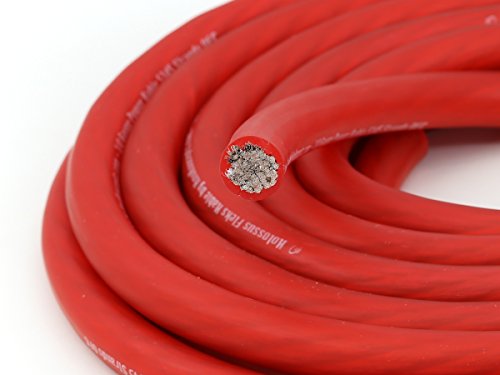
KnuKonceptz Kolossus Flex Kable OFC 4 Gauge (10 ft) Red

End Game 4 AWG Fully Assembled Battery Cable (8ft Single Red)

InstallGear 4 Gauge Battery Cable 25ft OFC

A ABIGAIL 4 AWG Battery Inverter Cable 2FT with Lugs

WindyNation 4 AWG Welding Cable 15ft Red + Black + Lugs

EWCS 4 Gauge Extra Flexible Welding Cable 25ft Black + Red

EWCS 4 Gauge Welding Cable 100ft Black

HOUSUN 10PCS 4 Gauge Copper Lugs 1/4″

MOOKEERF 4 Gauge Battery Cable 3FT Red + Black OFC
The Details Behind The Selections
The Kimbluth pair ships with 5 feet of red and 5 feet of black 4 AWG raw cable, aimed at the small workshop or weekend DIYer who needs a short, flexible hookup for a battery-to-inverter or ground-return run. The conductor uses 99% pure oxygen-free copper (OFC) bundled into many fine strands, which keeps the cable pliable enough to bend around battery trays without kinking. Unlike the heavier-duty KnuKonceptz option below, it stays in the more approachable price tier while still giving you copper conductivity rather than aluminum.
You cut and terminate the cable yourself with your own lugs, so the experience depends a lot on what crimping tool you have on hand.
Well-Handled Touches
- 99% OFC strands for better current flow than CCA at this size.
- PVC jacket that resists gasoline, battery acid, and abrasion in engine bays.
- Comes as a red-and-black pair, which saves a second order for negative runs.
- Lightweight enough to coil and stash in a small toolbox.
Things To Consider
- Raw ends mean you need to source lugs and a crimper separately.
- 5 feet is tight for anything beyond a single-battery or short inverter hookup.
- PVC jacket is fine for most cabins, though EPDM holds up better around hot engine components.
Made For
First-time installers wiring a small solar shed, a boat electronics box, or a single-battery accessory circuit who want copper without the cost of a full kit.
Look Elsewhere When
You need a sealed, pre-crimped lead out of the box, in which case the End Game 4 AWG Fully Assembled Battery Cable (8ft Single Red) saves you the tool investment.
KnuKonceptz built the Kolossus line for car audio installers who care about voltage drop across long amplifier runs. The 10-foot red spool uses 2,058 strands of tinned oxygen-free copper, which keeps resistance low and lets the cable bend through door boots and under carpet without fighting you. Where the Kimbluth above is a general-purpose DIY cable, this one targets the amp-install crowd specifically.
The matte soft-touch PVC jacket feels grippy in hand and stays flexible in cold weather, which matters when you’re working in an unheated garage in February.
Noteworthy Benefits
- High strand count improves current flow compared with coarse-strand cable at the same gauge.
- Tinned copper resists corrosion at marine or underbody mounting points.
- Exceeds AWG standards, meaning the conductor cross-section is genuine, not undersized.
- Soft matte jacket reduces snagging when pulling through tight interior panels.
Honest Caveats
- 10 feet is generous for an amp run, but you’ll need a separate black lead if your ground is far away.
- Premium pricing reflects the audio-install market, not general-purpose wiring.
- PVC jacket is rated for most interiors, though continuous engine-bay heat is better served by EPDM cable.
Best Suited To
Car audio hobbyists running a subwoofer amplifier from a battery in the trunk or under a rear seat.
Swap It Out When
You’re building a longer custom run with multiple termination points, where the WindyNation 4 AWG Welding Cable kit gives you lugs and heat shrink in the same order.
End Game skips the DIY step entirely by shipping an 8-foot positive lead with 3/8-inch tinned sealed lugs already crimped and heat-shrunk onto each end. The cable uses 99.9% pure copper wrapped in ultra-flex EPDM rubber, the same insulation you’ll find on commercial truck and RV battery banks. If you’ve ever tried to crimp 4 AWG lugs in a home workshop, the convenience of a pre-assembled lead starts to make a lot of sense.
Owners commonly use these on marine battery banks, RV house banks, and truck starting-battery replacements where the OEM cable finally corroded through.
Real Benefits
- Hydraulic-crimped, sealed lugs reduce the chance of a loose or oxidizing connection at the terminal.
- EPDM jacket tolerates oil, fuel, and engine-bay heat better than PVC alternatives.
- 99.9% pure copper gives you genuine current capacity rather than a CCA shortcut.
- Available in multiple lengths and polarity options for mixed setups.
Trade Offs
- Sealed lugs are great for stock terminals, but adapting to unusual stud sizes may require re-termination.
- Single-cable ordering means you may need to place a second order for the matching negative lead.
Key Specs
The Right Fit
Truck, RV, and boat owners replacing an old, corroded positive battery cable with a sealed, ready-to-bolt-on lead.
Reach For A Different Pick When
You want raw cable to build multiple custom lengths, where the EWCS 4 Gauge Welding Cable 100ft Black bulk spool gives you more flexibility per foot.
InstallGear’s 25-foot spool targets full-vehicle amp rewires and trailer runs where you need enough cable to reach a battery at one end and an accessory at the other without splicing. The cable is pure OFC with a heat-resistant jacket, sold without lugs so you cut and terminate where needed. If you measure a wiring run and find it’s 20 feet, the 25-foot spool gives you a sensible margin for rerouting.
Compared with the Kimbluth pair, you’re paying for length rather than convenience, and you give up the red-and-black pairing in favor of buying two spools if you need both polarities.
Reasons It Performs
- 25 feet covers full-sedan amp installs and small trailer battery runs.
- Pure OFC conductor holds voltage better than CCA at the same gauge rating.
- Heat-resistant jacket tolerates underhood and engine-bay routing.
- Comes on a single spool, which keeps the cable tangle-free during pull-through.
Worth Noting
- No included lugs means a separate purchase and crimp session.
- One-color spool forces you to order twice if you want matched red and black runs.
Who Should Grab It
Installers rewiring a complete car audio system or DIYers running power to a remote battery box in a trailer.
A Better Fit Elsewhere
You only need a short, pre-terminated lead for a single-battery swap, in which case the A ABIGAIL 4 AWG Battery Inverter Cable 2FT with Lugs arrives ready to bolt on.
The A ABIGAIL 2-foot lead is purpose-built for tight inverter hookups, the kind where you bolt a 1000W inverter directly to a battery box and want zero excess cable to manage. Both ends ship with 3/8-inch tinned copper lugs already crimped, so the install is essentially bolt-down-and-go. Pure copper conductor and a flexible PVC jacket round out a lead that targets a very specific niche.
It’s also a common replacement cable for solar charge controllers and small marine bus bars where the existing OEM lead finally cracked at the bend.
Benefits That Matter
- Pre-crimped tinned lugs at both ends eliminate one of the messier steps in inverter wiring.
- 2-foot length keeps the cable path short, which reduces voltage drop at high current draws.
- Pure copper core delivers full 4 AWG conductivity without CCA compromise.
- Flexible PVC jacket bends around tight corners in battery boxes.
A Few Limitations
- 2 feet is too short for any routing outside the immediate battery box.
- PVC insulation is fine indoors, though constant engine-bay heat pushes you toward EPDM alternatives.
Feature Snapshot
Who Will Love This
Solar and inverter installers wiring a small cabin system or RV house bank with components mounted close to the battery.
Not Your Match When
You need a longer, single-cable run from a remote battery, where the End Game 4 AWG Fully Assembled Battery Cable (8ft Single Red) gives you more reach.
WindyNation bundles 15 feet of red and 15 feet of black 4 AWG pure copper welding cable with 10 tinned copper lugs and 3 feet of black heat-shrink tubing in one box. It’s aimed at the DIYer building a custom battery bank, a portable welding lead, or a camper solar setup from scratch, where buying everything separately usually means three different orders. The cable itself is annealed (heat-softened for flexibility) pure copper with a solvent-resistant EPDM jacket.
For most DIYers, the kit format is the real draw, since the lugs and heat shrink match the conductor size and arrive together.
Good Reasons To Consider
- Bundle format cuts out multiple orders and matches components to the cable size.
- Annealed pure copper strands stay flexible across long routing paths.
- Solvent-resistant EPDM jacket suits underhood, marine, and outdoor battery setups.
- Tinned lugs arrive in the kit so the only tool you need is a crimper.
Points To Keep In Mind
- 15 feet each color is more than a small job needs, so you’re paying for material you may not use.
- Heat-shrink and lug count limit the cable to roughly five finished leads.
Perfect Match For
Garage builders wiring a complete dual-battery solar system or a portable jump-starter kit who want all the parts in one shipment.
Skip It When
You only need one short finished lead, where the A ABIGAIL 4 AWG Battery Inverter Cable 2FT with Lugs comes pre-assembled and ready to bolt down.
EWCS builds the cable for welders, where 30-gauge copper stranding (very fine individual wires bundled together) keeps the lead floppy enough to drag across a shop floor without kinking. The set ships 25 feet each of black and red 600-volt welding cable, jacketed in sunlight- and water-resistant insulation that also tolerates grease and solvents. The 600V rating here matters more for stick welding rigs than for low-voltage battery banks, but the same cable works for either.
If your battery or inverter setup lives in a workshop where you’ll be moving the lead around, the flexibility shows up the first time you coil it.
What Helps Most
- 30-gauge stranding produces one of the most flexible 4 AWG cables on the list.
- Sunlight- and water-resistant jacket suits outdoor solar and marine storage sheds.
- Coil packaging arrives ready to hang on a wall bracket or unspool into a workbench.
- Black-and-red pairing covers both battery polarities in one order.
Trade-Offs To Consider
- No lugs included, so termination is on you.
- 25 feet per color is excessive for a single inverter hookup, so you may end up coiling excess.
Whose Shelf It Belongs On
Workshop owners building welding leads or a long battery-bank run who want maximum flexibility and don’t mind ordering lugs separately.
Consider Something Else When
You’d rather have a finished lead than build one yourself, in which case the End Game 4 AWG Fully Assembled Battery Cable (8ft Single Red) arrives with sealed lugs already on.
The 100-foot EWCS spool is the bulk-buyer’s friend: same 30-gauge copper stranding and EPDM-style jacket as the 25-foot pair above, but in a single 100-foot run that’s easier to cut into multiple finished leads. US manufacturing and the same sunlight/water-resistant jacket make it a sensible choice for off-grid solar arrays or shop rewires. If you’re building several welding leads at once, the per-foot cost here drops noticeably.
You trade convenience for value, since 100 feet of black cable means ordering a separate red spool if you want color-coded polarity.
What It Does Well
- Bulk length lowers the per-foot cost when cutting multiple finished leads.
- Highly stranded copper keeps every cut piece flexible for handheld welding work.
- Sunlight- and water-resistant jacket handles outdoor routing along a roofline or shed.
- US manufacturing with the EWCS-branded coil and packaging.
Points To Note
- Single-color (black) requires a second spool for clean red/black polarity coding.
- 100 feet is overkill for a single-battery replacement or short inverter hookup.
Feature Card
Built With In Mind
Off-grid installers and shop owners building several custom welding leads or long solar battery runs from one spool.
Where Another Pick Suits Better
You only need a short finished lead, where the MOOKEERF 4 Gauge Battery Cable 3FT Red + Black OFC pair gives you matched polarities in a smaller package.
The HOUSUN pack is the only item on this list that’s pure termination hardware: 10 closed-end 4-gauge copper lugs with a 1/4-inch stud hole, ready to crimp or solder onto the end of any 4 AWG cable above. They’re built from annealed electrolytic-grade copper with a treated surface that resists corrosion, which matters at the battery post where oxidation starts. If you already have raw cable from Kimbluth, InstallGear, or EWCS, this is the matching end-piece.
The closed-end barrel design means the cable stops inside the lug instead of passing through, so you don’t need to fold strands back.
Key Advantages
- Annealed copper lugs crimp cleanly and hold tight under vibration.
- Closed-end barrel accepts the full cable without needing a fold-back trick.
- Anti-corrosion surface treatment extends service life in marine and underhood environments.
- 10-pack covers a typical small battery bank or amp install with spares left over.
Possible Compromises
- 1/4″ stud hole is the smaller common size; verify your battery post or bus bar stud before ordering.
- You supply the crimper or soldering iron, neither of which is included.
Right Fit For
Anyone terminating raw 4 AWG cable from this list into finished battery or ground leads at home.
Not Your Match When
You’d rather skip the crimping step entirely, since the End Game 4 AWG Fully Assembled Battery Cable (8ft Single Red) and the A ABIGAIL 4 AWG Battery Inverter Cable 2FT with Lugs both arrive with lugs already attached.
MOOKEERF closes out the list with 3 feet each of red and black 4 AWG stranded OFC cable, rated for 600V and a working temperature range from roughly -40°F to +221°F. The 469-strand conductor count isn’t as dense as the KnuKonceptz or EWCS options, but it stays flexible enough for short battery-to-inverter or generator hookups in tight spaces. You cut and terminate with your own lugs.
Where the A ABIGAIL 2-foot pre-lugged lead is a finished product, this is a slightly longer raw pair for someone who wants color-coded cable but doesn’t mind doing the crimp work.
Useful Highlights
- Red-and-black pairing covers both polarities in one box.
- 600V rating and broad temperature range suit generator, marine, and solar cabinets.
- Pure OFC conductor maintains current capacity without CCA compromise.
- 3-foot length is a sensible middle ground between 2-foot pre-lugged leads and longer spools.
Where It May Fall Short
- No lugs included, so you’ll need a separate termination kit and tool.
- Strand count is lower than the audio-focused KnuKonceptz option above.
Who It Suits Best
DIYers wiring a small solar generator, a marine electronics box, or a compact inverter setup who need matched color pairs without buying two spools.
Where Another Pick Suits Better
You want a finished, ready-to-bolt lead, since the End Game 4 AWG Fully Assembled Battery Cable (8ft Single Red) ships with sealed lugs already crimped in place.
Picking the Right 4 Ga Battery Cable for the Job
The single biggest decision is conductor material. Oxygen-free copper (OFC) and other pure copper constructions carry more current per gauge and resist corrosion better than copper-clad aluminum (CCA), which costs less but loses conductivity quickly at the crimp joint. If the cable is going near a battery post, in a marine engine bay, or under constant engine-bay heat, pure copper is worth the modest upcharge.
Insulation matters almost as much. PVC jackets are flexible and cheap but soften in extreme heat, while EPDM rubber stays stable from roughly -40°F up to high engine-bay temperatures and shrugs off oil, fuel, and most solvents. For underhood, marine, and welding applications, EPDM is the more durable choice; for indoor amp installs and protected battery boxes, PVC is usually fine.
Length and termination round out the decision. Measure the route along the actual cable path, not the straight-line distance, then add a foot for slack and bend radius. Raw cable is the more flexible option, since you cut exact lengths and crimp your own lugs with a kit like the HOUSUN 10PCS 4 Gauge Copper Lugs 1/4″. Pre-assembled leads like the End Game or A ABIGAIL options save the tool investment but lock you into fixed lengths and lug sizes.
Match the lug stud size to your battery post or bus bar (3/8″ is most common on automotive and marine banks, 1/4″ is typical on smaller electronics), and verify the voltage rating if the cable will feed an inverter or welding rig above 48V DC.
Key Considerations Across These Picks
Pitfalls Shoppers Hit
Underestimating length is the most common mistake. A 5-foot lead that looks right in the shop turns into a stretched, unsupported run once routed around the battery tray, so always measure the actual path with slack to spare. Mixing copper and CCA in the same run is another avoidable trap, since the two metals corrode at the junction and slowly raise resistance.
When Paying More Pays Off
Premium cable earns its keep in three places: high-vibration engine bays, marine environments with constant moisture, and long amplifier runs where voltage drop matters audibly. The KnuKonceptz, End Game, and EWCS options cost more because of denser stranding, sealed terminations, and tougher jackets, and those features show up the first time the cable faces heat, salt, or a long current draw. For a protected indoor hookup, the Kimbluth or InstallGear value picks deliver the same conductivity without the extras.