Wiring a car, boat, RV, or off-grid setup means making the right call on cable quality, and a sloppy 4 AWG run shows up fast in voltage drop, heat, and corrosion. You want conductors that match the load, terminals that seat properly, and insulation that survives the environment. This list sorts through ten solid options spanning lugs, inverter cables, jumper sets, and specialty leads, with practical notes on who each one suits and where it falls short.
A Quick View Of The Lineup

SELTERM 25pcs 4 AWG 3/8″ Stud Heavy Duty Copper Battery Cable Lugs

Sanuke 10pcs 4 Gauge-3/8 (M10) Wire Connectors, 4 AWG Ring Terminals

HiFind 4 AWG Battery Cables 3 Ft Black + 3 Ft Red, Pure Copper
HiFind 4 AWG Battery Cables 5 Ft Black + 5 Ft Red, Pure Copper
HiFind 4 AWG Battery Cables 1.5 Ft Black + 1.5 Ft Red, Pure Copper

TKDMR 10 PCS 4 AWG – 3/8 Battery Cable Lugs Copper Wire Ring Terminals
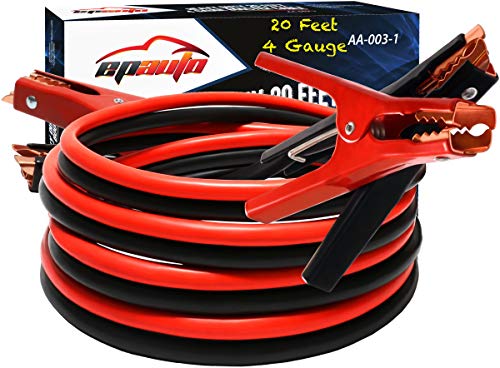
EPAuto 4 Gauge x 20 Ft Heavy Duty Jumper Cables for Car/SUV

GEARit 4 Gauge Wire CCA Amp Power Cable, Black/Red 25FT Each

Apex EC3 to 4mm Banana Charge Lead Adapter Cable, 2 Pack

MOOKEERF 4 Gauge Battery Cable 3FT Red + 3FT Black, OFC Copper
The Details Behind The Selections
A 25-count bag of bare copper lugs is the kind of thing that quietly lives in a shop drawer and gets pulled out for years. The SELTERM pack fits that role well, covering 4 AWG cable ends with a 3/8″ stud hole that lines up with most automotive, marine, and solar battery posts.
Annealed copper is the key spec here, and it’s the right call for high-current runs. You can crimp with a proper hex die and expect the terminal to hold its shape without splitting. For a multi-battery build or trailer rewiring project, having this many lugs on hand means you’re never short when a connection goes bad mid-job.
What Works In Its Favor
- 25 lugs per pack keeps a working inventory for larger projects
- Annealed (softened through heat treatment) copper takes crimps cleanly without cracking
- 3/8″ stud hole suits most automotive and marine battery posts
- Heavy-duty build rated for high-temperature environments
Things To Consider
- Bare copper finish, so sealing with heat shrink or liquid tape is wise in wet installs
- You supply the crimping tool and heat shrink separately
Who It Suits Best
Workshop owners and DIYers running a multi-battery or trailer build who want a deep bench supply of quality lugs.
Look Elsewhere When
If you only need a few lugs and want shrink tubing included, the Sanuke 10pcs set covers a smaller job with bundled insulation.
The Sanuke set bundles ten 4 AWG copper ring terminals with a matched set of color-coded heat shrink tubing. That single addition makes a meaningful difference for first-time installers, because polarity gets easier to track when red and black sleeves go on from the start.
The ring terminals share the same 3/8″ stud footprint as the SELTERM pack above, so they swap into similar projects. The shrink tubing is dual-wall adhesive, meaning the inner layer melts and seals while the outer layer shrinks tight, which adds moisture resistance at the crimp joint. You may find the count limiting on a multi-bank job, but for one or two battery upgrades it covers everything in a single buy.
Where It Delivers
- Heat shrink tubing included, color-coded red and black for polarity tracking
- Annealed electrolytic (refined for high purity) copper construction
- Dual-wall adhesive shrink seals out moisture at the crimp
- Clean entry point for anyone new to cable termination
Worth Noting
- Only ten lugs in the box, so larger builds will outrun the supply quickly
- You still need a proper hex crimp tool for best results
Made For
First-time installers handling a single battery swap or small inverter connection who want shrink tubing in the box.
Skip It When
Multi-battery builds call for the SELTERM 25-pack, which gives you headroom for mistakes and extras.
Pre-terminated cables save real time when the run is short and the route is awkward. HiFind’s 3-foot pair ships with 3/8″ lugs already crimped on both ends, so the job drops to a bolt-down exercise. The copper is oxygen-free, meaning refined to remove trapped gases that can degrade conductivity over time, and the strand count is high enough to keep the cable flexible through tight bends.
Where this length shines is in a tight engine bay or a small inverter tucked near the battery. You avoid the slack that longer cables tend to gather. For longer reaches between batteries or to a rear-mounted inverter, the 5-foot version below suits the situation better.
What Stands Out
- Pre-crimped 3/8″ lugs on both ends speed up installation
- Oxygen-free pure copper conductor for low resistance
- High strand count keeps the cable flexible for routing
- Tin-plated (coated with a thin tin layer) terminals resist corrosion in marine and outdoor use
Trade Offs
- 3-foot length is restrictive for anything beyond a near-battery inverter mount
- Lugs are sealed in place, so the cable cannot be shortened cleanly if you need less
Right Fit For
Compact engine bays, small inverter setups, and any installation where the battery sits inches from the device it powers.
Consider Something Else When
Longer runs benefit from the HiFind 5-foot set, which keeps the same construction but doubles the working length.
The 5-foot HiFind pair covers the most common automotive and marine runs without forcing you to oversize. The same oxygen-free copper and tin-plated terminals carry over from the 3-foot set above, so you get matched construction across the lineup if you’re wiring multiple devices.
Five feet is the kind of length that handles a battery-to-trunk amplifier run, a marine house bank to helm setup, or a small solar battery box to inverter hookup. You trade some flexibility for slack, and the high strand count keeps bends manageable. If your run stretches past that, custom-length cable and your own lugs become the more sensible path.
A Favorable Mix
- 5-foot length suits most mid-distance automotive and marine installations
- Pre-terminated 3/8″ lugs on both ends eliminate crimp-tool needs
- Tin-plated copper terminals hold up in salt-air and humid environments
- Stranded conductor stays pliable for routing around tight corners
Points To Note
- Fixed length means leftover slack on shorter runs
- Pair pricing puts the per-cable cost higher than bulk wire
Best Suited To
Car and truck owners running a battery-to-trunk amplifier, plus marine setups where the helm sits a few feet from the bank.
Reach For A Different Pick When
Custom-length installers with a specific route should grab the GEARit 25-foot spool and terminate to their own measurements.
When batteries sit side by side in a tight bank, 1.5 feet is often the only honest length. The shortest HiFind set handles cell-to-cell jumps, series links between two batteries, or paralleling a starter and house battery in a small footprint. Same oxygen-free copper, same tin-plated 3/8″ lugs as the longer versions above.
This is a specialty length and won’t fit most standalone projects, but for a compact battery box, a small RV house bank, or a portable solar generator, it removes the messy bundle of excess cable that longer pre-terminated sets leave behind. Compared to the Sanuke lug pack above, you trade the ability to choose your own length for the convenience of a ready-to-bolt pair.
The Case For It
- Shortest HiFind length keeps battery banks neat and tidy
- Pre-terminated 3/8″ lugs install with hand tools
- Same copper and terminal quality as the 3- and 5-foot siblings
- Perfect for cell-to-cell linking in compact layouts
Honest Caveats
- Very limited reach makes it a niche pick
- Excess cable cannot be trimmed without losing the factory crimp
Perfect Match For
Compact battery banks and portable power stations where batteries sit inches apart and excess cable would just get bundled out of the way.
Not Your Match When
Anything more than a short inter-battery link calls for the HiFind 3-foot or 5-foot sets, or the MOOKEERF 3-foot pair for welding-style applications.
The TKDMR pack mixes bare copper terminals with a 4:1 dual-wall shrink tube ratio (the tubing shrinks to one-quarter of its original diameter when heated, sealing tightly). That higher shrink ratio grips the lug base more securely than the standard 3:1 tubing, which matters when the joint lives near a heat source like an engine block.
Ten lugs is a smaller batch than the SELTERM pack above, but the bundled tubing is the difference here. Closed-end ring terminals are designed for a specific crimp profile, so you’ll want a matching hex die to seat them properly. For one-off repairs or small upgrades, this set covers the consumables you need in a single buy.
Advantages To Know
- 4:1 shrink tubing seals tighter at the lug base than standard 3:1
- Annealed copper with surface treatment for corrosion resistance
- Color-coded black and red tubing supports polarity tracking
- Compact bundle suits a single repair or small project
Softer Spots
- Smaller count than bulk packs, so larger builds will need a second buy
- Closed-end design needs a matched hex crimp die for full contact
Who Should Grab It
DIYers tackling one-off battery repairs or small upgrades who want premium shrink tubing included with their lugs.
A Better Fit Elsewhere
High-volume installers get better value from the SELTERM 25-pack and pair it with their preferred shrink tubing.
Jumper cables are their own category, but at 4 AWG they’re worth including alongside permanent wiring. EPAuto’s 20-foot set gives a generous reach for boosting a parked car from another vehicle without nose-to-nose parking, which is the real-world situation most people face in a parking lot.
The insulation jacket is engineered to resist tangling and stay flexible in cold weather, so uncoiling from a trunk in February isn’t a wrestling match. Color-coded clamps make polarity hard to mix up under stress. For trucks, SUVs, and larger-displacement engines, 4 AWG handles the load better than the lighter 6 or 8 gauge sets often sold for compact cars.
Where It Excels
- 20-foot length reaches between vehicles parked front-to-front in a lot
- Tangle-resistant jacket stays flexible in cold weather
- Color-coded clamps reduce the chance of reversed polarity in a panic
- 4 AWG handles most car and SUV starting loads reliably
Points To Keep In Mind
- 20-foot cables are bulky to store in smaller trunks
- 4 AWG is on the lighter end for heavy-duty diesel starts
Made For
Daily drivers and family SUVs that want an emergency boost kit ready in the trunk for parking-lot jump situations.
Swap It Out When
Diesel trucks and heavy equipment demand heavier gauge cables; this set is built for gasoline engines primarily.
Car audio runs are where bulk CCA (copper-clad aluminum) cable earns its keep. GEARit ships 25 feet each of red and black 4 AWG wire, enough for a trunk-mounted amplifier in a sedan or a mid-sized SUV. CCA is lighter and cheaper than pure copper, and for typical amp loads it performs without complaint.
The wire is fine-stranded and flexible, which helps when routing behind trim panels or through door boots. You supply your own lugs and terminals, so a hex crimp tool belongs on the bench. For a permanent battery-to-amp run, the length gives you slack to spare. If you’re pushing serious current at the amplifier end, pure copper cable like the MOOKEERF set below carries the load with less voltage drop over distance.
Positive Points
- 25 feet per color covers most sedans and mid-size SUV amp runs
- CCA construction is lighter and easier to route than pure copper
- Color-coded jackets make power and ground runs easy to follow
- Fine stranding handles tight bends behind trim panels
Factors To Consider
- CCA has higher resistance than pure copper over long runs
- No terminals included, so crimp tools and lugs are separate purchases
Best Suited To
Car audio installers running a battery-to-trunk amp line where weight and budget matter more than maximum conductivity.
Where Another Pick Suits Better
High-current installations benefit from the MOOKEERF pure copper pair, which drops voltage loss across longer cable runs.
Stepping outside the automotive world, Apex RC Products makes a charge lead adapter built for RC hobbyists. The 14 AWG silicone wire is far thinner than the 4 AWG cable on every other pick here, and that’s by design. RC batteries charge at lower amperage, so the lighter gauge handles the load while staying flexible.
EC3 connectors (a three-pin polarized plug common in RC batteries) on one end and 4mm banana plugs on the other let you move between charger types without rewiring. The silicone insulation stays pliable in cold garages where standard PVC stiffens. Two leads in the pack means you can wire up a parallel charging board or keep a spare on the bench.
Everyday Advantages
- EC3 to 4mm banana compatibility covers common RC chargers
- Super-flexible silicone insulation handles cold-shop charging
- Two leads support parallel charging setups
- 12-inch length keeps the bench tidy
Practical Considerations
- 14 AWG wire is undersized for any automotive or marine application
- Specialty connectors limit use to RC charging contexts
Whose Shelf It Belongs On
RC hobbyists flying drones or running LiPo battery packs who need a reliable charge lead adapter between connector standards.
A Better Fit Elsewhere
Anyone wiring a vehicle or boat battery needs true 4 AWG cable like the HiFind or MOOKEERF sets above.
Welding cable brings serious flexibility to the table, and the MOOKEERF pair leans into that. The 469-strand count beats typical battery cable, so the wire bends around corners and through tight grommets without fighting back. Pure oxygen-free copper keeps conductivity high for solar, marine, and generator hookups.
The rated temperature range from -40°F to +221°F suits outdoor installs where standard cable jackets would stiffen or soften past comfort. Fire resistance and solvent tolerance extend the working life in engine bays and bilge areas. Unlike the pre-terminated HiFind sets above, this cable ships without lugs, so plan on terminating to your own stud size with a proper crimp.
Benefits That Matter
- 469-strand conductor is more flexible than typical battery cable
- Wide temperature rating suits outdoor and engine-bay installs
- Pure oxygen-free copper for low resistance over distance
- Fire and solvent resistant insulation extends service life
Things To Weigh
- No lugs included, so crimp tools and terminals are a separate step
- 3-foot length is short for most generator-to-panel runs
Built With In Mind
Off-grid solar installers and marine riggers who want welding-grade flexibility in a battery cable rated for harsh environments.
Consider Something Else When
Pre-terminated convenience matters more for quick inverter swaps, where the HiFind 5-foot pair gets the job done faster.
Choosing The Right 4 Awg Battery Cable For Your Build
The right cable depends on three questions: how far the run travels, how much current it carries, and where it lives. A short battery-to-inverter link in a clean engine bay has different priorities than a marine run through a saltwater bilge.
Match The Cable Type To The Job
Pre-terminated pairs like the HiFind sets cover most automotive and inverter work without tools. Bulk lugs and wire, like the SELTERM and TKDMR packs, suit custom builds where you cut to length and crimp on site. Jumper cables are a different category altogether, built for emergency use rather than permanent wiring. For RC hobby charging, lightweight silicone leads with the right connectors handle the lower current loads without overkill.
Pure Copper Vs CCA
Pure copper costs more but carries current with less resistance, especially over longer runs. CCA (copper-clad aluminum) is lighter and cheaper, which makes it popular for car audio where weight and budget matter more than maximum conductivity. For solar arrays, marine banks, and any high-current installation, pure copper pays off. The HiFind and MOOKEERF sets use oxygen-free copper for cleaner current flow, while GEARit’s CCA spool fits audio work at a friendly weight.
Terminal Style And Stud Size
3/8″ (M10) is the most common battery stud size in automotive and marine work, and every cable set here uses that hole. Verify the stud on your battery post before buying. Lugs come in bare copper, which is cheaper but needs sealing, or tin-plated, which resists corrosion in wet installs. Heat shrink with an adhesive inner layer (dual-wall) seals out moisture at the crimp joint, which matters for marine and outdoor use.
Insulation And Environment
Standard PVC insulation works indoors and in dry engine bays. Welding cable insulation handles wider temperature swings, oil exposure, and flexing better. For marine bilges, solar battery boxes, or anything exposed to weather, look for solvent-resistant jackets and a wide operating temperature range. The MOOKEERF welding cable covers the toughest environmental demands in this list.
Key Considerations Across These Picks
Where Shoppers Go Wrong
The most common slip is mismatching cable length to the actual route, leaving either a tight pull or a bundled mess of slack. Measure the path before buying, including bends and slack for service access. Another trap is grabbing lugs without checking the stud size on the battery, ending up with hardware that doesn’t fit the post. Finally, mixing copper lugs with aluminum wire (or vice versa) creates a galvanic (electrical corrosion between dissimilar metals) reaction that eats the joint over time. Match the lug material to the conductor.
When Paying More Pays Off
Higher-tier pure copper cable costs more per foot than CCA, but the upgrade shows up in lower voltage drop over distance, better corrosion resistance, and longer service life. For permanent installs in hard-to-reach spots, that extra cost buys peace of mind because replacing a failed cable run later is far more expensive than installing the right cable the first time. Pre-terminated pairs cost more than bulk wire plus your own crimping, but the time saved and the assurance of a factory-crimped joint often justify the premium for one-off projects.
Frequently Asked Questions
What Does 4 AWG Mean For Battery Cables?
4 AWG (American Wire Gauge) refers to the conductor’s cross-sectional area, and at this gauge the cable handles high current loads for automotive, marine, and inverter applications. Lower AWG numbers mean thicker wire, so 4 AWG is a common step up from 6 or 8 gauge for heavier loads.
How Long Can A 4 AWG Battery Cable Run Be?
The honest answer depends on the current load and acceptable voltage drop. For most automotive and marine runs under 10 feet, 4 AWG handles the job with minimal loss. Longer runs push voltage drop higher, and you may need to step up to 2 AWG to keep efficiency.
Do I Need Pure Copper Or Is CCA Acceptable?
Pure copper carries current more efficiently and resists corrosion better, which makes it the right choice for permanent high-current installations. CCA works for shorter runs and lower-current applications like car audio, where its lighter weight and lower cost are practical advantages.
Can I Crimp 4 AWG Lugs With Regular Pliers?
Regular pliers won’t deliver enough force for a proper crimp on 4 AWG cable. A hex crimp tool matched to the cable and lug gauge creates the cold-weld connection that holds under vibration and heat. Budget crimpers from a hardware store will work in a pinch, but a proper tool produces better results.
What Is Heat Shrink Tubing Used For On Battery Terminals?
Heat shrink tubing seals the crimp joint against moisture, dirt, and corrosion. Dual-wall adhesive tubing goes further by melting an inner layer that bonds to the cable insulation, which is the right choice for marine and outdoor installs where bare copper would otherwise oxidize.
The Takeaway
The right 4 AWG cable comes down to matching the cable to the route, the current, and the environment. Pre-terminated pairs like the HiFind sets cover most quick installs, while bulk lugs and welding cable handle custom or harsh-environment work. Take a minute to measure the run, confirm the stud size, and pick the insulation that suits where the cable will live. That groundwork pays off the first time you turn the key.