Quiet mornings on the water run on a different clock than the rest of your week. The difference between a relaxing day on the lake and a frustrating one usually traces back to how much steady, dependable power your trolling motor delivers. A 36V lithium setup changes the entire feel of a long day, replacing heavy lead-acid banks with a single, manageable battery that holds its voltage under load. Anglers, pontoon owners, kayak anglers, and small craft boaters are all hunting the same thing: more runtime, less weight, fewer headaches. The picks below cover the practical spread, from compact 50Ah units to higher-capacity banks built for serious fishing days.
The Lineup, Simplified

Cloudenergy 36V 105Ah LiFePO4 Golf Cart Battery

LiTime 36V 50Ah Bluetooth Lithium Trolling Motor Battery

LiTime 36V 100Ah Lithium Battery for Trolling Motor

OGRPHY 36V 100AH Lithium Golf Cart Battery

OGRPHY 36V Lithium Golf Cart Battery (150Ah)

Enjoybot 36V 100Ah LiFePO4 Lithium Battery
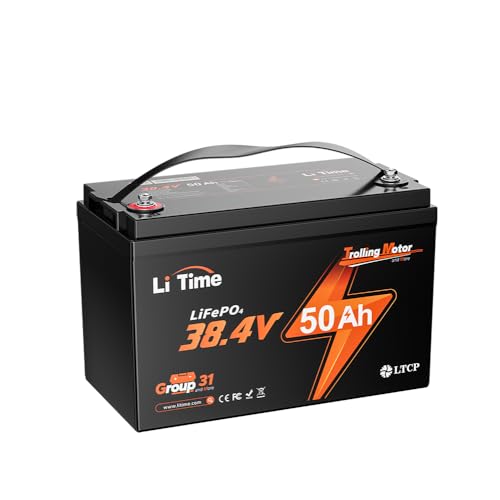
LiTime 36V 50Ah TM LiFePO4 Battery Group31
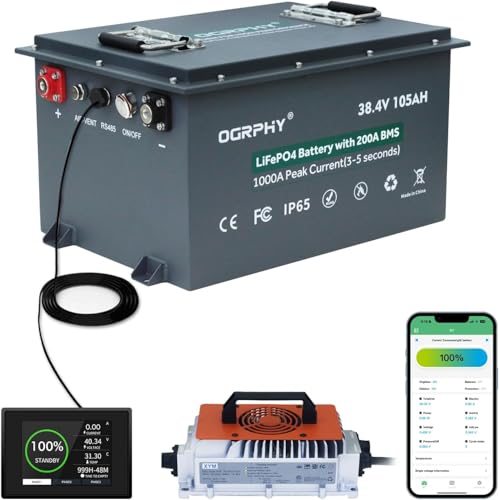
OGRPHY 36V Lithium Golf Cart Battery (105Ah)

OGRPHY 36V Lithium Golf Cart Battery with 12V DC
The Details Behind The Selections
Serious anglers running 36V trolling motors at speed for hours tend to want one thing above all: a battery that doesn’t quit mid-lake. The Cloudenergy 36V 105Ah LiFePO4 (lithium iron phosphate, a chemistry known for stability and long cycle life) sits firmly in the heavy-duty category, and it ships with a 20A charger that handles refills at a reasonable pace. The chemistry here matters: LiFePO4 cells hold voltage more steadily as they discharge, so your motor keeps pushing at near-full power even as the tank empties.
Compared to the smaller LiTime 50Ah Bluetooth battery below, this is the pick to look at when a full tournament day or multi-session weekend is the use case. The trade-off is size and weight: 105Ah is a chunky unit, and you’ll want to measure your battery compartment before ordering.
Advantages To Know
- 105Ah capacity gives you generous runtime for full-day trolling at moderate speeds.
- LiFePO4 chemistry holds voltage flat, so motor thrust stays consistent as the battery drains.
- 20A charger cuts refill time compared to the smaller LiTime 15A unit.
- Single-pack delivery reduces the chance of a missing or damaged box at your door.
Things To Consider
- It’s a large, heavy battery, so smaller jon boats or kayak setups may struggle to fit it.
- Charger amperage may run hot during long fills, so plan charging in a ventilated area.
Key Specs
Who It Suits Best
Anglers and boaters running 36V trolling setups on bass boats, pontoons, or mid-sized fishing rigs who need full-day runtime without battery anxiety.
Consider Something Else When
Kayak anglers or anyone running a tight battery compartment will find the LiTime 36V 50Ah Bluetooth Lithium Trolling Motor Battery a more practical fit.
Not every boat has room for a 100Ah brick, and not every angler needs one. The LiTime 36V 50Ah Bluetooth Lithium Trolling Motor Battery targets a smaller, lighter audience: kayak anglers, jon boat owners, and anyone running a kayak-mounted 36V motor who wants to track state of charge from a phone. Bluetooth monitoring in a trolling battery is a quiet luxury, but it pays off when you’re five miles from the ramp and wondering whether to head back.
For most small craft setups, 50Ah is enough to handle half-day or shorter sessions at moderate speeds. The trade-off versus the Cloudenergy 105Ah above is straightforward: less runtime, in exchange for less weight and a smaller footprint.
Key Advantages
- Bluetooth connectivity gives you live state-of-charge and voltage readouts on your phone.
- Compact 50Ah form factor fits smaller battery compartments better than 100Ah+ units.
- LiTime is a member of both the ABYC (American Boat & Yacht Council) and ASA, so the design targets marine standards.
Points To Keep In Mind
- 50Ah won’t carry a full day of high-thrust fishing for heavier boats, so match it to your actual session length.
- 15A charger is slower than the 20A unit bundled with the Cloudenergy, so overnight charges are the norm.
Made For
Kayak and small craft anglers who want compact power, app-based monitoring, and a battery that doesn’t dominate the deck.
Reach For A Different Pick When
Larger boats and longer sessions are better served by the LiTime 36V 100Ah Lithium Battery covered in the next review.
Step up from the 50Ah above and you land in the most common 36V trolling capacity class: 100Ah. The LiTime 36V 100Ah Lithium Battery is built for boats that draw serious current: bigger pontoons, deep-V bass rigs, and anglers who run their motor at higher thrust settings for long stretches. The bundled 25A charger is the quickest refill of any pick in this lineup, which matters when you want to charge overnight and get back out the next morning.
LiTime positions it for outboard motors, with ABYC certification referenced in the design. Compared to the Cloudenergy 105Ah earlier, the headline difference is charging speed and the slightly different physical layout, since the LiTime ships in a single heavy package for protection.
Notable Upsides
- 25A charger is the fastest in this roundup, which means quicker turnaround.
- 100Ah capacity handles heavier thrust motors and longer runs without voltage sag.
- Marine-focused design with outboard motor compatibility built into the engineering.
Small Caveats
- Single-package shipping means a heavy box arriving at your door, which can be awkward to receive.
- Verify dimensions against your compartment before ordering, since 100Ah LiFePO4 units are physically large.
Right Fit For
Anglers with mid-to-large fishing boats running high-thrust 36V trolling motors who prioritize fast charging and dependable runtime.
A Better Fit Elsewhere
Kayak anglers who need something far smaller and lighter should look at the LiTime 36V 50Ah Bluetooth battery reviewed earlier.
OGRPHY makes several appearances in this roundup, and the 36V 100AH version earns its place by being a true crossover battery: equally at home on a golf cart, a trolling motor setup, or a solar storage bank. The 200A BMS (battery management system, the onboard circuitry that protects against overcharge, over-discharge, and current spikes) is the headline spec, since it gives you more headroom for accessories and surge loads than smaller-BMS alternatives.
The BMS rating matters in real terms: a 200A BMS handles the momentary current spikes that bigger trolling motors produce when you punch the throttle from a standstill. Compared to the LiTime 100Ah above, OGRPHY leans toward broader use-case flexibility rather than pure trolling focus.
What Helps Most
- 200A BMS supports heavier inrush currents than the 100A BMS on Enjoybot’s unit.
- Genuine multi-purpose design covers golf cart, trolling motor, and solar storage use.
- 25A charger keeps refill times competitive with other 100Ah picks.
Trade Offs
- More connection points and setup flexibility mean slightly more wiring to think through for first-time installers.
- Broader compatibility can mean a less specialized fit than a pure trolling-focused battery.
Best Suited To
Multi-purpose owners who want one battery that handles a golf cart during the week and a trolling motor on weekends, with solar in the mix.
Look Elsewhere When
Pure cold-climate trolling is the priority, and the Enjoybot 36V 100Ah with low-temp cut-off is a smarter pick.
This is the heavyweight of the roundup: a 150Ah (5.76kWh) OGRPHY 36V lithium battery with a smart 200A BMS, a touch monitor, and mobile app connectivity. The 1000A peak current rating gives it serious muscle for high-thrust trolling motors and rugged terrain, which makes sense given its crossover design for both golf carts and heavy marine use.
For anglers running extended-range setups or anyone who doesn’t want to recharge between sessions, this is the most generous capacity in the lineup. The honest read is that the touch monitor and app integration feel nice, but they’re not essential for everyone. If you just need raw runtime without the tech layer, the OGRPHY 100AH pick above will likely serve you well.
Real Benefits
- 150Ah capacity delivers the longest runtime in this roundup for extended sessions.
- 1000A peak current handles aggressive throttle demands without tripping protection.
- Touch monitor and mobile app give you live data without a separate meter.
A Few Limitations
- Premium capacity comes with premium weight, so verify your boat’s weight tolerance and lift access.
- App and touch monitor add cost you may not need if you’re a minimalist owner.
Who Should Grab It
Anglers and boat owners running high-thrust 36V motors who want maximum runtime and don’t mind paying for the integrated monitoring tech.
Skip It When
Smaller boats or modest session lengths make the Cloudenergy 105Ah a more practical capacity match.
Cold water angling is hard on LiFePO4 cells, and most batteries don’t address it directly. The Enjoybot 36V 100Ah LiFePO4 Lithium Battery stands out for its low-temp cut-off function, which protects the cells from damage when temperatures drop. The Bluetooth monitoring and 100A BMS round out a thoughtful package aimed at owners who fish in shoulder seasons or northern climates.
For most backyards and southern lakes, this feature is invisible. But for ice-edge anglers and early-spring walleye hunters, the low-temp protection matters. The 100A BMS is more modest than the 200A units in the OGRPHY picks, so verify it matches your motor’s surge demands.
Useful Touches
- Low-temp cut-off protects cells during charging in cold conditions, extending usable life.
- Bluetooth lets you check voltage and state of charge from your phone.
- Prismatic cells (rigid, rectangular lithium cells) and a smart BMS support a long cycle life rating.
Honest Caveats
- 100A BMS is conservative, so very high-thrust motors may push the limits at full throttle.
- Low-temp feature is irrelevant for warm-weather-only boaters, so you may pay for capability you won’t use.
Perfect Match For
Anglers who fish through cold mornings, late-season ice-out trips, or any environment where temperature swings stress the battery.
Where A Sibling Pick Shines
If you run warmer water and want maximum surge headroom, the OGRPHY 36V 100AH with its 200A BMS is the better tool.
Battery case sizes matter when you’re squeezing a 36V bank into a small boat. The LiTime 36V 50Ah TM LiFePO4 Battery uses the Group31 footprint (a standard BCI battery size, roughly 13 x 9 x 9 inches), which is familiar to anyone who’s worked with marine electrical compartments. Low-temperature protection and a deep-cycle rating of up to 15,000 cycles round out a battery built for anglers who care more about fit than flash.
Compared to the LiTime 36V 50Ah Bluetooth battery earlier, this unit trades Bluetooth monitoring for a Group31 case and a notably higher cycle rating claim. Depending on how you fish, that trade can be a clean win.
Points In Its Favor
- Group31 form factor drops into existing battery trays without custom mounting work.
- Low-temp protection supports shoulder-season fishing without cell damage.
- LiTime’s ABYC and ASA membership reflects marine standards alignment.
Worth Bearing In Mind
- 50Ah capacity limits you to shorter sessions, so plan charging between trips.
- No Bluetooth means you’ll want a separate voltage meter if you like tracking state of charge.
The Right Fit
Boat owners with tight, Group31-sized compartments who want a no-fuss 36V drop-in replacement.
Swap It Out When
You want app-based monitoring and a slightly different feature mix; the LiTime 36V 50Ah Bluetooth battery covered earlier is the better match.
Tech-friendly anglers tend to want data, and the OGRPHY 36V Lithium Golf Cart Battery (105Ah) delivers it through a touch LCD monitor and app connectivity alongside a 200A BMS and 1000A peak current rating. This is the unit to look at when you want the same muscle as the larger 150Ah OGRPHY but in a slightly more compact package.
The honest read is that the LCD monitor is genuinely useful for live voltage checks at the boat ramp, and the 25A charger keeps refill times in line with the rest of the high-capacity field. Compared to the Cloudenergy 105Ah earlier, you get more monitoring capability for a similar capacity class.
The Good Stuff
- Touch LCD monitor gives you a clear readout without pulling out your phone.
- 200A BMS with 1000A peak handles aggressive throttle demands.
- 25A charger speeds up refills between sessions.
Possible Compromises
- Monitor and app add complexity that minimalist owners may find unnecessary.
- 105Ah sits between two popular capacity classes, so measure twice before committing.
Feature Snapshot
Whose Shelf It Belongs On
Owners who appreciate live data readouts and want a smart, connected 36V battery without jumping to the largest capacity tier.
Another Choice May Suit
If raw capacity matters more than monitoring features, the OGRPHY 150Ah version reviewed earlier is a step up.
Most 36V trolling setups also need 12V for lights, fish finders, and small electronics, which normally means a separate converter or a step-down wiring job. The OGRPHY 36V Lithium Golf Cart Battery with 12V DC solves that problem directly with an integrated 12V output port, so your accessories draw from the same battery without extra hardware. It’s a quiet but meaningful upgrade over the standard 105Ah OGRPHY covered above.
For tournament anglers running nav lights, livewell pumps, and electronics off the same bank, the built-in 12V port simplifies the wiring harness noticeably. The trade-off is the same as any crossover design: more features in one box mean you need to read the manual on the discharge switch to avoid draining the battery through accessories.
A Strong Showing
- Integrated 12V DC output powers accessories without a separate converter.
- Same 200A BMS and 1000A peak current as the standard 105Ah OGRPHY.
- 25A charger keeps refill times competitive.
Factors To Consider
- Discharge switch needs to be turned off after use, or accessories will quietly drain the battery.
- More integrated features mean slightly more to learn at install time compared to a plain 36V battery.
Quick Facts
Built With In Mind
Anglers running lights, finders, and 12V electronics off the same 36V bank who want cleaner wiring and a single power source.
Where Another Pick Suits Better
Plain trolling setups without 12V accessories will do fine with the standard OGRPHY 105Ah battery reviewed above.
What To Weigh Before Choosing A 36v Trolling Motor Battery
Capacity Versus Runtime
Capacity, measured in amp-hours (Ah), is the headline number on any trolling battery. A 50Ah battery will roughly deliver 50 amps for one hour under ideal conditions, though real-world draw from a trolling motor is lower and steadier. For half-day sessions on a kayak or jon boat, 50Ah usually suffices. For full tournament days on a bass boat, you’re better served by 100Ah or more. The honest read: bigger capacity costs more weight and more dollars, so match the battery to the longest day you actually fish, not the longest day you imagine.
Voltage Stability And Cell Chemistry
LiFePO4 chemistry holds its voltage more steadily as it discharges compared to lead-acid, which is why a 36V lithium bank feels stronger toward the end of a long day. The internal cells matter: prismatic cells (rigid, rectangular cells) tend to last longer than cylindrical cells in deep-cycle use. A quality BMS (battery management system) protects against overcharge, over-discharge, and current spikes, and a higher-amp BMS gives you more headroom for surge currents when a trolling motor hits hard throttle from a standstill.
Physical Fit And Weight
A 36V lithium battery is large by kayak standards and modest by bass-boat standards. Measure your battery compartment before ordering, and verify the case footprint (Group31 is a common standard) against the dimensions listed by the manufacturer. Weight matters more for small craft: a 100Ah LiFePO4 unit can run 60+ pounds, which adds up quickly on a kayak.
Smart Choices Across These Picks
Pitfalls Shoppers Hit
The most common mistake is buying capacity you don’t need and paying for weight you don’t want. A 150Ah battery in a kayak is overbuilt for the use case, and you’ll feel the difference every time you launch. The flip side is also common: undersizing capacity for a tournament-style session leaves you dead in the water before noon. Match the battery to your actual longest day, verify the BMS rating against your motor’s thrust, and confirm the physical dimensions before checking out.
Where The Extra Money Goes
Higher-capacity batteries cost more because of the cells inside: more prismatic cells in series and parallel, a heavier BMS, and a larger enclosure. Premium picks also add monitoring tech like touch screens and Bluetooth apps, which are nice but not essential. The upgrade is worth it when you genuinely need the runtime or the data, and less worth it when your sessions are short and your motor is modest. Spend up for capacity and BMS headroom first; spend up for the monitor only if you actually use it.
Frequently Asked Questions
How Long Does A 36V Trolling Motor Battery Last Per Charge?
Runtime depends on capacity and motor draw. A 50Ah battery running a moderate-thrust motor at low speed typically lasts several hours, while a 100Ah battery at higher thrust settings delivers a full day. Real-world runtime varies with wind, current, and throttle habits.
Can You Use A 36V Lithium Battery In Place Of Lead-Acid?
Yes, in most setups, as long as your motor’s voltage requirement matches 36V and your charger is compatible. Lithium batteries are lighter and hold voltage more steadily, but they need a charger designed for LiFePO4 chemistry to avoid damage.
Is Bluetooth Monitoring Necessary On A Trolling Battery?
Bluetooth is a convenience, not a necessity. It lets you check state of charge from your phone, which is useful on longer trips. A simple voltage meter accomplishes the same task if you’d rather skip the app.
What Does The BMS Rating Mean?
The BMS, or battery management system, protects the cells from overcharge, over-discharge, and excessive current. A higher amp rating (100A vs 200A) means more headroom for surge currents from your motor. Match the BMS to your motor’s thrust for best results.
How Should You Store A Lithium Trolling Battery Off-Season?
Store it at roughly 50% charge in a cool, dry location, and check the voltage every couple of months. Avoid storing it fully charged or fully depleted for long stretches, since both extremes stress the cells over time.
The Takeaway
The right 36V trolling motor battery depends on how you actually fish: half-day kayak trips call for compact 50Ah units, full bass-boat days need 100Ah or more, and tech-focused anglers will appreciate integrated monitoring. Cold-climate anglers should look for low-temp protection, while crossover owners benefit from higher BMS ratings. Match the capacity to your longest session, verify the fit, and the rest usually takes care of itself.