10 Best 36 Volt Lithium Golf Cart Battery for 2026: Power That Lasts Beyond the Course
Most golfers still haul a set of tired lead-acid batteries around the back nine without realizing how much the driving experience has changed. Swapping in a modern lithium pack means quicker acceleration up steep cart paths, longer range between charges, and almost zero terminal upkeep. The ten picks below cover true 36V drop-ins, flexible 48V alternatives, and a pair of purpose-built chargers that keep the whole system topped off cleanly.
A Snapshot Of The Selections
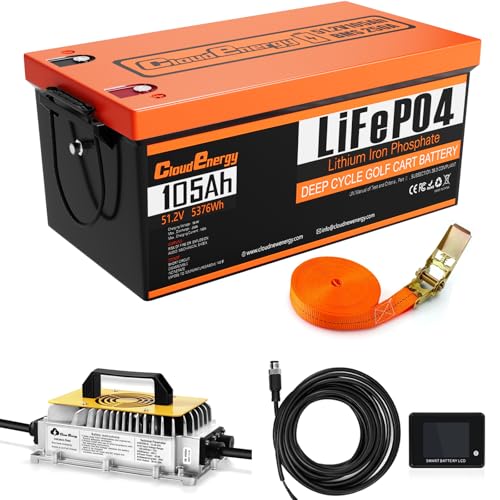
Cloudenergy 48V 105Ah LiFePO4 Lithium Golf Cart Battery
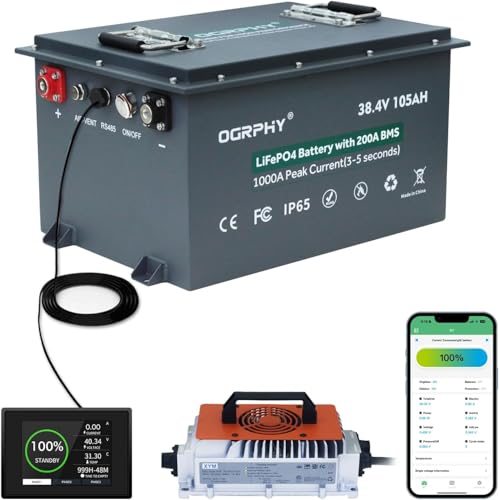
OGRPHY 36V Lithium Golf Cart Battery 105AH

XIONGRUIHENG 36V LiFePO4 Lithium Battery

Mehrpow 48V Lithium Battery Golf Cart Kit

KEZIMO 48V 105Ah Lithium Battery for Golf Cart

OGRPHY 36V Lithium Golf Cart Conversion Kit 102AH

OGRPHY 36V 100AH Lithium Golf Cart Battery

DC HOUSE Metal Case 48V 100Ah Lithium Golf Cart Battery Kit

EPOWREY 18A Lithium Battery Charger 36V
HTAXSCC 36 Volt 20 Amp Golf Cart Battery Charger
A Closer Look At Each Pick
Even though the target keyword points at 36V packs, the Cloudenergy 48V 105Ah earns the spotlight because so many owners retrofit carts to 48V for the extra torque on hills. Inside sits a built-in 250A BMS (the Battery Management System, the circuit board that guards each cell against overcharge, deep discharge, and overheating), plus a touch monitor and a mobile app that show real-time voltage and state of charge. A retention strap is included, which matters because lithium packs weigh roughly a quarter of equivalent lead-acid banks and can shift under hard braking.
The chemistry is LiFePO4 (lithium iron phosphate), and the published cycle life tops 6,000 deep discharges. For most golfers that translates into a decade of weekend rounds before any noticeable fade. Compared to the OGRPHY 36V entries coming up, this pack trades native 36V compatibility for higher output, so verify that your cart’s motor controller accepts 48V before pulling the trigger.
The Value In It
- Built-in 250A BMS guards against overcurrent and overheating, so you don’t need an external protection module.
- Touch monitor and mobile app provide real-time voltage, current, and state of charge without crawling under the seat.
- Retention strap included, which is a thoughtful touch for a pack light enough to slide around an empty battery tray.
- 6,000+ cycle rating means casual owners may never see the end of useful capacity.
Honest Caveats
- This is a 48V pack, not a true 36V drop-in, so it requires a controller that accepts the higher voltage.
- The 105Ah capacity adds weight compared to smaller lithium packs, which can matter in lightweight chassis.
- Mobile app connectivity can be finicky in metal sheds where Bluetooth signals struggle to reach the phone.
Who It Suits Best
Owners with a 48V-ready cart who climb hills, haul gear, or just want the longest runtime per charge.
Where Another Pick Suits Better
Cart owners running a stock 36V system should reach for the OGRPHY 36V 105AH instead to avoid controller upgrades.
The OGRPHY 36V 105Ah is the closest thing to a true drop-in lithium pack for the legacy 36V club cars, EZ-GOs, and Yamahas that still roam most courses. The cells are Grade A prismatic LiFePO4, and the integrated 200A BMS is rated for 1,000A peak current, which matters when a loaded cart digs in on wet grass. A 25A charger ships in the box, so there is no hunting for a compatible wall unit.
The touch monitor and Bluetooth app let you check state of charge from the cart path, and the cycle rating clears 4,000 deep cycles at full depth of discharge. You will likely replace the cart itself before you wear this pack out, which is the whole point of going lithium.
What It Does Well
- True 36V output matches stock controllers, so most carts install with no rewiring beyond swapping cable ends.
- 200A continuous and 1,000A peak current keep acceleration strong even with two passengers and a full cooler.
- 25A charger bundled in the kit, saving a separate purchase.
- Grade A prismatic cells tend to hold voltage more steadily under load than cylindrical alternatives.
Points To Note
- The plastic enclosure is sturdy but not as rugged as metal-cased options if the cart sees frequent off-road use.
- At 105Ah the pack is heavier than the 100Ah version, so lifting it into a tight battery well may need two people.
Made For
Existing 36V cart owners who want a clean, complete conversion without controller changes.
Look Elsewhere When
You need a 12V accessory tap for lights or horns, in which case the OGRPHY 36V 102AH conversion kit adds a built-in DC port.
The XIONGRUIHENG 36V 105Ah takes the OGRPHY formula and dresses it up as a ready-to-install kit. The BMS tops out at 250A, slightly higher than the OGRPHY 36V unit, and the kit ships with a 20A charger, LCD touch monitor, mobile app, port plug, and retention strap. That last detail is easy to overlook until a hard stop sends a loose battery sliding across the tray.
The 3C discharge rating on the Grade A cells means short bursts of high current are well within spec, so a steep cart-path climb is not going to trip the BMS. For first-time lithium upgraders, the bundled accessories remove most of the guesswork.
What Stands Out
- All-in-one kit includes charger, monitor, mobile app, and retention strap.
- 250A BMS supports demanding acceleration without premature cutoff.
- 3C-rated cells handle current spikes better than standard 1C cells.
- 6,000+ cycle rating rivals pricier name brands.
Room For Improvement
- The plastic casing can show scuffs if the tray lacks padding.
- Brand recognition is lower than OGRPHY, so resale on the used market may be slower.
Feature Snapshot
The Right Fit
First-time lithium buyers who want every cable, strap, and screen in one box.
Skip It When
You prefer a metal-encased pack for trail-duty durability, in which case the DC HOUSE 48V 100Ah metal-case kit is the tougher alternative.
The Mehrpow 48V 100Ah kit leans hard into longevity, claiming over 10,000 deep cycles at 80 percent depth of discharge. That number is roughly ten times what a quality AGM (Absorbent Glass Mat, a sealed lead-acid technology) battery delivers, and the difference shows up in year ten, not year two. Sixteen UL-listed EVE Grade A cells with a 2C discharge capability handle the brief current spikes that come from launching a fully loaded cart up a hill.
Installation is essentially plug-and-play, which is a relief for owners who don’t want to chase down a wiring diagram. That said, this is a hazardous-materials item with shipping restrictions, so order through a familiar freight channel.
Standout Benefits
- 10,000+ cycle rating sets a high bar for service life in this category.
- 16 balanced UL-listed EVE cells suggest consistent cell-to-cell performance.
- Plug-and-play install removes much of the wiring intimidation.
- 2C discharge rating supports heavier loads than typical 1C cells.
Things To Consider
- Hazardous-materials shipping restrictions may delay delivery or limit carrier options.
- The 48V output means stock 36V carts need a compatible controller before installing.
Spec Overview
Whose Shelf It Belongs On
Daily cart users who want a long-haul pack and a relatively painless install.
A Better Fit Elsewhere
True 36V purists are better served by the OGRPHY 36V 105AH, which requires no controller swap.
The KEZIMO 48V 105Ah is built for owners who care about getting out of the gate first. Sixteen Grade A LiFePO4 cells deliver up to 10.24kW of peak output, roughly fifty percent more than typical same-capacity packs, and the 200A BMS keeps that current flowing without flinching. Low self-discharge means the cart still has charge after a winter in the garage, which is more than most lead-acid banks can claim.
Touch monitor and APP support keep the diagnostic side simple. The honest read is that this is overkill for a flat retirement-community course, but on a hill-climbing, rough-terrain fleet it’s right at home.
Notable Gains
- 10.24kW peak output exceeds typical same-size lithium packs.
- 200A continuous BMS current supports tough hill starts.
- Low self-discharge preserves charge through long storage periods.
- Touch monitor and APP give at-a-glance status checks.
Some Limits To Know
- 48V output still requires a compatible controller in stock 36V carts.
- Higher peak output means more heat in extreme conditions, so battery compartment ventilation deserves attention.
Feature Card
Perfect Match For
Hilly course owners and rough-terrain riders who need extra torque headroom.
Another Choice May Suit
Flat-course owners get more practical value from the OGRPHY 36V 105AH at lower cost.
The 102AH conversion kit is essentially the 105AH sibling with one big practical upgrade: a built-in 12V DC interface that powers lights, horns, or any 12V accessory directly from the main pack. That single port eliminates the separate 36V-to-12V converter that usually ends up zip-tied to the frame, simplifying the wiring harness and freeing up space in the battery bay.
The 200A BMS still delivers 1,000A peak current, and the touch monitor doubles as a control panel for switching the 12V output on and off. Owners commonly report that forgetting to disable the 12V port after use can drain the pack overnight, so the app toggle is worth learning.
A Few Highlights
- Integrated 12V DC port removes the need for a separate converter.
- 1,000A peak current supports demanding accessory loads without tripping.
- Touch monitor and APP let you control accessory power without climbing under the seat.
- 4,000+ cycle rating suits most recreational and rental-fleet use cases.
Practical Considerations
- The 12V port must be switched off via the monitor or app after use to prevent parasitic drain.
- Slightly lower 102Ah capacity than the 105AH model, though real-world difference is minimal.
Best Suited To
Cart owners adding aftermarket lights, horns, or USB charging who want cleaner wiring.
Reach For A Different Pick When
You don’t run 12V accessories, in which case the OGRPHY 36V 105AH keeps things simpler.
Where most picks target a single application, the OGRPHY 36V 100AH is explicitly pitched at golf carts, solar storage banks, and trolling motors. The 3.84kWh capacity and 200A BMS with 1,000A peak current translate into enough headroom for a trolling motor’s continuous draw on a fishing kayak. Off-grid cabins using a modest solar array can lean on the same pack for evening power.
The Grade A LiFePO4 cells are rated for 5,000+ deep cycles, and a 25A charger ships in the box. For owners juggling a cart and a small off-grid setup, that cross-compatibility avoids buying two separate battery systems.
Practical Pluses
- Compatible with golf carts, trolling motors, and small solar banks, reducing total battery spend.
- 3.84kWh capacity handles moderate off-grid loads like LED lighting and small inverters.
- 5,000+ deep cycle rating supports years of daily discharge and recharge.
- 25A charger included for quick top-ups after heavy use.
Potential Compromises
- 100Ah capacity is slightly below the 102AH and 105AH OGRPHY siblings, so pure cart-runtime seekers may want more.
- No dedicated 12V accessory port like the conversion kit, so trolling motor users need separate wiring for accessories.
Built With In Mind
Owners splitting time between a cart and a small boat or off-grid cabin who want one battery to do both jobs.
Where A Sibling Pick Shines
If 12V accessory integration matters, the OGRPHY 36V 102AH conversion kit is the cleaner cart-only solution.
Most lithium packs ship in plastic shells that look at home in a clean garage. The DC HOUSE 48V 100Ah wraps its cells in a metal case, which adds a layer of physical security that matters if the cart lives on a dusty trail or a back-of-property storage shed. The 200A BMS pushes 670A peak current, and a Bluetooth app plus LCD monitor handle status checks from the cart path.
DC HOUSE claims a 56-mile range under ideal conditions, which translates roughly to 7 to 9 rounds of 18-hole golf before recharging. The included 18A charger is on the slower side compared to 25A or 43.8V units, so overnight charging is the routine.
Where It Excels
- Metal enclosure protects cells from impact, dust, and curious rodents.
- 670A peak current supports demanding terrain without BMS cutoff.
- Bluetooth app and LCD monitor provide redundant status visibility.
- Direct replacement for 6-8V lead-acid banks, simplifying retrofit wiring.
Trade-Offs
- The metal case adds weight compared to plastic-cased lithium options.
- 18A charger is slower than competitors, so plan for longer overnight sessions.
- 48V output still needs a controller compatible with stock 36V carts.
Feature Rundown
Right Fit For
Owners who store their cart in tough environments and want extra impact protection.
Swap It Out When
A plastic-cased, faster-charging pack like the OGRPHY 36V 105AH is fine for clean garage environments.
The EPOWREY 18A charger is purpose-built for 36V (38.4V) 12S LiFePO4 packs (12 cells wired in series to reach the working voltage), making it a smart backup or replacement when the original charger dies or gets left behind at the lake house. The 100V to 240V AC input handles overseas voltage without a transformer, which is a quiet perk for snowbirds who trailer their carts south.
At 18A the charge rate sits between fast and gentle, which usually means a full overnight charge from empty. Owners should still verify connector compatibility, since cart-side plugs vary by brand and by era.
Points In Its Favor
- Wide 100V to 240V input range supports international use without extra hardware.
- 18A charging current balances speed and cell longevity.
- Compact form factor stores easily in a cart trunk or garage shelf.
- Targeted at 36V LiFePO4 chemistry, so it matches the major lithium packs in this roundup.
Worth Noting
- 18A is slower than 20A or 25A chargers included with main packs, so plan charge times accordingly.
- Connector type must be matched to the cart’s charge port, which varies by manufacturer.
Key Product Details
Who Should Grab It
Anyone needing a reliable backup or replacement charger for a 36V lithium setup.
Not Your Match When
You still run lead-acid batteries, in which case the HTAXSCC 36V 20A lead-acid charger is the appropriate pick.
The HTAXSCC charger stays in the lineup because plenty of carts still run 36V lead-acid banks, especially older Club Cars, EZ-GOs, and Yamahas that pre-date the lithium rush. The 20A output delivers reasonably quick top-ups, and the die-cast aluminum shell carries an IP67 rating (a standard that certifies the unit against dust ingress and temporary submersion in water), so a forgotten rainstorm or a dusty barn floor will not end its life.
The 16-foot power cable reaches distant outlets without dangerous extension cords, and the smart-charge profile drops into standby once full. That auto-standby is the kind of feature you don’t appreciate until the forgetful neighbor borrows the cart.
The Practical Payoff
- IP67 waterproof and dustproof rating handles outdoor storage and wash-down conditions.
- 20A output recharges lead-acid banks faster than many stock 10A chargers.
- Smart standby mode prevents overcharging if the cart stays plugged in.
- 16-foot power cable reaches distant outlets without extension cords.
- Only 5.8 lbs, light enough to take along in the cart trunk.
Some Limits To Know
- Designed for lead-acid batteries, not LiFePO4 packs, so it should not be paired with the lithium options above.
- Crowfoot plug fits Club Car and similar systems, but other brands may need an adapter.
Best Suited To
Owners of legacy 36V lead-acid carts who need a tough, weatherproof replacement charger.
Consider Something Else When
You have already upgraded to lithium, in which case the EPOWREY 18A lithium charger matches the chemistry.
What Matters Most Before Choosing 36 Volt Lithium Golf Cart Battery
Voltage and Controller Compatibility
Cart electrical systems run on either 36V or 48V, and the motor controller is tuned to one or the other. Swapping a 48V lithium pack into a stock 36V cart without updating the controller can send the solenoid or speed controller into an early grave. Match the pack voltage to your existing system first, then look at capacity.
BMS Amperage and Real-World Loads
The BMS is the silent gatekeeper of any lithium pack, and its continuous amperage rating sets the ceiling for safe current draw. A 200A BMS handles nearly every recreational cart, but heavy accessory loads like winches, lifts, or auxiliary heaters can push that ceiling. If your cart sees high-draw accessories, choose a pack with margin to spare.
Capacity, Range, and Cycle Life
Capacity in amp-hours tells you how much energy is stored, while cycle life tells you how many full discharges the pack can survive before noticeable fade. A 100Ah pack running a typical flat course might cover two or three rounds per charge. Higher cycle ratings (5,000 or 6,000+) mean a decade-plus of weekend play before any capacity drop becomes obvious.
Form Factor and Bundled Accessories
Lithium packs come in plastic or metal enclosures, with or without chargers, monitors, and retention straps. Bundled kits cost a bit more upfront but spare you the hunt for matching components later. Measure the battery tray before ordering, because some newer packs are slightly larger or smaller than the lead-acid banks they replace.
Key Considerations Across These Picks
Where Shoppers Go Wrong
The most common mistake is grabbing the highest-capacity pack without checking the controller’s voltage ceiling, then discovering the cart runs sluggish or refuses to move. Another slip is ignoring the BMS rating, where a low-amperage BMS keeps tripping under normal acceleration. Owners sometimes forget to verify connector polarity or plug type, which turns a weekend install into a parts-hunting week. Finally, underestimating total accessory draw leads to surprise BMS cutoffs in carts loaded with lights, stereos, and heaters.
When Paying More Pays Off
The price gap between budget and premium lithium usually reflects cell grade, BMS quality, and cycle life rather than simple capacity. A Grade A cell pack with a 6,000-cycle rating outlasts a cheaper 2,000-cycle competitor by several years of daily use. Premium enclosures, better app integration, and bundled accessories also show up in real ownership, not just on the spec sheet. For carts that see weekly use or live in harsh climates, the upgrade pays back in fewer replacements and fewer roadside headaches.
Frequently Asked Questions
Can a 36V lithium battery replace lead-acid without changing the motor or controller?
Yes, when the lithium pack is a true 36V unit (typically labeled 38.4V nominal), the existing 36V motor and controller usually accept it without modification. The lighter weight and steadier voltage often make the cart feel more responsive, and the only real change is removing the acid-filling routine.
How long does a 36V lithium golf cart battery typically last on a single charge?
Runtime depends on capacity, terrain, and load, but a 100Ah to 105Ah pack generally covers two to four rounds of 18-hole golf on flat ground. Hills, headwinds, and heavy passenger loads shorten that range noticeably, while flat retirement-community courses can stretch well past four rounds.
Do lithium golf cart batteries need a special charger?
Lithium packs require a charger with a LiFePO4-compatible charge profile and the correct voltage cutoff. Using a legacy lead-acid charger on a lithium pack can overcharge the cells and shorten life. Most lithium packs in this roundup ship with a matching charger, but replacements should always match the chemistry.
Is cold weather a problem for 36V lithium golf cart batteries?
LiFePO4 chemistry tolerates cold storage better than lead-acid, but charging below freezing can damage cells in packs without internal heaters. Owners in northern climates often store the cart in a heated garage or remove the pack for indoor storage during the coldest months.
What maintenance does a 36V lithium golf cart battery need?
Maintenance is minimal compared to flooded lead-acid: no terminal cleaning, no acid top-offs, no equalization charges. Periodically checking torque on the hold-down hardware and updating the BMS firmware via the app (when supported) covers most of it, plus keeping the case clean and dry.
Bottom Line
The right 36 Volt Lithium Golf Cart Battery comes down to matching voltage to your existing system, sizing capacity to your course, and picking a BMS that handles your real-world loads. For most stock 36V carts, the OGRPHY 36V 105AH hits the sweet spot, while the Cloudenergy 48V 105Ah is the better fit for those who have already upgraded their controller. Whichever path you choose, a lithium pack will likely outlive the cart itself, which is the kind of math that makes the upgrade easy to justify.