You dug out your high-drain flashlight, sorted your vaping mods, or wired up a power-hungry project, and now the 26650 cells on your bench need reliable charging. Picking the right 26650 rechargeable battery charger saves you from underperforming cells and the safety headaches that come with mismatched gear. The nine chargers below cover solo travelers, gear-heavy households, and anyone who wants lab-style diagnostics without the lab-grade spend.
A Fast Comparison Of The Options

Nitecore UI1 Battery Charger with Micro USB, Single Bay

SUNLYTOUR Intelligent 21700/18650 Battery Charger with LCD

MiBOXER C4 Smart Universal 4-Bay Charger with LCD

XTAR DRAGON VP4 Plus Smart Charger with Probes

BTBAI 26650 Dual-Bay Wall Charger

Nitecore NEW i2 Two-Channel Universal Charger
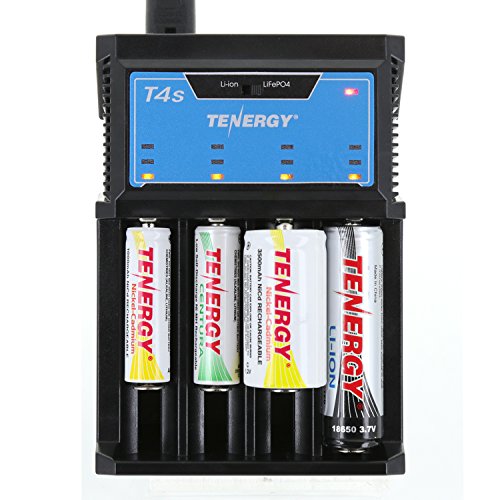
Tenergy T4s 4-Slot Universal Charger with Car Adapter

EBL Smart 18650 Charger with iQuick Tech

Efest LUSH Q2 Intelligent LED Battery Charger
The Details Behind The Selections
The Nitecore UI1 is what you toss into a backpack when a 26650 day calls for one cell at a time. Its roughly 3.2 x 3 x 12.3 cm footprint vanishes into a side pocket, and Micro USB input means a phone charger or power bank keeps it alive off-grid.
Unlike the bulkier four-bay picks later in this list, the UI1 focuses on a single channel, so the indicator light gives a clear read on one cell’s status. Campers, preppers, and anyone carrying a high-lumen flashlight will appreciate how little bench space it claims.
Advantages To Know
- Micro USB input lets a power bank or car charger top up your cell during multi-day trips.
- Battery level indicator stops charging independently at 100 percent, protecting cell longevity.
- Overheating, short circuit, and reverse polarity protection add a real safety net for travel use.
- Tiny 3.2 x 3 x 12.3 cm shell slips into pouches and organizer pockets without complaint.
Honest Caveats
- Single bay means slower turnaround if you rotate several 26650 cells through a work session.
- Travel-friendly form factor leans on your existing USB brick, so a slow source will drag charge times.
Made For
Outdoor enthusiasts and minimalists charging one 26650 cell on the road or in a small kit.
Reach For A Different Pick When
The Tenergy T4s suits households juggling four cells at once more than the single-bay Nitecore UI1.
The SUNLYTOUR charger earns its spot by speaking the language of nearly every cylindrical cell on your shelf. It covers 21750, 21700, 20700, 18650, 26650, 26700, 16340, 17650, and 17670 lithium chemistries alongside Ni-MH and Ni-CD AA and AAA cells.
That broad range matters when a household runs vape mods, headlamps, and remote controls off the same charger. The LCD screen shows live status, which helps you spot a tired cell before it strands a device mid-use.
Why It Works Well
- Compatibility list spans Li-ion, Ni-MH, and Ni-CD cells across 16340, 18650, 20700, 21700, 26650, and standard AA/AAA sizes.
- LCD display gives real-time charge status for confident monitoring during overnight sessions.
- One unit replaces multiple chemistry-specific chargers cluttering drawers.
Where It May Fall Short
- Source notes warn against charging non-rechargeable CR123 and CR123A cells, which adds a quick mental check before each insert.
- Older Ni-MH cells past their chemistry window should be retired rather than recharged, per the manufacturer guidance.
Feature Snapshot
Best Suited To
Mixed-device households with lithium and Ni-MH cells sharing the same charging bench.
Skip It When
The XTAR DRAGON VP4 Plus fits hobbyists who want battery diagnostics far better than the SUNLYTOUR charger.
The MiBOXER C4 stretches beyond the SUNLYTOUR by giving you four independent bays with an LCD that tells you exactly what each cell is doing. Fire-retardant PC housing and a smart circuit handle heat dissipation while error symbols flag reversed or shorted cells.
Gear-heavy users running a 26650 flashlight, an 18650 work light, and a stack of AA rechargeables at the same time benefit most. Compared to the single-bay Nitecore UI1 earlier, this charger trades portability for parallel throughput.
Reasons It Performs
- Four independent bays let you charge mixed chemistries at the same time without bottlenecks.
- Automatic LCD display reports each cell’s status and error conditions in plain text.
- Smart charging design revives over-discharged cells automatically rather than rejecting them.
- Supports Li-ion, LiFePO4, Ni-MH, and Ni-CD across AA, AAA, C, and cylindrical cell sizes including 26650.
- Fire-retardant housing adds reassurance during overnight batch charging sessions.
Practical Considerations
- Larger footprint claims more bench or desk space than single-bay chargers.
- Charging four depleted cells simultaneously stretches total session time considerably.
- The LCD adds complexity that casual users may not consult often.
Right Fit For
Gear-heavy households and pros who rotate several chemistries through a busy week.
Look Elsewhere When
The Efest LUSH Q2 serves casual two-cell users more practically than the four-bay MiBOXER C4.
The XTAR DRAGON VP4 Plus behaves less like a charger and more like a portable battery lab. Optional 0.5A, 1.0A, and 2.0A charge currents let you dial in the right speed for each cell, and internal resistance, real capacity, and refresh cycles go well beyond a basic top-up.
Versus the SUNLYTOUR and MiBOXER picks, this one trades chemistry breadth for diagnostic depth. The big LCD screen, USB output function, and probe testing earn their place on a hobbyist workbench.
A Few Strong Suits
- Internal resistance, voltage, and real capacity testing reveal weak cells before they fail in the field.
- Selectable 0.5A, 1.0A, and 2.0A currents balance speed with battery health per session.
- Refresh mode helps older Ni-MH and Ni-CD cells recover from memory effect.
- 11.1V battery pack support and USB output extend the unit beyond simple cylindrical charging.
Small Caveats
- Diagnostic features require patience and a willingness to read the manual to use them well.
- Probes and accessories add clutter for users who only need a basic top-up.
Quick Technical Notes
Who Should Grab It
Battery hobbyists and tech-minded users who want lab-style diagnostics in a home charger.
Swap It Out When
The MiBOXER C4 covers most households without the learning curve of the XTAR DRAGON VP4 Plus.
The BTBAI charger zeroes in on 26650 owners who don’t want the bulk of a four-bay unit. Two bays run on AC wall power from 100V to 240V or DC car input between 4.2V and 8.4V, which covers both home outlets and road trips.
Red and green LED indicators make state checks easy without an LCD panel. Where the Nitecore UI1 handles one cell at a time, this model doubles that count while staying dedicated to high-capacity lithium cells.
Everyday Wins
- AC wall input between 100V and 240V plus DC car input covers home, hotel, and vehicle use.
- Two charging bays double throughput compared to a single-bay travel charger.
- Red-to-green LED indicator gives a clear visual signal when cells reach full charge.
Points To Keep In Mind
- Dedicated lithium focus means Ni-MH AA and AAA cells need a separate charger.
- LED-only feedback lacks per-cell voltage or capacity readouts.
- Two-bay design sits between the compact UI1 and the roomier four-bay picks, with no clear size advantage.
Perfect Match For
High-capacity 26650 owners who want dual slots without extra chemistry clutter.
Consider Something Else When
The Tenergy T4s handles both lithium and Ni-MH households where the BTBAI falls short.
The Nitecore NEW i2 takes the guesswork out of charging by detecting cell type and capacity on its own, then picking the right current for safe, efficient top-ups. Its two channels handle Li-ion, IMR, LiFePO4, Ni-MH, and Ni-CD cells in sizes from 14500 and 18650 up to 26650.
Newcomers upgrading from a basic charger will appreciate the auto-pilot behavior. Compared to the SUNLYTOUR, the i2 trades LCD data for a simpler plug-and-go workflow.
Real Benefits
- Automatic chemistry and capacity detection removes manual mode selection for most users.
- Two channels let you top up a 26650 and an AA cell side by side.
- Wide cell support covers 14500, 16340, 18650, 26650, AA, and AAA cells across major chemistries.
Small Limitations
- 20700 and 21700 cells are too large to fit in the bay, so newer high-capacity formats need another charger.
- No LCD readout means less per-cell data for users who want to monitor progress closely.
Built With In Mind
Beginners and casual users who want a charger that thinks for them most of the time.
A Better Fit Elsewhere
The EBL Smart charger serves 20700 and 21700 owners more reliably than the Nitecore NEW i2.
The Tenergy T4s slots into family life where four cells cycle through at once and chemistry questions come up daily. Each of the four bays runs an independent microcomputer, so a 26650 and three AA cells charge on their own timelines without crosstalk.
CC, CV, and trickle charging modes apply automatically once the charger identifies Li-ion, NiMH, or NiCD cells. The included car adapter stretches usefulness beyond the kitchen counter.
Where It Helps
- Four independent slots with per-bay microcomputer control keep mixed cells charging at their own pace.
- Compatibility covers NiMH and NiCD AA, AAA, C, Sub C plus Li-ion and LiFePO4 cylindrical cells including 26650.
- Yellow status indicators above each bay show charge progress at a glance.
- Car adapter included for road trips and field use.
- Automatic chemistry detection picks the right CC, CV, and trickle charging profile for each cell.
Factors To Consider
- Four-bay size claims more shelf space than travel-friendly options like the Nitecore UI1.
- Charging four depleted cells in parallel stretches total session time considerably.
Whose Shelf It Belongs On
Families and shared households running mixed battery types through a single charging routine.
Where Another Pick Suits Better
The SUNLYTOUR charger suits single-cell users who don’t need a four-bay bench unit.
The EBL Smart 18650 charger focuses on iQuick fast charging, hitting up to 2000mA on a single lithium cell. Its compatibility list runs deep, covering Li-ion sizes from 10440 and 14500 up through 18650, 20700, 21700, 21750, 22700, 26650, and 26700, plus Ni-MH and Ni-CD AA and AAA cells.
Compared to the Nitecore UI1, this unit trades single-bay portability for higher current capability when time matters. Road-trippers and field workers will like the speed without giving up format flexibility.
Strengths Worth Knowing
- iQuick charging pushes up to 2000mA through a single lithium bay for fast turnaround.
- Broad compatibility covers 10440, 14500, 18650, 20700, 21700, 21750, 22700, 26650, 26700, plus AA and AAA cells.
- Compact shell fits into camera bags and travel kits without weighing you down.
A Few Limitations
- Fast charging generates more heat, so a cool charging surface helps cell longevity.
- Single-bay speed means waiting your turn when rotating multiple 26650 cells.
Feature Card
Who Will Love This
Travelers and field workers who want a fast, compact charger that handles many cell formats.
Not Your Match When
The Tenergy T4s serves households rotating four cells at once better than the EBL single-bay unit.
The Efest LUSH Q2 strips charging down to two bays, a row of LEDs, and zero menus. Automatic 2.0A fast charging kicks in with one cell, and shared 1.0A charging takes over when both bays are full, which keeps timing predictable.
Vapers and flashlight enthusiasts who already know their cells will appreciate the no-fuss interface. Where the XTAR VP4 Plus invites deep analysis, the LUSH Q2 prefers quick, clean top-ups.
What Pays Off
- Two-bay design with 2.0A fast charging on a single bay speeds up solo sessions.
- Reverse polarity, short circuit, and overcharge protection cover the usual safety basics.
- Button-free LED interface keeps the workflow simple and approachable.
- Compatibility with lithium IMR 3.6V and 3.7V cells covers most modern 26650 use cases.
Trade-Offs To Consider
- LED-only feedback offers less per-cell detail than LCD-equipped chargers like the SUNLYTOUR.
- No Ni-MH or Ni-CD support means AA and AAA cells need a separate charger.
The Right Fit
Casual vapers and flashlight owners who want quick, two-cell top-ups without menus.
Wrong Turns To Avoid
Skip the Efest LUSH Q2 and reach for the Tenergy T4s when Ni-MH AA and AAA cells matter.
Picking A Charger That Earns Its Space On Your Bench
Start with the cells you actually own, not the cells you might buy someday. A 26650 rechargeable battery only charges safely when the bay physically fits and the chemistry profile matches. Measure a representative cell’s length and diameter, then check the charger’s supported list before anything else.
Bay count matters more than people expect. Single-bay units like the Nitecore UI1 travel well but bottleneck busy households. Four-bay chargers such as the MiBOXER C4 and Tenergy T4s cut downtime when several cells cycle through a week, though they claim more shelf space.
Current rating shapes cell longevity. A 0.5A trickle favors small 14500 cells, while a 2.0A fast charge helps when a depleted 26650 needs to be ready before sunset. Matching current to cell capacity (typically 0.5C or lower for routine charging) keeps heat down and extends cycle life.
Diagnostics separate hobbyist gear from basic chargers. The XTAR DRAGON VP4 Plus measures internal resistance and real capacity, which helps you retire weak cells before they leave a flashlight dim mid-hike. For casual use, an LCD or simple LED read of charge status is usually enough.
What To Weigh Before You Click Buy
Common Shopping Slip Ups
Buying on cell format alone is a frequent mistake. A charger that lists 26650 support may not fit a 20700 or 26700 cell, so confirm exact dimensions before checkout. Ignoring chemistry coverage is another trap, since Ni-MH AA cells and Li-ion 26650 cells usually cannot share the same charger profile without dedicated circuitry.
Where The Extra Money Goes
Higher-tier chargers earn their price through independent per-bay control, finer current selection, and diagnostic readouts that reveal weak cells. The XTAR DRAGON VP4 Plus, for instance, lets you measure internal resistance and run refresh cycles, which pays off when cells see heavy use. Premium housings, fire-retardant plastics, and broader chemistry coverage add long-term reliability that budget units may not match.
Frequently Asked Questions
Can one charger safely handle both 26650 and AA cells?
Yes, when the charger explicitly supports both chemistries. Units like the Tenergy T4s and MiBOXER C4 detect Li-ion and Ni-MH cells automatically and apply the right charging profile for each bay.
What does a higher mAh current rating actually change?
Higher current shortens charge time but adds heat, which can shorten cell lifespan if used routinely. Match current to roughly 0.5C of the cell’s capacity for the best balance of speed and longevity.
Do I need an LCD screen to charge 26650 cells properly?
No, an LCD is helpful for diagnostics and per-cell readouts but not required for safe charging. LED indicators on chargers like the Efest LUSH Q2 and BTBAI models still signal charge status reliably.
Will a 26650 charger work with protected and unprotected cells?
Most chargers accept both, but physical fit and spring tension vary by model. Protected cells are slightly longer due to their circuitry, so check the charger’s maximum supported length before inserting them.
Is it safe to leave 26650 cells charging overnight?
Yes, on chargers with automatic cutoff and overcharge protection such as the Nitecore UI1 or MiBOXER C4. Even so, charging on a non-flammable surface and avoiding damaged cells reduces risk further.
Closing Remarks
Your bench routine, the cells you already own, and how often you rotate through them shape the right 26650 rechargeable battery charger more than any spec sheet. Match the bay count and chemistry coverage to your real workload, and let diagnostics earn their place only when you actually need them. The honest read is that any of these nine will do the job well, so pick the one that fits how you charge, not how a brochure says you should.