Every angler knows the sting of a dead starting battery just as the first cast hits. A reliable onboard charger quietly fixes that problem overnight, topping off the cranking and house banks without you lifting a finger. This list covers ten solid picks that handle marine abuse, support modern lithium chemistries, and slot into most fishing or cruising rigs.
A Quick View Of The Lineup

Minn Kota Precision MK-220PCL On-Board Marine Battery Charger 2 Banks 10 Amps
NEXPEAK NC215 15-Amp Battery Charger 12V 24V LiFePO4 Portable

ProMariner Gen 3 ProSport 20 Amp 12/24 Volt 2 Bank Waterproof Marine Battery Charger
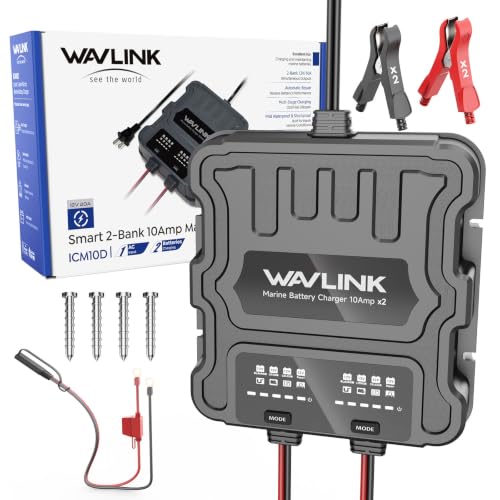
Wavlink 2 Bank 20A Marine Battery Charger 12V IP68 Onboard

3 Bank Marine Battery Charger 12V 5A/Bank IP68 Waterproof LCD

2 Bank Marine Battery Charger 20A 10A/Bank 12V IP68 Lithium Onboard
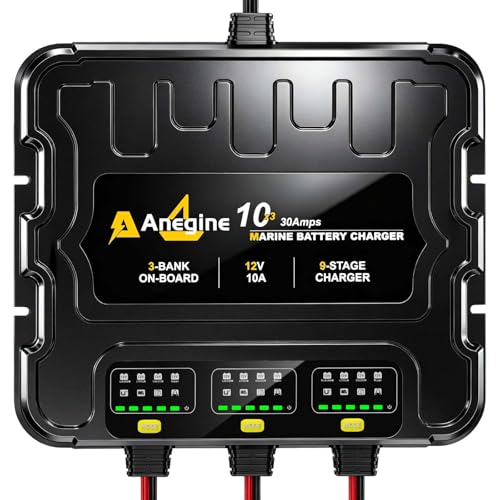
3 Bank Marine Battery Charger 10X3 30A 10A/Bank 12V

2 Bank Marine Battery Charger 5X2 10A 5A/Bank 12V Waterproof

LiTime 2 Bank 12V 10A LiFePO4 Battery Charger 14.6V Output Waterproof
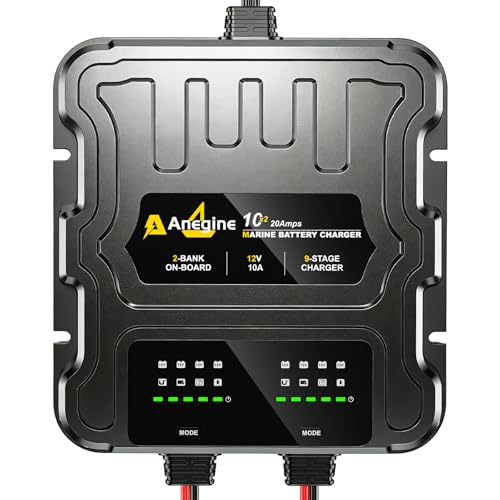
2 Bank Marine Battery Charger 20A 10A/Bank 12V IP68 LCD
More Details On Our Top Picks
The Minn Kota Precision MK-220PCL sits at the top of the list for anglers upgrading to lithium (LiFePO4) house banks without giving up their lead-acid cranking battery. Each bank pushes 10 amps independently, so the charger handles two distinct chemistries at once with per-bank profile selection. In a typical bass-boat setup, that means the trolling-motor batteries get a tailored lithium curve while the starter battery still receives safe, conventional charging.
Compared with the multi-purpose picks later in this list, the MK-220PCL skips bells and whistles and focuses on solid thermal management and recovery for deeply discharged packs. It also weighs less than older generation chargers in the same class, which helps when you’re squeezing it into a tight bilge compartment.
Standout Benefits
- Independent lithium and lead-acid profiles per bank
- 10A per channel keeps recovery times reasonable for mid-size packs
- Compact housing fits typical bilge layouts without modification
- Solid reputation for thermal stability under heavy charge cycles
Things To Consider
- Higher price than the basic 2-bank options later in this list
- No LCD readout, so you monitor status via indicator lights only
- Wiring hardware is solid but lean on extras
Key Specs
Who It Suits Best
Anglers running lithium trolling batteries paired with a conventional starter bank who want refined charge management in a quiet, dependable box.
Consider Something Else When
The NEXPEAK NC215 fits you better if you need a portable charger for garage, lawn tractor, and boat duty rather than a permanent onboard install.
The NEXPEAK NC215 breaks the onboard-only mold and earns its spot as a versatile bench and dockside companion. It handles both 12V and 24V systems with a 9-stage charging routine and supports lead-acid plus LiFePO4 chemistries. The oversized color screen displays voltage, current, charge percentage, and temperature in real time, which removes a lot of guesswork when reviving a neglected battery.
Where the Minn Kota MK-220PCL is a permanent fixture, the NC215 is the kind of charger you grab for the truck, the lawn mower, and the boat. A 6.7-foot combined cable gives you decent reach into awkward engine bays. Depending on your setup, this kind of flexibility matters more than ruggedized onboard housing.
Where It Helps
- Large color screen simplifies diagnostics at a glance
- 15A output on 12V handles faster recovery than many portable units
- Works on trucks, lawn equipment, and marine banks
- Built-in temperature compensation adjusts for seasonal swings
Worth Noting
- Not waterproof to marine standards, so it’s a carry-in unit
- Single-bank output, so two-battery rigs need manual swapping
Made For
Shed and garage owners who want one charger for a small fleet of vehicles and a single boat, with a screen that actually tells you what’s happening.
A Better Fit Elsewhere
The Minn Kota Precision MK-220PCL suits you better if you need permanent, weather-ready onboard charging for a true two-bank marine rig.
The ProMariner Gen 3 ProSport 20 leans into a smarter charging philosophy with its Distributed on Demand system. Rather than splitting amps evenly, it directs full output to whichever battery needs it most and reroutes as state-of-charge changes. For boats with mismatched banks, that translates into less babysitting and shorter total dock time.
Where the Wavlink and MVMOD units below trade on raw amps and sealed housings, the ProSport 20 prioritizes intelligent current routing and clear system feedback. You also get straightforward fault indication, which can save a long weekend when something goes sideways at the ramp.
Notable Upsides
- Distributed on Demand optimizes amp delivery between banks
- Lightweight build for a 20A waterproof unit
- Clear status indicators for each bank reduce troubleshooting time
- Solid reputation for long service life in saltwater setups
Room For Improvement
- No LCD readout, so detailed readouts require LED interpretation
Best Suited To
Boat owners running mixed loads between a starter bank and house bank who want intelligent current steering without an LCD panel.
Skip It When
The anegine 2-Bank 20A LCD charger fits you better if you want a visible read-out of voltage and charge status on the unit itself.
The Wavlink 2-Bank 20A leans hard into durability with a fully sealed IP68-rated housing, meaning it tolerates dust and prolonged water immersion beyond typical splashes. Inside, two independent channels push 10A each, keeping banks isolated so chemistry differences do not interfere. For saltwater boats running 30Ah to 300Ah packs, this unit hits a sweet spot for both power and protection.
Compared with the MVMOD 2-Bank unit later in the list, the Wavlink trades a similar output profile for an arguably tougher sealed enclosure. Owners commonly report peace of mind when the charger lives in a wet bilge or under a splash-prone console.
Everyday Advantages
- IP68 sealing handles bilge spray and brief submersion
- Independent 10A per bank for isolated charging
- Broad 30Ah to 300Ah battery compatibility
- Wide AC input range suits different dock power setups
Points To Note
- Heavier than open-frame units
- Status readouts are basic compared with LCD-equipped competitors
Perfect Match For
Saltwater anglers and offshore boaters who store batteries in damp lockers and want maximum sealing against corrosion and splash damage.
Reach For A Different Pick When
The anegine 3-Bank 5A unit suits you better if you run three battery banks and prefer gentler, slower charging on smaller packs.
The 3-Bank 5A/Bank IP68 LCD charger leans on a different philosophy: smaller, steadier current across three separate banks rather than brute force on two. With 5A per channel and a total of 15A, it suits boats running smaller AGM or lithium packs that prefer a slower, cooler charge. The integrated LCD gives immediate visibility into each bank’s status.
Versus the heavier Wavlink earlier in this roundup, this anegine unit gives up raw amperage for an extra bank and visual feedback. Owners with multi-battery rigs who value information over speed should find it appealing.
A Favorable Mix
- Three independent banks cover starter, house, and electronics packs
- LCD screen makes charge monitoring straightforward
- IP68 sealing stands up to humid bilge environments
- Compatible with lead-acid, AGM, EFB, and LiFePO4 chemistries
Honest Caveats
- 5A per bank is slow on larger house banks
- LCD visibility may suffer in direct sunlight on open consoles
Who Will Love This
Boaters with compact AGM or lithium house banks who want three separate charging channels and a clear visual readout at a glance.
Another Choice May Suit
The anegine 3-Bank 10X3 30A charger fits better if you need faster recovery on larger deep-cycle packs.
The MVMOD 2-Bank 20A offers 10 amps per bank in a sealed IP68 housing, making it a straightforward dual-bank workhorse for boats with mixed battery types. Each bank operates on its own circuit, which prevents one weak battery from dragging the other down. It supports SLA, AGM, lithium (LiFePO4), and calcium chemistries with auto-detection of the right charge curve.
Versus the anegine 2-Bank 20A LCD unit later in this list, the MVMOD trades visual feedback for a more rugged sealed body. If you can’t easily check the charger in person, the simpler status LEDs may actually suit your routine better.
A Few Strong Suits
- Independent 10A per bank with isolated circuits
- Auto-detects lead-acid and lithium profiles
- IP68 sealed for harsh bilge environments
- Handles SLA, AGM, lithium, and calcium chemistries
Possible Compromises
- Status indicators are basic LEDs without detailed readouts
- Wiring hardware is functional but minimal
Built With In Mind
Boat owners with one lithium house bank and one conventional starter bank who want isolated charging in a sealed housing.
Look Elsewhere When
The anegine 2-Bank 20A LCD charger fits you better if you want a visible voltage and current readout without pulling out a multimeter.
The anegine 3-Bank 10X3 delivers a combined 30 amps across three independent 10A channels, making it a serious charger for boats with large house banks and trolling demands. Each bank operates independently, so a deeply discharged house pack won’t starve the starter battery. The IP68 sealed housing handles humid engine rooms and bilge splash without complaint.
Where the smaller 3-Bank 5A unit earlier prioritizes compact battery maintenance, this 10X3 version pushes for quicker recovery on big packs. You trade a slightly larger footprint for noticeably faster turnaround between trips.
Notable Gains
- 30A total output across three independent banks
- Supports lead-acid, AGM, and lithium chemistries
- IP68 sealing for marine environments
- Temperature compensation adapts for seasonal shifts
Trade Offs
- Larger physical footprint than 2-bank units
- Higher amperage may stress older shore-power cords if undersized
Whose Shelf It Belongs On
Larger fishing or cruising boats running multiple deep-cycle banks that benefit from faster, higher-amperage recovery.
Swap It Out When
The FirstPower Pro 2-Bank 5X2 unit fits you better if you mostly do weekend trips on smaller banks and want 24/7 maintenance without overspending.
The FirstPower Pro 2-Bank 5X2 is built around a simple, low-maintenance approach. With 5A per bank and a 10A combined ceiling, it favors slow, steady topping off over aggressive recovery. The fully sealed waterproof housing supports 24/7 onboard mounting, so you can leave the boat connected indefinitely without worry.
Versus the higher-output anegine 3-Bank 10X3 earlier in the list, this unit trades raw speed for set-and-forget simplicity. Three charging modes cover SLA/AGM, lithium, and calcium chemistries. For weekend boaters who don’t want to think about charger settings, that kind of automation is worth the slower recovery.
Key Advantages
- 24/7 always-on maintenance for long-term storage
- Three chemistry modes for common battery types
- Fully sealed waterproof housing
- Simple installation for first-time onboard setups
Some Limits To Know
- 5A per bank is slow on larger deep-cycle banks
- Basic status indicators without detailed readouts
Who Should Grab It
Recreational weekend anglers who keep their boat plugged in between trips and want a quiet, set-and-forget maintenance charger.
A Better Fit Elsewhere
The LiTime 2-Bank 10A LiFePO4 charger suits you better if your rig runs exclusively on lithium batteries and needs a matched 14.6V output.
The LiTime 2-Bank 10A LiFePO4 charger is purpose-built for owners who have standardized on lithium iron phosphate across both battery banks. It delivers a 14.6V output per bank at 10 amps, which aligns with the absorption voltage LiFePO4 cells actually need (lead-acid chargers typically top out lower, leaving lithium packs undercharged). The waterproof exterior and 90V-260V AC input range make it forgiving on different dock pedestals.
Versus the multi-chemistry Minn Kota MK-220PCL earlier, this charger focuses purely on LiFePO4 and skips lead-acid compatibility. The trade-off shows up when you try to charge a conventional starter battery. For all-lithium builds, however, the matched voltage profile is a meaningful upgrade.
Practical Advantages
- Matched 14.6V LiFePO4 absorption voltage
- Wide 90V to 260V AC input range for varied dock power
- 10A per bank for moderate recovery on mid-size lithium packs
- Waterproof housing suited to marine installs
Soft Spots
- Not suited for lead-acid starter batteries
- Higher per-amp cost than multi-chemistry chargers
The Right Fit
Boat owners running two LiFePO4 banks who want a charger whose voltage profile matches their batteries exactly without manual tweaking.
Where A Sibling Pick Shines
The Minn Kota Precision MK-220PCL fits you better if you need per-bank chemistry selection for a mixed lithium and lead-acid rig.
The anegine 2-Bank 20A LCD brings the best of both worlds for most households juggling multiple battery types. Two independent 10A channels cover a starter bank and a house bank with isolated charging, and the LCD screen provides at-a-glance readouts of voltage and current. IP68 sealing plus overcharge and temperature protection round out a strong everyday package.
Compared with the MVMOD 2-Bank 20A earlier in the list, this anegine unit adds a visible LCD at a similar output profile. For owners who like to peek at the actual numbers without hauling out a multimeter, that visibility is a quiet upgrade.
What Helps Most
- LCD display shows real-time voltage and current per bank
- Independent 10A per bank for isolated chemistry profiles
- IP68 sealing with overcharge and temperature protection
- Wide chemistry support including lead-acid, AGM, gel, and LiFePO4
Less Ideal Details
- LCD can be hard to read in bright direct sunlight
- Slightly heavier than non-display 2-bank alternatives
Best Suited To
Multi-chemistry households running a conventional starter and a lithium or AGM house bank who want visible charging data without extra tools.
Not Your Match When
The Wavlink 2-Bank 20A IP68 charger fits you better if you prioritize maximum sealing and can live without a detailed screen readout.
What To Weigh Before Choosing 2 Bank Onboard Marine Battery Chargers
Match Amperage To Battery Capacity
A practical rule is to size each bank at 10 to 25 percent of the battery’s amp-hour rating. A 100Ah house bank benefits from a 10A channel for steady recovery without excess heat, while a 200Ah bank wants closer to 20A. Picking too small a charger extends dock time dramatically; picking too large can stress smaller batteries.
Confirm Chemistry Support Up Front
Lead-acid, AGM, gel, calcium, and LiFePO4 each want different absorption voltages. A charger that lists LiFePO4 support delivers roughly 14.6V per bank, while a lead-acid-only charger tops out lower. Run a quick check on your battery labels before committing, because mismatched profiles shorten cycle life.
Look At Waterproofing And Mounting
Bilge-mounted chargers live in damp air and occasional splash zones. An IP68 rating means the housing tolerates immersion, while lower ratings handle only splashes. Think about where the unit physically mounts before buying, and leave room around it for heat dissipation.
Decide If You Need An LCD
LCD readouts add size and cost, but they remove guesswork when a battery refuses to top off. For boats you visit infrequently, that visibility is a real asset. For permanent installs you monitor remotely, basic LED indicators may be enough.
Key Considerations Across These Picks
Common Shopping Slip Ups
The biggest trap is assuming any “marine” charger handles lithium. Many older or budget-oriented units only charge to roughly 14.4V, leaving LiFePO4 banks chronically underfed. Another frequent mistake is overlooking shore-power limits. A 30A combined draw on an undersized 15A dock outlet can trip breakers every evening.
Where The Extra Money Goes
Stepping up to a higher-tier onboard charger typically buys matched lithium voltage profiles, IP68 sealing, and intelligent current distribution between banks. Those features matter most for boats with larger battery banks, harsher saltwater exposure, or mixed chemistries where a basic unit struggles to keep up.
Frequently Asked Questions
Can I leave a 2-bank onboard charger plugged in all the time?
Yes, most modern units listed here support 24/7 float maintenance once batteries reach full charge. The charger drops to a low-voltage holding stage and resumes bulk charging only when needed.
Do I need a separate charger for my lithium and lead-acid banks?
Not necessarily. Chargers with per-bank chemistry selection, like the Minn Kota Precision MK-220PCL, handle both simultaneously. Pure lithium units such as the LiTime 2-Bank 10A charger won’t safely charge a lead-acid starter, so check the spec sheet before mixing.
What does an IP68 rating actually mean for a marine charger?
IP68 means the housing resists continuous dust ingress and prolonged water immersion beyond casual splashes. For boats with wet bilges or splash-prone consoles, that rating buys meaningful longevity compared with splash-only enclosures.
How many amps do I really need per bank?
Match output to roughly 10 to 20 percent of battery capacity. A 100Ah bank is comfortable at 10A, while a 200Ah trolling pack benefits from closer to 20A per bank. Larger banks paired with undersized chargers simply take longer to recover.
Is a portable charger like the NEXPEAK NC215 a substitute for an onboard unit?
Portables work well for shop and shore charging but aren’t designed for permanent bilge mounting. For dockside overnight recovery without hauling the boat, an onboard unit is the practical choice.
Closing Thoughts
The right onboard charger turns battery anxiety into background noise. Match chemistry support and amperage to your actual bank sizes, then choose the sealing and display features that fit how you boat. Any of the ten units here will serve well when matched to the right rig.