Your cordless drill dies mid-project, the lawn mower sputters halfway across the yard, and suddenly the entire afternoon grinds to a stop. Picking the right 18 volt battery changes that whole story, whether you’re a weekend DIYer replacing a tired original pack or a pro who needs reliable power across a full day on site. This roundup walks through nine solid options, from replacement packs and high-capacity upgrades to handy adapters that rescue older tools from the recycling pile.
The Picks In Brief
Munikind 2-Pack 4.5Ah Replacement Black and Decker 18V Battery

OHYES BAT 2-Pack 4500mAh Replacement Black and Decker 18V Battery

RYOBI PBP004 ONE+ 18V Lithium-Ion 4.0 Ah Battery
STANLEY SFMCB204-XJ V20 18V Li-Ion 4Ah Battery
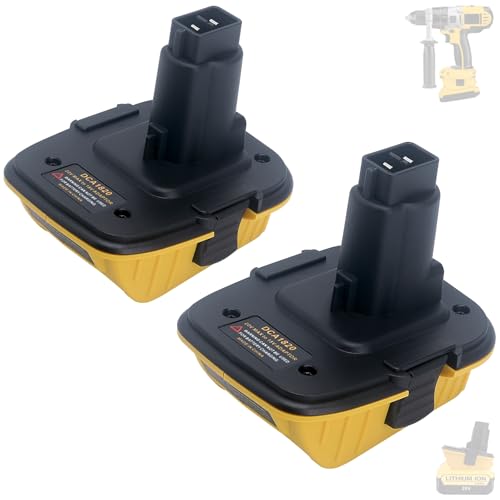
Tulepowceeng 2-Pack DCA1820 Adapter for DeWalt 18V

ExpertPower 2-Pack 18V Replacement for Milwaukee 48-11-2230

BatPower 3.0Ah 18V Battery for Ryobi 18V Tools

BatPower 6.5Ah 18V Battery for Makita 18V LXT

Jectse ABS+PC 18V Li-Ion Battery Adapter for Charging
The Picks, Examined More Closely
Munikind’s twin-pack Ni-Mh setup targets owners of older Black and Decker slide-style tools that have long outlasted their original batteries. The 4.5Ah rating (a measure of how much charge a battery can store) gives you a noticeable jump over many tired OEM packs, and the included charger means you don’t need to track down a separate unit that still works.
If your workshop still runs on a FireStorm drill, a slide-style circular saw, or a hedge trimmer from that era, this kit covers both rotation and top-up in one box. Compared to the OHYES BAT pack below, you get a charger bundled in, which adds real value if yours has gone missing.
Useful Strengths
- Two-pack design lets you rotate one pack while the other charges, useful for yard work that lasts past lunch.
- 4.5Ah capacity extends runtime noticeably over worn original packs in similar tools.
- Ni-Mh chemistry (nickel-metal hydride) avoids the memory effect that plagued older NiCd cells, so partial top-ups don’t slowly reduce capacity.
- Included charger means no hunting for a compatible wall unit.
Things To Consider
- Ni-Mh self-discharges faster than lithium, so storing a spare for months may leave it partly drained.
- Heavier than a lithium equivalent, which matters on overhead drilling or long trim sessions.
Right Fit For
Homeowners with legacy Black and Decker 18V slide tools who want a charger-and-battery combo in a single purchase.
A Better Fit Elsewhere
Anyone running modern RYOBI ONE+ tools will get more from the RYOBI PBP004 4.0Ah pack, since lithium chemistry and platform fit beat raw capacity here.
OHYES BAT keeps the focus narrow: a pair of Ni-Mh cells, no charger, no extras, and a price that makes sense for a vacuum or drill that only sees weekend use. The 4.5Ah capacity lands at the high end of what aftermarket replacements typically offer in this slide-style format.
Owners of Black and Decker cordless vacuums especially benefit, since vacuum motors pull hard and burn through weak batteries fast. Stack this against the Munikind twin pack above and the trade-off is clear: skip the bundled charger, save a few dollars, and use the one you already own.
Good Reasons To Consider
- Two-battery bundle gives a true spare for longer cleaning or drilling sessions.
- Wide compatibility across older Black and Decker slide packs reduces guesswork before ordering.
- Ni-Mh build plays nicely with existing NiCad chargers, so no new accessories required.
Minor Gripes
- No charger included, which is fine if you own one, frustrating if yours is dead.
- Adds noticeable weight to compact handheld vacuums compared to lithium.
Built With In Mind
Budget-minded shoppers restoring an older Black and Decker vacuum or drill who already own a working slide-style charger.
Consider Something Else When
Anyone needing a charger in the box should grab the Munikind twin pack instead, since it bundles the same chemistry with a wall unit.
The RYOBI PBP004 is the high-performance cell in the ONE+ lineup, the broad 18V platform that powers over 260 tools from drills to leaf blowers. At 4.0Ah, it sits a tier above the standard packs and gives meaningful runtime gains for saws, recip tools, and anything that punishes a battery.
Unlike the aftermarket Ni-Mh replacements reviewed earlier, this is genuine OEM lithium-ion (a rechargeable chemistry prized for light weight and steady power output) that slots into any ONE+ tool you already own. For homeowners building out a RYOBI garage, this is the pack most pros recommend grabbing first.
Noteworthy Benefits
- 4.0Ah capacity delivers up to four times the runtime of standard lithium packs in demanding tools.
- Lithium-ion chemistry holds charge on the shelf far longer than Ni-Mh, ideal for seasonal tools.
- Cross-compatible with the entire ONE+ range, so one battery moves between drill, saw, and blower.
- Lighter than older NiCd packs, reducing wrist fatigue on overhead work.
Trade Offs
- Premium price compared to aftermarket replacement cells, since you’re paying for OEM build and platform integration.
- Single-pack purchase means no rotation unless you already own a second battery.
Best Suited To
DIYers and homeowners already invested in the RYOBI ONE+ platform who need longer runtime without buying multiple tools.
Look Elsewhere When
Anyone without RYOBI tools will get more value from the BatPower 6.5Ah Makita pack, which delivers similar capacity gains for a different ecosystem.
STANLEY’s V20 battery brings 4Ah of lithium runtime to the brand’s mid-tier cordless lineup, which spans drills, impact drivers, and outdoor gear. The V20 platform targets homeowners who want a step up from entry-level 12V tools without jumping into a full professional system.
Compared to the RYOBI PBP004 above, this pack serves a smaller installed base, but for STANLEY V20 owners it unlocks the runtime you need for fence builds or deck refastening sessions. It’s a sensible add-on pack once you’ve moved past the starter kit’s basic battery.
The Good Stuff
- 4Ah capacity handles medium-duty tasks like repetitive deck screwing without constant top-ups.
- Lithium-ion build means the pack holds charge through winter storage in the garage.
- Slides into any STANLEY V20 tool, so one battery covers multiple applications.
Points To Note
- Requires existing V20 charger and tools to be useful, limiting flexibility for newcomers.
- Capacity sits below the larger aftermarket Makita pack reviewed later in this guide.
Who It Suits Best
STANLEY V20 owners looking to upgrade from a starter battery for longer project days.
Skip It When
Shoppers without V20 tools should pick the RYOBI PBP004 instead, since ONE+ offers a wider ecosystem and similar 4Ah performance.
The Tulepowceeng adapter is a clever bridge: clip a modern DeWalt 20V MAX XR battery onto the top and it slips into your older 18V NiCad or Ni-Mh tools. Two adapters in the pack let you dedicate one to a drill and another to a saw without constant swapping.
For anyone holding onto legacy DeWalt 18V gear because the tools still run great, this kit avoids the cost of replacing a whole shelf of perfectly good saws and impact drivers. Think of it as a translator between two generations of the same brand.
What It Does Well
- Lets modern 20V MAX batteries power older 18V DeWalt tools, extending tool life without full replacement.
- Two-adapter bundle means you can keep one on each frequently used tool for quick swaps.
- Compatible with popular 20V packs like DCB203, DCB204, and DCB206 for flexible battery use.
- Costs a fraction of replacing a full set of original 18V batteries.
Where It May Fall Short
- Doesn’t charge batteries; you still need a 20V charger for the packs themselves.
- Won’t help anyone without at least one 20V MAX battery in their collection.
The Right Fit
DeWalt owners with a mixed 18V and 20V collection who want to retire aging NiCad packs gradually.
Swap It Out When
Shoppers running only legacy NiCd Milwaukee tools will find the ExpertPower twin pack a more direct replacement.
ExpertPower’s aftermarket twin pack targets owners of older Milwaukee NiCd tools, the kind contractors and tradesmen bought heavily in the early 2000s. This is a third-party cell, not OEM, but it fits the 48-11-2230 form factor (the physical shape and connector standard) and works with original chargers that support NiCd chemistry.
You sacrifice the brand-stamped assurance of a Milwaukee pack for a meaningfully lower price and the convenience of two batteries in one box. For pros on a job site with three or four Milwaukee NiCd tools that still earn their keep, this keeps the fleet running.
Where It Excels
- Two-pack format keeps a backup ready for long shifts on site.
- Designed for the 48-11-2230 platform, covering a wide range of older Milwaukee 18V tools.
- Uses existing NiCd chargers, so no extra accessory purchases required.
Honest Caveats
- Not OEM, so warranty support flows through ExpertPower rather than Milwaukee.
- NiCd chemistry is heavier and more prone to memory effect than lithium alternatives.
- Won’t fit Milwaukee’s newer M18 lithium tools, only legacy NiCd models.
Made For
Tradesmen and serious DIYers still running vintage Milwaukee NiCd cordless tools who need a budget-friendly replacement.
Reach For A Different Pick When
Anyone on a modern Milwaukee M18 system should skip this and grab the BatPower 6.5Ah Makita pack for lithium performance, or invest in OEM M18 cells.
BatPower’s 3.0Ah lithium pack is built for RYOBI 18V cordless tools, covering most of the drills, impact drivers, and fans that define the brand’s mid-range lineup. The slim, ergonomic shape reduces hand fatigue on long trim and assembly jobs where every ounce matters.
Stack this against the OEM RYOBI PBP004 above and the trade-off is capacity versus price. You give up roughly a full amp-hour, which shows up in heavy saw work, but for typical DIY tasks around the house the runtime is plenty.
A Few Highlights
- Lithium-ion cells (rechargeable chemistry that delivers steady power without memory issues) keep weight low for overhead drilling and trim work.
- Low self-discharge means the battery holds charge through months of occasional use.
- Slim profile improves balance on smaller RYOBI drills and impact drivers.
- Works with original RYOBI chargers, no extra accessories needed.
Smaller Limitations
- Single-pack purchase limits rotation for marathon project days.
- 3.0Ah capacity trails the OEM RYOBI 4.0Ah pack for high-drain tools.
Perfect Match For
Casual RYOBI users wanting a backup pack for light DIY tasks without paying OEM prices.
Where A Sibling Pick Shines
Frequent users running circular saws or recip tools should grab the RYOBI PBP004 4.0Ah for the extra runtime headroom.
BatPower’s high-capacity 6.5Ah cell targets Makita’s sprawling LXT platform (Makita’s 18V cordless system covering hundreds of tools). The integrated star protection tech monitors overload and temperature in real time, communicating with both the tool and charger to prevent the kind of damage that ruins packs pushed too hard.
For contractors running grinders, hammer drills, or circular saws all day, the 108Wh capacity keeps the saw spinning through longer cuts. Compared to standard 5.0Ah packs, this delivers noticeably more runtime before fade sets in.
The Upside
- 6.5Ah (108Wh) capacity delivers roughly 30% more runtime than standard 5.0Ah packs for high-drain saws and grinders.
- Star protection technology guards against overload, over-discharge, and overheating in real time.
- Works across the entire Makita 18V LXT tool family, one battery moves between dozens of tools.
- Fade-free power output keeps torque consistent as the pack drains.
Practical Considerations
- Higher capacity means longer charge times on standard chargers, so plan around longer top-up windows.
- Single-pack format requires buying multiples for all-day rotation.
- Aftermarket brand, so warranty terms differ from OEM Makita packs.
Whose Shelf It Belongs On
Trade professionals and serious woodworkers running Makita LXT tools on long, demanding cuts.
Another Choice May Suit
Shoppers on RYOBI’s platform get a better capacity jump from the RYOBI PBP004 in OEM form, which also carries stronger platform integration.
Key Product Details
The Jectse adapter solves a frustration many weekend DIYers forget they have: chargers from one brand and batteries from another. Built from ABS and PC plastics (a tough, impact-resistant housing blend common in power tool accessories), this converter lets you charge an 18V Li-Ion battery from one brand on a different brand’s charger.
It’s a niche tool, but for anyone with a mixed shelf of batteries and a single working charger, it sidesteps buying redundant wall units. Compared to the DeWalt DCA1820 adapter earlier, this one focuses on charging flexibility rather than powering legacy tools.
The Case For It
- ABS and PC construction (two tough plastics often used in tool housings) holds up to drops and shop abuse.
- Compact and portable, easy to toss in a tool bag for travel between sites.
- Cross-brand charging support cuts down on redundant wall chargers.
Worth Bearing In Mind
- Charging adapter, not a power adapter, so it won’t run a tool from a different battery.
- Limited brand-pair compatibility, check the supported list before ordering.
Who Should Grab It
DIYers and small shop owners juggling batteries from multiple brands who want to consolidate chargers.
Not Your Match When
Anyone needing to power older tools from newer batteries should pick the Tulepowceeng DCA1820 adapter, which is built for that exact job.
Picking A Battery That Actually Fits Your Tools
Chemistry matters more than capacity on day one. Ni-Mh and NiCd packs cost less and work with older chargers, but weigh more and self-discharge faster. Lithium-ion costs more up front, but holds charge on the shelf, runs lighter, and avoids memory effect (where partial top-ups gradually reduce total capacity over time) entirely. For tools used in bursts across months, lithium wins on convenience.
Capacity is your runtime, measured in amp-hours (Ah), and bigger isn’t always smarter. A 4.0Ah pack handles almost every DIY task, while a 6.5Ah cell pays off only when you’re driving saws and grinders for hours. Oversizing capacity adds weight and charge time without much real-world benefit for light work.
Platform fit is non-negotiable. RYOBI ONE+, Makita LXT, DeWalt 20V MAX, and Milwaukee M18 all use proprietary footprints, so a battery only works if your tools match. Adapters like the Tulepowceeng DCA1820 bridge generations, but can’t cross brands entirely.
OEM versus aftermarket comes down to budget versus assurance. OEM packs carry stronger platform integration and warranty support, while aftermarket replacements like the ExpertPower and BatPower lines deliver more capacity per dollar for legacy or backup use.
What To Watch Before You Click Buy
Common Shopping Slip Ups
Buying on amp-hours alone leads to overpaying for runtime you won’t use. Most weekend projects never drain a 4.0Ah pack, so jumping to 6.5Ah mostly adds weight and cost. Match capacity to your heaviest tool and stop there.
Assuming all 18V batteries fit all 18V tools is the fastest way to a return. Brands use different slide and pod footprints, and even within a brand, NiCd packs won’t seat in lithium tools. Confirm your tool’s exact model against the compatibility list before ordering.
Where The Extra Money Goes
Higher-tier lithium packs bring integrated protection circuits that monitor heat, current, and voltage in real time, which extends cell life and prevents dangerous over-discharge. On demanding tools like grinders and circular saws, that protection earns its keep.
Premium OEM packs also buy platform integration, fuel gauges, and tighter fit tolerances. For shop owners who run the same battery hundreds of times a year, that engineering compounds into longer service life and fewer surprises mid-project.
Frequently Asked Questions
How long does an 18V lithium battery usually last?
Most lithium 18V packs deliver three to five years of regular use before capacity drops noticeably, though heavy daily work shortens that window. Storage matters too, since heat and full discharge both age cells faster.
Can I use a higher Ah battery on any 18V tool?
Yes, as long as the form factor matches. Higher amp-hour packs just run longer; the voltage stays the same. The tool draws what it needs, so a 6.5Ah pack works fine in a tool originally sold with a 3.0Ah cell.
Is it safe to leave an 18V battery on the charger?
Modern chargers switch to a maintenance mode once full, so occasional overnight charging won’t hurt. For longest cell life, top up shortly before use rather than leaving packs at 100% for weeks on end.
What’s the difference between NiCd and lithium 18V batteries?
NiCd cells are heavier, suffer from memory effect, and self-discharge on the shelf. Lithium packs weigh less, hold power through storage, and deliver steadier output as they drain, which is why most modern tools ship with lithium.
Do aftermarket batteries damage tools?
Quality aftermarket packs with proper protection circuits generally work fine, though warranty support flows through the battery maker rather than the tool brand. Sticking with reputable aftermarket brands reduces the risk of poor cell matching.
The Takeaway
Your best match depends on the platform you already own and the kind of work you actually do. RYOBI ONE+ owners running real tools get the most from the RYOBI PBP004, while contractors on Makita LXT will appreciate the BatPower 6.5Ah’s runtime and protection. Older slide-style tools and legacy NiCd systems have their own dedicated replacements above, so dig in by ecosystem first and capacity second. Pick the right fit once, and your tools stay ready when you are.