If your drawer holds a growing pile of flashlight cells, vape mods, and headlamp batteries, the right charger turns chaos into a reliable routine. A 16340 cell (a compact, high-output lithium-ion often sold under the RCR123A label) needs careful voltage and current handling to stay healthy, and most household NiMH AA/AAA gear benefits from the same smart charging intelligence. This list rounds up ten solid picks that handle 16340s alongside other common sizes, so you stop babysitting batteries and start trusting your gear.
A Fast Comparison Of The Options
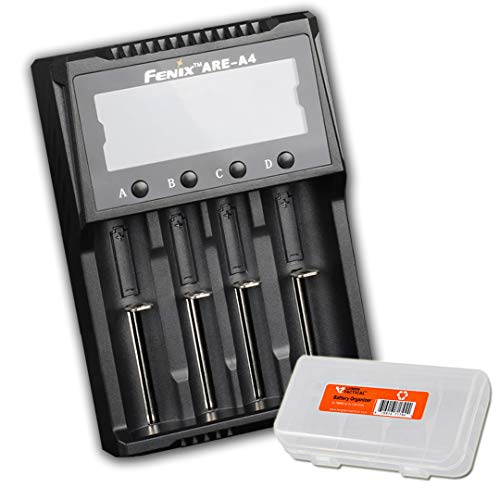
FENIX are-A4 Multifunctional Smart Battery Charger

EdisonBright Fenix are-A2 Home/in-car Charger Bundle

EdisonBright Fenix are-D1 USB Powered Charger
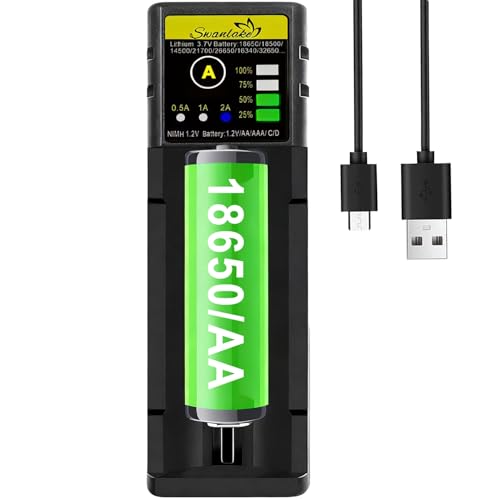
Swanlake Universal 18650 Battery Charger

SUNLYTOUR 4-Slot 21700/18650 Charger

MC-ELIN 18650 Smart Universal Charger 2-Slot

FARSAIL LCD Universal 18650 Battery Charger

EdisonBright Fenix are-A2 Smart Charger with Case

Nitecore UMS4 USB 4-Port Speedy Smart Charger

SEVENKA 18650 1-Bay Smart LCD Charger
The Details Behind The Selections
Most charger buyers eventually hit the same wall: one device handles their 18650s, another handles AA NiMH, and somehow nothing covers both at once. The Fenix ARE-A4 breaks that pattern with four independent slots that treat each cell as its own project, picking the right current for whatever you drop in.
If you rotate between high-drain flashlights, headlamps, and a stash of household rechargeables, this charger’s broad chemistry support means one unit replaces three. The LCD readout removes the guesswork that smaller chargers force on you, and owners commonly report that the included LumenTac organizer keeps loose cells from disappearing into couch cushions.
A Few Highlights
- Four independent bays let you charge mixed chemistries at once without babysitting
- High-definition LCD clearly shows voltage, current, and charging status per slot
- Auto-adjusting current prevents overcharging and extends battery lifespan
- Handles Li-ion, NiMH, and NiCd cells from 10440 up to 21700
- Bundled LumenTac organizer keeps your loose inventory tidy
Trade Offs
- Bulkier footprint than single-bay travel chargers
- LCD backlight is functional, not glamorous
Quick Facts
Who It Suits Best
Hobbyists and preparedness-minded households running mixed battery inventories across flashlights, headlamps, and household gear will appreciate the broad compatibility.
Swap It Out When
Travelers prioritizing pack weight should consider the smaller EdisonBright Fenix ARE-D1 instead.
Compared to the four-bay flagship above, the ARE-A2 strips things down to two slots, but adds a 12V in-car cable that most desktop chargers skip entirely. That dual-input design turns long drives into productive ones if your gear runs dry before you reach the trailhead.
The EdisonBright bundle adds a BBX5 carry case, which solves a different problem: keeping 16340s and their A2 charger from rattling around loose in a backpack. For weekend campers, overlanders, and anyone whose “office” shifts between desk and dashboard, this kit earns its space.
What Stands Out
- Dual AC and 12V DC inputs for flexible locations
- Two independent bays handle different cell types simultaneously
- BBX5 carry case protects cells and charger during transit
- Multi-chemistry support spanning Li-ion and NiMH
Room For Improvement
- Only two slots, limiting parallel throughput
- Car cable adds bulk to overnight-bag packing
Right Fit For
Overlanders, van-lifers, and weekend campers who need to top off batteries between stops away from outlets.
Look Elsewhere When
Home-only users should step up to the Fenix ARE-A4 for its four-bay flexibility.
Where the A-series chargers assume you’ll find a wall outlet, the Fenix ARE-D1 leans entirely on USB power. That single design choice rewrites how you can use it: a power bank, a laptop, or a car’s USB port all become valid charging stations. The trade-off is a single bay, so this is a charger for people who rotate one or two cells at a time.
Owners traveling light will find the EdisonBright bundle’s BBX5 case fits the ARE-D1 and a handful of spare cells without dominating a pack. For EDC pocket carriers and minimalist travelers, this setup covers the basics without the bulk of a multi-bay unit.
Standout Benefits
- USB input works from power banks, laptops, and car ports
- Single-bay focus suits one-cell-at-a-time rotation
- Broad chemistry support from 10440 up to 26650
- Tiny footprint for minimal pack weight
Honest Caveats
- One bay means slower overall throughput for multiple cells
- Requires a USB power source you supply yourself
Made For
Minimalist EDC users and ultralight travelers carrying only one or two charged cells at a time.
Reach For A Different Pick When
The Nitecore UMS4 suits power users who need four USB-powered bays running simultaneously.
If speed matters more than brand prestige, the Swanlake unit takes a different angle. Instead of locking you into preset modes, it offers three switchable current outputs (0.5A, 1A, and 2A) that you set per session with a single button. You dial in what fits the cell rather than letting the charger guess.
The LCD display shows four charge stages (25%, 50%, 75%, 100%), so you can see progress at a glance and pull cells when they hit the level you need. For users who match charging speed to cell chemistry, this Swanlake unit is a refreshingly flexible middle ground.
Real-World Strengths
- Switchable 0.5A/1A/2A current modes for tailored charging
- LCD shows 25/50/75/100 percent charge stages
- Auto shutoff when cells reach full capacity
- Broad compatibility across Li-ion and NiMH families
Points To Note
- Highest speed settings need careful monitoring on smaller cells
- No dedicated display per bay on multi-cell sessions
Best Suited To
Speed-oriented users who want manual control over current output and appreciate visible progress indicators.
Consider Something Else When
Drivers needing a true multi-bay setup should look at the SUNLYTOUR 4-slot charger for higher throughput.
Four slots plus a built-in PCB protection board make this SUNLYTOUR unit feel closer to a bench tool than a consumer charger. Where smaller units might let a worn NiMH cell trickle forever, the protection circuit steps in and stops the cycle, which is the kind of safety margin you want if you leave cells sitting for days.
The unit handles an unusually wide range including 22700 and 26700 sizes that other chargers in this roundup skip. Owners with deep mixed inventories commonly appreciate that flexibility, though the trade-off shows up in physical size: this is a desk-dweller, not a travel companion.
Reasons It Performs
- Four bays with built-in PCB protection circuit
- Unusually wide size support including 22700 and 26700
- Designed for battery rotation rather than one-off charging
Worth Bearing In Mind
- Larger footprint than compact two-bay units
- NiMH cells older than two to three years should be retired, not recharged
- Won’t charge CR123, CR123A, or 1.5V Li-ion cells
Perfect Match For
Battery rotation enthusiasts and serious flashlight collectors running varied cell sizes across deep inventories.
A Better Fit Elsewhere
Travelers wanting compact performance should consider the EdisonBright Fenix ARE-D1 USB charger.
USB-C has quietly become the standard cable cluttering every drawer, so the MC-ELIN charger’s USB-C input keeps your cable count honest. Two bays hit the sweet spot for most households: enough to cover a flashlight and a headlamp, or two RCR123s at once, without dominating the desk.
The intelligent circuit stops charging when cells hit full, plus includes short-circuit, overvoltage, and overheating safeguards. For shoppers who want modern connectivity without paying for four-bay overkill, this strikes a clean balance.
Notable Upsides
- USB-C input uses the cable you already own
- Two bays cover typical household rotation
- Auto-stop with short-circuit and overheat safeguards
- Clean white housing fits modern desk aesthetics
Less Ideal Details
- Do not combine AC and car power simultaneously
- Primary cells and damaged batteries must stay out
Feature Snapshot
Who Should Grab It
Modern-minded households wanting USB-C convenience and two-bay simplicity for typical flashlight and headlamp rotations.
Skip It When
Power users managing larger inventories should step up to the Nitecore UMS4 for its four-port capacity.
The FARSAIL charger’s draw is its per-cell voltage readout on the LCD, which is the kind of detail data-driven owners tend to appreciate. Instead of guessing whether a 16340 has truly hit 4.2V, you watch the numbers tick up in real time. That’s also useful for spotting weak cells whose voltage stalls or drops under load.
Charging speed hits up to 1000mA on Li-ion cells (twice what older units deliver) and 400mA on NiMH. If your household owns a mix of high-drain Li-ion cells and standard rechargeables, this FARSAIL unit covers both without manual mode switching.
Strengths Worth Knowing
- Per-cell voltage readout helps spot weak batteries
- 1000mA Li-ion charging halves wait times vs basic units
- Handles Li-ion, LiFePO4, IMR, INR, ICR, and NiMH/NiCd
- Broad size support from 10440 up to 18650
Practical Considerations
- Higher current generates more heat on long sessions
- LCD visibility can suffer in bright sunlight
Built With In Mind
Data-driven owners who want to monitor cell health and charge progress at a granular level.
Not Your Match When
Plug-and-forget users should consider the EdisonBright Fenix ARE-A2 for simpler operation.
First-time charger owners tend to want something that just works without menu diving, and the EdisonBright Fenix ARE-A2 bundle fits that profile. Two bays, plug-in power, drop in your cells, and the LCD handles the rest. The included BBX5 case adds carrying convenience without adding complexity.
Compared to the heavier four-bay options reviewed earlier, this kit stays approachable: short-circuit, over-current, over-voltage, and reverse polarity protection all sit behind the scenes. For households buying their first dedicated smart charger, it removes intimidation without skimping on safety.
Strong Points
- Plug-and-charge simplicity with no menu learning curve
- Multi-layer protection (short, over-current, over-voltage, reverse polarity)
- BBX5 carry case included for portable organization
- LCD readout keeps charging status visible
Small Caveats
- Two bays limit throughput for larger households
- AC-only input (no car cable in this version)
Whose Shelf It Belongs On
Beginners and first-time charger owners wanting straightforward operation without advanced settings menus.
Where A Sibling Pick Shines
Road-trippers needing vehicle charging should pick the EdisonBright Fenix ARE-A2 Home/in-car bundle instead.
Power users managing a busy charging rotation will feel the difference with the Nitecore UMS4’s 3000mA single-slot throughput. That kind of current, paired with Quick Charge 2.0 input support, compresses charging times significantly when paired with the right adapter. Four bays keep multiple cell types moving at once.
The LifeMods battery case in the bundle tucks the charger and spares into one tidy package. For photographers, videographers, and flashlight hobbyists running high-volume rotations, this UMS4 setup earns its space through raw speed and capacity rather than compactness.
Where It Helps
- 3000mA max single-slot output for fast charging
- Quick Charge 2.0 compatible input
- Four independent bays handle mixed chemistries
- Automatic voltage and mode selection per cell
- Li-ion battery restoration mode extends older packs
Trade-Offs To Consider
- QC 2.0 speed requires a compatible adapter you supply
- Higher price tier than basic two-bay units
Best Suited To
Power users, photographers, and serious flashlight hobbyists who charge high volumes and value speed over footprint.
Another Choice May Suit
Casual households should consider the MC-ELIN two-slot USB-C charger for simpler everyday use.
Tight bench space, cluttered desks, and shared workstations all benefit from the SEVENKA single-bay approach. One slot, smart LCD, fire-retardant PC housing, and adjustable 0.5A/1A/2A output cover the core charging needs without claiming extra real estate. For users who only need to keep one or two 16340s topped off, this is honest minimalism.
USB input via laptop, phone charger, or car adapter makes placement flexible in ways that wall-only chargers can’t match. The trade-off is sequential, not parallel: you wait for one cell before starting the next. But for nightstand or workbench setups, that constraint often doesn’t matter.
Positive Points
- Fire-retardant PC housing with solid heat dissipation
- Adjustable 0.5A/1A/2A output (Li-ion only)
- Auto-stop charging when cells reach full
- USB input works from laptop, phone charger, or car
Possible Compromises
- Single bay means sequential charging only
- Variable current settings apply to Li-ion, not NiMH
Made For
Users with tight bench or desk space who only need to keep one or two cells rotating at a time.
Where Another Pick Suits Better
Multi-cell households should consider the Fenix ARE-A4 for its four independent bays and broader size support.
Choosing The Right 16340 Battery Charger For Your Setup
Bay Count And Charging Speed
The number of bays shapes how many cells you can rotate simultaneously. Two-bay units like the Fenix ARE-A2 or MC-ELIN cover most household needs, while four-bay options (Fenix ARE-A4, SUNLYTOUR, Nitecore UMS4) suit users managing flashlights, headlamps, and camera gear in parallel. Charging current matters too: 500mA handles 16340s gently, while 1000mA to 3000mA speeds up larger 18650 and 21700 cells when paired with compatible adapters.
Chemistry And Size Compatibility
A 16340 cell shares dimensions with RCR123A rechargeable lithium-ion batteries, and most chargers in this roundup cover both labels interchangeably. If your drawer also holds 18650s, 21700s, or household NiMH AA/AAA cells, look for a unit that handles Li-ion and NiMH chemistries without manual mode switching. The Fenix ARE-A4 and Nitecore UMS4 stand out for covering the broadest mix of sizes in one device.
Safety Features That Matter
Reverse polarity protection prevents damage when a cell is inserted backward. Short-circuit and overvoltage safeguards step in during electrical faults. Overheat protection limits charging current as cells warm. NiMH cells older than two to three years should be retired entirely, regardless of charger quality, because aging NiMH chemistry can vent under stress. Look for chargers with built-in protection circuits rather than bare-bones designs.
Power Input Flexibility
USB and USB-C inputs (EdisonBright Fenix ARE-D1, MC-ELIN, Nitecore UMS4, SEVENKA) free you from wall outlets and let you charge from power banks or car adapters. AC wall inputs (Fenix ARE-A4, SUNLYTOUR, EdisonBright Fenix ARE-A2) generally deliver faster sustained throughput but tether you to a fixed location. Some bundles include 12V car cables for the best of both worlds.
Key Considerations Across These Picks
Mistakes Worth Dodging
Buying a charger that handles only Li-ion when your household runs NiMH AA/AAA creates a second charger you didn’t plan for. Avoid chargers without short-circuit or reverse polarity protection, since damaged or misoriented cells can cause real safety issues. Skipping battery health checks is another common slip: cells older than two to three years, especially NiMH, can develop internal resistance problems that even smart chargers cannot safely fix.
Where The Extra Money Goes
Premium-tier models like the Nitecore UMS4 add Quick Charge 2.0 input and 3000mA single-slot throughput, which compresses charging times when paired with the right adapter. Mid-tier options like the Fenix ARE-A4 add LCD monitoring and broader size coverage. The upgrade pays off for high-volume users (photographers, flashlight hobbyists, gear reviewers), but casual households rotating two or three cells weekly typically get enough value from the affordable tier without spending up.