A trolling motor only performs as well as the battery feeding it, and anglers know the sting of a half-finished day on the water because the wrong power source tapped out early. Choosing a deep-cycle battery that matches your motor’s draw, your boat’s storage footprint, and the conditions you fish in makes the difference between a full afternoon on the flats and an early paddle back to the launch. This lineup covers the sealed lead-acid workhorses, the lighter lithium options, and a few dual-purpose picks for anglers who want one battery to handle both starting and trolling.
A Quick View Of The Lineup

Mighty Max 12V 55Ah Deep Cycle Trolling Motor Battery (2 Pack)
HJGHY 12V 60Ah Marine Propulsion Lithium Battery Pack
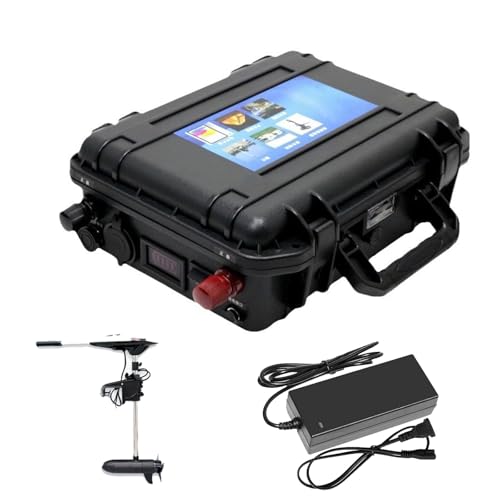
HJGHY 12V Marine Thruster Lithium Battery (60Ah to 200Ah)

OPTIMA D34M BLUETOP Dual Purpose AGM Battery

OPTIMA D75/25 YELLOWTOP High Performance AGM Battery

OPTIMA D27M BLUETOP Boat and RV AGM Battery

Yuasa YTX20L-BS Maintenance Free VRLA Battery

Odyssey ODX-AGM24M 24M-PC1500 Marine AGM Battery
A Deeper Look At The Lineup
Two batteries at once gives you a built-in rotation scheme, and that is exactly the appeal of the Mighty Max 12V 55Ah pair. Each unit is a sealed lead-acid (SLA) absorbed glass mat (AGM) design, which means the electrolyte is held in fiberglass mats rather than swimming in liquid form. You can mount them at an angle without worrying about spills, and the absence of liquid acid vents makes them a comfortable fit in enclosed battery compartments.
The 55Ah rating per battery translates into a realistic full day of moderate trolling on most small-to-mid sized rigs, and pairing two lets you swap or run them in parallel for longer outings. Compared to the lithium options later in this list, you trade weight for cost. Anglers running heavier jon boats, pontoons, or any setup with room to spare tend to appreciate the predictable deep-cycle performance.
Noteworthy Benefits
- Maintenance-free AGM construction, no water topping required.
- Ships as a matched pair, ready for series or parallel wiring.
- Spill-proof design tolerates angled mounting in tight compartments.
- Strong fit for budget-minded anglers who fish moderate trolling sessions.
Honest Caveats
- Heavier than lithium equivalents, which matters on kayaks and small craft.
- Listing ships batteries and screws only, so plan to buy cables and a charger separately.
Who Should Grab It
Anglers with limited budgets who run pontoons, jon boats, or larger bass rigs that can absorb the extra weight and want the redundancy of two matched batteries.
Swap It Out When
Kayak and canoe anglers focused on cutting weight should step up to the HJGHY 12V 60Ah Marine Propulsion Lithium Battery Pack instead.
The HJGHY 12V 60Ah swaps the heft of lead-acid chemistry for lithium-ion portability, and you can feel the difference the moment you carry it to the launch. The ABS housing gives the cell block a rugged shell that shrugs off splash and brief rain exposure, and an integrated handle makes transport across slippery docks far less awkward.
A built-in battery management system (BMS) protects the pack against overcharge, overdischarge, and short circuits, which is the kind of feature that matters when you push electronics in cold mornings or summer afternoons. The display panel on top shows remaining capacity at a glance, so you know when to head back. For kayak and small jon boat anglers, this pick runs cooler and lighter than the Mighty Max pair above.
The Value In It
- Substantially lighter than SLA equivalents, easing load on small craft.
- Built-in BMS protects against common electrical faults.
- Rugged ABS housing tolerates splash and outdoor exposure.
- Capacity and voltage display helps track remaining runtime.
Soft Spots
- Listed capacity spans an unusually wide range of options, so confirm the exact model before ordering.
- Lithium chemistry requires a compatible charger, which is typically sold separately.
Made For
Kayak, canoe, and small jon boat anglers chasing a lighter trolling rig and willing to invest in a matched lithium charger for the season.
Look Elsewhere When
Anglers running larger boats that demand 100Ah or more should consider the HJGHY 12V Marine Thruster Lithium Battery (60Ah to 200Ah) below.
Where the smaller HJGHY pack covers a single angler’s kayak, this lineup spans the kind of capacity you need when a 24-volt trolling motor is drawing steady current across a long afternoon. Models range from a 60Ah 12V unit up to a 200Ah option, and the listing covers 24V configurations as well, giving you room to grow.
The ABS shell, BMS protection, and integrated handle carry over from the sibling pick above, so you get the same rugged convenience in a heavier package. The 12V 105Ah variant measures roughly 290 by 240 by 110mm, while the 24V 100Ah version steps out to about 330 by 230 by 170mm. These are the packs suited to bass boats and pontoons where lead-acid bulk has started to add up.
Useful Strengths
- Broad capacity and voltage range, covering 60Ah to 200Ah options.
- ABS housing with BMS protection for safer marine use.
- Integrated handle simplifies transport to and from the boat.
- Suits anglers running 24V trolling setups that need more headroom.
Points To Note
- Listing spans many sizes, so the listing page can feel confusing without checking the variant carefully.
- Larger capacity packs grow heavy enough that weight savings over lead-acid narrow on the bigger end.
Best Suited To
Bigger-boat anglers running 24V trolling motors who want lithium longevity and the flexibility to pick the capacity that matches their setup.
Skip It When
Single-boat anglers with smaller crafts will find the 60Ah variant in the earlier HJGHY 12V 60Ah Marine Propulsion Lithium Battery Pack a more focused choice.
OPTIMA’s spiral-cell construction is the standout engineering detail on the D34M BLUETOP. Instead of flat plates, the cells wind into tight spirals, which gives the battery better resistance to vibration and a stronger pulse for engine starting. This is also a dual-purpose design, so it can crank an outboard or push a trolling motor without skipping a beat.
The sealed AGM format keeps the unit maintenance free, and the dual-post terminals accept both top-mount and side-mount cable configurations. For anglers running a single-battery boat with a small outboard plus a trolling motor, this is the kind of battery that simplifies the wiring. Compared to the Mighty Max SLA pair above, you trade raw capacity for build quality and starting power.
Useful Touches
- Maintenance-free sealed AGM, no water or acid checks.
- Dual-post terminals accept multiple cable hookups.
- Resists vibration from rough water and trailering.
- One battery handles both starting and trolling duties.
Trade Offs
- Higher cost per amp-hour than basic SLA options.
- Heavier than comparably rated lithium packs for the same use.
Quick Facts
Perfect Match For
Anglers running a single-battery setup with both an outboard and a trolling motor, who want one rugged unit to handle the workload.
Consider Something Else When
Pure deep-cycle anglers who never crank an outboard may find the OPTIMA D27M BLUETOP Boat and RV AGM Battery a better capacity match.
The YELLOWTOP family is OPTIMA’s take on the deep-cycle-plus-cranking hybrid, and the D75/25 sits at the upper end of that line. The 620 CCA rating handles engine starts on most mid-sized outboards, while the deep-cycle reserve capacity supports trolling motors and accessory loads without sagging.
Maintenance-free sealed AGM construction means you can install it under a seat or in a compartment and forget about water levels. The dual terminal layout keeps the wiring flexible when you’re routing cables around fishfinders and pumps. For anglers running a modern bass boat stuffed with electronics, this is one of the more versatile batteries in the lineup.
Standout Benefits
- Strong cranking amps for mid-sized outboards.
- True dual-purpose design for starting and accessory loads.
- Dual terminals simplify cable routing on busy boats.
- Sealed AGM construction means no venting concerns indoors.
Worth Noting
- Designed primarily for automotive use, so confirm marine fit before installing.
- Heavy and bulky compared to dedicated trolling-only packs.
Right Fit For
Anglers running accessory-heavy setups with fishfinders, livewell pumps, and a trolling motor sharing the same battery bank.
Not Your Match When
Kayak anglers chasing lightweight lithium performance should pivot back to the HJGHY 12V 60Ah Marine Propulsion Lithium Battery Pack.
Step up from the D34M and you land at the D27M BLUETOP, a larger Group 27 footprint with more reserve capacity for full-day trolling sessions. The same spiral-cell AGM construction carries over, so the durability story stays consistent while the runtime story grows.
This is the OPTIMA most saltwater anglers gravitate toward, since the higher reserve capacity handles wind, current, and longer runs to the fishing grounds. The dual-purpose design still lets it crank an outboard without a dedicated starting battery, which simplifies smaller boat layouts. You will notice the heavier weight compared to the D34M, so plan your battery tray accordingly.
What Makes Sense
- Higher reserve capacity supports longer trolling sessions.
- Spiral-cell AGM resists vibration on rough saltwater runs.
- Dual-purpose design handles both engine and trolling loads.
- Maintenance-free for set-and-forget convenience.
A Few Limitations
- Heavier Group 27 footprint needs a sturdy battery tray.
- Premium pricing reflects the build quality and reserve gains.
Who Will Love This
Saltwater and offshore anglers chasing longer trolling days who want one battery that can both start and run accessories.
A Better Fit Elsewhere
Budget-focused freshwater anglers may find the Mighty Max 12V 55Ah Deep Cycle Trolling Motor Battery pair covers similar runtime at a friendlier cost.
Yuasa’s YTX20L-BS uses valve-regulated lead-acid (VRLA) construction, a sealed design that recombines internal gases and prevents the need for water top-offs. The factory-activated format ships ready to install, so you skip the acid-filling step common to older flooded batteries.
The YTX20L-BS designation is a Group 20 footprint, which fits many mid-sized motorcycles, ATVs, and select marine applications. For anglers with smaller boats or jet-drive setups looking for a sealed, spill-proof option, this unit drops into place without extra mounting hardware. Compared to the OPTIMA spiral-cell offerings above, you trade cycling depth for a more compact form factor.
What It Does Well
- Factory-sealed VRLA design requires no initial acid filling.
- Maintenance-free operation over the battery’s lifespan.
- Compact Group 20 footprint fits smaller battery trays.
- Spill-proof for safe installation in angled compartments.
Where It May Fall Short
- Smaller footprint limits runtime on long trolling days.
- Not a deep-cycle specialty design, so cycling hard will shorten service life.
Built With In Mind
Anglers with smaller boats or hybrid motorcycle/ATV/marine setups who want a sealed battery that installs without preparation.
Where A Sibling Pick Shines
Anglers running heavy trolling loads should consider the OPTIMA D34M BLUETOP Dual Purpose AGM Battery for deeper cycling capability.
The Odyssey 24M-PC1500 sits in the extreme-duty corner of the AGM world, and the model name hints at its mission. Odyssey rates it for service in demanding marine and RV environments, where high cranking power and deep cycling both matter during a single outing.
Sealed AGM construction means you can mount it in odd positions without acid spill concerns, and the rugged plate design is built to take repeated deep discharges. This is the kind of battery serious offshore anglers consider when they want one pack that handles a large outboard plus extensive electronics. It carries more weight than the smaller OPTIMA D34M, but the service ratings climb accordingly.
The Upside
- Heavy-duty service rating for demanding marine and RV use.
- Sealed AGM construction tolerates angled mounting.
- Strong cranking performance alongside deep-cycle capability.
- Plate design built to handle repeated deep discharges.
Less-Strong Areas
- Sits at the heavier end of the AGM category.
- Premium positioning reflects the heavy-duty construction.
Technical Highlights
Whose Shelf It Belongs On
Serious boaters running large outboards and accessory-heavy electronics setups who want one battery to anchor the entire system.
Reach For A Different Pick When
Kayak and small-craft anglers will find the HJGHY 12V 60Ah Marine Propulsion Lithium Battery Pack a more weight-appropriate match.
Choosing The Right 12v Trolling Motor Battery For Your Setup
Battery Chemistry And Why It Matters
The chemistry choice drives most of the real-world differences you’ll feel on the water. Sealed lead-acid (SLA) and absorbed glass mat (AGM) batteries use the same basic chemistry, with AGM being a sealed variant where the electrolyte sits in fiberglass mats. These are the budget-friendly workhorses that run heavier but cost less per amp-hour. Lithium-ion packs trim serious weight and cycle deeper, but they ask for a compatible charger and a higher upfront outlay. AGM also appears in “dual purpose” designs from brands like OPTIMA, blending starting power and trolling depth in one box.
Capacity, Voltage, And Motor Match
Match the amp-hour (Ah) rating to the trolling motor’s draw and your typical day length. A 55Ah battery generally covers a moderate day at lower thrust settings, while a 100Ah or larger pack stretches into full-day sessions. For 24V trolling motors, you either run two 12V batteries in series or pick a dedicated 24V lithium pack like the HJGHY 24V options. Going too small on capacity forces deeper discharges than the chemistry likes, which shortens service life over time.
Size, Weight, And Mounting Footprint
Battery group size (Group 24, 27, and so on) tells you the rough dimensions, and weight scales with capacity. Kayak and small jon boat anglers feel every extra pound, so lithium’s weight advantage is real in those setups. Larger boats with dedicated battery compartments can absorb the heft of an SLA or AGM pack and benefit from the lower cost per amp-hour. Check the tray dimensions before ordering, since Group 24 and Group 27 footprints differ enough that swapping is rarely a direct drop-in.
Real-World Ownership Considerations
Sealed batteries of any chemistry simplify ownership by eliminating water top-offs and acid checks. AGM and lithium both handle angled mounting, but lithium typically demands a battery management system (BMS) to prevent overcharge and overdischarge damage. Charging matters: a standard lead-acid charger works fine for SLA and AGM, while lithium needs a charger matched to its specific voltage profile. Storage during the off-season favors lithium since low self-discharge means you can park the boat for months without topping up.
Key Considerations Across These Picks
Pitfalls Shoppers Hit
The most common mistake is treating any 12V battery as a universal trolling solution. Starter batteries and deep-cycle batteries look similar, but using a starter battery for trolling destroys it within a season because thin starter plates don’t tolerate deep discharge. Another slip-up is mismatching chemistry to charger, which can undercharge lead-acid packs or damage lithium cells. Confirming the battery group size against your existing tray saves the headache of returns, and double-checking the exact capacity variant on multi-option listings prevents shipping surprises.
Where The Extra Money Goes
Premium picks like the OPTIMA D27M BLUETOP and Odyssey 24M-PC1500 cost more because the plate construction, vibration tolerance, and reserve capacity step up substantially. Spiral-cell designs hold up to rough water better than flat-plate AGM, and extreme-duty plates cycle deeper before showing wear. For anglers who fish weekly in tough environments, those upgrades pay back through longer service life and fewer mid-season replacements. Casual weekend anglers fishing calm lakes may not see enough benefit to justify the premium over a standard AGM pair.
Frequently Asked Questions
What Size 12v Trolling Motor Battery Do I Need?
Match capacity to your motor’s thrust and day length, with 55Ah covering moderate use and 100Ah or more supporting full-day sessions. For 24V systems, plan for two 12V batteries in series or a dedicated 24V pack.
Can I Use A Regular Car Battery For Trolling?
Car batteries are starter batteries with thin plates that fail quickly under deep trolling discharge. Deep-cycle or dual-purpose marine batteries are the right choice for sustained trolling loads.
How Long Does A 12v Trolling Motor Battery Last?
Service life depends on chemistry and discharge depth, with SLA lasting a few seasons under moderate use and lithium often pushing beyond 1500 cycles. Avoiding deep discharges below 50% extends the lifespan of any chemistry.
Do I Need A Special Charger For A Lithium Trolling Battery?
Yes, lithium batteries require a charger matched to their voltage profile and BMS requirements. Standard lead-acid chargers can undercharge or damage lithium cells over time.
Is AGM Or Lithium Better For Trolling Motors?
AGM offers lower cost and proven reliability, while lithium delivers lighter weight and deeper cycling. The right pick depends on your boat size, budget, and how often you fish.
Final Take
Pick the chemistry that fits your boat and budget first, then dial in capacity and group size to match your trolling motor’s draw. The Mighty Max pair covers anglers who want simple, affordable runtime, while the lithium picks trim every pound off small craft. For mixed setups with both starting and trolling duties, the OPTIMA and Odyssey options earn their keep through rugged construction and dual-purpose flexibility. Match the battery to the way you actually fish, and the motor will do the rest of the work.