A dead battery ruins the day, whether you’re trying to fire up a motorcycle that sat all winter or just need your daily driver ready for a cold morning. Modern 12V smart chargers take the stress out of long-term storage and dead-cell recovery, but the spec sheets blur together fast. This list breaks down ten solid picks across powersports, automotive, marine, and heavy-duty shop use, so you can match amperage, chemistry support, and portability to your actual situation.
The Shortlist At A Glance

Battery Tender Junior 750mA 12V Charger & Maintainer
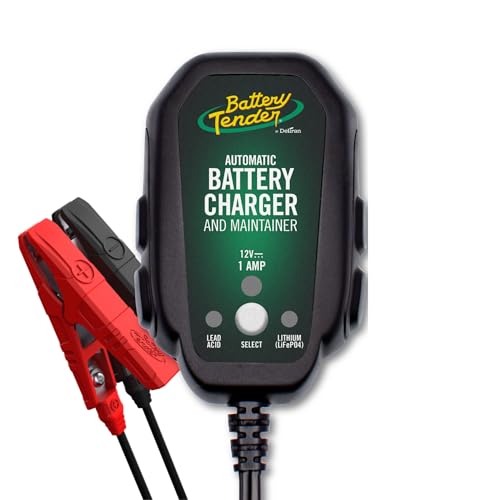
Battery Tender Junior 800mA 12V Switchable Charger

Schumacher SL1674 12V Lithium Jump Starter & Power Pack

NOCO GENIUS1 1A 6/12V Smart Battery Charger

NOCO GENIUS10 10A 6/12V Smart Battery Charger

NOCO GENIUS5 5A 6/12V Smart Battery Charger

Schumacher SC1355 1.5A 6/12V Charger & Maintainer

Schumacher SC1280 3A 6/12V Charger & Maintainer

Schumacher SC1361 6A 12V Charger & Maintainer

Schumacher SC1445 6/12V 250A Wheeled Starter/Charger
A Closer Look At Each Pick
The Battery Tender Junior has earned its reputation on garage shelves across the country. Designed for powersports batteries that sit idle for weeks, it delivers a steady 750mA trickle that won’t cook a small AGM or gel cell over time. Riders who tuck their motorcycle or ATV into winter storage typically plug it in, walk away, and trust the four-step program to handle the rest.
Where it falls short of the larger units on this list is raw charging speed. At 750mA, refilling a deeply discharged battery takes patience, so it suits maintenance duty far more than emergency recovery. For seasonal riders who want set-and-forget behavior, that trade-off is exactly the point.
Reasons It Performs
- Four-step charging program handles initialization, bulk charge, absorption, and float mode automatically.
- Compatible with 12V lead-acid, flooded, AGM, and gel cell batteries found in most powersports vehicles.
- Float maintenance keeps a stored battery topped up without overcharging during long winters.
- Compact size fits easily in a saddlebag or shop drawer between rides.
Things To Consider
- Lower amperage means a deeply discharged battery may take many hours to recover fully.
- No lithium chemistry option, so LiFePO4 owners will need the Item 2 switchable version instead.
Key Specs
Who It Suits Best
Riders storing motorcycles, scooters, or ATVs over the winter who value a true set-and-forget maintainer over fast recovery.
Where Another Pick Suits Better
Households running both lead-acid and lithium batteries should consider the Battery Tender Junior 800mA Switchable Charger instead.
The bigger draw here, a slight bump to 800mA, hides the real headline: a push-button chemistry switch. Where the original Junior locks you into lead-acid territory, this version handles AGM, flooded, gel, and LiFePO4 lithium packs with a single tap. Owners with a mixed garage, say a classic car on flooded cells next to a newer motorcycle on lithium, can use one tool for both.
The catch shows up in setup discipline. Select the wrong chemistry mode and the charging profile no longer matches the battery in front of you, so a careful eye on the indicator light matters. For households adding their first lithium battery, that extra step is well worth it.
Useful Touches
- Switchable chemistry covers lead-acid (AGM, flooded, gel) and lithium (LiFePO4) from one unit.
- Push-button selection keeps the process simple, even for first-time owners.
- Smart microcontroller manages the charge curve and shifts to float mode automatically.
Points To Note
- Owners must confirm the correct chemistry is selected before each charge session.
- Output still runs at a maintenance-focused 800mA, so deep recoveries require patience.
Made For
Riders and hobbyists who own at least one lithium powersports battery alongside older lead-acid vehicles.
Skip It When
You need faster recovery for deeply discharged automotive batteries, where the NOCO GENIUS5 makes more sense.
The Schumacher SL1674 breaks the mold by leaving the wall outlet behind. This is a portable lithium jump starter rated at 1500 amps, sized for trunks and glove boxes rather than workbenches. Where the Battery Tender and NOCO units earlier on this list are about long-term battery health, this one is about getting you home tonight.
Beyond jump-starting, it doubles as a multi-mode LED flashlight, a 10W wireless charging pad, plus USB-A and USB-C fast-charging ports for phones and tablets. It is a roadside kit in one block, the kind of thing that earns its space on road trips or in a second car.
What It Does Well
- 1500A peak output handles most passenger vehicles and many larger engines on a dead day.
- Built-in wireless charging pad cuts cable clutter during roadside waits.
- USB-A and USB-C ports keep phones topped up when the car is the one out of power.
- Multi-mode LED flashlight covers emergency signaling and under-hood work.
Worth Noting
- Jump starters need periodic top-ups themselves, and lithium packs slowly lose charge in storage.
- This unit is not a maintenance charger, so it cannot replace a wall-plug trickle charger for long-term battery care.
Right Fit For
Drivers who want a portable safety net for dead batteries and dead phones alike.
Consider Something Else When
Long-term garage maintenance matters more, where the NOCO GENIUS10 or Schumacher SC1280 delivers more useful charging power.
The NOCO GENIUS1 is the smallest member of the NOCO GENIUS family, and that smallness is its charm. At 1A, it suits batteries up to about 30 amp-hours, which covers motorcycles, lawn tractors, small classic cars, and other low-capacity setups. The unit handles both 6V and 12V systems, which is rare at this size.
The trade-off is straightforward. Deeply discharged 12V automotive batteries will not respond quickly to 1A of input. For owners with larger flooded or AGM batteries in family vehicles, the GENIUS5 or GENIUS10 covered later on this list serves better.
Strengths Worth Knowing
- Compact housing fits on crowded workbenches and in tight battery compartments.
- Supports 6V and 12V lead-acid plus lithium-ion batteries from one unit.
- Functions as charger, maintainer, and restorer for small batteries in storage.
Room For Improvement
- 1A output recovers small batteries only; larger automotive banks need a bigger GENIUS model.
- Lead length is short for some installations, depending on where the outlet sits relative to the vehicle.
Quick Facts
Best Suited To
Owners of small-battery vehicles who want a tiny, broad-compatibility charger that disappears on a shelf.
Look Elsewhere When
You mainly charge larger car or truck batteries, where the NOCO GENIUS10 is the stronger choice.
The NOCO GENIUS10 is the top-shelf option in this roundup for a reason. It pushes 10 amps, supports both 6V and 12V systems, and accepts batteries up to roughly 230 amp-hours. For owners with a full-size car, SUV, marine cranking battery, or even a deep-cycle bank, the extra current translates to genuinely faster recovery times.
Beyond raw amperage, the unit adds a desulfator mode for reviving neglected batteries and a force mode for charging deeply discharged packs that have dropped below normal voltage thresholds. Temperature compensation adjusts the output for hot garages or cold snap mornings, which protects battery life over the long haul.
A Few Highlights
- 10A output cuts charge time noticeably on large automotive and marine batteries.
- Desulfation mode helps recover batteries that have sat unused for months.
- Force mode can wake deeply discharged batteries that other chargers refuse to start.
- Temperature compensation adjusts output for seasonal storage conditions.
Honest Caveats
- Larger unit takes up more bench space than the GENIUS1 or GENIUS5.
- Force mode and desulfation should be used carefully on damaged batteries to avoid further stress.
Whose Shelf It Belongs On
Garage owners and marine users with full-size batteries who want faster recovery and the option to revive neglected packs.
Reach For A Different Pick When
You mainly tend to small powersports batteries, where the Battery Tender Junior 750mA is a quieter fit.
The GENIUS5 sits in the comfortable middle of the NOCO lineup, and that is precisely why it shows up in so many home garages. At 5 amps, it covers most cars, SUVs, and light trucks without the size of the GENIUS10 or the slow pace of the GENIUS1. For most households running one or two daily drivers, this is the sweet spot.
It shares the family traits: 6V and 12V compatibility, lead-acid and lithium support, plus built-in overcharge protection. Compared with the Schumacher SC1280 below, the GENIUS5 brings lithium compatibility to the table in a similarly sized package.
What Works In Its Favor
- 5A output strikes a balance between recovery speed and battery gentleness.
- Works with lead-acid (AGM, gel, flooded, deep-cycle) and lithium-ion (LiFePO4) batteries.
- Overcharge protection lets it stay connected indefinitely in storage.
Minor Gripes
- No desulfation or force mode, unlike the larger GENIUS10.
- Longer charge times on very large deep-cycle banks compared with the 10A model.
Perfect Match For
Daily drivers and family vehicles that sit for short stretches and need a flexible everyday charger.
Swap It Out When
You regularly recover deeply discharged batteries, where the NOCO GENIUS10 earns its extra output.
The Schumacher SC1355 is the value-oriented entry in this lineup, a no-frills 1.5A maintainer aimed at the weekend rider or the occasional second vehicle. It handles 6V and 12V batteries, including standard, AGM, and deep-cycle types, and adds a reconditioning mode that helps bring marginal batteries back from the edge.
The honest read is that 1.5A is too slow for a deeply discharged full-size automotive battery. For a motorcycle, ATV, lawn tractor, or a stored classic that just needs periodic top-ups, the SC1355 does the job without taking up much room or budget.
Good Reasons To Consider
- 3-in-1 design covers charging, maintaining, and reconditioning for small batteries.
- Compatible with cars, motorcycles, ATVs, trucks, SUVs, and boats.
- Simple controls suit first-time owners who do not want programming menus.
Practical Considerations
- 1.5A output is too gentle for a deeply discharged full-size automotive battery.
- No lithium chemistry support, unlike the Battery Tender Junior 800mA Switchable Charger.
Who Should Grab It
Shoppers on a tight budget who mainly maintain small batteries on occasional-use vehicles.
Not Your Match When
You need faster recovery for larger automotive batteries, where the Schumacher SC1280 or NOCO GENIUS5 fits better.
The Schumacher SC1280 stretches upward from the SC1355 by adding microprocessor-controlled 3A charging, plus a dedicated reconditioning mode for sulfated batteries. Owners juggling an automotive battery and a marine or deep-cycle bank will appreciate that AGM, gel, and deep-cycle chemistries are all on the supported list.
What it gains in flexibility, it loses in lithium compatibility. If your garage runs only lead-acid batteries, the SC1280 covers most bases. Households adding lithium should glance at the NOCO GENIUS5 or GENIUS10 instead.
Bright Spots
- 3A trickle charge handles larger lead-acid batteries faster than the SC1355.
- Reconditioning mode helps revive batteries weakened by extended storage.
- Microprocessor control manages the charge cycle without manual voltage selection.
Where It May Fall Short
- No lithium (LiFePO4) support, unlike the NOCO GENIUS5 covered earlier in this list.
- 3A output remains a maintenance pace for very large deep-cycle banks.
Feature Snapshot
Built With In Mind
DIYers who mainly run a garage full of lead-acid automotive and marine batteries and want one dependable charger.
Another Choice May Suit
Lithium-battery households should look at the NOCO GENIUS5 or GENIUS10 for chemistry compatibility.
The Schumacher SC1361 leans into the workshop and farm side of the category. At 6 amps, it recovers 12V batteries noticeably faster than the SC1280 and SC1355, while keeping the same compact bench-friendly format. Owners running tractors, generators, or older work trucks should find this output range comfortable for routine top-ups.
The unit is 12V only, so 6V classic-car owners will need a different tool. Within its lane, the SC1361 covers daily maintenance and modest recovery duty without jumping to a wheeled shop unit.
A Strong Showing
- 6A output moves 12V batteries out of a depleted state in reasonable time.
- 3-in-1 charger, maintainer, and engine starter aid covers workshop scenarios.
- Compact housing fits on a pegboard shelf or under a bench.
Less Ideal Details
- 12V only; 6V classic-car owners must look at the SC1280 or SC1355 instead.
- No lithium chemistry support, unlike the NOCO GENIUS5 covered earlier.
Who Will Love This
Farm, workshop, and small-business owners who need a faster 12V charger without jumping to a wheeled shop unit.
A Better Fit Elsewhere
Genuine engine-starting capability calls for the wheeled Schumacher SC1445 covered below.
The Schumacher SC1445 is the only unit in this lineup that genuinely counts as shop equipment. The wheeled chassis, 250A engine-start rating, and 10A charging mode put it in a different league from the wall-plug maintainers above. For home garages that double as small workshops, this is the kind of tool that earns a permanent corner.
It is also the most manual unit on the list. Owners need to monitor charge rate settings and understand the difference between 6V and 12V operation before flipping switches. Beginners should plan a little reading time before first use.
Notable Gains
- 250A engine-start output revives vehicles that a wall-plug maintainer cannot help.
- Wheeled chassis makes it easy to roll between bays or out to a stalled vehicle.
- 6V and 12V support covers both classic restorations and modern cars.
Trade-Offs To Consider
- Manual operation requires more user attention than fully automatic chargers.
- Large footprint means it needs dedicated floor space in the garage.
Feature Card
The Right Fit
Home mechanics and small-shop owners who want engine-starting power alongside a capable charger.
Consider Something Else When
Storage space is tight, where the compact NOCO GENIUS10 handles maintenance duty with a smaller footprint.
What To Weigh Before Picking Your 12v Automatic Battery Charger
Match The Charger To Battery Capacity
Amperage ratings look similar on the box, but the right size depends on battery capacity in amp-hours. Smaller batteries under 30Ah, like motorcycle or lawn tractor cells, do well with 0.75A to 1.5A units such as the Battery Tender Junior or NOCO GENIUS1. Full-size automotive batteries in the 50 to 100Ah range respond faster to 5A to 10A chargers like the NOCO GENIUS5 or GENIUS10. Mismatching a tiny charger to a huge bank means days of recovery time, while oversizing a maintainer risks stressing smaller cells.
Confirm Voltage And Chemistry Compatibility
Modern smart chargers handle 6V and 12V batteries, but not every unit covers lithium. If a vehicle uses a LiFePO4 battery, look for explicit lithium support, as found in the Battery Tender Junior 800mA Switchable or the NOCO GENIUS family. Lead-acid riders (AGM, gel, flooded, deep-cycle) have more flexibility and can use any unit in this list. Verify the chemistry on the battery label before connecting.
Decide Between Maintainer And Workshop Tool
Wall-plug maintainers and jump-pack-style tools solve different problems. The Battery Tender Junior, NOCO GENIUS, and Schumacher SC1280 or SC1355 units are about long-term battery health for stored or lightly used vehicles. The Schumacher SL1674 jump pack is for getting home tonight. Heavy users with stalled vehicles should add the wheeled Schumacher SC1445 to the lineup. Owning one of each tier covers most real-world scenarios without overlap.
Look At Cable Length And Mounting
Practical ownership details matter once the charger arrives. Clamp length, cable thickness, and where the wall outlet sits relative to the battery all shape everyday use. For outdoor vehicles parked far from an outlet, a longer lead saves daily frustration. For permanent installs under a workbench, a short cable and wall-mounted bracket keep the floor clear.
Key Considerations Across These Picks
Pitfalls Shoppers Hit
A common mistake is choosing the smallest charger because it costs less, then expecting it to recover a deeply discharged full-size automotive battery overnight. Realistic charge times scale with amperage, so a 1A unit on a 60Ah battery needs patience measured in days, not hours. Owners should also leave lithium-mode chargers disconnected during long storage without verifying battery health every few months, as lithium packs slowly lose charge and a deeply discharged LiFePO4 cell may need a manual wake-up.
Where The Extra Money Goes
Higher-tier models earn their premium through faster recovery, broader chemistry support, and recovery modes like desulfation and force charging. The NOCO GENIUS10 and wheeled Schumacher SC1445 cost more because they push 10 amps or include 250A engine-start capability, neither of which a basic maintainer can match. For households with multiple vehicles, larger batteries, or neglected packs, that extra speed and flexibility saves real time over the years. For occasional maintenance on small cells, a basic maintainer does the job without overspending.
Frequently Asked Questions
What size 12V automatic battery charger do you need for a car?
For a typical car battery in the 50 to 80Ah range, a 5A to 10A smart charger offers a good balance of speed and gentleness. Smaller 1A to 1.5A units work for motorcycles and small vehicles, while 10A chargers like the NOCO GENIUS10 speed up recovery on larger banks.
Can you leave a 12V automatic battery charger connected for months?
Yes, provided the charger has a float or maintenance mode that drops to a low voltage once the battery is full. Most smart chargers in this list, including the Battery Tender Junior and NOCO GENIUS models, are designed for long-term connection. Owners should still check the battery and connections every few weeks.
Do all 12V automatic chargers work with lithium batteries?
No. Lead-acid compatibility is nearly universal, but lithium (LiFePO4) support requires an explicit setting or switch. Look for units like the Battery Tender Junior 800mA Switchable Charger or any NOCO GENIUS model that lists lithium support in the description.
Is a trickle charger the same as an automatic battery charger?
Trickle chargers deliver a small, constant current, while automatic smart chargers vary voltage and current across multiple stages and shut off or drop to float when the battery is full. Smart chargers are safer and more efficient for modern batteries, since they adjust output based on battery condition.
How long does a 12V automatic battery charger take to charge a dead battery?
Charge time depends on the charger’s amperage and the battery’s capacity. A 1A charger may take 24 to 48 hours to refill a moderately discharged mid-size car battery, while a 10A charger can do the same job in 4 to 8 hours. Deeply discharged batteries may require even longer or specialized recovery modes.
Wrap Up
The right 12V automatic battery charger comes down to matching amperage, chemistry, and form factor to your specific vehicles and storage habits. Smaller maintainers like the Battery Tender Junior or NOCO GENIUS1 handle powersports and seasonal storage with quiet reliability. Mid-range picks like the NOCO GENIUS5 and Schumacher SC1280 cover most daily drivers and family garages. For serious recovery, fast charging, or engine-starting capability, the NOCO GENIUS10 or wheeled Schumacher SC1445 rise to the challenge. Pick the one that fits your real parking situation, plug it in, and let the smarts do the work.