A 12v 100ah Battery sits at the heart of any serious off-grid setup, whether you’re wiring up a camper van, running a trolling motor, or building a backup bank for a small cabin. The category has shifted fast in the last few years, with LiFePO4 chemistry (lithium iron phosphate, valued for thermal stability and long cycle life) replacing lead-acid as the default for anyone who cares about usable capacity and weight.
The picks below cover RV house banks, marine use, cold-weather installs, tight battery boxes, and small-footprint builds where every inch counts. Match the case size, the BMS rating (battery management system, the onboard circuit board that guards against overcharge and short circuits), and the protection features to how you actually plan to use the bank, and you’ll be set for thousands of cycles.
The Shortlist At A Glance
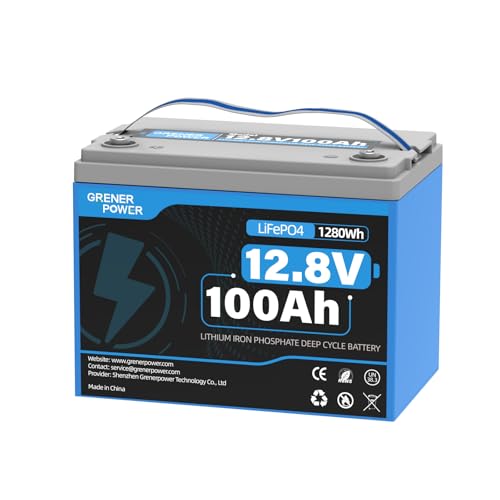
GrenerPower 12V 100Ah LiFePO4 Lithium Battery Group 24

SOK 12V 100Ah LiFePO4 Battery BCI Group Size 24

Litime 12V 100Ah LiFePO4 Battery, Group 31 for RV, Marine
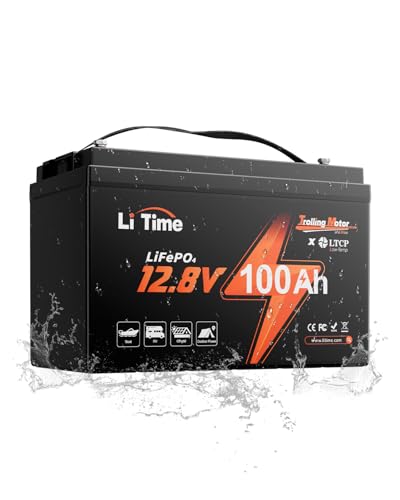
Litime 12V 100Ah Trolling Motor LiFePO4 Battery Group 31

Power Queen 12V 100Ah LiFePO4 Lithium Battery with Self-Heating

Litime 12V 100Ah LiFePO4 Battery, Group 24 for RV, Camper

Litime 12V 100Ah Xtra Mini LiFePO4 Lithium Battery
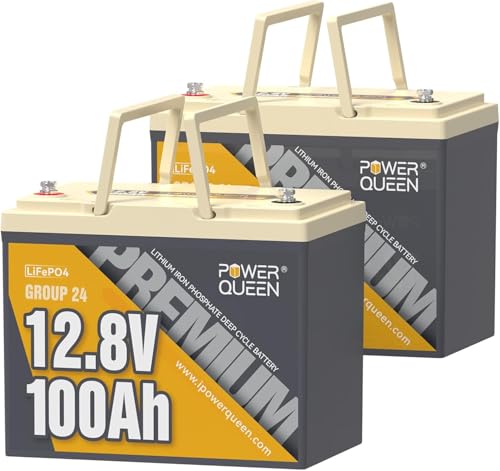
Power Queen 2PACK 12V 100Ah LiFePO4 Lithium Battery Group 24

Litime 12V 100Ah Xtra-Mini LiFePO4 Battery
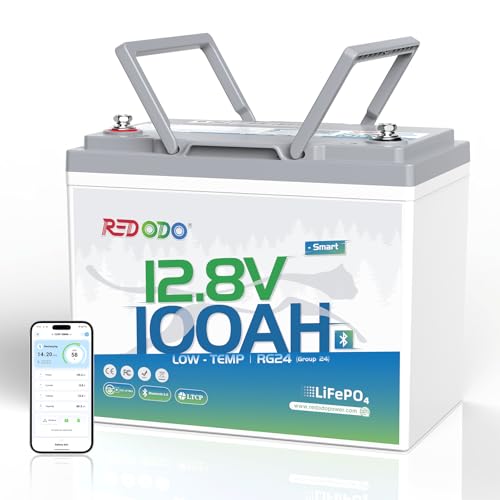
Redodo 12V 100Ah Group 24 LiFePO4 Lithium Battery Bluetooth
More On The Choices That Made The List
GrenerPower opens the list with a textbook Group 24 drop-in (a battery dimension standard, meaning it fits existing battery trays without adapter plates), aimed at the RV crowd who just want to swap a lead-acid box and forget about it. Cylindrical Grade A+ cells (factory-matched lithium iron phosphate cells with tightly controlled capacity) feed a 100A BMS, giving you 100 amps of continuous discharge headroom for inverters and trolling motors.
For most weekend warriors running a fridge, lights, and a small inverter, this capacity and the 15000-cycle rating (the number of full charge-and-discharge cycles the battery can handle before capacity drops noticeably) covers years of service. Five protection layers cover the usual suspects: overcharge, over-discharge, short-circuit, overcurrent, and overheat. The trade-off shows up in the spec sheet, where the focus is on core safety rather than app control or self-heating.
The Practical Payoff
- Group 24 case drops straight into common RV battery trays with no rewiring.
- 100A continuous BMS output handles mid-size inverters and trolling motors comfortably.
- 15000-cycle rating translates to roughly a decade of weekend camping before noticeable capacity loss.
- Five-layer protection keeps the cells safe even when a charger misbehaves on a hot roof.
- Cylindrical cell format tends to dissipate heat more evenly than prismatic packs under heavy load.
Things To Consider
- No Bluetooth or app monitoring means you read state-of-charge off a shunt or voltmeter.
- Cold-weather charging is not addressed by a built-in heater, so winter installs need a heated box or warm storage.
Who It Suits Best
RV owners and off-grid beginners who want a clean, no-fuss Group 24 lithium swap with strong cycle life.
Look Elsewhere When
You camp in freezing conditions and need built-in heating, in which case the Power Queen self-heating model handles cold weather without extra gear.
SOK takes a different angle with a translucent IP65-rated case, where IP65 is an ingress-protection rating meaning dust-tight and protected against low-pressure water jets. The clear shell lets you peek at the cells and busbars without cracking anything open, which is genuinely useful during seasonal inspection. For boat owners or anyone working in a damp bilge, that visibility is a real maintenance win.
The shatter-resistant housing is sturdy enough for marine vibration, and the IP65 sealing keeps spray and dust off the internals. Inside, the same 100Ah LiFePO4 chemistry handles RV solar charging, trolling motors, and small inverter loads without complaint. Where GrenerPower is a no-frills workhorse, this one earns its place by giving you visual confidence the install is healthy.
The Good Stuff
- Translucent case removes guesswork during cell and connection inspections.
- IP65 sealing holds up to spray, dust, and bilge moisture on marine rigs.
- Group 24 footprint keeps the swap path simple for existing battery trays.
Worth Noting
- Visual inspection helps, but the case itself can’t be opened for cell service, so internal fixes aren’t on the table.
- Lacks Bluetooth reporting, so pairing with a shunt remains the only way to track state-of-charge over time.
- Polycarbonate-style shells can scratch over years of trailering if not padded.
Feature Snapshot
Right Fit For
Boaters and RV owners who want to keep an eye on connections without opening the case every season.
Swap It Out When
You want Bluetooth app monitoring, in which case the Redodo 12V 100Ah Group 24 with built-in wireless reporting is a smarter fit.
Litime steps into Group 31 territory (a slightly larger BCI case than Group 24) with a battery aimed at heavier house loads. The 100A BMS supports up to 4P4S configurations, meaning four batteries in parallel and four in series, so the bank scales to 400Ah at 12V or stacks into a 48V system without compatibility headaches.
Automotive-grade cells deliver 1280Wh of usable energy, and IP65 sealing means spray and dust don’t shorten its life on a trailer or in a marine engine bay. For full-time RVers or anyone building a solar shed, the scalability is the real story. Compare that to the smaller GrenerPower entry above, which is friendlier to a single-box install.
The Helpful Details
- 4P4S expandability turns a single 12V unit into a 48V bank of 400Ah.
- 1280Wh usable capacity runs a 12V fridge for a full day with margin to spare.
- IP65 sealing tolerates spray and dusty compartment installs.
- 20+ BMS safeguards add belt-and-suspenders protection against operator error.
Trade Offs
- Group 31 footprint won’t drop into every factory Group 24 tray, so measure first.
- No low-temp cutoff heater, so cold-climate garages or uninsulated bays need extra planning.
Made For
Full-time RVers and off-grid cabin builders planning a multi-battery bank that grows over time.
Reach For A Different Pick When
Tight battery compartments matter most, in which case the Litime 12V 100Ah Xtra Mini fits a smaller Group 22NF case footprint.
This Litime trolling-motor variant shifts the focus to boats, where saltwater spray and chilly morning launches punish standard packs. It meets the ABYC E-13 marine standard (a safety baseline from the American Boat & Yacht Council covering lithium battery installation) and adds triple-layer BMS protection against dust, water, and salt corrosion.
Smart low-temperature protection stops charging below 32°F and discharging under -4°F, which protects the cells when an early-season lake trip starts cold. At roughly 22 pounds in a Group 31 case, the weight savings over AGM (absorbent glass mat, a sealed lead-acid chemistry) help small boats plane faster and trim better. Where the standard Litime Group 31 focuses on expandability, this one earns its place for cold-launches and harsh bilge conditions.
What Works In Its Favor
- Low-temp cutoff protects cells during cold-weather charging and discharging.
- ABYC E-13 compliance keeps the install aligned with recognized marine safety practice.
- IP65 sealing plus salt-spray safeguards extend service life in coastal conditions.
- Lightweight Group 31 footprint helps small craft trim correctly without lead-acid ballast.
Honest Caveats
- Lower temperature discharge cutoff means subzero fishing days may cut runtime short.
- No built-in heater, so charging in a freezing boat house still requires warming the battery first.
Best Suited To
Anglers and cruisers running 12V to 36V trolling motors who launch in shoulder seasons and need ABYC-aligned protection.
Consider Something Else When
You camp or fish in true winter conditions where charging must happen below freezing, in which case the Power Queen self-heating model keeps the cells warm without a separate blanket.
Cold-weather charging is the weak link of most lithium banks, and Power Queen addresses it directly with dual 100W heating pads. The internal heaters reportedly take a battery from 14°F up past 41°F in roughly half an hour, twice the speed of single-pad designs, so you don’t lose a sunny window waiting for the pack to wake up.
Smart low-temperature cutoff pauses charging under 32°F and resumes above 41°F, preserving the cells from plating damage. For ice-fishing shacks, snow-bird RVers, and remote cabins, that self-heating layer is the difference between a working bank and a brick. Where the Litime trolling-motor unit stops you from charging in the cold, this one warms the pack first so the cycle continues.
Useful Strengths
- Dual 100W heating pads restore charge-ready temperatures faster than single-pad units.
- Low-temp charging cutoff engages automatically, no manual switch required.
- LiFePO4 chemistry holds rated capacity across thousands of seasonal swings.
- Drop-in case format suits common RV and cabin battery boxes.
Points To Keep In Mind
- The heaters draw from the charging source, so expect longer bulk-charge times when warming from a deep freeze.
- Heating feature only operates while a charger is connected, leaving parked winter storage without thermal protection.
Key Product Details
Who Will Love This
Snow-bird RVers and remote-cabin owners who charge banks in freezing weather without babysitting the process.
Skip It When
You stay in temperate climates year-round, where the GrenerPower Group 24 covers the same use case without paying for heating hardware.
Litime’s Bluetooth Group 24 model targets the upgrade crowd replacing tired lead-acid banks. At roughly 22 pounds it’s about a third of a comparable AGM, and the Bluetooth radio pushes voltage, current, and state-of-charge to your phone so you know exactly when to top up.
The Group 24 case lands in standard trays, so a lead-acid swap usually means new terminals and a torque wrench, nothing else. Where the GrenerPower above is a pure spec-first workhorse, this one leans on the app for daily checks. For commuters in vans or weekend trailer owners, that’s the right balance of simplicity and visibility.
Notable Gains
- Bluetooth reporting removes the need for a separate shunt or voltmeter routine.
- Lightweight build makes single-handed install realistic in tight battery compartments.
- Group 24 compatibility fits trays designed for lead-acid without adapter plates.
Less Ideal Details
- App-dependent monitoring may frustrate anyone without a smartphone handy at the battery.
- No low-temp heating, so charging in an unheated shed in winter still needs precautions.
The Right Fit
Van-lifers and trailer owners who appreciate real-time battery data on their phone without adding a shunt.
Another Choice May Suit
You want a multi-battery bank from day one, in which case the Litime Group 31 model supports 4P4S expansion out of the box.
The Xtra Mini takes the same 100Ah capacity and shrinks the case so it fits where Group 31 won’t. At about 19 pounds with built-in carry handles, it’s the lightest full-capacity lithium on this list, and the form factor targets kayak anglers, teardrop trailers, and overland rigs where space is the bottleneck.
Bluetooth 5.0 streams state-of-charge to the Litime app, so a quick phone check replaces climbing into a hatch with a multimeter. Compared to the larger Litime Group 24 above, the trade-off is fewer expandability options in exchange for a tighter case. For builds where every inch of hatch counts, the smaller shell is worth more than a parallel-ready footprint.
The Value In It
- Compact case opens up installs in kayaks, teardrops, and small truck campers.
- Built-in handles make solo carry and install realistic.
- Bluetooth 5.0 reporting keeps tabs on charge without a separate monitor.
Points To Note
- Smaller case means fewer expansion options for multi-battery banks.
- Higher power density can run warmer under heavy inverter loads, so ventilation matters in tight compartments.
Whose Shelf It Belongs On
Kayak anglers, teardrop builders, and overlanders who prioritize a compact case over expandability.
A Better Fit Elsewhere
You want a larger house bank that scales, in which case the Litime Group 31 model offers 4P4S expandability.
Two-pack buyers usually mean business, swapping out a whole lead-acid house bank in one weekend. Power Queen bundles two 100Ah LiFePO4 batteries in standard Group 24 cases, so each unit drops into the existing tray layout with no adapter plates and roughly a third of the weight of AGM equivalents.
Wiring two in parallel doubles usable capacity to 200Ah while keeping the 12V architecture intact. EV-grade LiFePO4 cells and multi-layer BMS protection bring the same safety story you’d expect from a single-pack build. For full-time RV families or anyone replacing a tired coach bank, the two-pack format turns a project into an afternoon.
Real-World Strengths
- Two-pack format covers a 200Ah house bank in a single purchase.
- Group 24 fit preserves existing battery trays and cable routing.
- Multi-layer BMS guards both packs against parallel-imbalance issues.
Small Caveats
- Parallel wiring requires matched-length cables and a common busbar to avoid imbalance over time.
- More cells mean more connection points to torque-check during seasonal maintenance.
Who Should Grab It
Full-time RV families and serious off-gridders replacing a whole house bank in one project.
Where A Sibling Pick Shines
You only need a single 100Ah battery right now, in which case the GrenerPower Group 24 covers a basic install without paying for a second pack.
The Xtra-Mini variant squeezes 1280Wh into a Group 22NF case (a compact BCI footprint smaller than Group 24), giving you one of the highest energy densities in this roundup. The roughly 9-inch-long shell slips behind seats, under bench cushions, and into kayak hatches where a standard Group 24 simply doesn’t fit.
Bluetooth 5.0 streams state-of-charge and current data to the Litime app, and the 1-second discharge switch helps isolate the pack during service. The compact footprint comes at the cost of lower expandability, so single-battery builds are where it shines. Compared to the slightly larger Litime Xtra Mini above, this case trades Bluetooth capacity checks for a smaller envelope.
Good Reasons To Consider
- Group 22NF case fits installs where Group 24 and 31 physically won’t go.
- Bluetooth 5.0 reporting plus a fast discharge switch simplify service routines.
- 20+ protection features guard against common operator and charging faults.
Where It May Fall Short
- Smaller case limits current handling slightly compared to larger Litime siblings under heavy inverter loads.
- Lower-temperature charging cutoff still requires planning for cold garages.
Spec Overview
Built With In Mind
Kayak anglers, overlanders, and compact camper builders who want max capacity in the smallest possible case.
Not Your Match When
You plan to expand a multi-battery bank, in which case the Litime Group 31 model supports 4P4S scaling.
Redodo rounds out the list with a Bluetooth-equipped Group 24 battery built around a smart BMS that streams voltage, current, and capacity to your phone. For owners who like seeing battery data in real time rather than guessing from a voltmeter, that app layer is the main draw.
The Group 24 footprint drops into existing RV trays, so swapping a tired AGM usually takes an afternoon. Remote shutoff through the app adds a layer of safety when the rig sits between trips. Compared to the SOK above, this one trades the translucent case for digital monitoring, which is the right call for tech-forward owners.
What Stands Out
- Bluetooth 5.0 module pushes live battery stats to a phone app.
- Remote power-off feature adds a layer of safety for long-parked rigs.
- Group 24 fit preserves factory battery trays and cable routing.
Practical Considerations
- App-only monitoring can be a hassle when troubleshooting away from cell signal or Wi-Fi.
- No cold-weather heater, so winter charging needs an insulated box in unheated bays.
Quick Facts
Perfect Match For
Tech-forward RV owners who want a phone-first view of battery state without adding a shunt monitor.
Where Another Pick Suits Better
You’d rather inspect cells visually than check an app, in which case the SOK translucent case gives you that analog confidence.
Factors To Consider When Choosing 12v 100ah Battery
BCI Group Size And Physical Fit
Group 24, 31, and 22NF cases cover most RV, marine, and compact-build trays. Measure the tray and cable reach before committing, because a battery that’s 0.5 inches too long forces a return or a fabrication job. Group 22NF is the compact outlier here, designed for tight kayak and teardrop installs.
BMS Rating And Protection Layers
A 100A BMS handles mid-size inverters and trolling motors comfortably. Look for built-in safeguards against overcharge, over-discharge, short-circuit, overcurrent, and overheat at minimum. Marine and cold-climate buyers should also check for low-temperature charging cutoff or, in the harshest cases, integrated heating pads.
Cycle Life And Chemistry
LiFePO4 chemistry delivers thousands of cycles with stable thermal behavior, making it the practical default for daily deep-discharge use. Compare the rated cycle count to your expected weekly throughput: a weekend warrior cares less than a full-time RVer running a residential fridge.
Connectivity And Monitoring
Bluetooth reporting adds real-time state-of-charge visibility without a separate shunt, useful for owners who want phone-first data. Visual cases like the SOK translucent design trade app data for at-a-glance inspection, valuable for marine and remote installs where phones aren’t always handy.
Key Considerations Across These Picks
Pitfalls Shoppers Hit
The biggest mistake is choosing a Group 31 case for a Group 24 tray, or under-buying capacity for a residential fridge load. Cold-climate buyers also overlook charging cutoff, then wonder why the bank refuses to take a charge in winter. Match the case to the tray, the BMS to your inverter draw, and the temperature features to your climate before anything else.
Where The Extra Money Goes
Premium picks in this category typically add Bluetooth monitoring, low-temp cutoff, integrated heating, or marine-grade sealing. The upgrade makes sense when your install demands it: an unheated bay needs a heater, a saltwater boat needs IP65 plus salt-spray protection. Temperate, single-purpose RV owners can skip those extras and put the savings toward a larger bank.
Frequently Asked Questions
How long does a 12v 100ah LiFePO4 battery actually last?
A quality 12v 100ah LiFePO4 battery typically delivers several thousand full cycles before noticeable capacity loss, often a decade of weekend use. Daily deep-discharge users see shorter calendar life than occasional campers, but the chemistry outlasts lead-acid in nearly every realistic scenario.
Can I replace a lead-acid battery with any of these directly?
Group 24 and Group 31 LiFePO4 batteries drop into standard lead-acid trays with no adapter plates. Verify the case dimensions match your tray and confirm the charging profile (the voltage and current curve a charger delivers to refill the battery) is lithium-compatible, since some older chargers over-voltage lithium banks.
Do I need a special charger for a 12v 100ah lithium battery?
Most modern multi-stage chargers (power supplies that cycle through bulk, absorption, and float stages to refill a battery) support LiFePO4 profiles. Older lead-acid chargers may push too high an absorption voltage and trigger the BMS cutoff, so check your model before relying on an existing unit.
Is Bluetooth monitoring worth the extra cost?
For tech-forward owners who check the app weekly, Bluetooth adds real convenience and prevents surprise dead banks. For remote or marine installs where a phone isn’t always nearby, a physical shunt display or a translucent case often serves better.
Can these batteries be mounted in any orientation?
LiFePO4 cells have no liquid electrolyte, so orientation is far less restrictive than flooded lead-acid. Still, secure the case against vibration and ensure terminals stay clear of conductive surfaces, especially in marine bilges.
Bottom Line
The right 12v 100ah Battery depends on case fit, climate, and how much data you want from the bank. Group 24 drop-ins cover most RV swaps, Group 31 unlocks expandability, and the self-heating and marine-focused picks fill niche conditions without compromise. Pick the case that fits, match the BMS to your loads, and you’ll get thousands of cycles of quiet, dependable power.