A dead battery on a Saturday morning, right when the grass is ankle-high, derails the whole yard. Most ride-on tractors and lawn mowers depend on a 12-volt battery, and the right match depends on your engine size, climate, and how often you cut. This roundup covers AGM workhorses built for steady starting, lightweight lithium replacements for shorter sessions, and small sealed units that pull double duty in lawn toys and accessories. You’ll find honest trade-offs and the exact profile each one suits.
A Snapshot Of The Selections

12V 15Ah LiFePO4 Battery for Peg Perego Tractors

WEIZE Lawn Garden AGM Battery 12V 300CCA BCI Group U1

WEIZE Lawn Garden AGM Battery 12V 200CCA BCI Group U1
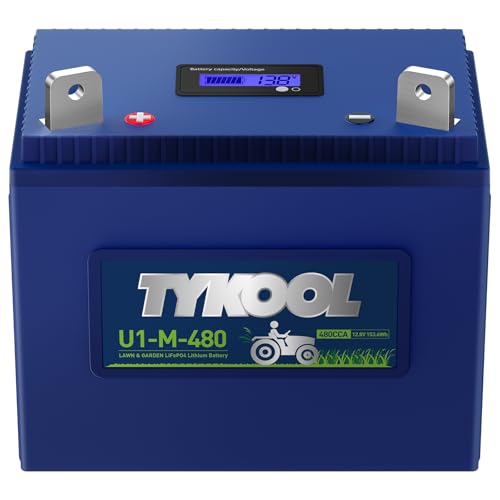
TYKOOL 480CCA Group U1 Lithium LiFePO4 Lawn Mower Battery

WEIZE Lawn Garden AGM Battery 12V 350CCA BCI Group U1

UPLUS LP12-8.0 12V 8AH Rechargeable AGM Battery

Casil CA1270 12V 7Ah SLA/AGM Sealed Lead Acid Battery

Mighty Max ML18-12 12V 18AH SLA AGM Battery
What Each Pick Brings To The Table
This lithium iron phosphate (LiFePO4) drop-in swaps out the tired lead-acid pack hiding under the seat of a Peg Perego John Deere ground rover. Lithium chemistry means a fraction of the weight, so kids can still steer without the tractor feeling like it’s towing a brick. It fits the same 12V slot but runs cooler during long driveway sessions and holds a steady voltage as it drains.
The on-board Battery Management System handles overcharge, over-discharge, and short-circuit protection, which matters when a charger gets left plugged in past full. Owners commonly report longer run-times per charge versus the original lead-acid unit. It targets a narrow use case, so it earns its place at the top of this list only if your tractor is a kid’s ride-on toy rather than a Cub Cadet.
Advantages To Know
- Long cycle life from LiFePO4 chemistry, rated beyond 2,000 charge cycles
- Built-in BMS guards against overcharge, deep discharge, and short circuits
- Lightweight compared with a sealed lead-acid replacement
- Maintenance-free: no water top-ups or terminal cleaning
Things To Consider
- Specifically designed for Peg Perego ride-on toys, not for full-size lawn tractors
- Not intended as a motorcycle or automotive starter battery
Who It Suits Best
Parents replacing the original battery in a Peg Perego John Deere or similar 12V kids’ tractor.
Consider Something Else When
You need starting power for a real riding mower, in which case the TYKOOL 480CCA or a WEIZE U1 AGM is the better fit.
WEIZE’s 300CCA Group U1 sealed lead-acid battery (AGM, or Absorbent Glass Mat, where the electrolyte is held in fiberglass sheets rather than pooling as liquid) is the middle of the WEIZE lawn-tractor lineup, slotting between the lighter 200CCA unit below and the 350CCA heavy hitter further down. The U1 case size fits the standard tray in most John Deere, Toro, Cub Cadet, and Craftsman riders, so installation rarely requires bracket mods.
CCA (Cold Cranking Amps) measures how much current a battery can deliver at 0°F for 30 seconds while staying above a minimum voltage. 300CCA is enough headroom on cool mornings for engines up to roughly 22 horsepower, depending on compression and oil weight. The positive terminal sits on the left, with square-hole nut-and-bolt posts that accept standard U1 cables.
Standout Benefits
- 300CCA delivers confident cold starts for mid-range riding mowers
- Standard U1 footprint fits most John Deere, Toro, Cub Cadet, and Craftsman trays
- Sealed AGM design resists vibration damage on rough lawns
- Nut-and-bolt terminals provide a tight, low-resistance connection
Worth Noting
- Heavier than lithium alternatives, roughly 19 pounds
- Hazardous-materials shipping restrictions can limit carrier options at checkout
The Right Fit
Homeowners with a 17 to 22 horsepower riding mower who want a proven AGM replacement without stepping up to the 350CCA model.
Look Elsewhere When
You mow through long, cold springs and want the surest cold-start, where the WEIZE 350CCA BCI Group U1 is the stronger choice.
The 200CCA WEIZE sits at the entry of the same AGM family, sharing the same 7.68″ x 5.12″ x 6.22″ U1 case as the 300CCA version above. For smaller engines that don’t fight hard against compression, the lower cold-cranking figure is plenty for a reliable turnover. At roughly 21.5 pounds it’s a familiar lead-acid heft.
It uses the same square-hole nut-and-bolt terminals and left-side positive layout, so swapping between the WEIZE U1 SKUs is a true drop-in. Pair it with light-duty mowers under about 18 horsepower and you’ll rarely notice the difference versus higher-CCA siblings.
Benefits That Matter
- Lower cost entry into the AGM U1 format
- Same trusted case dimensions and terminal layout as pricier WEIZE siblings
- Compatible with John Deere, Toro, Cub Cadet, and Craftsman rider trays
- 30-day return window through the listing for sizing sanity checks
Trade Offs
- 200CCA may feel marginal on larger V-twin engines during cold snaps
- Lead-acid chemistry means gradual capacity loss if stored through winter without a maintenance charge
Made For
Shoppers with smaller single-cylinder lawn tractors who want a sealed AGM replacement without paying for cranking amps they won’t use.
A Better Fit Elsewhere
Cold-climate owners with bigger V-twin engines should step up to the TYKOOL 480CCA for stronger cold-start response.
TYKOOL’s U1-M-480 is the lithium flagship of this roundup, rated at 480 cold-cranking amps from a 12Ah LiFePO4 cell. The chemistry delivers roughly half the weight of an equivalent AGM U1, and the higher CCA rating out-punches every AGM on this list on paper. For a rider parked outside in March air, that’s a real edge.
It fits standard U1 trays and targets John Deere, Cub Cadet, Craftsman, and Troy-Bilt mowers. Owners should check their existing charger’s voltage profile, since lithium batteries prefer a charger designed for LiFePO4 profiles rather than a legacy lead-acid float charger. For most backyards, the trade-off shows up only at the charging step.
Practical Pluses
- 480CCA, the strongest cranking output among this roundup’s U1 options
- LiFePO4 chemistry rated for 3,000-plus cycles for season-after-season reuse
- Substantially lighter than AGM equivalents, easier to lift into the tray
- Holds voltage under load, so headlights stay brighter while mowing
Points To Keep In Mind
- Requires a LiFePO4-compatible charger for full longevity
- Higher upfront cost than AGM alternatives with similar case size
Best Suited To
Owners of mid-to-large ride-on tractors who mow in cool spring weather and want the surest cold-start on this list.
Swap It Out When
You mainly mow flat suburban lawns in mild weather, where the WEIZE 300CCA BCI Group U1 offers enough cranking at a friendlier cost.
This 350CCA WEIZE is the strongest AGM in the family and the closest lead-acid rival to the TYKOOL lithium on cranking output. It shares the same 7.68″ x 5.12″ x 6.22″ U1 case as the 200 and 300CCA siblings, so swapping between them is mechanical, not creative.
At roughly 21.45 pounds it’s the heftiest option here, a familiar AGM mass that translates to robust vibration tolerance over rough ground. Nut-and-bolt terminals and a left-side positive match the rest of the WEIZE U1 line, keeping cable routing predictable.
What Helps Most
- 350CCA delivers confident turnover for V-twin engines and heavier riders
- Sealed AGM construction handles vibration from uneven lawns
- Drop-in replacement within the WEIZE U1 family across CCA tiers
Small Caveats
- Heaviest battery in this roundup at around 21.45 pounds
- Lead-acid weight still trails lithium alternatives for easier handling
Who Should Grab It
Riders with larger displacement engines or hilly properties where a stronger starter burst prevents slow, lugged cranks.
Reach For A Different Pick When
You want the lightest case on the list, in which case the HeyFuture 12V 15Ah LiFePO4 drops pounds, though it isn’t sized for full-size tractors.
The UPLUS LP12-8.0 is a compact 12V 8Ah sealed AGM that shares the dimensions of common 12V 7Ah packs, making it a near-universal replacement for small lawn equipment, ride-on accessories, and garden lighting transformers. F1 spade terminals come standard, with included F2 adapters for broader compatibility.
At roughly 5.51 pounds and a 5.95″ x 2.56″ x 3.68″ footprint, it’s a fraction of the size of any WEIZE U1 listed above. That means it isn’t the right shape for a riding mower’s starter tray, but it’s a versatile spare for the rest of the shed.
The Helpful Details
- Compact 5.95″ x 2.56″ x 3.68″ frame fits tight accessory compartments
- Includes F2 adapters for broader terminal compatibility
- Sealed AGM means no maintenance and no orientation worries
- AGM construction supports both float and cyclic use patterns
Some Limits To Know
- Too small to start a full-size lawn tractor
- Lower amp-hour rating than the Casil CA1270 for longer accessory runtime
Whose Shelf It Belongs On
Shed owners who want a compact spare for garden sprayers, small electric feeders, or other 12V accessories.
Skip It When
You need a battery that physically bolts into a riding mower’s U1 tray, in which case the WEIZE 350CCA BCI Group U1 is the correct form factor.
The CA1270 has been a familiar 12V 7Ah sealed lead-acid reference for years, used across home security panels, emergency lighting, and small UPS backups. The fully sealed AGM design prevents leaks and eliminates water top-ups, a real plus for gear mounted at odd angles in a shed or garage.
Standard 0.187″ F1 fast-on terminals make wiring into existing harnesses a quick swap. It’s not sized for a riding mower starter, but the chemistry is identical in principle to the UPLUS above, just with a slightly smaller amp-hour reserve.
The Case For It
- Sealed, maintenance-free AGM chemistry with no leaks or spills
- F1 terminals for quick installation in standard wiring harnesses
- Trusted format widely used in alarms, lighting, and backup gear
Less Ideal Details
- Not a starter battery for riding mowers or tractors
- Slightly lower 7Ah rating versus the 8AH UPLUS for accessory runtime
Perfect Match For
Anyone replacing a 12V 7Ah pack in a home alarm panel, emergency light, or compact UPS unit.
Another Choice May Suit
You want a slightly higher amp-hour reserve for accessory runtime, where the Mighty Max ML18-12 brings 18Ah in a larger case.
The Mighty Max ML18-12 is a 12V 18Ah sealed AGM with a heavy-duty calcium-alloy grid built for both float and cyclic use. At 18Ah it carries more reserve capacity than the UPLUS or Casil above, useful when a battery powers accessories rather than just turning a starter.
Nut-and-bolt terminals suit permanent bolt-on wiring, which is typical in mobility gear, small solar sheds, and lawn tractor accessory circuits. The valve-regulated AGM design lets it sit indoors or in enclosed compartments without venting concerns.
Noteworthy Benefits
- 18Ah reserve capacity for accessory and cyclic loads
- Calcium-alloy grid for longer service life in float and cyclic applications
- Nut-and-bolt terminals for secure, low-resistance permanent wiring
- Valve-regulated AGM allows safe indoor or enclosed installation
Potential Compromises
- Larger and heavier than 7Ah or 8Ah sealed packs
- Not a direct bolt-in for U1 mower trays; verify dimensions before ordering
Built With In Mind
Shed owners who need a deep-cycle-friendly 12V pack for accessories, lighting, or backup systems around the yard.
Where A Sibling Pick Shines
You need a battery shaped for a mower’s U1 tray, in which case the WEIZE 300CCA BCI Group U1 is the proper fit.
Picking The Right 12 Volt Battery For Your Mower
Match The Case Size First
Before looking at cranking amps, the physical case size has to line up. Most riding mowers use BCI Group U1 batteries (the standardized battery case size common across lawn tractors), with the standard WEIZE footprint of 7.68″ x 5.12″ x 6.22″. Anything shorter or taller usually requires bracket mods or won’t sit in the hold-down. For accessories, alarms, and smaller gear, look at the smaller 12V 7Ah or 8Ah sealed units instead.
Cranking Amps And Climate
CCA ratings matter most where you live. In a southern climate with mild springs, 200 to 300CCA is comfortable for most riding mowers. In regions where the tractor sits through freezing nights, 350CCA AGM or a LiFePO4 unit like the TYKOOL 480CCA provides a more confident first crank. A higher rating rarely hurts the starter, but it does add cost you’ll never use in warm weather.
Lithium Versus AGM
Lithium iron phosphate batteries (LiFePO4) weigh less, hold voltage under load, and last through thousands of cycles, but require a compatible charger and a higher upfront outlay. AGM units cost less, work with existing lead-acid chargers, and tolerate storage in cold sheds better in some cases, though they self-discharge faster if neglected. Match the chemistry to your habits, not just your engine size.
Reserve Capacity For Accessories
If the battery also powers LED lights, sprayer pumps, or USB chargers through a 12V accessory port, prioritize amp-hours (Ah) over CCA. A 12V 18Ah pack like the Mighty Max ML18-12 supports longer accessory runtime without leaving the starter underpowered. For purely starter duties, lower Ah ratings paired with high CCA are the better trade.
Key Considerations Across These Picks
Pitfalls Shoppers Hit
Buying on CCA alone is a common mistake. A 480CCA unit that doesn’t physically fit your mower tray is useless, and a physically correct 200CCA unit that suits your climate will out-perform it. Measure the existing battery, check terminal orientation, and confirm charger compatibility if you’re stepping up to lithium.
Where The Extra Money Goes
The jump from a budget AGM to a premium lithium option pays for lighter weight, longer cycle life, and steadier voltage under load. For seasonal weekend mowers, that premium rarely matters. For daily commercial cutting, equipment that’s lifted often, or cold-climate home use, the upgrade pays back in fewer replacements and easier handling over the years.
Frequently Asked Questions
How long does a 12 volt tractor battery usually last?
With seasonal use and proper winter storage, a quality AGM unit typically lasts three to five years, while a LiFePO4 battery can stretch past eight years depending on cycle count and charging habits.
Can I use a car battery in my lawn tractor?
Physically, no. Car batteries are a different BCI group size with terminal layouts that don’t match a riding mower’s tray, and their higher CCA can damage small starter motors over time.
Do lithium tractor batteries need a special charger?
Yes. A LiFePO4 battery should be paired with a charger set to its specific voltage profile to avoid underwhelming the cells and shortening cycle life.
What does CCA actually measure?
Cold Cranking Amps measure how many amps a battery can deliver at 0°F for 30 seconds while staying above a minimum voltage, giving a rough idea of starting strength in cold conditions.
Is AGM the same as sealed lead-acid?
AGM is a type of sealed lead-acid battery where the electrolyte is absorbed in fiberglass mats, making it spill-proof and vibration-resistant compared with older flooded designs.
Bottom Line
Pick the case size first, then match cranking amps to your climate and engine size. AGM still wins for value and broad compatibility, while lithium earns its keep through weight savings and cold-weather cranking. The right battery is the one that drops in cleanly, turns over the engine on the first try, and matches how often you actually mow.