Sitting in a driveway with a dead battery is one of those small frustrations that ruins a weekend. A properly sized solar charger quietly keeps cars, boats, RVs, and deer feeders topped off without ever needing a wall outlet. The ten options below cover everything from a 1.7W trickle panel to a 100W workhorse, with smart MPPT controllers doing the heavy lifting on the higher-end kits.
A Fast Comparison Of The Options
SUNER POWER 20W 12V Solar Battery Charger Maintainer Ultra

POWOXI 12V 1.7W Deer Feeder Solar Panel (Pack of 3)

SUNER POWER 30W 12V Solar Battery Charger Maintainer

SUNER POWER 12V 10W Solar Battery Trickle Charger
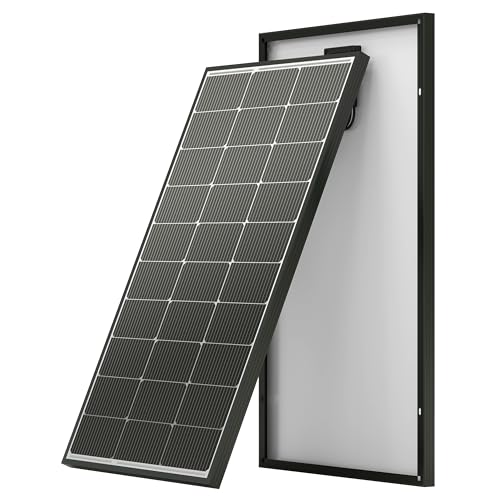
JJN 100 Watt N-Type 16BB Solar Panel

SUNER POWER 10W 12V Solar Battery Charger Maintainer
SUNER POWER 20W 12V Solar Battery Charger Maintainer
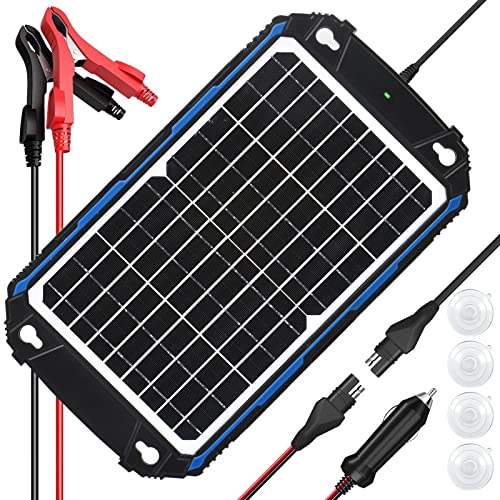
SUNER POWER Waterproof 12W 12V Charger & Maintainer Pro

SUNER POWER Waterproof 30W 12V Charger & Maintainer PRO

SUNER POWER 12V 50W Solar Battery Charger Maintainer
The Strengths Of Each Pick
You mount this 20W panel, run the leads to the terminals, and largely forget about it. The unit includes a built-in MPPT controller (a Maximum Power Point Tracking chip that constantly adjusts the panel’s output to harvest the most energy from changing light conditions), so it squeezes noticeably more energy out of cloudy skies than older PWM trickle units in the same wattage class.
Four LED indicators show charging progress at 25, 50, 75, and 100 percent, which is genuinely useful if you store the vehicle for long stretches. You get a clearer picture than a single blinking light, and you can tell at a glance whether the panel is actually doing its job.
The Upside
- Built-in MPPT controller claims up to 99 percent tracking efficiency and roughly 98 percent conversion efficiency, edging past basic PWM competitors.
- Three-stage charging (Bulk, Absorption, Float) sequences power delivery so the battery tops off without being stressed.
- Auto-resume function restarts charging after the battery self-discharges, so a parked RV sitting for months won’t run flat.
- Visual LED charge indicators remove the guesswork during long storage.
- Waterproof construction handles rain, dew, and splashes on a boat deck or trailer tongue.
Things To Consider
- 20W is a maintenance output, not a recovery tool, so a deeply discharged battery still needs a wall charger.
- Bracket and hardware are basic; you may want to add extra stainless hardware for saltwater marine mounting.
Key Specs
Whose Shelf It Belongs On
This panel fits owners of cars, boats, and RVs that sit for weeks at a time and need a maintenance-grade top-up.
Consider Something Else When
Step up to the SUNER POWER Waterproof 30W 12V Charger & Maintainer PRO if you need faster recovery or run larger battery banks.
This is a very specific tool: a 1.7W trickle panel sized for the small sealed batteries that run spin-cast deer feeders. The pack of three covers multiple feeder locations, which is the way most folks run them.
Mounting brackets are included, and the housing is rated for outdoor use. For most property owners managing a hunting lease or food plot, this keeps feeder motors running through the off-season without hauling batteries back and forth.
Positive Points
- Monocrystalline panel with high light transmittance cover for steady low-light output.
- Three-pack format suits multi-feeder properties right out of the box.
- Waterproof construction handles rain and morning dew without sealing the panel away.
- Mounting bracket is included, so you skip the trip to the hardware store.
Worth Noting
- 1.7W is only useful for small feeder batteries, not cars, boats, or anything with a meaningful starter draw.
- No built-in charge controller listed, so matching it with a simple PWM controller is recommended for long-term battery health.
Who It Suits Best
Landowners running several spin-cast feeders who want a no-fuss seasonal maintenance panel for each unit.
Look Elsewhere When
Pick the SUNER POWER 12V 10W Solar Battery Trickle Charger Maintainer if you need trickle charging for a standard car, ATV, or lawn tractor battery instead.
Bumping up to 30W gives you noticeably more current on a sunny day, which matters for boat and trailer batteries that self-discharge faster thanks to bilge pumps or onboard electronics. The built-in MPPT controller carries the same smart charging logic as the smaller Ultra model.
The adjustable mount bracket is the real story for marine use, since you can angle the panel toward the sun without fabricating a custom rack. Compared to the 20W Ultra above, this panel recharges faster but takes up more deck or roof space.
Where It Delivers
- 30W output recharges small trolling motor or trailer batteries more quickly than 10W or 20W trickle panels.
- Built-in MPPT controller with high tracking efficiency helps in partial shade and winter sun angles.
- Adjustable bracket lets you chase the sun through the seasons.
- Waterproofing stands up to splash, spray, and full rain.
Trade Offs
- Larger physical footprint than 10W or 20W models, so it may not fit tight dashboard or windshield mounts.
- Wiring routing matters more on a boat; you may want to add grommets or cable clips to keep runs tidy.
Feature Snapshot
Made For
Boat owners and trailer folks who want a faster maintenance charge than a 20W panel can deliver.
Swap It Out When
Choose the SUNER POWER 12V 50W Solar Battery Charger Maintainer if your battery bank is larger or you need to top off deep-cycle AGM and LiFePO4 banks faster.
Small panels have a place, especially on motorcycles, lawn tractors, and ATVs. This 10W unit ships with a tubular mount bracket that mounts to handlebars, rails, or trailer tongues, which is unusual at this price point.
Inside, the MPPT controller manages the same three-stage charging logic as the bigger siblings. The difference shows up in panel surface area: less light captured means slower replenishment, which is the whole trade-off.
Strong Points
- Built-in MPPT controller keeps conversion efficiency high despite the compact panel.
- Multiple safety protections guard against overcharge, reverse polarity, short circuit, and over-temperature.
- Tubular mount bracket makes it easy to clamp onto rails, posts, or trailer tongues.
- Spark-proof and waterproof design suits permanent outdoor installation.
Things To Consider
- 10W will not recover a deeply discharged battery, only offset normal standby drain.
- Small panel surface area means output drops sharply under tree canopy or heavy cloud cover.
Who It Suits Best
Riders and small-vehicle owners who want a maintenance-grade panel for a bike, ATV, or compact tractor battery.
Skip It When
Pick the SUNER POWER 20W 12V Solar Battery Charger Maintainer Ultra instead, if you need meaningful charging headroom for a car or RV battery.
The JJN panel is the one to look at if you are stepping into actual off-grid territory. N-type cells with 16 busbars (the thin metal fingers on a solar cell that collect current) push conversion rates higher than standard P-type cells, and the half-cut cell layout (cells sliced in half to reduce resistance losses) reduces hot-spot damage when part of the panel is shaded.
At 100W, this is no longer a trickle charger but a real energy source. Pair it with a charge controller matched to your battery chemistry, and you can keep a small cabin battery bank topped off or run low-draw DC loads directly.
Notable Gains
- N-type 16BB cell design reaches a higher conversion rate than older P-type panels.
- Half-cut cell technology improves low-light performance and reduces power loss from partial shading.
- 100W output meaningfully recharges larger battery banks rather than just offsetting drain.
- Available in multiple configurations (N-type 100W or 200W, single or two-pack) to match project size.
Some Limits To Know
- No built-in charge controller, so you must pair it with an external MPPT unit matched to your battery type.
- 100W panels are large and heavy; roof or pole mounting takes planning and sturdy hardware.
At A Glance
Best Suited To
Off-grid homesteaders and cabin owners building out a small solar charging system with an external controller.
Reach For A Different Pick When
Stay with the SUNER POWER 12V 50W Solar Battery Charger Maintainer if you just want an all-in-one maintenance panel and don’t want to source a separate charge controller.
The 10W SUNER POWER has a slightly different mounting style than its tubular-bracket sibling, with an adjustable bracket that tilts to catch more direct light. For tight dashboards, motorcycle fairings, or compact car interiors, this footprint fits where rigid flat panels won’t.
It uses the same MPPT charge controller logic that the brand builds into the larger models, so even at modest wattage it pulls more from shifting sun than older PWM trickle units. The honest read is that 10W is the floor for keeping a battery happy through winter storage, not a recharge tool.
The Case For It
- Adjustable bracket tilts the panel to track seasonal sun angles.
- Compact 10W panel fits tight mounting spots where larger panels won’t go.
- Built-in MPPT controller maintains efficiency in real-world light conditions.
- Waterproof housing handles outdoor mounting on a fender or trailer.
Points To Note
- Output is strictly for maintenance; deeply discharged batteries need a wall charger first.
- Adjustable bracket adds a moving part that can loosen over time without periodic checks.
Right Fit For
Owners of seasonal vehicles parked in tight spots who need a compact, tiltable maintenance panel.
Look Elsewhere When
Move up to the SUNER POWER 30W 12V Solar Battery Charger Maintainer if you have the mounting real estate and want faster replenishment.
20W is the wattage sweet spot for general-purpose automotive maintenance, and this panel brings the same MPPT controller to a familiar mid-size form factor. The adjustable bracket lets you tilt the panel for better winter sun capture.
Compared to the Ultra version at the top of this list, the trade-off is the omission of the LED visual gauge. If you don’t need the readout and just want reliable charging, this model keeps the price and features focused.
Strengths Worth Knowing
- Built-in smart MPPT controller with up to 99 percent tracking efficiency for real-world light conditions.
- 20W output covers typical car, boat, and RV maintenance needs without taking up too much space.
- Adjustable bracket supports seasonal angle adjustments.
- Waterproof housing suitable for outdoor permanent mounting.
Practical Considerations
- No visual charge level indicator, so you rely on the controller’s auto-resume behavior.
Who Should Grab It
Vehicle owners who want a straightforward 20W maintenance panel without paying extra for status LEDs.
Not Your Match When
Pick the SUNER POWER 20W 12V Solar Battery Charger Maintainer Ultra if the LED charge gauge is worth a few extra dollars to you.
The Pro designation signals the upgraded UltraSmart MPPT controller, which the brand positions as its flagship charging brain. 12W sits between the 10W compact models and the larger 20W+ panels, and that middle ground suits many owners who want a bit more headroom.
Waterproofing is emphasized in the naming, which tells you this is designed for permanent outdoor mounting. A rooftop, fender, or trailer-tongue installation won’t phase it.
Good Reasons To Consider
- UltraSmart MPPT controller for higher efficiency in shifting light conditions.
- 12W output adds some charging headroom over standard 10W trickle models.
- Heavy-duty waterproofing for permanent outdoor installations.
- Three-stage charging extends battery life through long storage periods.
Honest Caveats
- 12W is still firmly maintenance territory, not a recharge solution for deeply drained batteries.
- The Pro branding comes at a small premium over the standard 12W equivalents.
Feature Card
Perfect Match For
Owners who want a Pro-grade trickle charger and need permanent outdoor mounting that survives weather year-round.
Where Another Pick Suits Better
Step up to the SUNER POWER Waterproof 30W 12V Charger & Maintainer PRO for faster replenishment on larger banks.
At 30W with the Pro-trim UltraSmart MPPT controller, this panel sits near the top of the maintenance-class offerings from the brand. The combination pushes meaningful current into RV house banks and trailer batteries while still being compact enough for rooftop mounting.
Waterproof construction is built for permanent outdoor exposure, which matters because 30W panels are large enough to attract attention and need to stay outside for months at a time. Compared to the standard 30W model above, the Pro controller is the upgrade story.
The Good Stuff
- 30W output recharges RV and trailer banks faster than smaller trickle panels.
- UltraSmart MPPT Pro controller maximizes energy harvest from shifting sun angles.
- Waterproof housing rated for permanent outdoor mounting.
- Three-stage charging algorithm protects batteries across long storage periods.
Some Limits To Know
- 30W is still maintenance-tier; an empty battery needs wall power first.
- Larger panel footprint requires planning for mounting location and shading.
Built With In Mind
RV owners and serious trailer users who want the brand’s premium charging brain at a meaningful 30W output.
Skip It When
Go with the SUNER POWER 12V 50W Solar Battery Charger Maintainer if your battery bank is large enough to justify stepping up to 50W.
At 50W, this is the most powerful all-in-one panel in the SUNER POWER maintenance lineup. The UltraSmart MPPT controller and adjustable bracket combination is the brand’s full feature set at meaningful wattage, aimed at owners of larger SLA, AGM, deep-cycle, and LiFePO4 banks.
The wider compatibility with multiple battery chemistries (sealed lead-acid, absorbed glass mat, conventional deep-cycle, and lithium iron phosphate) is a useful note for owners who upgrade battery types over the life of a system. The honest read is that 50W is the boundary where a “maintainer” starts behaving like a real charging source.
Where It Helps
- 50W output meaningfully recharges AGM and LiFePO4 banks rather than just offsetting drain.
- UltraSmart MPPT controller extracts more usable power across a range of light conditions.
- Adjustable mount bracket for seasonal angle optimization.
- Waterproof design rated for permanent outdoor mounting.
- Broad battery chemistry support including SLA, AGM, deep-cycle, and LiFePO4.
Honest Caveats
- 50W panels are large and heavy, so rooftop or pole mounting hardware becomes essential.
- All-in-one design with a built-in controller limits flexibility for users who already own a higher-end external charge controller.
Feature Overview
The Right Fit
Owners of larger RV, marine, and off-grid battery banks who want the brand’s top maintenance wattage in a single panel kit.
A Better Fit Elsewhere
Choose the JJN 100 Watt N-Type 16BB Solar Panel if your ambitions go beyond maintenance and you want to build out a true off-grid solar array with an external controller.
Choosing The Right Wattage And Controller For Your Setup
Solar chargers in the 12V category split into two camps: maintenance panels under 30W for topping off vehicles in storage, and meaningful charging arrays of 50W and up for RVs, boats, and off-grid setups. Most automotive applications only need to replace the slow self-discharge that kills batteries sitting unused, so a 10W to 20W panel with a built-in MPPT controller covers the job nicely.
Wattage-to-battery sizing matters more than people expect. A 10W panel roughly offsets the parasitic loss on a single car or truck battery, while a 20W to 30W panel handles boats and trailers with bilge pumps or onboard electronics drawing power continuously. Step up to 50W or higher when you are running AGM or LiFePO4 house banks that power refrigerators, lights, or inverters.
Controllers fall into PWM (Pulse Width Modulation, a simpler charging method that pulses current on and off) and MPPT. MPPT controllers convert the panel’s higher voltage output to the battery’s required charging voltage, which harvests more energy, especially in cool or cloudy conditions. PWM units cost less but waste potential output when the panel voltage exceeds the battery voltage.
Battery chemistry compatibility matters with newer LiFePO4 banks, which need specific charging profiles that older PWM trickle chargers may not provide correctly. Always confirm the controller matches your battery type before connecting anything permanently.
Common Mistakes Shoppers Make With Solar Maintainers
Pitfalls Shoppers Hit
The most common error is under-sizing the panel for the battery drain it has to offset. A small motorcycle battery and a deep-cycle RV house bank draw at completely different rates, so picking by wattage alone often leaves you short. Measure or estimate your actual standby draw before choosing panel size.
Mounting placement gets overlooked until after the panel is already up. Panels under tree canopy or behind a windshield lose a surprising share of their output, and there is no controller that fully compensates for poor placement. Aim for unshaded southern exposure where possible.
Wiring and connection quality is another weak spot. Owners commonly report that undersized wire runs and loose ring terminals cost more energy than people realize, especially over longer cable runs. Match wire gauge to the length of the run and use proper sealed connectors for outdoor installations.
When Paying More Pays Off
Higher-wattage panels with MPPT controllers cost more up front, but the upgrade pays off in two ways: faster replenishment on partial-shade days and better behavior in winter sun. For anyone running AGM or LiFePO4 batteries worth several hundred dollars, that extra capability is straightforward insurance against premature replacement.
Frequently Asked Questions
How many watts do I need for a 12V solar battery charger?
Match the wattage to your battery’s daily drain. A 10W to 20W panel handles most cars and trucks in storage, while 30W to 50W suits boats, RVs, and trailers with continuous parasitic draw. Larger banks or off-grid use call for 50W and up.
What is the difference between MPPT and PWM solar chargers?
MPPT controllers track the panel’s maximum power point and convert excess voltage into additional charging current, harvesting more energy overall. PWM controllers pulse current on and off at a fixed voltage and cost less, but waste potential output when panel voltage exceeds battery voltage.
Can a 12V solar charger run in cloudy weather?
Yes, but output drops significantly. MPPT controllers handle partial and shifting light much better than PWM units, so a 20W MPPT panel in clouds can outperform a 30W PWM panel in the same conditions.
Will a solar charger overcharge my battery?
Quality panels with built-in three-stage controllers (Bulk, Absorption, Float) stop pushing current when the battery is full and resume when voltage drops, so overcharging is not a concern. Always confirm your panel includes this protection before connecting.
Can I leave a solar charger connected all year?
Yes, that is exactly what they are designed for. Mount the panel securely, weatherproof the connections, and let the controller manage the rest. Periodic checks of cable connections and bracket tightness are recommended for permanent installations.
The Takeaway
A properly sized solar charger quietly solves the dead-battery problem that comes with seasonal vehicles, RVs, and remote equipment. Most owners will be happy with a 20W to 30W MPPT panel for general maintenance, while bigger systems call for 50W or true off-grid arrays. Match the panel to the battery, mount it in real sun, and let the controller do its job.