A 100 amp hour lithium battery used to feel like specialty gear, the kind of thing only off-grid veterans or marine tinkerers chased. These days it shows up in camper vans, fishing kayaks, home backup cabinets, and weekend solar rigs, and the range of supporting gear has grown right alongside it. The trick is matching the right cell, BMS (battery management system, the small circuit board that protects the pack from overcharge, deep discharge, and shorts), charger, and monitor to how you actually use the bank. This roundup walks through eight picks that cover the full setup, from the main pack to the dashboard readout that tells you what’s left in the tank.
A Fast Comparison Of The Options
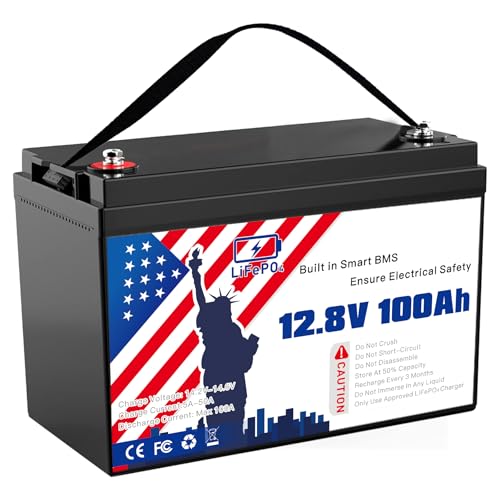
VEMDIA 12V 100Ah LiFePO4 Battery Group 31

DALY BMS 4S 12V 100A Bluetooth Module Set

Varta Longlife AAA Batteries 100 Pack

Timeusb 14.6V 40A LiFePO4 Battery Fast Charger
RJ 48V 100Ah LiFePO4 Deep Cycle Battery

PowerMax PM4-100A Deck Mount RV Converter
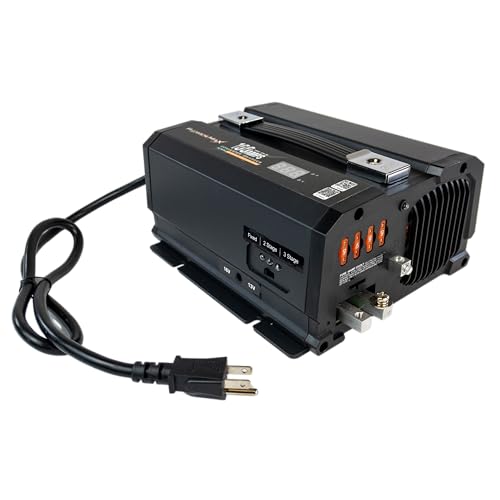
PowerMax PMBC-100-SE ECU Programming Supply

AILI Battery Monitor with 100A Shunt
Why These Options Stand Out
This is the most direct interpretation of a 100 amp hour lithium battery for someone building a real bank. The VEMDIA pack ships in the Group 31 case size, which means it drops into the same tray you might already have for a lead-acid starting or house battery.
Inside, LiFePO4 chemistry (lithium iron phosphate, valued for thermal stability and long cycle life) pairs with a built-in 100A BMS that handles overcharge, deep discharge, overcurrent, and short-circuit events. That headroom matters when a trolling motor or inverter suddenly demands a big burst.
The Upside
- Series and parallel expansion up to 4S4P, so your bank can grow from 100Ah to 400Ah or scale voltage toward 48V without swapping cells.
- Group 31 footprint keeps retrofitting straightforward in existing battery compartments.
- Around 1280Wh of usable energy per pack, enough for a quiet evening of lights, fans, and a small fridge.
- Three accepted charging methods cover solar, alternator, and shore setups, giving a flexible off-grid workflow.
Trade-Offs To Consider
- No native Bluetooth readout, so you will want a separate monitor like the AILI unit later in this list.
- Heavier than smaller pouch-cell packs, which matters in weight-sensitive camper builds.
Quick Facts
Best Suited To
Anyone building a 12V solar or RV bank who wants a drop-in LiFePO4 replacement and room to expand later.
Skip It When
You need a higher-voltage 48V pack out of the box, in which case the RJ 48V 100Ah unit is a closer match.
The DALY kit is the brain for a pack you wire yourself, not a finished battery. It is a 4S 12V 100A BMS (battery management system) paired with a Bluetooth module, aimed at hobby builders who already own LiFePO4 cells or are sourcing them separately.
Where the VEMDIA above gives you a sealed, ready-to-go pack, this gives you control over cell matching, layout, and amp ratings. For a workshop tinkerer, that flexibility can matter more than convenience.
Positive Points
- Low voltage, high voltage, short circuit, and temperature protection cover the common failure paths in DIY packs.
- Bluetooth module surfaces cell-level data, so you can spot imbalance before it becomes a real problem.
- 100A continuous rating handles most mid-size inverter loads without complaint.
Worth Noting
- No cells included, so the total cost climbs once you add matched LiFePO4 prismatic units.
- Wiring and balancing require confidence with a soldering iron and a multimeter.
Whose Shelf It Belongs On
Experienced DIY pack builders who want Bluetooth visibility without paying for a fully assembled battery.
Reach For A Different Pick When
You would rather skip the build and bolt in a finished pack, in which case the VEMDIA 12V 100Ah above is the easier path.
A 100 amp hour lithium battery conversation usually ignores the small cells quietly running the dashboard around it. The Varta Longlife AAA 100-pack fills that role for remotes, sensors, headlamps, and wall thermostats that share cabinet space with the main bank.
Alkaline chemistry keeps the cost low per cell, and a multi-year shelf life means you can throw a few in a drawer without worrying they will leak the next time you reach for them.
The Case For It
- 100-cell count keeps low-drain devices powered through a long winter without restocking.
- Leak-resistant construction protects garage remotes and outdoor sensors from messy failures.
- No mercury or cadmium, which matters if you compost dead cells or recycle them locally.
Things To Weigh
- Not rechargeable, so high-drain devices like camera flashes will chew through them quickly.
- Storage life depends on cool, dry conditions, and a hot garage can shorten usable life.
Perfect Match For
Households running a wall full of remotes, smoke detectors, and weather sensors alongside a main lithium bank.
Consider Something Else When
You need AA cells for trail cameras or game controllers, since this AAA format will not fit those slots.
Big banks demand a charger that does not dawdle, and the Timeusb 14.6V 40A unit is built around high-current LiFePO4 refills. It targets 12V lithium packs and is happiest when the bank is already wired in a series string.
Compare that to the small 10A tenders many people start with, and the difference shows up on long drives and dark solar weeks. A 40A stage turns a full overnight top-up into a lunch-break affair.
Standout Benefits
- 40A output slashes charge times on large LiFePO4 banks, cutting hours off a typical refill cycle.
- 14.6V absorption target matches the chemistry, helping preserve cycle life over years of use.
- Multiple protection modes keep the unit safe during unattended overnight charges.
Honest Caveats
- Requires a properly rated AC circuit, and a standard household outlet may not deliver full current.
- Larger and louder than trickle chargers, so placement matters in a small cabin or apartment.
Key Product Details
Right Fit For
Off-grid owners with banks north of 200Ah who are tired of waiting overnight for a full charge.
Not Your Match When
You only need to top up a single 50Ah portable, where a small solar maintainer would do the job more cheaply.
The RJ pack lands at the higher-voltage end of the family. Rated 48V 100Ah, it suits golf carts, small EVs, and 48V solar arrays where a single 12V block would need four in series to keep up.
Fewer cells in the string means simpler wiring, fewer balance points to watch, and a single BMS to monitor. For shop owners tired of troubleshooting long battery ladders, that simplicity is worth real money.
What Makes Sense
- 48V configuration drops current draw for the same power, which reduces cable thickness and heat.
- Deep-cycle design tolerates regular discharge to lower states of charge without rapid wear.
- Form factor suits common golf car and marine battery trays for direct swap projects.
Practical Considerations
- Source details are thin, so confirm connector type and BMS features with the seller before committing.
- Requires a 48V-compatible charger, and most 12V automotive units will not work.
Who It Suits Best
Golf cart owners and small EV builders who want a single, high-voltage LiFePO4 block instead of a 12V series string.
A Better Fit Elsewhere
You mostly run 12V cabin accessories, in which case the VEMDIA 100Ah pack keeps the wiring simpler.
The PM4-100A is a deck-mount converter charger, the kind of metal box that lives behind the fuse panel in an RV and feeds your house batteries while plugged into shore power. Up to 100A of DC output keeps the fridge, lights, and water pump happy without tripping breakers.
Multi-stage charging helps protect the bank, and the lithium-compatible profile means you can wire it to a LiFePO4 house bank without a separate profile module. For a retrofit, that removes a common pain point.
Good Reasons To Consider
- 100A output supports larger house banks common in modern RVs.
- Smart multi-stage charging suits both legacy lead-acid and newer lithium banks.
- Standalone deck-mount form factor simplifies replacement of older converter sections.
Less Ideal Details
- Settings assume some electrical confidence, and misconfigured profiles can shorten battery life.
- Cooling vents need clear space around the chassis, so tight compartment installs can run warm.
Spec Overview
Made For
RV owners upgrading a tired converter section to handle lithium house banks without rewiring the whole panel.
Swap It Out When
Your rig already runs a high-output inverter charger, since stacking converters can confuse the charge cycle.
This is the most specialized item in the roundup. The PMBC-100-SE is a bench power supply, not a deep-cycle battery. It sits in a diagnostic bay and keeps a constant 100A feed alive during ECU (engine control unit) flashing, module programming, and ADAS (advanced driver assistance systems) calibration.
Voltage drop during a reflash can corrupt a module, and a stable supply avoids the kind of expensive mistakes that ruin a Tuesday afternoon. For shops that program weekly, this kind of tool earns its keep fast.
Positive Takeaways
- Stable output prevents voltage sag during long module programming sessions.
- High 100A ceiling supports heavy electrical loads during ADAS calibration and module updates.
- Adjustable voltage settings add flexibility across battery service and showroom display work.
Factors To Consider
- Designed for shop environments, so the size and weight are overkill for a home garage.
- Specialty tool that overlaps less with the deep-cycle focus of the rest of this roundup.
Who Should Grab It
Independent repair shops and dealerships flashing ECUs and calibrating ADAS modules on a regular schedule.
Look Elsewhere When
You are building an RV solar bank, where the VEMDIA 100Ah LiFePO4 pack is the more relevant starting point.
No battery bank is complete without a way to see what it is doing, and the AILI monitor handles that job across an unusually wide range. It tracks voltage, current, and state of charge from 8V up to 120V, with a 100A shunt in the box and capacity readout up to 999Ah.
Compared to the bare-bones LED indicators on many BMS boards, a dedicated meter like this makes daily operation far more honest. You stop guessing how much is left and start seeing the real numbers.
Well-Handled Touches
- Wide chemistry support covers LiFePO4, AGM (absorbent glass mat), gel, and sealed lead-acid banks.
- Capacity readout up to 999Ah suits mid-sized off-grid and RV installations.
- Included 100A shunt simplifies wiring on smaller banks and avoids a separate parts order.
Where It May Fall Short
- Display relies on a small panel that can be hard to read in bright direct sunlight.
- Shunt installation near the battery requires short, heavy-gauge cables for accurate readings.
Feature Snapshot
Built With In Mind
Off-grid owners and van builders who want a clear, real-time picture of remaining capacity without a full app ecosystem.
Another Choice May Suit
You prefer phone-based monitoring over a fixed panel, in which case pairing the VEMDIA pack with a Bluetooth BMS upgrade makes more sense.
What Matters Most Before Choosing 100 Amp Hour Lithium Battery
Chemistry And Cycle Life
LiFePO4 is the chemistry that made 100 amp hour lithium banks mainstream, and for good reason. The cells tolerate deep discharges far better than lead-acid, and most quality packs are rated for thousands of cycles. That matters more than peak watt-hours in real ownership. A pack that lasts twice as long before capacity sag pays for itself across a few winters.
Voltage Class And Bank Architecture
A 12V bank is the easiest to retrofit, since most appliances, chargers, and alternators expect that range. A 48V bank, like the RJ unit above, runs cooler at high power and suits larger inverters and golf car conversions. The right answer depends on what your inverter and solar charge controller expect, not what sounds impressive on paper.
BMS Quality And Monitoring
The battery management system decides how safely the pack behaves under stress. Built-in 100A protection, low-temperature cutoff, and Bluetooth visibility all add real value. A separate monitor like the AILI meter covers packs where the BMS stays silent.
Charger Match And Real-World Use
A high-amp charger like the Timeusb 40A unit turns overnight refills into afternoon errands. Smaller banks and occasional use cases do not need that throughput, and a modest charger keeps cost and weight down.
Key Considerations Across These Picks
Pitfalls Shoppers Hit
Skipping the BMS check is the most common mistake. Some packs advertise huge amp ratings but ship with a BMS rated for far less. Another is treating a 100 amp hour lithium battery like a deep-discharge lead bank, pulling the pack to zero repeatedly and expecting the same lifespan.
What Separates Premium From Basic
Higher-tier LiFePO4 packs add grade-A cell matching, stronger BMS boards, and Bluetooth or CAN-bus (a vehicle-style data bus that lets the battery talk to chargers and inverters) connectivity. Lower-tier options can perform well for casual use, but skip the extras that help a pack last through years of solar seasons.
Frequently Asked Questions
How long does a 100 amp hour lithium battery last on a single charge?
Runtime depends on the load, but a 100Ah LiFePO4 pack delivers roughly 1000 to 1280Wh of usable energy. That covers a quiet night of lights, fans, and a small fridge in most camper vans.
Can I replace a lead-acid battery with lithium directly?
In many cases yes, especially with a drop-in Group 31 pack like the VEMDIA option. Your charger may need a lithium profile to hit the correct absorption voltage.
Do I need a special charger for LiFePO4?
A charger matched to the chemistry helps the pack last longer and charge faster. Lead-acid chargers often stop early, leaving the bank partly full, while a 14.6V lithium unit finishes the cycle properly.
Is a BMS necessary on a 100Ah lithium battery?
A built-in BMS is the standard today, and it protects against overcharge, deep discharge, short circuits, and temperature extremes. Skipping one is rarely worth the small savings.
How do I monitor remaining capacity accurately?
A shunt-based monitor like the AILI meter reads true state of charge by tracking current in and out of the bank. That is far more reliable than voltage alone, which sags under load.
Wrap Up
The right pick depends less on specs and more on how you use power day to day. Vans, cabins, and boats each lean toward a different mix of battery, charger, and monitor, and this roundup covers the full spread. Start with the main pack that fits your voltage class, then add the BMS, charger, and meter that match your routine. Once those pieces line up, owning a 100 amp hour lithium battery feels less like a project and more like a quiet upgrade you forget is even there.