A dead battery on a cold morning is one of those frustrations that quietly derails a whole day. The right 12V car battery charger turns that moment into a ten-minute fix instead of a stranded afternoon, whether you’re maintaining a classic in storage, keeping a daily driver topped up, or reviving a motorcycle after winter.
The Picks In Brief

Battery Tender Junior 750mA Charger and Maintainer
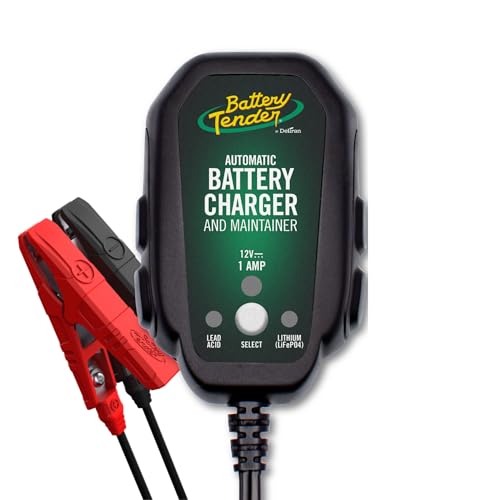
Battery Tender Junior 800mA Lead Acid/Lithium Charger

NOCO GENIUS1 1A Smart Charger and Maintainer
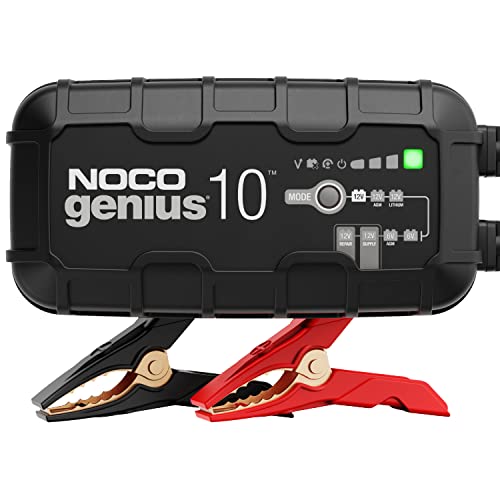
NOCO GENIUS10 10A Smart Charger and Maintainer

NOCO GENIUS5 5A Smart Charger and Maintainer

Schumacher SC1355 1.5A Charger and Maintainer

Schumacher SC1308 6A Multi-Function Charger

Schumacher SC1361 6A Charger and Starter

CRAFTSMAN CMXCESM258 12A Charger and Maintainer

Schumacher SC1281 6A Charger and Engine Starter
Why These Options Stand Out
This little unit has earned a long track record among motorcycle and ATV owners for one simple reason: it does the boring, careful thing very well. At 750mA, the Battery Tender Junior won’t rush a charge, which matters for the smaller batteries tucked inside powersports vehicles that often sit all winter. Plug it in, walk away, and the four-stage program brings the battery up, then parks it at a safe float voltage.
Where it shines most is in seasonal storage scenarios. A motorcycle in a garage for four months can come back to a battery that’s still healthy enough to fire on the first press. The tradeoff is patience: that low output means a deeply discharged battery will take a while to recover, so this isn’t the right tool for a dead-on-arrival morning.
Good Reasons To Consider
- Four-stage charging with a float mode that prevents overcharging during long storage
- Works with flooded, AGM (absorbent glass mat, a sealed battery type common in modern vehicles), and gel cell lead-acid batteries
- Compact enough to leave mounted in a tight garage corner or workshop shelf
- Set-and-forget operation suits people who don’t want to babysit a charger
Things To Consider
- 750mA is gentle, so a deeply drained battery may need overnight or longer to recover
- Lead-acid only; no lithium compatibility, which limits future flexibility
Feature Snapshot
Who It Suits Best
Garage owners storing a motorcycle, ATV, or lawn tractor through the off-season who want a quiet, automatic maintenance charger.
Skip It When
You also ride or drive a lithium-powered vehicle; the NOCO GENIUS5 handles mixed fleets with broader chemistry support.
Take the same basic formula as the classic Junior and add a switch for battery chemistry, and you get a small charger that grows with your garage. The 800mA output gives a small bump over its sibling, while the push-button selection lets you toggle between standard lead-acid (flooded, AGM, gel) and LiFePO4 (lithium iron phosphate) profiles. That single switch is the whole point of this model.
For households mixing a traditional motorcycle with a newer lithium-equipped bike or a lithium jump-start pack, the flexibility is genuinely useful. Owners commonly report the selector eliminating the need to keep two separate maintainers on hand. The catch is that you must remember to switch profiles manually before each use, since there’s no auto-detect.
What Earns Its Place
- Switchable chemistry profile covers both lead-acid and LiFePO4 batteries
- Light 800mA output still protects small batteries during long storage
- Simple push-button operation keeps setup time short
- Compact build fits on crowded workbenches or in tool drawers
Honest Caveats
- Manual chemistry selection means a wrong setting could stress the battery
- Not designed for full car-sized batteries in a pinch
Made For
Owners running a mixed fleet of older lead-acid bikes and newer lithium-equipped gear in the same garage.
Where Another Pick Suits Better
You mostly work on cars and need real amperage behind the maintenance; the Schumacher SC1308 brings engine-start capability into the same role.
The GENIUS1 is the smallest unit in NOCO’s smart-charger family, but it pulls more weight than its size suggests. It handles 6V and 12V chemistries, including lead-acid (flooded, AGM, gel, and deep-cycle) and LiFePO4, which means it works on everything from a vintage tractor to a modern lithium-equipped motorcycle. The 1A output keeps it firmly in the maintenance category rather than fast-charge territory.
Compared to the larger GENIUS5 and GENIUS10 reviewed below, the GENIUS1 trades raw speed for footprint. For someone with a small shelf and a couple of seasonal vehicles, that tradeoff feels right. Owners appreciate that it can be left connected indefinitely without overcharging, though storage in a dry spot is still wise given the exposed lead terminals.
Bright Spots
- Dual 6V/12V compatibility broadens its usefulness across vehicles
- Supports LiFePO4 alongside all common lead-acid types
- Tiny housing tucks into tight garage or apartment storage spaces
- Float-mode behavior lets you leave it connected long-term
Trade Offs
- 1A output is too slow for reviving a deeply discharged full-size car battery in any reasonable window
- Cable length may feel short on larger vehicles or wall-mounted setups
At A Glance
Best Suited To
Apartment dwellers or hobbyists with limited storage who mostly maintain small seasonal batteries rather than reviving large ones.
Look Elsewhere When
You regularly need to recover a dead car battery; the NOCO GENIUS10 brings real recovery amperage into the same smart platform.
The GENIUS10 sits at the top of NOCO’s consumer line and behaves like a tool built for bigger problems. At 10A, it can actually push a deeply discharged car battery back toward usable voltage in a reasonable window, not just maintain a healthy one. It supports 6V and 12V systems, plus all the usual lead-acid variants and LiFePO4, with the addition of a desulfator mode (a recovery function that uses electrical pulses to break down sulfate buildup on aging plates) and temperature compensation.
Where the GENIUS1 maintains and the GENIUS5 handles daily drivers, the GENIUS10 is built for people who actually expect to recover dead batteries, not just keep topped-up ones healthy. That extra capability comes with a larger housing and higher cost, and the Force Mode adds complexity that casual users may rarely touch.
Reasons It Performs
- 10A output handles recovery of deeply discharged full-size batteries
- Desulfator mode can sometimes restore capacity in lightly sulfated batteries
- Temperature compensation adjusts output for hot and cold environments
- Force Mode lets you initiate charging on a battery that’s dropped below normal voltage
Worth Bearing In Mind
- Larger and heavier than the GENIUS1 or GENIUS5, so it isn’t a grab-and-go unit
- Force Mode requires reading the manual before use to avoid misapplication
- Premium positioning makes it overkill for a single small powersports battery
Who Will Love This
Owners with multiple vehicles, including cars and trucks, who want one charger that can maintain and genuinely recover larger batteries.
Reach For A Different Pick When
Your garage only sees motorcycles and lawn equipment; the Battery Tender Junior 750mA does that job at a friendlier size and price.
The GENIUS5 lands in the middle of NOCO’s range, both in size and in ambition. At 5A, it’s quick enough to top up a car battery overnight without being so large that it dominates the bench. Like its siblings, it covers 6V and 12V systems across lead-acid and LiFePO4 chemistries, and it includes the desulfation and temperature-compensation features that make the platform feel considered.
For most households with one daily car and maybe a motorcycle in the corner, the GENIUS5 hits the sweet spot. It’s more capable than the GENIUS1 without the size and cost jump to the GENIUS10. Owners commonly note that the included mounting accessories make it easy to leave semi-permanently wired into a seldom-driven vehicle.
The Case For It
- 5A output suits overnight charging for typical car batteries
- Broad chemistry support across 6V and 12V lead-acid and lithium types
- Built-in desulfator extends the useful life of aging batteries
- Compact enough to store in a glove box or under a shelf
Practical Considerations
- Lacks the Force Mode and raw amperage of the larger GENIUS10 for severe recovery cases
- Accessory ring-terminal harness is sold separately if you want a permanent install
The Right Fit
Daily-driver owners who want a single charger that can maintain a battery in winter and recover one that’s gotten low over a few weeks of sitting.
Where A Sibling Pick Shines
You need engine-start assist for emergency jumps; the Schumacher SC1281 brings a 100A boost function into the picture.
The SC1355 is a simple, no-frills entry point for someone who needs basic charging and maintenance without the feature list of higher-end models. It delivers 1.5A across 6V and 12V systems and supports standard, AGM, and deep-cycle batteries. Schumacher built it for the budget-conscious shopper who still wants a reliable name on the box.
Where it works best is the once-in-a-while maintenance case. A classic car parked through the winter, a seldom-used ATV, a boat battery topped off before launch season. Owners commonly describe it as a “set it and don’t worry about it” tool. The honest read is that the 1.5A ceiling makes it a poor choice for anything but the lightest charging duty.
Strengths Worth Knowing
- Three-mode operation covers charging, maintenance, and reconditioning for common battery types
- Dual 6V/12V support opens it up to vintage and modern vehicles
- Compact and lightweight for simple storage
- Approachable price point for first-time charger owners
Points To Note
- 1.5A is too slow for reviving a deeply discharged full-size car battery in a single afternoon
- No lithium support, which rules out newer LiFePO4-equipped vehicles
Feature Card
Perfect Match For
First-time charger owners who want a Schumacher unit for occasional seasonal maintenance on small or classic vehicles.
Swap It Out When
You want lithium support and faster top-ups in one box; the NOCO GENIUS5 does both without much extra size.
The SC1308 is the charger for someone whose garage leans more workshop than parking spot. It pulls double duty as a 6V/12V charger, maintainer, engine starter, battery tester, alternator tester, and desulfator, which is a feature list closer to a small diagnostic station than a maintainer. The 6A output gives it respectable charging speed without being oversized.
For home mechanics who already think in terms of voltage drops and charging health, the testing functions make this unit pay for itself. The catch is the engine-start capability, which requires understanding amperage ratings before relying on it for a dead vehicle. Owners commonly appreciate the clear mode dial that walks you through selections without guesswork.
Benefits That Matter
- Six functions in one chassis reduce bench clutter
- Engine-start assist helps recover dead vehicles in the driveway
- Alternator tester confirms charging-system health after repairs
- Desulfator function may extend life of older batteries
A Few Limitations
- Engine-start function requires careful interpretation of cranking amperage specs
- Larger and heavier than the simpler Schumacher models
- No lithium chemistry support limits future flexibility
Whose Shelf It Belongs On
Home mechanics who already work on their own vehicles and want a charger that doubles as a basic diagnostic tool.
Where Another Pick Suits Better
You only need a maintenance charger for a single stored car; the CRAFTSMAN CMXCESM258 keeps things simpler with lithium support.
The SC1361 is a 12V-focused unit that targets a slightly different scenario than the SC1308. It’s still a charger, maintainer, and engine starter rolled into one box, but it strips out 6V support and the diagnostic extras in favor of a cleaner, more focused tool. The 6A output moves a normal car battery along at a sensible pace.
Farm and rural-property owners have gravitated to this model because it handles jump-assist duties without overcomplicating the routine. You connect it, select the mode, and either charge or attempt a start. Compared to the NOCO GENIUS10, you give up lithium compatibility and desulfator function in exchange for built-in engine cranking.
Standout Benefits
- Engine-starter mode handles dead-vehicle recovery in the driveway
- Streamlined mode selection reduces setup confusion
- 12V focus suits modern cars, trucks, and SUVs without 6V distractions
- Rugged build tolerates farm and workshop environments
Trade-Offs To Consider
- 12V only, so it can’t help with older 6V vehicles or equipment
- No lithium battery support compared to NOCO’s GENIUS family
Spec Overview
Who Should Grab It
Property owners and rural drivers who want one tool that can both maintain and crank-start a modern 12V vehicle.
Not Your Match When
You also maintain a vintage 6V vehicle or a lithium-equipped motorcycle; the CRAFTSMAN CMXCESM258 covers both voltages.
The CRAFTSMAN CMXCESM258 brings the highest continuous output in this list, at 12A across 6V and 12V systems. That extra current translates to noticeably faster top-ups on bigger batteries, especially when you’ve come back from vacation to a vehicle that sat too long. It also supports standard, AGM, deep-cycle, and 12V lithium (LiFePO4) batteries, which makes it one of the most chemistry-flexible options here.
Owners who keep a mix of powersports, classic, and modern gear tend to like having one unit that covers all those bases without swapping chargers. The 12A rating gives it genuine recovery capability, though it isn’t a jump-starter in the Schumacher sense. For a tool that lives in a garage and sees varied use, that distinction usually matters less than the raw charging speed.
A Few Strong Suits
- 12A rapid-charge mode shortens recovery time for big batteries
- LiFePO4 support future-proofs the charger for newer lithium-equipped gear
- Multiple modes cover 6V and 12V, including a slower 3A/2A maintenance pace
- Microprocessor-controlled operation adjusts output automatically
Where It May Fall Short
- No engine-start assist, so it’s strictly a charger and maintainer
- Larger housing takes up more shelf space than 1A-class units
Built With In Mind
Shaded-tree mechanics with mixed-age vehicles who want faster recovery than a 1A or 5A unit without paying for engine-start features.
A Better Fit Elsewhere
You also need emergency jump capability for truly dead vehicles; the Schumacher SC1281 supplies a 100A boost alongside charging.
The SC1281 closes the list with the most aggressive engine-start rating here: a 100A boost function on top of the standard 6A charging output. It covers 6V and 12V systems and is built for situations where the battery has gone past the point of patient recovery. The larger transformer and heavier gauge cables explain its bulk.
For owners of trucks, SUVs, and larger vehicles who occasionally face a deeply discharged battery, that boost function is the whole reason to consider this model. It’s not something you’d grab for a motorcycle or lawn tractor. Owners commonly describe it as the “big one” in a multi-charger household, kept for emergencies while smaller units handle day-to-day maintenance.
What Makes Sense
- 100A engine-start assist handles dead trucks and SUVs in the driveway
- Dual 6V/12V support covers classic and modern vehicles
- Fully automatic operation simplifies emergency use
- Rugged construction suits long-term garage placement
Things To Weigh
- Heaviest unit on this list, so it’s a dedicated bench tool rather than a portable
- No lithium chemistry support compared to NOCO’s GENIUS line
Feature Rundown
The Right Fit
Truck and SUV owners who want a single garage tool that can charge, maintain, and provide emergency cranking when a battery fully dies.
Consider Something Else When
Your vehicles all use lithium batteries; the NOCO GENIUS10 supports LiFePO4 with much smaller dimensions.
Choosing The Right 12V Charger For Your Garage
Match Amperage To Battery Size
The output current of a charger, measured in amps, is the single biggest factor in how long a charge will take. A 1A unit like the NOCO GENIUS1 is friendly to small powersports batteries but will crawl through a full-size car battery. A 10A or 12A unit like the NOCO GENIUS10 or CRAFTSMAN CMXCESM258 moves a car battery in a few hours rather than a full day. The honest read is that most car owners benefit from at least 5A, while motorcycles and seasonal equipment are happy with 1A or less.
Consider Chemistry Support
Battery chemistry matters more each year. Older vehicles and equipment typically use flooded, AGM, or gel lead-acid batteries, which every charger here handles. Newer motorcycles, powersports gear, and some specialty vehicles use LiFePO4 lithium, which requires a charger with a lithium profile, like the NOCO GENIUS1, GENIUS5, or GENIUS10, plus the Battery Tender Junior 800mA and the CRAFTSMAN CMXCESM258. Using a lead-acid-only charger on a lithium battery risks incorrect float voltages.
Think Beyond Charging
Charging is the headline function, but maintenance mode is what keeps stored vehicles healthy through months of sitting. A float-mode maintainer can stay connected indefinitely without overcharging, which matters for anyone with a classic car, boat, or motorcycle that doesn’t see weekly use. The Schumacher SC1308 and SC1281 add diagnostic and engine-start functions on top of maintenance, which earns their place in a workshop where more than one job gets done at the same bench.
Decide If You Need Engine Start Assist
Pure chargers revive batteries over hours. Engine-start units add a high-amperage boost that can crank a vehicle from a deeply discharged state in minutes. For households with a single daily driver and a wall outlet, charging alone is usually enough. For rural properties, farms, or households with multiple vehicles, the Schumacher SC1361 or SC1281 brings real peace of mind on cold mornings.
Things To Know Before You Buy
Pitfalls Shoppers Hit
A common mistake is choosing a charger based only on its maximum output and ignoring whether it supports the battery’s chemistry. A 12A lead-acid charger connected to a LiFePO4 battery will eventually push the wrong float voltage. Another frequent miss is underestimating cable length; in larger vehicles or wall-mounted setups, short leads force awkward placement of the charger. Buyers also sometimes skip the desulfator function, which can recover lightly sulfated batteries and delay replacement for months.
Where The Extra Money Goes
Higher-tier models like the NOCO GENIUS10 and Schumacher SC1281 cost more because they add capabilities a basic charger skips. Stronger amperage shortens charge times, while built-in engine-start assist, desulfation, and temperature compensation address real-world failure modes rather than ideal-lab conditions. The upgrade pays off for households with multiple vehicles, larger batteries, or unpredictable climates where a basic charger often runs out of headroom right when you need it most.
Frequently Asked Questions
What size 12V car battery charger do I need?
For most car and truck batteries, a 5A to 10A charger offers a good balance of speed and safety. Smaller batteries in motorcycles and lawn equipment are fine with 1A to 1.5A maintainers, which are gentler on the smaller cells.
Can I leave a 12V charger connected all the time?
Modern smart chargers with a float or maintenance mode, like every model in this list, are designed for long-term connection. They reduce output once the battery reaches full charge and only top up as needed, so leaving one on a stored vehicle is normal practice.
Do I need a separate charger for lithium batteries?
You do, technically. LiFePO4 batteries require a charger with a dedicated lithium profile to deliver the correct absorption and float voltages. Chargers like the NOCO GENIUS5, GENIUS10, or CRAFTSMAN CMXCESM258 offer that profile alongside lead-acid support.
How long does it take to charge a dead car battery?
With a 5A charger, a fully discharged mid-size car battery typically takes 8 to 12 hours to recover. A 10A or 12A unit roughly halves that time, while a 1A trickle charger may need two to three days for the same job.
Can a battery charger start a dead vehicle?
Only chargers with a dedicated engine-start function, like the Schumacher SC1308, SC1361, or SC1281, can deliver the cranking amperage needed to start a dead vehicle. Standard maintainers and chargers cannot.
The Takeaway
The right 12V car battery charger depends less on spec sheets and more on what sits in your garage. Maintenance-focused models like the Battery Tender Junior and NOCO GENIUS1 are perfect for stored seasonal vehicles, while mid-range picks like the NOCO GENIUS5 and CRAFTSMAN CMXCESM258 cover daily drivers and mixed fleets well. For emergency cranking on trucks and SUVs, the Schumacher SC1308, SC1361, or SC1281 bring real jump-start capability into the same toolbox. Pick the one that matches your vehicles, and your future self on a cold morning will thank you.