A dead battery never picks a good moment to ruin your day. Whether you’re commuting through a cold snap, storing a classic through winter, or trying to keep a fleet of small electronics alive, the right 12v setup makes the difference between a quick start and a tow-truck call. This roundup covers the small cells that power key fobs and remotes, the wheeled chargers that bring a tired car battery back from the brink, and one full-size AGM replacement battery for vehicles that need it.
An Overview Of The Picks

Energizer A23 Battery, 12V (4 Pack)
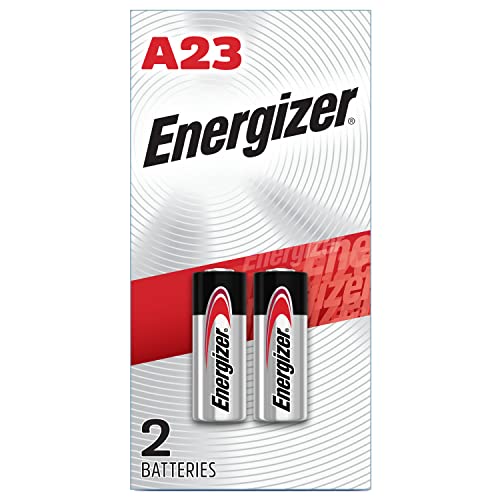
Energizer A23 Batteries Alkaline (2 Pack)
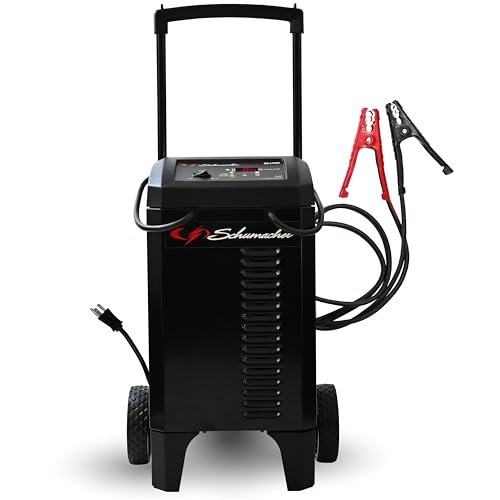
Schumacher Electric SC1400 Wheeled Charger

Schumacher Electric SC1364 Wheeled Charger

CRAFTSMAN CMXCESM233 6V/12V Charger

Goodyear 48-H6-AGM Platinum Battery

Schumacher DSR131 Pro Series Charger
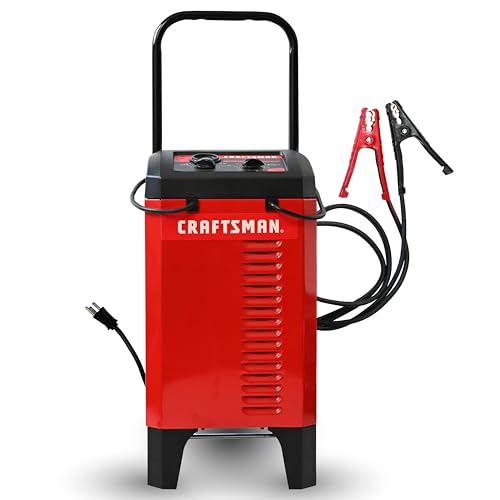
CRAFTSMAN CMXCESM274 12V Charger

Schumacher Electric SC1446 Wheeled Charger

Schumacher Electric SC1445 Starter/Charger
What Each Pick Brings To The Table
The A23 cell is the kind of battery you forget about until your garage door refuses to open on a rainy morning. These tiny cylindrical 12V alkalines power everything from keyless entry fobs to remote controls and small Bluetooth gadgets, and Energizer’s four-pack is the practical way to keep spares on hand.
If your household runs multiple remotes, swapping out several at the same time means you’re not hunting for a fresh cell in a drawer six months later. Compared to the two-pack coming up, this is the better math when you’ve got more than one device that needs attention.
Real Benefits
- Four-cell pack covers the most common household devices that take A23 cells.
- Wide cross-compatibility with equivalent sizes like 23A, MN21, and GP23AE.
- Economical bulk format suits anyone stocking a junk drawer with spares.
- Reliable alkaline chemistry for short bursts of moderate current draw.
Things To Consider
- Alkaline chemistry loses charge sitting unused, so spares may need rotation.
- Single-cell specialty batteries are rarely recyclable curbside, so check local drop-off options.
Who It Suits Best
Anyone running multiple A23-powered remotes, fobs, or small electronics around the house will find the four-pack format more practical than singles.
Where Another Pick Suits Better
For a single garage door opener that needs just one replacement, the Energizer A23 2 Pack keeps things simple.
This is the smaller cousin of the four-pack above, and it earns its place because not everyone needs four cells at once. The two-pack is sized for the common “one device just died” moment: a key fob that won’t unlock, a garage remote that finally gave up.
For a single-vehicle household or a renter with one remote, this is the leaner option. Compared to the bulk pack, you’re trading capacity for a smaller upfront commitment when you only have one slot to fill.
Practical Pluses
- Targets the most common single-device replacement scenario.
- Same cross-compatibility with the A23 family of equivalent cell codes.
- Alkaline chemistry delivers the steady voltage fobs and remotes expect.
Worth Noting
- You’ll run out faster in households with multiple A23 devices.
- Specialty cells like these tend to age out of working spec if left sitting for years.
Key Specs
Made For
A single-key-fob household or someone replacing one tired garage remote without committing to a four-pack.
Consider Something Else When
If you’ve got three or more A23-powered gadgets on the go, the Energizer A23 4 Pack spreads the cost more sensibly.
The Schumacher SC1400 is a serious wheeled unit aimed at garages, workshops, and farm shops that see more than one battery a year. It handles charging, maintaining, starting, and reconditioning in one package, which is more capability than most homeowners need and exactly what heavy users want.
If you’ve burned through smaller maintainers because they couldn’t wake up a deeply discharged battery, this is the step up. The SC1400 reads as the more refined option compared to the older SC1364 coming next, trading some brute-force cranking amps for smarter four-mode operation.
Useful Touches
- Four-mode design covers charging, maintaining, starting, and reconditioning.
- Wheeled chassis is easier to roll around a workshop than a benchtop unit.
- Automatic operation suits drivers who’d rather plug in and walk away.
Trade Offs
- Larger footprint than the basic chargers, so storage space matters.
- Heavier gauge clamps and cables take up more room in a packed garage.
Right Fit For
Home mechanics, small farm operators, and anyone juggling multiple vehicles that need different charge modes throughout the year.
Skip It When
If your battery needs are limited to a single commuter car and you just want simple maintenance, the SC1446 is a lighter alternative.
The SC1364 leans into the muscle side of the Schumacher line, pairing a 150-amp engine start with a 20-amp boost mode for trucks, SUVs, and marine batteries that need a serious wake-up call. It’s a wheeled unit meant to live in a workshop corner, not a kitchen pantry.
Compared to the SC1400, this model skips reconditioning and trades some smart features for raw starting power. The trade-off is clear: more grunt for stubborn engines, less finesse for the casual commuter.
The Upside
- 150-amp engine start for larger displacement engines that struggle in cold weather.
- 20-amp boost mode speeds up recovery for deeply discharged batteries.
- Supports a broad range of vehicles from cars to marine applications.
- Wheeled frame makes it manageable despite the heavy output.
Honest Caveats
- Older-feature manual controls compared to the SC1400’s automatic modes.
- Size and weight are overkill for a single sedan’s annual maintenance.
At A Glance
Built With In Mind
Truck and SUV owners, marine battery tenders, and home workshops that handle a mix of vehicles will get the most from this unit.
Look Elsewhere When
Compact sedan owners who just want gentle maintenance charging should look at the CRAFTSMAN CMXCESM274 instead.
The CMXCESM233 is the kind of charger that appeals to drivers who’d rather turn a dial than trust an algorithm. It’s a manual wheeled unit supporting both 6V and 12V systems, which makes it a useful companion for older tractors, classic cars, and farm equipment that share shop space with daily drivers.
The 10A output pairs nicely with serious engine-start capability, and the dual-voltage support widens the audience compared to single-voltage competitors. Versus the smaller CMXCESM274 coming later, this is the unit you reach for when the job is genuinely heavy.
What It Does Well
- Dual 6V and 12V support covers classic vehicles alongside modern cars.
- Manual controls give experienced users direct command over amperage.
- Strong output for reviving deeply discharged farm and diesel batteries.
- Wheeled frame for shop and barn floors.
Points To Keep In Mind
- Manual operation means you monitor the charge, not the charger.
- Less compact than the CMXCESM274 if storage is tight.
Whose Shelf It Belongs On
Farm owners, classic-car restorers, and rural drivers who need flexibility across 6V and 12V equipment.
A Better Fit Elsewhere
For dedicated 12V-only daily drivers in milder climates, the CRAFTSMAN CMXCESM274 is the leaner choice.
This is the only true replacement battery on the list, and it earns its slot by addressing the moment every driver dreads: a sluggish crank on a freezing morning. The Goodyear Platinum AGM delivers 760 cold cranking amps in an H6 group-size case, which fits many modern European and domestic vehicles.
AGM stands for absorbed glass mat, a sealed construction that resists vibration and tolerates deep cycles better than a flooded lead-acid design. Compared to the chargers on the rest of this list, this is the swap-in solution for when the old battery has reached the end of its useful life rather than just being discharged.
What Pays Off
- 760 cold cranking amps give confident starts in freezing temperatures.
- AGM sealed construction resists vibration and handles deep discharge cycles.
- Maintenance-free design means no electrolyte top-offs during ownership.
- Group size 48 fits a wide range of late-model vehicles requiring H6 case dimensions.
Softer Spots
- AGM pricing sits above flooded lead-acid alternatives for the same group size.
- Proper disposal at a battery recycler is required; do not toss in household trash.
- Heavier than compact cells, so installation calls for two hands.
Feature Snapshot
Best Suited To
Drivers in cold climates whose current battery has cranking weakness, especially those driving H6-fitment vehicles.
Not Your Match When
Owners of vehicles that use different BCI group sizes should not force-fit this case; verify your vehicle’s required group before ordering.
The DSR131 is the commercial-shop tier of this roundup, built for environments where the charger earns its keep daily rather than once a season. With 250-amp engine start and a 50-amp boost, it handles the vehicles that smaller units simply cannot wake up.
This is a meaningful step beyond the SC1364 reviewed earlier, aimed squarely at professionals and fleet operators. You pay for that capability in size, weight, and storage footprint, so it’s worth thinking about whether you genuinely need the headroom.
Where It Delivers
- 250-amp engine start clears stubborn heavy-duty and commercial vehicles.
- 50-amp boost mode compresses recovery time on dead batteries.
- Dual 6V and 12V support covers classics alongside modern fleets.
- Wheeled construction suits daily shop use.
Practical Considerations
- Footprint and weight are substantial; plan storage space ahead of time.
- Capability exceeds what a single-car household will ever use.
Perfect Match For
Professional mechanics, fleet operators, and serious enthusiasts who run a rotation of vehicles through their shop.
Reach For A Different Pick When
Homeowners with a single daily driver should size down to the Schumacher SC1400 or CRAFTSMAN CMXCESM233.
The CMXCESM274 is the more approachable sibling in the CRAFTSMAN wheeled line, trading some of the CMXCESM233’s heavy-duty output for a tighter, 12V-focused design. It carries a 175-amp engine-start mode that handles most passenger cars without the bulk of a commercial unit.
Think of this as the right charger for a driveway tinkerer who wants real control without dragging a workshop-sized tool across the lawn. It complements the larger CRAFTSMAN by handling the everyday jobs while the heavier unit covers extreme cases.
The Helpful Details
- 175-amp engine start is generous for typical passenger cars and light trucks.
- Manual 2-in-1 design keeps operation predictable for hands-on users.
- 12V focus suits modern vehicles without dual-voltage complexity.
Room For Improvement
- Limited to 12V, so classic 6V applications require a different unit.
- Manual operation rewards attention but doesn’t suit a plug-and-forget routine.
Who Should Grab It
Driveway DIYers and small-shop owners who want manual control and reliable starts without commercial-tier pricing.
Swap It Out When
Anyone running 6V classics alongside modern vehicles should consider the dual-voltage CRAFTSMAN CMXCESM233.
The SC1446 is the manual unit that drivers and DIYers pick when they want full control of the charging process instead of digital hand-holding. It’s especially useful for reviving batteries that smart chargers can’t even detect, which is a common frustration with deeply discharged cells.
Compared to the SC1400’s fully automatic operation, this is the analog-feeling counterpart for those who prefer dialed-in settings. It’s also a sensible match for older vehicles, tractors, and garage queens that spend weeks between drives.
Strengths Worth Knowing
- Manual controls make it easier to recover deeply discharged batteries that smart chargers miss.
- 10A output is well-matched to standard 12V automotive maintenance routines.
- Wheeled chassis keeps the unit mobile despite its capabilities.
- Suitable for older vehicles, tractors, and equipment in seasonal storage.
Some Limits To Know
- Requires user attention during charging cycles compared to fully automatic units.
- Not the right choice for users who prefer plug-and-forget convenience.
Quick Facts
The Right Fit
Garage users with older or stored vehicles who need a charger that won’t quit on a deeply discharged cell.
Where A Sibling Pick Shines
For fully automatic four-mode operation, the Schumacher SC1400 is the smarter alternative.
The SC1445 closes out the roundup as a serious dual-voltage starter and charger with 250 amps of engine-start reserve. It bridges the gap between the consumer SC1364 and the commercial DSR131, giving home garages a high-output tool without the full shop price tag.
Compared to the CRAFTSMAN CMXCESM233 reviewed earlier, this unit pushes higher peak amps for tougher starts. For a household garage juggling a sedan, a pickup, and occasional farm equipment, it’s the kind of tool that quietly proves its worth.
Real-World Strengths
- 250-amp engine start gives ample reserve for larger V8 and diesel engines.
- Both 6V and 12V support broadens use across classic and modern vehicles.
- 2-in-1 charging and starting functionality consolidates shop equipment.
- Wheeled frame makes positioning straightforward in a packed garage.
- Schumacher’s long-running track record in battery tools.
Possible Compromises
- Footprint exceeds that of compact consumer chargers.
- Capability may go unused in single-vehicle households.
Feature Rundown
Who Will Love This
Garage owners running a mixed fleet, from daily drivers to weekend classics, who want one tool that handles both.
Not Your Match When
City apartment dwellers with one compact car and limited storage should look at smaller Schumacher units instead.
Choosing The Right 12V Battery And Charger Setup
Picking the right 12V option starts with understanding which category you actually need. The small A23 cells cover remotes, fobs, and specialty electronics, while the wheeled chargers and AGM replacement battery serve vehicles. Mixing them up is the most common slip, so clarify your use case before anything else.
Match Voltage And Capacity To The Device
For specialty cells, cross-reference the existing battery code (A23, MN21, 23A) to avoid size mismatches. For chargers, confirm your battery is 6V or 12V before plugging in; the dual-voltage models on this list handle both, but a 12V-only unit will not save a 6V tractor.
Cold Cranking Amps And Reserve Capacity
CCA, or cold cranking amps, measures how well a battery starts in cold weather, while reserve capacity (rc) is the minutes a battery can run accessories if the alternator fails. For cold-climate daily drivers, prioritize higher CCA figures; for accessory-heavy vehicles with lots of electronics, lean toward longer reserve capacity.
Manual Vs Automatic Chargers
Manual chargers give direct control and recover deeply discharged batteries that smart units ignore. Automatic chargers trade that control for set-and-forget convenience. Your tolerance for babysitting a charge cycle should guide this choice more than price alone.
Wheeled Form Factor And Storage
Every charger here is wheeled, which is great for shop floors and tough on crowded apartment closets. Measure your available storage space before committing to a heavy-duty unit, especially the DSR131 and SC1445, which take up real floor area.
Key Considerations Across These Picks
Pitfalls Shoppers Hit
Buying a charger that exceeds what your battery needs wastes money and storage space. Going too small leaves you stranded when a deeply discharged cell won’t wake up. The middle path is to match your typical use case, not the worst-case scenario you’ll never face.
Where The Extra Money Goes
Premium-tier chargers and AGM batteries earn their cost through higher output, sealed construction, and longer service life. The jump from a basic maintainer to a unit like the DSR131 is meaningful for shops and cold-climate drivers, but unnecessary for a single daily driver in a mild region.
Frequently Asked Questions
What Is A 12V Battery Used For In A Car?
A 12V battery powers the starter motor, lights, ignition, and onboard electronics when the engine is off. It also stabilizes voltage while the alternator charges the system during driving.
How Long Does A 12V Car Battery Typically Last?
Most 12V batteries last three to five years depending on climate, driving habits, and maintenance. Frequent short trips, extreme heat, and chronic undercharging shorten that lifespan.
Can You Overcharge A 12V Battery With A Wrong Charger?
Yes, using a charger without automatic voltage regulation or leaving a manual charger connected too long can overcharge a battery. Overcharging damages plates, boils off electrolyte in flooded designs, and reduces service life.
Are AGM Batteries Worth The Upgrade Over Standard Flooded?
AGM batteries cost more up front but resist vibration, handle deep discharge better, and require no maintenance. For vehicles with start-stop systems or accessory-heavy electrical loads, AGM is often the smarter long-term choice.
How Do You Know When A 12V Battery Needs Replacing?
Slow cranking, dim headlights at idle, frequent jump-starts, and a swollen case are common signs. Many auto parts stores offer load testing that confirms whether the battery still holds a useful charge.
Wrap Up
Your best pick depends entirely on what problem you’re solving. A remote that stopped working needs an A23 cell, a sluggish sedan needs a charger or a replacement battery, and a stubborn diesel needs commercial-grade starting power. Match the tool to the job, and the rest falls into place.