Off-grid setups live or die by the battery bank sitting behind your panels. The right 12V unit keeps lights on through cloudy stretches, runs fridges quietly overnight, and shrugs off deep discharge day after day. After comparing capacity, cold-weather behavior, charging speed, and app integration, these nine LiFePO4 (lithium iron phosphate) options cover the widest range of solar builds, from weekend cabins to full-time RVs.
A Fast Comparison Of The Options

Redodo 12V 100Ah LiFePO4 Battery with Charger

Redodo 12V 50Ah LiFePO4 Battery with Charger

VATRER POWER 12V 300Ah Self-Heating LiFePO4 Battery

Redodo 24V 100Ah LiFePO4 Battery with Charger

Redodo 12.8V 100Ah LiFePO4 Battery with Charger

Redodo 12V 100Ah LiFePO4 Battery with 100A BMS

Redodo 12V 165Ah LiFePO4 Battery with Charger
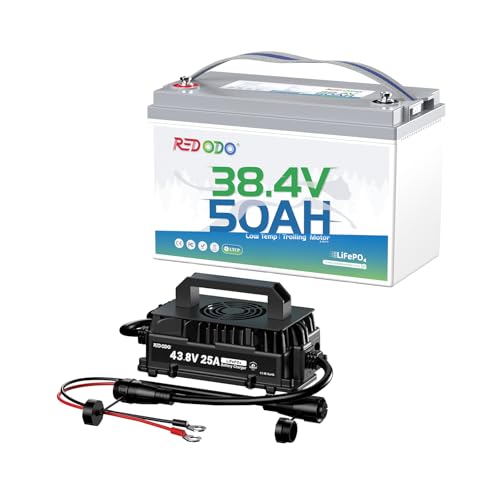
Redodo 36V 50Ah Trolling Motor LiFePO4 Battery

Redodo 16V 30Ah LiFePO4 Battery for Fish Finder
Why These Options Stand Out
A complete starter kit for solar newcomers, this Redodo bundle pairs a 12V 100Ah LiFePO4 cell (lithium iron phosphate, a chemistry prized for thermal stability and thousands of deep cycles) with a dedicated 14.6V 20A charger so nothing has to be sourced separately. For most home backup builds, that single-pack approach keeps wiring simple while still delivering roughly 1280Wh of usable storage.
The standout feature is the built-in Bluetooth 5.0 BMS (battery management system, the onboard circuitry that protects against overcharge, over-discharge, and short circuits). You can check state of charge from the couch without opening a cabinet. Owners running a small inverter fridge or communications gear in a remote cabin will appreciate the real-time visibility, and the low-temp cutoff stops charging below freezing to protect cell longevity.
The Good Stuff
- Bluetooth 5.0 monitoring via phone app for voltage, current, and remaining capacity
- Low-temperature charging protection preserves cells below 32°F
- Pair-and-go bundle includes a matched 20A charger
- Full recharge cycle wraps up in roughly five hours
Honest Caveats
- The 50Ah sibling is easier to wrestle into a tight RV bay
- Heating function is passive; winter charging still pauses until temps rise
Key Specs
Right Fit For
Solar beginners who want monitoring and a matched charger in a single box.
Swap It Out When
You need raw capacity above 100Ah; the VATRER POWER 12V 300Ah Self-Heating LiFePO4 Battery triples the storage in a similar chemistry.
Half the capacity of its 100Ah sibling but a fraction of the weight, this Redodo 50Ah pack trades bulk for portability. For weekend campers running lights, a small fan, and a phone-charging station, the reduced mass makes it easy to lift in and out of a truck bed.
It recharges in roughly five hours through the bundled 14.6V 10A charger, which keeps generator run-time short on cloudy mornings. Compared to the 100Ah unit above, you lose the Bluetooth module, but you gain a smaller box that fits behind a seat.
What Earns Its Place
- Compact, lighter form factor for tight spaces
- Includes a dedicated 10A charger so no extra purchases are needed
- LiFePO4 cycle life means years of weekend use before capacity drops noticeably
Worth Noting
- 50Ah limits runtime for anything beyond lights and small electronics
- No Bluetooth; state of charge requires a separate meter
Made For
Casual campers and anglers running low-draw gear from a kayak or pop-up tent.
Consider Something Else When
You power a fridge or CPAP overnight; the Redodo 12V 100Ah LiFePO4 Battery with Charger delivers double the capacity in a similar footprint.
The workhorse of the roundup, this VATRER POWER cell triples the capacity of the standard 100Ah Redodo while adding active thermal management. Cabin owners in northern climates, where batteries often sit in unheated sheds, get a heating film that warms the cells before charging kicks in below freezing.
The BMS activates the heater automatically when temperatures drop near 32°F and uses incoming charge current to do the warming, which means you do not lose generator runtime just to thaw the pack. For full-time off-gridders, that single feature is the difference between waking up to a dead bank or a topped-off one.
Features That Help
- 300Ah capacity covers multi-day loads without generator backup
- Self-heating film enables safe charging in sub-freezing temps
- App-based monitoring tracks cell health remotely
- Single-pack design simplifies wiring compared to parallel banks
Things To Consider
- Heater only runs while charging is active; passive storage in extreme cold still drains capacity
- Physically larger and heavier than 100Ah alternatives, plan your mounting
Quick Facts
Best Suited To
Off-grid households in cold regions who charge through solar even in winter.
Look Elsewhere When
You only need a starter pack for weekend trips; the Redodo 12V 50Ah LiFePO4 Battery with Charger is far easier to haul around.
Stepping up to 24V cuts current draw in half compared to a 12V system, which means thinner gauge wiring and less voltage drop across long cable runs in a large RV. This Redodo 24V 100Ah pack delivers around 2560Wh while playing nicely with 24V trolling motors and inverter setups designed for higher voltage input.
You trade the simple drop-in compatibility of a 12V system for efficiency gains that become obvious in rigs running 2000W-plus inverters. For full-time RVers, that single decision reduces heat buildup in the wiring loom and leaves more panel output available for actual loads.
Everyday Advantages
- Lower current at the same wattage simplifies panel-to-battery wiring
- 29.2V 20A charger tops the pack in roughly five hours
- LiFePO4 chemistry rated for roughly ten years of daily cycling
- Single-pack replacement for two 12V AGM (absorbent glass mat) batteries
Room For Improvement
- Requires 24V-compatible inverters and solar charge controllers
- Heavier than a single 12V 100Ah unit, plan for floor-mount installation
Who It Suits Best
RVers and off-gridders running high-wattage inverters who want efficient 24V architecture.
A Better Fit Elsewhere
You run a small cabin with modest 12V loads; the Redodo 12.8V 100Ah LiFePO4 Battery with Charger keeps the system simpler.
The straight-to-the-point option, this Redodo 12.8V 100Ah pack skips the Bluetooth extras and focuses on reliable LiFePO4 storage for first-time solar builders. The 14.6V 10A charger runs slower than the 20A unit in the premium bundle, but it also generates less heat during long charging sessions in enclosed spaces.
Think of it as the no-frills workhorse. Owners commonly report swapping a failing lead-acid bank with this unit and immediately gaining usable depth of discharge (the percentage of total capacity you can safely drain) without the weight penalty.
Points In Its Favor
- LiFePO4 cycle life rated for years of daily use
- 10A charger stays cool even on long summer charge cycles
- Drop-in replacement for group 31 lead-acid footprints
- Lower price than Bluetooth-equipped siblings
Small Caveats
- Slower charging means longer generator run-time on cloudy stretches
- No app monitoring; track state of charge with an external meter
Perfect Match For
Beginners replacing an aging lead-acid setup who want proven LiFePO4 longevity.
Skip It When
You want to check battery status from your phone; the Redodo 12V 100Ah LiFePO4 Battery with Charger adds Bluetooth in the same capacity class.
When your solar rig feeds a 1000W or larger inverter, the limiting factor is often the BMS discharge rating, not raw capacity. This Redodo unit pushes that ceiling to 100A continuous, which translates to roughly 1200W of safe draw before protection kicks in.
The 14.6V 20A charger fills the pack in around five hours, matching the rate at which most residential solar arrays dump energy midday. For full-time van dwellers running induction cooktops or microwave ovens off-grid, the higher discharge headroom removes the brown-out worry during peak cooking.
Benefits That Matter
- 100A BMS handles high-wattage inverters without tripping
- Fast five-hour recharge pairs well with midday solar peaks
- Drop-in fit for marine, RV, and home backup installations
- LiFePO4 cycle rating around 4000 cycles at moderate depth of discharge
A Few Limitations
- Charger fan noise may be noticeable in quiet indoor setups
- No Bluetooth module; rely on inverter readings for state of charge
Feature Snapshot
Built With In Mind
Inverter-heavy solar rigs that need sustained high discharge for cooking and tool use.
Reach For A Different Pick When
You want cold-weather self-heating; the VATRER POWER 12V 300Ah Self-Heating LiFePO4 Battery handles freezing temps better.
Packing 165Ah into a Group 31-sized case is the engineering trick here. The same physical footprint as a typical lead-acid box now holds around 2112Wh, which means existing battery trays in boats and campers can absorb the upgrade without modification.
The included Bluetooth module adds app-based monitoring, and the 14.6V 20A charger finishes a full top-up in roughly eight hours. Compared to the 100Ah sibling above, you pick up meaningful extra runtime while keeping the wiring and mounting identical.
A Strong Showing
- Group 31 dimensions drop into standard trays without bracket modifications
- Bluetooth monitoring adds remote state-of-charge visibility
- 2112Wh capacity covers longer off-grid stretches between charges
Trade Offs
- Eight-hour charge time means cloudy days may require generator backup
- Slightly heavier than standard 100Ah packs, factor into vehicle payload
Whose Shelf It Belongs On
Boat and RV owners with stock Group 31 trays who want extra runtime without rewiring.
Where Another Pick Suits Better
You need much more capacity; the VATRER POWER 12V 300Ah Self-Heating LiFePO4 Battery nearly doubles the storage with similar chemistry.
Anglers running 36V trolling motors with 100 to 120 pounds of thrust know the weight penalty of three lead-acid batteries in series. This Redodo pack consolidates that into a single lithium unit, freeing up serious stern space and cutting roughly 70 pounds from the boat.
The 43.8V 25A charger tops the pack in about two hours, which is fast enough for lunchtime recharges at the marina. For bass boats and walleye rigs, the runtime gain over lead-acid is significant because you can discharge deeper without cell damage.
Everyday Wins
- Single-pack replacement for three 12V batteries in series
- Fast two-hour recharge at the dock
- Significant weight savings improve boat balance and fuel economy
- LiFePO4 depth-of-discharge tolerance extends fishing days
Possible Compromises
- Requires 36V-compatible motor; check your thrust rating before buying
- Higher upfront cost than refurbishing with three budget 12V units
Who Should Grab It
Boat owners running mid-thrust trolling motors who want lighter weight and faster charging.
Not Your Match When
You fish from a kayak with a 12V setup; the Redodo 16V 30Ah LiFePO4 Battery for Fish Finder fits smaller craft better.
Built specifically for fish finders and 360 sonar systems that demand a stable 16V supply, this Redodo pack eliminates voltage dropouts that plague weak marine batteries. Kayak anglers and small-boat fishermen get a dedicated power source that lasts multi-day trips without recharging.
The 18.25V 10A charger fills the pack in around three hours between launches. Owners commonly mount the unit in a dry hatch with a simple fused lead to the transducer, simplifying what used to be a tangled mess of jumpered batteries.
Bright Spots
- Stable 16V output keeps sonar screens flicker-free
- Three-hour recharge fits between morning and afternoon sessions
- Lightweight and compact for kayak hulls
- LiFePO4 chemistry tolerates deep discharge without damage
Minor Gripes
- Limited to fish-finder and low-voltage accessory use; not a general-purpose 12V unit
- 30Ah capacity may need topping up on extended multi-day trips
Who Will Love This
Kayak and small-boat anglers running modern sonar who need reliable dedicated power.
Another Choice May Suit
You need broader household solar storage; the Redodo 12V 50Ah LiFePO4 Battery with Charger serves general off-grid use better.
How To Match The Right Battery To Your Solar Setup
Choosing a 12V solar battery comes down to matching capacity, discharge behavior, and physical size to your specific build. Start by calculating your daily watt-hour consumption: multiply the wattage of each device by the hours you run it, then add a 20 percent buffer for cloudy days. A weekend cabin running lights and a phone charger rarely needs more than 50Ah, while a full-time household with a fridge and laptop will outgrow 100Ah quickly.
Capacity matters, but BMS discharge rating is the silent gatekeeper. A 100Ah battery with a 50A BMS can only deliver 600W before protection trips, which surprises new owners running a 1000W inverter. For high-wattage tools or induction cooking, look for 100A continuous BMS ratings. Cold-climate users should also prioritize self-heating models like the VATRER POWER unit, since standard LiFePO4 chemistry pauses charging below freezing to protect cell longevity. Finally, verify the physical footprint: Group 31 trays fit many boats and RVs without modification, while compact 50Ah packs slip behind seats for portable setups.
What To Weigh Before You Commit
Traps First Timers Fall Into
Underestimating depth of discharge ruins more battery banks than any other mistake. Lead-acid batteries only deliver 50 percent of rated capacity safely, while LiFePO4 handles 80 to 100 percent without damage. Shoppers sometimes buy based on raw amp-hours without accounting for that usable difference, ending up with half the runtime they expected.
Where The Extra Money Goes
Higher-tier batteries earn their premium through three measurable advantages: longer cycle life, smarter BMS protection, and thermal management. A budget cell might survive 2000 cycles before noticeable degradation, while premium LiFePO4 units push past 4000. Cold-weather self-heating adds another layer of cost but eliminates the winter charging blackout that strands off-grid users. For full-time households, that upgrade pays back in avoided generator runtime and extended service life.
Frequently Asked Questions
How long will a 12V 100Ah battery run a fridge?
A typical efficient fridge draws around 50W per hour, and a 100Ah LiFePO4 battery stores roughly 1280Wh. Expect roughly 20 to 24 hours of runtime before reaching an 80 percent depth of discharge, less if ambient temperatures push the compressor to work harder.
Can you connect different LiFePO4 batteries in parallel?
Mixing brands or ages in parallel creates imbalance because internal resistance varies between cells. Stick with identical batteries from the same brand and production run, and keep cable lengths matched to ensure even current sharing across the bank.
Do solar batteries need a special charger?
Standard lead-acid chargers can damage LiFePO4 cells because the voltage profiles differ. Always use a charger specifically rated for LiFePO4 chemistry, ideally one bundled with the battery or sold by the same brand for guaranteed voltage matching.
What does a BMS actually protect against?
A battery management system guards against overcharge, over-discharge, short circuits, and excessive temperature. Higher-rated BMS units also handle larger continuous discharge currents, which matters when running inverters or high-wattage tools from the pack.
Is Bluetooth monitoring worth the extra cost?
For permanent installations, Bluetooth adds convenience and helps catch problems early. For portable setups that get visually inspected before each use, the app adds cost without much practical benefit.
Closing Thoughts
The right battery depends less on raw specs and more on how you actually live with your solar setup. A weekend camper needs portability above all, while a full-time off-grid household values capacity and cold-weather resilience. Match the battery to your real consumption pattern, leave room for growth, and prioritize LiFePO4 chemistry for the long-term cycle life that makes solar storage worthwhile in the first place.