A reliable 12v battery charger keeps seasonal vehicles, daily drivers, and weekend toys ready to roll without the surprise of a dead battery on a cold morning. Whether you store a motorcycle over winter, run a classic car in the garage, or just want a safety net for a seldom-driven truck, the right charger pays for itself the first time it saves you a jump-start. This roundup breaks down ten solid options across budgets and use cases, from tiny maintainers for powersports batteries to heavy-duty workshop units with engine-start capability.
A Side-By-Side Look

Battery Tender Junior 12V 750mA Charger & Maintainer
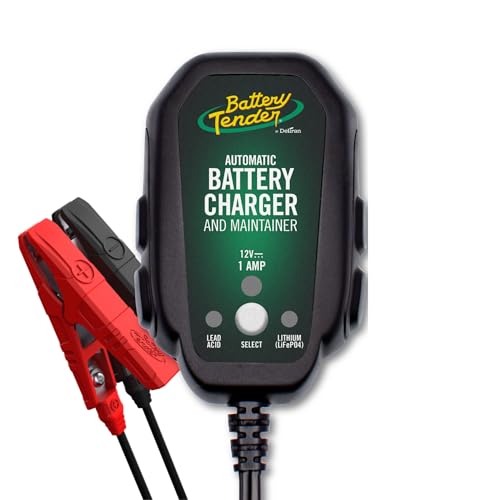
Battery Tender Junior 12V 800mA Lead Acid & Lithium Maintainer

NOCO GENIUS1 1A 6/12V Smart Battery Charger

NOCO GENIUS10 10A 6/12V Smart Battery Charger

NOCO GENIUS5 5A 6/12V Smart Battery Charger

Schumacher Electric 1.5A 6V/12V Charger & Maintainer (SC1355)

Schumacher Electric 6A 6V/12V Charger & Maintainer (SC1308)

Schumacher Electric 6A 12V Charger & Engine Starter (SC1361)

CRAFTSMAN 12A 6V/12V Charger & Maintainer (CMXCESM258)

Schumacher Electric 6A 6V/12V Charger & 100A Starter (SC1281)
More On The Choices That Made The List
Long-term storage is where small batteries die quietly, and the Battery Tender Junior exists for exactly that reason. It delivers a 750mA (milliamp) output, which is a measure of charging current, designed to top off a powersports battery without overcooking it. The four-step program walks the battery through initialization, bulk charge, absorption, and float, so the unit shifts into maintenance mode once full charge is reached. For a motorcycle parked through winter or an ATV that sits between weekends, that kind of hands-off reliability is the whole point.
It works across flooded, AGM (Absorbent Glass Mat, a sealed battery design that resists vibration), and gel cell lead-acid batteries, which covers nearly every powersport battery on the road. Compared to the more advanced NOCO GENIUS1 below, it lacks lithium compatibility and a force mode for deeply discharged packs, but for traditional lead-acid setups it rarely disappoints. Owners commonly leave it connected for months at a time with no manual intervention.
Notable Gains
- Four-step charging program transitions automatically to float mode once the battery tops out
- Compatible with flooded, AGM, and gel cell 12V lead-acid batteries
- Compact size fits on a shelf, workbench, or inside a storage closet without hogging space
- Long-term float maintenance means a stored motorcycle or ATV starts reliably come spring
- Straightforward two-color LED status indicator shows charging state at a glance
Points To Keep In Mind
- 750mA output is gentle, so a deeply discharged battery takes many hours to recover
- Lead-acid only, with no support for lithium (LiFePO4) chemistry
- The alligator clips and ring terminal accessory options are sold separately on some bundles
Made For
Riders and ATV owners who store their vehicles seasonally and want a set-and-forget maintainer that protects against sulfation over the off months.
Skip It When
You run a LiFePO4 lithium battery and need explicit chemistry switching, in which case the Battery Tender Junior 800mA Lithium version further down the list is a better fit.
This Battery Tender Junior variant keeps the same compact form factor as the classic 750mA unit but adds a chemistry toggle on the front. A push of a button switches between lead-acid profiles (AGM, flooded, gel) and a lithium LiFePO4 profile, which is a lithium iron phosphate chemistry prized for its stability and lighter weight. That single switch solves a real headache for riders who have upgraded from old flooded batteries to modern lithium packs and don’t want to own two separate chargers.
The output nudges up slightly to 800mA, which translates to modestly faster top-offs without changing the gentle, maintenance-friendly character. Like its sibling above, it uses an ISM microcontroller, a tiny computer chip that regulates voltage and current through each charging stage. Where the original Junior is lead-acid only, this one future-proofs your garage against chemistry changes without forcing a bigger or pricier unit.
Bright Spots
- Front-panel button toggles between lead-acid and LiFePO4 lithium profiles
- 800mA output gives a slight speed bump over the classic 750mA version
- Same compact, shelf-friendly footprint as the original Battery Tender Junior
- ISM microcontroller manages multi-stage charging automatically
Things To Consider
- Still on the slower side for reviving a deeply discharged battery
- No engine-start assist or heavy-duty mode for automotive-sized packs
- Switching chemistry means a small extra step before each charging session
Best Suited To
Owners who have already upgraded to lithium powersport batteries or who plan to, and want one charger that handles both battery worlds without buying a second unit.
A Better Fit Elsewhere
Anyone charging a car, SUV, or larger engine bay will get more practical value from the Schumacher Electric 6A 12V SC1361 reviewed below, which offers engine-start assist.
The GENIUS1 takes the already-small NOCO formula and shrinks it further while bumping output over its predecessor. At 1 amp, it’s still firmly in the maintenance and slow-charge category, but it adds 6V support alongside 12V, which opens the door to vintage motorcycles, classic tractors, and small riding mowers. Lithium-ion LiFePO4 compatibility rounds out a chemistry list that covers practically any battery sitting in a typical garage.
It’s a tidy unit that disappears on a shelf and never feels precious. Compared to the Battery Tender Junior above, the GENIUS1 supports both 6V and 12V systems and adds lithium support in a single device, while the Junior needs the chemistry-switching version for that flexibility. For a small battery that just needs to stay topped up between rides, the 1A output is plenty.
Key Advantages
- Handles 6V and 12V lead-acid plus lithium LiFePO4 batteries in one unit
- Very compact housing fits inside crowded garage shelves or a saddlebag
- Multi-stage charging transitions to float mode without manual steps
- Can remain connected indefinitely for long-term storage maintenance
Honest Caveats
- 1A output means longer recovery times on larger or deeply discharged batteries
- Accessory options like eyelet terminals are typically separate purchases
- No engine-start function, so it’s a maintainer first, not a rescue tool
Right Fit For
Owners of mixed batteries across a small property, from a 6V tractor to a 12V motorcycle, who want one compact charger on the bench instead of a pile of dedicated units.
Reach For A Different Pick When
You frequently need to revive a dead car battery quickly, in which case the NOCO GENIUS10 below brings ten times the output and far faster recovery.
The GENIUS10 is the heavyweight of the NOCO maintainer family and steps into real charger territory with a 10A output. That current rating matters: a 10A unit can bring a deeply discharged car battery back from the dead in a few hours rather than overnight, which is the difference between “stuck waiting” and “drive to work.” It also adds a desulfator, a feature that sends pulsing current into the battery to break down lead sulfate crystals that build up when a battery sits unused, plus temperature compensation that adjusts voltage based on ambient conditions to avoid overcharging in summer or undercharging in winter.
A force mode lets the unit start charging even on a battery whose voltage has dropped below the typical threshold for automatic detection. That’s a real recovery feature for a battery that’s been sitting dead for months. Compared to the GENIUS1 above, this is the same chemistry list and 6V/12V flexibility with far more muscle. The trade-off shows up in size and current draw at the wall outlet, which is unavoidable for the extra power.
Where It Delivers
- 10A output handles large car, truck, and marine batteries in reasonable timeframes
- Built-in desulfator helps recover neglected batteries that have sat discharged
- Temperature compensation adjusts charging profile for hot and cold environments
- Force mode initiates charging on deeply discharged packs below normal voltage
- Compatible with 6V and 12V lead-acid (wet, gel, AGM) and lithium LiFePO4 batteries
Some Limits To Know
- Larger and heavier than the GENIUS1 or GENIUS5, so it lives on a bench rather than a shelf
- Higher current draw on the outlet during heavy charging
Feature Snapshot
Who It Suits Best
Home mechanics and serious enthusiasts who push batteries to their limits, run multiple vehicles, or need to recover deeply discharged packs rather than just maintain them.
Where Another Pick Suits Better
Casual owners of small powersport batteries get more practical value from the Battery Tender Junior 750mA Charger reviewed earlier, which costs less and does the job for motorcycle-sized packs.
The GENIUS5 lands in the middle of the NOCO lineup, offering a 5A output that bridges the gap between the tiny GENIUS1 and the bigger GENIUS10. That middle position is genuinely useful: it’s enough current to charge a car battery overnight or a lawn tractor battery in a couple of hours, but small enough to live on a shelf without dominating the space. Like the rest of the GENIUS family, it handles 6V and 12V lead-acid plus lithium LiFePO4 batteries with the same multi-stage profile.
Where the GENIUS10 adds desulfation and a force mode, the GENIUS5 stays focused on the core charging and maintenance job. For most households running a couple of cars, a riding mower, and a powersport vehicle, 5A covers all of it without the bulk of the 10A unit. Compared to the Schumacher Electric 1.5A SC1355 below, this NOCO brings lithium compatibility and a more aggressive multi-stage profile to the table.
The Upside
- 5A output balances charging speed with a manageable bench footprint
- Supports 6V and 12V lead-acid plus LiFePO4 lithium batteries
- Multi-stage program transitions to float mode for indefinite connection
- Works on cars, lawn tractors, boats, and powersport vehicles
- Compact housing compared to the larger GENIUS10
Trade Offs
- Lacks the desulfator and force mode of the higher-output GENIUS10
- Still slower than a dedicated 10A or 12A charger for emergency recovery
Who Should Grab It
Multi-vehicle households that want one charger to handle cars, tractors, and powersports with enough speed to actually charge a battery, not just maintain one.
Look Elsewhere When
You also want engine-start assist in the same unit, in which case the Schumacher Electric SC1361 reviewed below adds that capability alongside maintenance charging.
The Schumacher SC1355 is a basic 1.5A maintainer designed to do one job reliably at a sensible price point. It charges, maintains, and reconditions 6V and 12V batteries including standard, AGM, and deep-cycle types, so a wide range of small to mid-sized vehicles fits the bill. The reconditioning step is worth calling out: it sends a controlled higher-voltage pulse into the battery to gently recover capacity that has dropped from sitting unused.
For owners who simply want to keep a seldom-driven car, motorcycle, ATV, truck, or boat battery topped up through the off-season without paying for bells and whistles, the SC1355 hits the target. Compared to the NOCO GENIUS1 above, the Schumacher trades lithium LiFePO4 support for a slightly higher 1.5A output and a built-in reconditioning mode. The honest read is that this is a no-frills workhorse, not a feature showcase.
Useful Highlights
- Charges, maintains, and reconditions batteries in a single 3-in-1 device
- Works across 6V and 12V standard, AGM, and deep-cycle battery types
- Affordable price point for budget-conscious shoppers
- Suitable for cars, motorcycles, ATVs, trucks, SUVs, and boats
Things To Weigh
- No lithium LiFePO4 compatibility
- 1.5A output means slower recovery than 5A or 10A units
- Lacks diagnostic features found on higher-tier Schumacher models
Quick Facts
Whose Shelf It Belongs On
Shoppers who need a simple, affordable charger-maintainer for one or two vehicles and don’t need lithium support or advanced diagnostics.
Swap It Out When
You regularly charge larger automotive batteries and want faster turnaround, in which case the CRAFTSMAN CMXCESM258 reviewed later delivers 12A rapid charging.
Schumacher calls the SC1308 a six-in-one unit, and the spec sheet backs it up. It combines a 6V and 12V charger, a battery maintainer, an engine starter, a battery tester, an alternator tester, and a desulfator into one bench unit. For a garage tinkerer who likes to know what’s happening electrically, having the tester and alternator diagnostics built in is a quiet value-add that replaces a few standalone tools.
The 6A output puts it squarely in the mid-tier charging range, which is a meaningful step up from the SC1355 above for actual charging work. Compared to the NOCO GENIUS5, the SC1308 adds engine-start assist and diagnostics but skips lithium LiFePO4 support, so the choice depends on whether you value emergency starting capability or modern battery chemistry more.
Points In Its Favor
- Six-in-one design consolidates charger, maintainer, starter, and diagnostic tools
- Built-in battery and alternator testers surface charging system issues
- 6A output charges automotive batteries in reasonable timeframes
- Engine-start assist handles emergency situations
- Desulfator helps recover batteries that have sat discharged for extended periods
Worth Bearing In Mind
- Lead-acid focus means no support for lithium LiFePO4 batteries
- Bench-style form factor takes up more space than compact maintainers
- More features mean more buttons and modes to learn upfront
Who Should Grab It
Garage hobbyists who want one device to charge, test, start, and diagnose, and who work on vehicles with traditional lead-acid batteries.
Not Your Match When
You primarily maintain lithium-powered powersport vehicles, in which case the NOCO GENIUS5 above gives you chemistry switching in a smaller package.
The SC1361 trims the SC1308 down to three functions, but the one it keeps front and center is engine starting. This 3-in-1 unit runs as a 12V charger, a maintainer, and an engine starter, with a 6A charging rate for routine top-offs and a high-amp start mode for turning over stubborn engines. On farms and in workshops where a tractor or truck occasionally sits too long, that start capability turns a dead morning into a quick recovery instead of a delay.
By dropping 6V support and the diagnostic tester functions of the SC1308, this unit keeps the focus tight on charging and starting. Compared to the NOCO GENIUS10 above, the Schumacher trades lithium compatibility and desulfation for a more traditional, workshop-oriented build. For users who run 12V lead-acid systems across multiple heavy vehicles, it’s a practical, sturdy tool.
Everyday Advantages
- Engine-start assist handles dead batteries in farm and workshop settings
- 6A charging rate tops up automotive batteries in reasonable timeframes
- Float-mode maintenance allows long-term connection during storage
- Durable construction suited to workshop and garage environments
- Simpler control layout than the multi-function SC1308
Potential Compromises
- 12V only, with no 6V support for classic vehicles
- Lead-acid focus without lithium LiFePO4 compatibility
- Heavier and bulkier than compact maintainer-style units
Feature Card
Right Fit For
Farmers, rural property owners, and home mechanics with 12V lead-acid vehicles who need a reliable starter-mode charger for occasional dead mornings.
Consider Something Else When
Your fleet includes a classic 6V vehicle, in which case the Schumacher Electric SC1281 further down offers both 6V and 12V support with a higher engine-start rating.
The CRAFTSMAN CMXCESM258 brings the highest routine charging rate on this list at 12 amps, which means genuinely fast top-offs for larger batteries. It supports 6V and 12V systems across standard, AGM, 12V lithium LiFePO4, and deep-cycle battery types, so the chemistry coverage is among the broadest available here. The 4-in-1 design bundles rapid charging, 3A 12V charging, 2A 6V charging, and a maintenance mode into one microprocessor-controlled unit.
That 12A rapid mode is the headline: a deeply discharged car battery can move from flat to drivable in a couple of hours rather than overnight. Compared to the NOCO GENIUS10 above, the CRAFTSMAN delivers more peak current but lacks the desulfator and force-mode recovery features. Where the GENIUS10 is the technician’s tool, the CRAFTSMAN is the workhorse built for fast routine charging.
Reasons It Performs
- 12A rapid charge mode revives large batteries quickly
- Supports standard, AGM, LiFePO4 lithium, and deep-cycle battery types
- Handles 6V and 12V systems across vehicles and equipment
- 4-in-1 design combines rapid charging, standard charging, and maintenance
- Microprocessor-controlled profile adjusts output to battery condition
- Dependable brand recognition in home garage tool circles
A Few Limitations
- Larger footprint than 1A through 5A maintainer units
- Higher current draw on the outlet during rapid charging cycles
- No engine-start assist, unlike the Schumacher SC1281 below
Spec Overview
Perfect Match For
Owners of large-battery vehicles, deep-cycle applications, and properties with mixed 6V and 12V systems who want the fastest routine charging this list offers.
Not Your Match When
You need engine-start assist in addition to charging, in which case the Schumacher Electric SC1281 reviewed below adds a 100A start function.
The SC1281 is the most rescue-oriented unit on this list, pairing a 6A automatic charger and maintainer with a 100-amp engine start function. That combination matters when you need to turn over a stubborn truck, SUV, or large V8 that has sat dead through a cold snap. The fully automatic profile shifts from bulk to absorption to float without manual steps, so leaving it connected during long storage is safe.
It supports 6V and 12V systems, so classic car owners and modern vehicle drivers can share one unit. Compared to the CRAFTSMAN CMXCESM258 above, the Schumacher trades lithium LiFePO4 support for a higher engine-start rating and proven workshop-grade build. For owners who want emergency starting capability alongside routine maintenance, this is the most capable unit on the list.
Benefits That Matter
- 100A engine start function revives dead batteries in trucks and SUVs
- 6A charging rate handles routine top-offs in reasonable timeframes
- Fully automatic multi-stage charging for safe long-term connection
- Supports 6V and 12V systems for classic and modern vehicles
- Designed for garage, workshop, and emergency use
Practical Considerations
- Lead-acid focus without lithium LiFePO4 chemistry support
- Heavier and bulkier than compact maintainer units
- Engine-start function requires proper gauge cabling and a strong outlet
Built With In Mind
Owners of larger gasoline vehicles who occasionally face dead batteries and want one unit to both charge and start, without calling a service truck.
Reach For A Different Pick When
You charge lithium LiFePO4 batteries in powersport vehicles, in which case the Battery Tender Junior 800mA Lithium version reviewed earlier handles that chemistry more safely.
What To Match Before Picking Your Charger
Start with the battery type sitting in your vehicle. Lead-acid flooded, AGM, and gel batteries are nearly universal in older cars, while many newer motorcycles and powersport vehicles ship with lithium LiFePO4 packs that need explicit chemistry support. A charger without the right profile can either undercharge or damage the battery over time, so this single choice rules out a chunk of the market immediately.
Output current matters more than most shoppers expect. A 750mA to 1A maintainer is fine for topping off a small motorcycle battery that already has decent charge, but reviving a deeply discharged car battery at those rates takes days. Plan on at least 5A to 10A if you regularly charge dead batteries from flat, and look for 10A or higher if you want fast turnaround. Engine-start assist is a separate feature that adds bulk but solves a different problem entirely: it provides a short burst of high current to crank a stubborn engine.
Voltage support is the third filter. Modern vehicles run 12V systems, but classic cars, vintage tractors, and some motorcycles use 6V batteries. A 6V/12V switchable unit covers both worlds without buying a second charger, which is helpful for households with mixed fleets. Look for multi-stage charging profiles (bulk, absorption, float) and temperature compensation if your garage swings between hot summers and freezing winters, since those features adjust output to ambient conditions.
Smart Considerations For Smarter Charging
Traps First Timers Fall Into
A common mistake is grabbing the cheapest charger on the shelf and assuming any 12V unit works on any 12V battery. Chemistry mismatch is the silent killer here. Charging a lithium LiFePO4 battery with a profile designed for flooded lead-acid can push voltages the lithium chemistry wasn’t built to absorb, shortening its life. Check the battery label first, then match the charger’s supported chemistry list.
Another trap is underestimating how long “trickle charging” really takes. A 750mA charger can take 24 to 48 hours to bring a moderately discharged car battery back to full, which feels broken even when it’s working correctly. Anyone who actually drives daily should pick at least 5A of output for routine charging, reserving sub-1A maintainers for batteries that are already topped up and just need to hold their charge through storage.
What Separates Premium From Basic
Higher-tier models earn their place through three upgrades: faster recovery, recovery features, and chemistry flexibility. A 10A to 12A output cuts charging time dramatically, which matters when the goal is driving the vehicle that day rather than waiting until tomorrow. Desulfation, force mode, and temperature compensation all target batteries that have been neglected or exposed to extreme conditions, and they’re the difference between a charger that maintains and one that recovers.
Lithium LiFePO4 compatibility rounds out the premium tier. As more powersport and even some automotive applications shift to lithium, a charger that handles both chemistries in one unit is genuinely future-proof. The trade-off is price and size: more capable units cost more and take up more bench space. For a single motorcycle or a one-car garage, a compact maintainer is plenty; for a multi-vehicle property with mixed chemistries, the bigger unit earns its keep quickly.
Frequently Asked Questions
How long does a 12v battery charger take to fully charge a dead battery?
It depends on the charger’s amp output and the battery’s capacity. A 1A charger needs roughly 24 to 48 hours to bring a moderately discharged car battery back to full, while a 10A unit can do the same job in 4 to 8 hours. Smaller powersport batteries charge proportionally faster because they hold less energy.
Can I leave a 12v battery charger connected indefinitely?
Modern smart chargers with multi-stage profiles, including float mode that holds the battery at full charge without overcooking it, are designed for long-term connection. Owners commonly leave them plugged in for months at a time during off-season storage, though it’s worth inspecting the cables and connectors occasionally for wear.
Do I need a different charger for lithium batteries?
Yes, if your battery is lithium LiFePO4 chemistry. Standard lead-acid charging profiles push voltages that can shorten a lithium battery’s life. Look for a charger with an explicit lithium mode or chemistry switch, like the Battery Tender Junior 800mA or the NOCO GENIUS5, before connecting it to a lithium pack.
What’s the difference between a charger and a maintainer?
A charger delivers higher current to bring a battery from low to full charge, while a maintainer delivers a gentle trickle that keeps an already-charged battery topped up during storage. Many modern units do both, automatically shifting from charging to maintenance once the battery reaches full voltage.
Is engine-start assist the same as a jump starter?
Not exactly. Engine-start assist in a charger delivers a short, controlled high-current burst through the same cables used for charging, which works for many dead-battery situations. A portable jump starter uses an internal battery to deliver that burst without being plugged in, which is more convenient away from an outlet but adds another device to own and charge.
Closing Remarks
The right 12v battery charger depends less on raw specs than on the vehicles you actually own and how often those batteries go flat. A compact Battery Tender Junior handles motorcycle storage with zero fuss, while a NOCO GENIUS10 or CRAFTSMAN CMXCESM258 brings real charging muscle for daily drivers and dead-battery mornings. Match the chemistry, size the output to your biggest battery, and the rest of the decision tends to sort itself out.