RVs sit in storage lots for months, then hit rough two-lane roads the moment you tow them out. The battery underneath needs a real enclosure, not a prayer, and that’s where a purpose-built battery box earns its keep. Inside this guide, you’ll find ten RV battery boxes and accessories that handle vibration, weather, and the occasional forgotten vent cap without drama. Whether you’re upgrading a weekend rig or wiring a full-time coach, there’s a fit here for your specific setup.
The Main Contenders

Ancor 113505 Tinned Copper Battery Cable 4 AWG Red 50ft

SeaSense Battery Box Series 27 Black

Attwood 9067-1 Vented Battery Box Group 27 Black

MEGAWARE KEELGUARD BatteryGuard Protector Group 31

YYST Battery Box Hold-Down Strap Kit Anti-UV
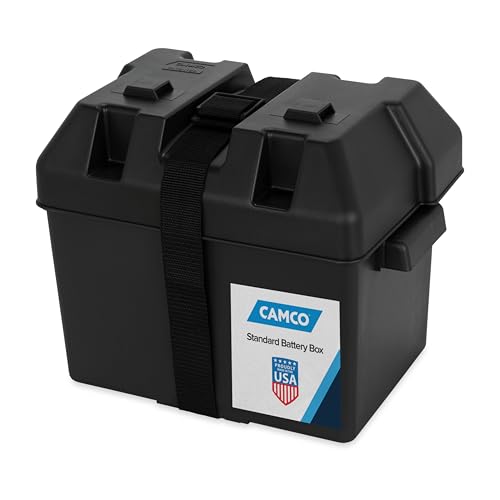
Camco Heavy Duty Group 24 Battery Box 55363

Valterra A10-3300 White Battery Box Louver

NOCO Snap-Top BGU1 Battery Box Group U1

GOODTIMES Battery Box Hold-Down Strap Kit 78-Inch

Allstar Performance ALL76100 Steel Battery Mounting Box
More Details On Our Top Picks
Wiring is the unglamorous part of any battery box upgrade, and that’s exactly why the Ancor 113505 earns the top slot. It’s a 50-foot spool of 4 AWG (a heavy-duty wire gauge capable of carrying high current over distance) tinned copper cable, individually stranded and plated to fight corrosion in damp under-chassis environments. If you’re running a new battery feed from a coach battery to an inverter, or replacing crusty factory leads, this is the kind of bulk wire that makes the rest of the installation feel solid.
Unlike the enclosures further down this list, this pick is purely about the connection. You bring your own terminals, lugs, and heat shrink, which seasoned DIYers actually prefer. For most weekend RVers who already own a decent crimper, the flexibility and corrosion resistance are worth every foot.
A Favorable Mix
- Tinned copper strands resist corrosion far longer than bare copper in humid RV bays
- Type 3 stranding (many fine wires woven together) keeps the cable flexible around tight bends and through grommets
- Meets UL 1426, US Coast Guard charter boat, and ABYC (American Boat & Yacht Council) standards for marine-grade use
- 50-foot length covers a full coach run plus a few extra feet for slack and mistakes
Points To Note
- Red insulation only, so a second black run of the same cable is required for negative leads
- 4 AWG may be heavier than necessary for low-draw accessories like lights or water pumps
Made For
RVers rewiring a battery bay from scratch or upgrading factory leads on a coach battery bank.
Look Elsewhere When
The SeaSense Battery Box Series 27 is the better match for owners who need an actual enclosure rather than replacement wire.
If the Ancor cable above handles the wiring, the SeaSense Battery Box Series 27 handles everything around it. This is a vented polyethylene enclosure sized for Group 27 batteries (a common automotive/marine battery size measuring roughly 12 x 6.75 x 9 inches), with a covered vent cap on top that lets hydrogen gas escape while keeping rain out. The polyethylene construction shrugs off battery acid splashes and road salt, which matters if your RV spends winters anywhere near the coast.
Compared to the heavier marine boxes further down, the SeaSense keeps things simple. You get a battery strap, stainless steel mounting hardware, and a lid that pops on and off without tools. For most towable RVs with a single Group 27 house battery, the dimensions land in the sweet spot between capacity and footprint.
Everyday Wins
- Vented top with cover balances safety against rain intrusion better than a sealed box
- Polyethylene frame resists corrosion from battery off-gassing over time
- Included battery strap and stainless hardware eliminate a separate parts run
- Available in four size variants to fit battery groups from 24 through 31
Trade Offs
- Polyethylene can fade or become brittle after years of UV exposure without a cover
- Lid is not lockable, which is a concern for batteries mounted in accessible exterior compartments
Right Fit For
Standard RV installs with one Group 27 battery that need venting but not a heavy-duty marine rating.
A Better Fit Elsewhere
The Attwood 9067-1 Vented Battery Box is a smarter match when ABYC and Coast Guard compliance matters for insurance or marina use.
The Attwood 9067-1 is the box you reach for when the installation needs to clear an inspector. It’s built to meet ABYC Standard E-10 and U.S. Coast Guard Specification 183.420, the same benchmarks that govern proper marine battery compartments. For coastal RVers and dual-use boat/RV owners, that paperwork-grade compliance is genuinely useful rather than marketing fluff.
Beyond the certifications, the construction is acid-resistant and built for permanent mounting. The hold-down strap keeps the battery seated against vibration on rough roads, while the vented lid channels gas safely outside. If your RV occasionally crosses into a trailered boat slip, this is the safer spec.
Everyday Advantages
- Meets ABYC E-10 and USCG 183.420, so marina and insurance requirements are handled
- Acid-resistant body holds up to spills that would stain lesser enclosures
- Mounting strap is sized for standard Group 27 footprints without modification
- OEM-grade construction, making it a straightforward replacement for factory boxes
Honest Caveats
- Pricing reflects the certification, so the premium may be overkill for a weekend camper that never sees saltwater
- Group 27 only, so larger Group 31 banks will need a different box
Who It Suits Best
Coastal RVers and dual-use trailer owners who need spec-grade compliance and acid-resistant construction.
Consider Something Else When
The Camco Heavy Duty Group 24 Battery Box covers you at a friendlier price for inland installs that don’t need marine certification.
Vibration kills batteries long before they wear out chemically, and that’s exactly what the MEGAWARE BatteryGuard attacks. Rather than a hard enclosure, it’s a 12.75 x 6.88-inch shock-absorbing mat that sits beneath the battery inside your existing box. It dampens road shock from washboard gravel, potholed highways, and rough water crossings for anyone towing a boat or running off-pavement.
You’d pair this mat with one of the vented boxes already on this list, so think of it as an upgrade rather than a standalone solution. For overlanders, semi-truck drivers, and Class A coaches bouncing down dirt access roads, it adds a meaningful layer of protection.
A Strong Showing
- Cushioned design absorbs road shock that would otherwise crack internal battery plates
- Fits Group 31 trays, which is the largest common RV battery size
- Multi-vehicle use, so the same mat moves between boat, RV, and truck as needed
- Simple drop-in installation requires no tools or hardware
Worth Bearing In Mind
- It does not replace a hard enclosure, so you still need a box or tray around it
- Adds roughly 0.375 inches of height, which matters in shallow compartments
Built With In Mind
Off-road RV owners and anyone running Group 31 batteries on washboard surfaces for extended stretches.
Swap It Out When
The Attwood 9067-1 Vented Battery Box handles the job on its own if you mostly travel on paved highways without chronic vibration concerns.
Sometimes the box itself is fine, but the strap that came with it has gone crispy from sun exposure. The YYST Hold-Down Strap Kit is a two-pack replacement system built from anti-UV heavy-duty nylon, paired with stainless steel cam buckles and four mounting eyes. You get two 54-inch straps, which is enough for a single battery box on most RVs.
The hardware is 316 stainless, a marine-grade alloy that resists pitting in salt air far better than standard 304. For owners running desert sun or coastal humidity, that upgrade alone often justifies the swap.
Positive Takeaways
- Anti-UV-treated nylon outlasts untreated PP straps in sun-exposed bays
- 316 stainless buckles and eye mounts resist rust through repeated wet-dry cycles
- 54-inch length fits standard Group 24 and 27 battery trays
- Complete kit includes screws, so no separate hardware store trip
Possible Compromises
- Straps are not adjustable to a cut-to-fit length, so very large trays may run short
- Two-pack format leaves no spare if one strap is damaged during install
Best Suited To
RVers replacing a sun-damaged factory strap with hardware that survives salt and UV exposure.
Reach For A Different Pick When
The GOODTIMES Battery Box Hold-Down Strap Kit is a better match for oversized trays that need 78 inches of strap.
Camco’s 55363 is the workhorse box that shows up in countless OEM RV builds. It’s a Group 24-sized polypropylene enclosure with a lift-off lid, woven hold-down strap, foot clamps, and stainless screws included in the box. The polypropylene build is corrosion-resistant and lightweight, which is exactly what RV manufacturers want when shipping a rig across the country.
It also meets USCG CFR 183.420 and ABYC E-010.7, so you’re not sacrificing certification for the friendlier price. For most entry-level and mid-size RVs with a single Group 24 house battery, this is the sensible baseline.
The Value In It
- Polypropylene construction keeps weight low without sacrificing chemical resistance
- USCG and ABYC compliance matches more expensive marine boxes
- Lift-off lid allows quick water checks without removing the strap
- Complete with strap, foot clamps, and stainless hardware in one package
Things To Consider
- Group 24 footprint only, so larger batteries won’t seat properly without modification
- Lid does not lock, which is a concern for exposed exterior mounts
Who Should Grab It
Entry-level RV owners running a standard Group 24 battery who want spec compliance without a premium price.
Where Another Pick Suits Better
The Attwood 9067-1 Vented Battery Box steps up to Group 27 capacity when the house bank is larger than 24.
At A Glance
The Valterra A10-3300 isn’t a box, it’s a fix. This white plastic louver snaps into the side of an existing battery compartment to vent hydrogen fumes safely outside the RV body. Batteries off-gas hydrogen during charging, and a sealed bay without proper venting is the kind of issue that fails inspection on older coaches.
At 4.25 x 4.25 inches outside, it accommodates a 1.75-inch hose for routing fumes to the exterior. For owners retrofitting a vintage motorhome or repairing a cracked original louver, this is a small but essential part.
Strong Points
- Routes hydrogen fumes safely outside the RV body
- Drop-in replacement for worn or broken original louvers
- Accommodates standard 1.75-inch vent hose
- Compact 4.25 x 4.25-inch footprint fits tight exterior panels
Things That May Matter
- Only replaces the vent louver, so a full battery box is still required separately
- White plastic may yellow over years of UV exposure on sun-facing walls
Perfect Match For
RV owners retrofitting or repairing an existing battery bay that needs proper fume venting.
Skip It When
The Camco Heavy Duty Group 24 Battery Box is the better starting point if you’re building a battery bay from scratch.
NOCO’s BGU1 is built around a snap-lock lid that does away with the cam buckle entirely. The rugged top clicks into place over a Group U1 battery (a compact 12V format used in lawn mowers, generators, and small equipment) and can be removed just as quickly for water checks. Pre-drilled pilot holes let you mount it directly to a tray or floor without buying a separate strap kit.
For most small RV applications, this format works when space is at a premium and the battery itself is a smaller lawn-and-garden size rather than a full Group 24 or 27 house bank.
Reasons It Performs
- Snap-lock lid eliminates strap fumbling during routine battery checks
- Pre-drilled internal pilot holes support direct mounting without a strap
- Rugged construction handles vibration on generator trailers and equipment carriers
- Cross-compatible with generators, gate openers, and lawn equipment
Practical Considerations
- Group U1 size is smaller than typical RV house batteries, so it’s not a direct replacement
- Snap lid may wear under repeated temperature cycling in extreme climates
Whose Shelf It Belongs On
RVers running a small backup battery in a generator bay or accessory compartment.
Not Your Match When
The Camco Heavy Duty Group 24 Battery Box is the right fit for standard RV house battery installations.
Quick Facts
The GOODTIMES kit solves the most common frustration with battery straps: not enough length. At 78 inches per strap, this pair handles oversized trays, deep compartment bays, and dual-battery setups where standard straps run short. The 600D webbing (a heavy denier rating indicating thick, durable woven fabric) is anti-UV and cuts cleanly to whatever length you actually need.
Hardware matches the YYST kit above, with stainless cam buckles and four mounting eyes, plus an extra screw in the box. For owners retrofitting unusual battery bays, the extra length is the deciding factor.
Bright Spots
- 78-inch length accommodates oversized and dual-battery trays
- Anti-UV 600D webbing holds up to direct sun exposure
- Cut-to-fit design lets you trim the strap after installation
- Includes mounting hardware so the install is a single trip to the RV
Less Ideal Details
- Excess strap length creates slack that has to be coiled or trimmed neatly
- Two-pack format with no spare if one cam buckle fails mid-trip
Who Will Love This
RV owners with deep or oversized battery bays that standard 50-inch straps can’t reach across.
Another Choice May Suit
The YYST Battery Box Hold-Down Strap Kit is a tidier match for shallow bays where shorter straps are an asset.
Feature Snapshot
The Allstar ALL76100 is a steel battery tray, not a sealed plastic box, and that distinction matters for some builds. At 11.75 x 7.25 inches of usable interior and a lightweight steel frame with frame hooks, it bolts into custom fabrication projects without forcing you into a specific brand footprint. It’s a workshop favorite for race trailers and DIY motorhome conversions where the battery location is being designed from scratch.
Steel does require attention to corrosion, so paint or coating is a wise add-on. For most production RVs, a vented plastic box like the Camco or Attwood makes more sense, but for custom builds, the Allstar tray opens up placement options other boxes can’t match.
The Good Stuff
- Lightweight steel frame handles vibration and heat better than plastic
- Frame hooks accept common hold-down hardware for custom mounting
- Full-size dimensions fit large Group 24 and 24F batteries
- Includes hold-down hardware for a complete install
A Few Limitations
- Steel requires paint or coating to resist rust in humid battery bays
- Open tray design offers no protection from debris or accidental terminal contact
Made For
Custom RV builders and race trailer fabricators designing battery placement from the ground up.
Where A Sibling Pick Shines
The Camco Heavy Duty Group 24 Battery Box is the smarter retail choice for production RV owners who need a sealed, compliant enclosure.
Feature Rundown
What To Weigh Before Choosing Battery Boxes For Rv
Battery group size is the first filter, since a Group 24 box won’t seat a Group 31 battery no matter how well it’s built. Match the interior dimensions of the box to the actual battery footprint you carry, then check the height clearance against your compartment lid.
Material is the next decision. Polypropylene and polyethylene are light and corrosion-resistant, which suits most RV bays where weight and humidity matter. Steel trays offer stronger mounting for custom builds but demand paint or coating to fight rust. For coastal RVers and dual-use boat/RV owners, acid-resistant plastic with proper venting is the safer long-term pick.
Ventilation is non-negotiable for any sealed battery bay. Hydrogen gas accumulates during charging, and a louvered vent like the Valterra A10-3300 is what routes that gas safely outside. ABYC and USCG certification (independent safety standards set by marine industry bodies) signals the box has been engineered with venting in mind, so certified boxes are worth the modest premium for any sealed installation.
Vibration control matters more than most owners expect. The MEGAWARE BatteryGuard mat absorbs road shock that cracks internal plates, which is the leading cause of premature battery failure. Pair a quality box with a cushioned mat and your batteries will outlast the ones sitting on bare metal.
Key Considerations Across These Picks
Mistakes Worth Dodging
The most common error is buying a box that doesn’t actually fit the battery group you own. Measure the length, width, and height of your current battery before ordering, then compare against the box’s interior dimensions. A loose-fitting battery slides around inside the box, which defeats the purpose of the enclosure entirely.
Another trap is assuming any plastic box is vented. Sealed boxes trap hydrogen gas, and that becomes a hazard in a closed compartment. Look for explicit venting or pair a sealed box with a separate louver like the Valterra A10-3300 to route fumes outside.
Where The Extra Money Goes
Premium boxes like the Attwood 9067-1 charge more for ABYC and USCG certification, plus acid-resistant materials that survive spills. For coastal RVing or boat-RV dual use, that upgrade is meaningful. For inland weekend camping on paved sites, a value pick like the Camco 55363 covers the same core function at a friendlier price.
Longer strap kits like the GOODTIMES 78-inch set cost more than standard 50-inch straps, but the extra length eliminates the need to splice or extend, which is a hidden cost most owners forget. Spending a bit more upfront on hardware that fits your actual bay saves the time and frustration of a mid-install parts run.
Frequently Asked Questions
What battery group size fits a standard RV battery box?
Most RV battery boxes target Group 24 or Group 27 batteries, which are the two most common house battery sizes. Larger coaches running big inverter banks may use Group 31, which requires a box sized specifically for that footprint, like the MEGAWARE mat.
Do RV battery boxes need to be vented?
Yes, any sealed battery bay should vent hydrogen gas outside the RV. Look for a box with a built-in vent cap, like the SeaSense Series 27 or Attwood 9067-1, or pair a sealed box with an external louver such as the Valterra A10-3300.
Can a battery box be used outdoors on an RV?
Yes, marine-grade RV battery boxes are designed for exterior mounting on the tongue or chassis. Polypropylene and polyethylene resist corrosion from rain and road salt, and stainless hardware keeps the hold-down strap functional through wet-dry cycles.
Is a steel battery tray better than a plastic box?
Steel trays handle heat and vibration better than plastic, making them a workshop favorite for custom builds. Plastic boxes are lighter and corrosion-resistant, so they suit production RVs better. The honest read is that each material has its place, depending on the installation.
How often should battery box straps be replaced?
Inspect straps and buckles annually for UV damage, fraying, or rust. Anti-UV nylon straps like the YYST and GOODTIMES kits last several years in normal sun exposure, but extreme climates may shorten that window.
The Takeaway
The right battery box for your RV comes down to matching group size, certifying venting, and choosing a material that fits your climate. Coastal and dual-use owners get the most from ABYC-certified plastic boxes, while off-road travelers pair any box with a vibration-absorbing mat. Start with the dimensions of your battery, then narrow by use case, and you’ll land on the right pick from this list without much fuss.