A loose marine battery on a choppy lake is more than an inconvenience. The right enclosure keeps terminals protected, holds the box in place when the hull slams a wave, and vents any hydrogen gas that builds up while the cells charge. For pontoons, skiffs, jon boats, sailboats, and trailer setups that sit at the ramp for hours, a proper battery box turns a vulnerable power source into a secure, code-aware part of the boat. You do not need the heaviest option, only one that fits the battery group you already own and handles the way you actually use the craft. The ten choices below cover Group 24, Group 27, dual 6-volt, and relocation trays, so you can match the right box to your setup without guessing.
The Lineup, Simplified

Attwood 9067-1 Vented Battery Box with Mounting Strap, Fits Group 27

Sidasu Stainless Steel Battery Box for Group 27 Marine
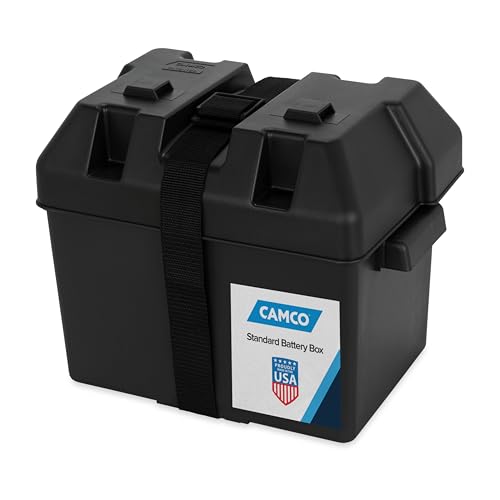
Camco Heavy Duty Group 24 Marine RV Battery Box (Black)

Valterra A10-3300 White Battery Box Louver

NOCO HM462 Dual L16 Commercial-Grade Battery Box
Metal Steel Battery Mounting Box Tray Bracket DIY, Fits up to 10.63″ × 7.06″ × 7.5″

Peastorm Trailer RV Marine Battery Box 12V Waterproof (Group 27 Black)

Battery Mounting Box Tray, Fits up to 10.63″ × 7.06″ × 7.5″ (Black)
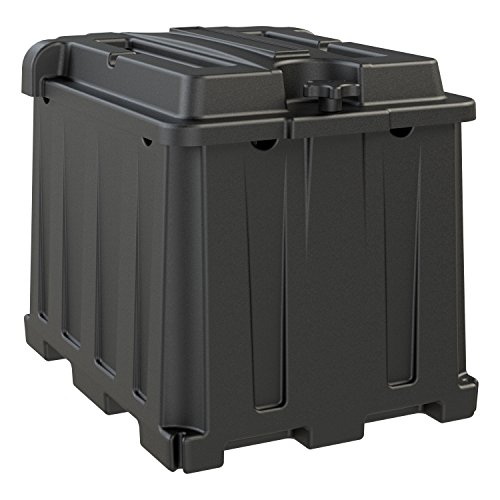
NOCO HM426 Dual 6V GC2 Commercial-Grade Battery Box

Allstar Performance ALL76100 Lightweight Steel Battery Mounting Box
A Breakdown Of The Leading Choices
Group 27 is the workhorse size behind most mid-sized outboards and trolling setups, and this Attwood box was designed around that exact footprint. The vented lid lets hydrogen escape during charging, which matters on any boat where the bilge can trap fumes. A woven hold-down strap drops over the top and hooks to the molded feet, so the whole assembly stays put when the hull pounds a wake.
For owners of small fishing boats and pontoons who want a no-drama install, this is the box most people picture. The polypropylene body shrugs off the splash zone and the strap keeps the lid seated if the boat rolls. You trade away a heavy steel feel, but you get something that is light enough to lift one-handed and durable enough to last several seasons.
Where It Delivers
- Vented lid design supports safer hydrogen off-gassing during charging sessions.
- Woven strap with foot clamps keeps the box anchored to the deck on rough water.
- Group 27 fit means the most common deep-cycle sizes drop right in without shimming.
- Lightweight body makes seasonal removal and battery swaps faster.
Worth Noting
- Polypropylene can fade or chalk after years in direct sun, so a cover helps.
- Not a sealed box, so it suits dry storage compartments more than open bilge water.
Key Specs
Who It Suits Best
Weekend anglers and pontoon owners running a single Group 27 deep-cycle who want a vented, strap-down box that drops into a standard battery compartment.
Where Another Pick Suits Better
Saltwater boaters who want a stainless enclosure should look at the Sidasu Stainless Steel Battery Box, which trades weight for corrosion resistance.
Stainless steel changes the feel of a battery install. The Sidasu box sits heavier on the deck, locks the lid down with a real latch, and shrugs off the kind of corrosion that eats through standard coated trays in a few saltwater seasons. Compared to the Attwood 9067-1’s polypropylene body, this is the box you pick when you want hardware-grade protection.
The advertised max battery size of about 13.0″ L by 7.5″ W by 10.0″ H leaves enough room for the Group 27 form factor plus terminal posts and cable bends. You may find the extra weight noticeable when stepping the battery in and out, but that same mass keeps the box planted when the boat hits a steep chop.
Useful Strengths
- Stainless construction resists rust in brackish and saltwater environments.
- Lockable lid design adds a layer of theft and tamper resistance at the dock.
- Roomy interior clearance handles Group 24 and Group 27 sizes in one enclosure.
Trade Offs
- Heavier than polypropylene boxes, so handling on smaller boats takes effort.
- Larger footprint may not fit tight compartments built around the Attwood 9067-1.
Made For
Boat owners running coastal or offshore trips who want a corrosion-resistant, lockable enclosure for a Group 24 or Group 27 battery.
Look Elsewhere When
Trolling motor anglers who want a lighter relocation kit should look at the Peastorm Trailer RV Marine Battery Box, which is easier to reposition season to season.
Group 24 is the smaller sibling to Group 27, and Camco’s model 55363 is the box most weekend boat owners end up holding. Inside lid dimensions around 7-1/4″ wide by roughly 13″ long match the standard Group 24 plate, with enough slack for top-post terminals. A lift-off lid and woven hold-down strap round out the kit.
The build is corrosion-resistant polypropylene, which keeps the weight manageable when you are carrying the box down a dock ladder. Compared to the Attwood 9067-1, this one targets a slightly smaller battery and tends to slot into RV compartments as cleanly as into small boat wells. For most low-fuss setups, the installation is a strap, two foot clamps, and four stainless screws.
Benefits That Matter
- Lightweight polypropylene body is easy to lift in and out of tight bilge spaces.
- Includes strap, foot clamps, and stainless screws for a complete install.
- Designed to align with USCG CFR 183.420 and ABYC E-010.7 expectations for safety.
Points To Keep In Mind
- Group 24 capacity, so a Group 27 battery will not seat properly inside.
- Polypropylene can chalk under years of UV exposure without a protective cover.
Right Fit For
Boat and RV owners running a Group 24 battery who want a code-aligned, lightweight box that installs in well under an hour with basic tools.
Consider Something Else When
Anyone stepping up to a Group 27 battery should look at the Attwood 9067-1 Vented Battery Box, which is built around that larger footprint.
Not every battery box problem is about the box itself. The Valterra A10-3300 is a replacement louver vent cover that mounts on the side of an existing RV or marine battery box, routing fumes outside through a 1-3/4″ hose port. The outside dimensions sit around 4-1/4″ by 4-1/4″, small enough to drop into a cutout without restructuring the compartment.
For owners whose existing enclosure is still structurally sound but has a cracked or missing vent, this part is a clean swap. It also helps anyone upgrading a setup to meet ventilation expectations for an indoor or enclosed battery bay.
Useful Touches
- Routes hydrogen fumes out of the box through a 1-3/4″ hose port.
- Compact 4-1/4″ by 4-1/4″ face fits standard cutouts.
- Direct replacement for many factory louver covers on RV battery boxes.
Small Caveats
- Only the louver, so you still need a compatible battery box to mount it on.
Key Specs
Who Will Love This
RV owners with a damaged or missing battery box vent who want a direct replacement part rather than a full enclosure swap.
Not Your Match When
Anyone needing a complete battery box should look at the Camco Heavy Duty Group 24 Marine RV Battery Box, which includes the enclosure, lid, and strap.
Step past Group 24 and Group 27, and the battery world shifts to L16 cells, the tall, deep-cycle units used in solar banks, floor scrubbers, and off-grid cabins. The NOCO HM462 is built around a pair of those L16s, with large cable entry holes sized for heavy-gauge wiring and a captive lid that stays attached during service.
Full-flow ventilation and a sizable acid reservoir inside the box give a margin of safety during heavy charge cycles. The four-corner fastening system is the kind of detail that matters when the box lives in a working shop or a vibrating utility compartment.
Notable Upsides
- Designed to house two L16 batteries side by side, the standard large-format cell.
- Large cable entry holes accept heavy-gauge inverter and charger wiring.
- Full-flow ventilation reduces gas buildup during long absorption charge stages.
Points To Note
- Oversized for a single Group 24 or Group 27 boat battery.
- Commercial footprint demands a planned mounting surface.
Key Specs
Best Suited To
Off-grid owners, solar installers, and small workshop operators running dual L16 banks who need a commercial-grade enclosure with proper cable management.
Swap It Out When
Boaters running a single Group 27 deep-cycle should reach for the Attwood 9067-1 Vented Battery Box, which is sized and vented for that smaller profile.
Not every install needs a sealed enclosure. This steel mounting tray is aimed at DIY engine bays, off-road rigs, and trailer builds where the battery sits in a visible spot and the priority is rigid mounting. The advertised capacity tops out around 10.63″ long by 7.06″ wide by 7.5″ tall, which catches most small to mid-sized 12V cells.
Perforated round holes punched through the side walls help with air circulation and keep water from pooling in the tray. A direct bolt-in design means you can drop it onto an existing mounting plate without fabricating brackets. Compared to the JY Performance tray covered later, this one leans toward a simpler open-frame feel.
Bright Spots
- Steel plate construction handles vibration and weight without flexing.
- Side perforations improve airflow and reduce water retention in the tray.
- Bolt-in design suits custom engine bay and trailer projects.
Factors To Consider
- Open design leaves terminals exposed, so care is needed during installation.
- Best paired with a secured battery hold-down for marine use.
Key Specs
Perfect Match For
DIY builders and off-road owners who want a rigid, bolt-in steel tray in a visible engine bay or trailer setup.
A Better Fit Elsewhere
Coastal boaters needing a sealed, vented enclosure should look at the Sidasu Stainless Steel Battery Box, which keeps saltwater and spray off the terminals.
When the battery needs to relocate from the original compartment to a transom, a kayak hatch, or a tongue-mounted tray, the box becomes part of the system, not just a cover. The Peastorm enclosure is a coated steel relocation kit sized for Group 27 cells, with side handles, a lockable top cover, and rubber-grommeted cable pass-throughs.
Owners of small craft and trolling motor setups use this kind of box to push weight aft, free up deck space, or keep the cell out of a wet bilge. The integrated lock and the included fixing screws mean most installs go in with a drill and a few minutes of measurement.
What Pays Off
- Steel body with a black coating resists splash and sun exposure.
- Lockable top cover protects the battery at the dock or in the truck bed.
- Side handles make the box easier to reposition between trips.
Some Limits To Know
- Heavier than polypropylene boxes, so plan mounting for the extra mass.
- Best with the included hold-down hardware for any marine or trailer use.
Built With In Mind
Kayak anglers, trolling motor users, and trailer boaters who want to relocate a Group 27 battery into a more accessible, lockable spot.
Another Choice May Suit
Anyone who would rather keep the battery inside the original hull compartment can use the Attwood 9067-1 Vented Battery Box and skip the relocation step.
The JY Performance tray aims at the same small-to-mid battery footprint as the earlier steel tray, but bundles a complete hold-down kit out of the box. You get a 14.38″ by 7.25″ by 6.5″ coated steel bracket, a hold-down angle bar, zinc-plated J-bolts, washers, and nylock nuts in one package.
That collection of hardware matters for a first-time installer who does not want to source fasteners separately. The 12-gauge steel and black coated finish land in the practical zone, rigid enough for daily use without the cost of a stainless build.
A Favorable Mix
- Includes hold-down bar, J-bolts, washers, and nylock nuts for a full install.
- 12-gauge steel with a black coated finish resists corrosion without painting.
- Fits common 10.63″ by 7.06″ batteries without modification.
Honest Caveats
- Open design leaves terminals exposed, so clean wiring is critical.
- Coating can scratch under heavy use, so a touch-up helps long term.
Whose Shelf It Belongs On
Garage tinkerers and budget-conscious DIYers who want a rigid steel tray with all the hold-down hardware in one package.
Reach For A Different Pick When
Boaters needing a sealed, vented enclosure should consider the Camco Heavy Duty Group 24 Marine RV Battery Box, which protects the terminals from spray.
House banks on larger boats, golf carts, and many RV setups run a pair of 6V GC2 golf cart batteries in series for higher reserve capacity. The NOCO HM426 is built around that exact pair, with the same four-corner fastening system, captive lid, and large cable entry holes as the larger HM462 L16 box.
Compared to the HM462, this one targets a smaller footprint, so it fits where two GC2 cells are the design point, not two L16 industrial units. Owners commonly report that the captive lid and the heavy cable entries make routine service much faster, since the lid never walks off to the back of the garage.
Practical Pluses
- Houses two 6V GC2 batteries for 12V series house banks.
- Captive lid design keeps the cover attached during inspections.
- Large cable entries handle inverter and charger wiring without adapters.
Worth Bearing In Mind
- Bulkier than a single 12V box, so plan a flat, well-supported mount.
Right Fit For
RVers, cruising boaters, and golf cart owners who run a dual 6V GC2 house bank and want a commercial-grade enclosure with proper cable routing.
Where A Sibling Pick Shines
Off-grid solar users running larger L16 cells should look at the NOCO HM462 Dual L16 Commercial-Grade Battery Box for the taller format.
Race shops and hot rod builders tend to want a battery tray that mounts cleanly, keeps the cell anchored through vibration, and does not fight the rest of the chassis. The Allstar Performance ALL76100 is a full-size steel tray at 11-3/4″ wide by 7-1/4″ deep, with frame hooks and the hold-down hardware included in the kit.
Compared to the JY Performance tray covered earlier, this one is sold more as a complete race-style kit. For weekend projects, that means one fewer trip to the hardware store and a cleaner final install.
The Good Stuff
- Full-size steel tray handles common 12V automotive and marine batteries.
- Frame hooks plus included hardware speed up the install.
- Lightweight steel keeps overall chassis mass in check.
Practical Considerations
- Open tray, not a sealed box, so it suits dry chassis bays more than wet bilges.
- No finish specified beyond raw steel, so many owners paint or coat before install.
Who Should Grab It
Weekend hot rod and race project builders who want a clean, ready-to-mount steel tray without sourcing separate hold-down parts.
Skip It When
Boat owners needing vented marine protection should look at the Attwood 9067-1 Vented Battery Box, which is purpose-built for hull use.
Matching A Marine Battery Box To The Way You Boat
Start with the battery group you already own. Group 24, Group 27, dual 6V GC2, and L16 cells all need different internal dimensions, and forcing a tight fit is a common way to crack a box during install. Measure the longest side, the width across the terminals, and the height including any vent caps, then add about a quarter inch on each axis for cable bends and post clearance. That simple step rules out most sizing regrets before they happen.
Ventilation is the next call. Lead-acid batteries off-gas hydrogen during the absorption stage of charging, and an enclosed bilge can trap that gas faster than you expect. A vented lid, a louver like the Valterra A10-3300, or an open steel tray in a well-aerated bay are the three main approaches. For sealed AGM or lithium cells, the gas concern drops, but a sturdy mount still matters because lithium packs dislike physical shock and a loose cell can crack a case on a hard wave.
Material choice follows the environment. Polypropylene boxes like the Camco 55363 keep weight low and shrug off casual splash, which suits freshwater weekend use. Stainless steel handles saltwater and theft-prone docks at the cost of extra pounds. Coated steel trays land in the middle and pair well with custom engine bay installs where a sealed enclosure is not the goal. Mounting is the part people underestimate: a strap alone is rarely enough on a boat that sees real chop, so a foot clamp, a hold-down bar, or a four-corner fastening system earns its keep the first time the hull pounds a wave.