A sump pump that quits the moment the power goes out is exactly when you need it most. Battery backup sump pumps pick up where your primary pump leaves off, running on stored energy while the grid stays dark. The right system depends on your basement’s flood risk, pit depth, and how long outages tend to last in your area.
Homeowners in storm-prone regions, finished basements, and anyone storing valuables below grade all benefit from a layer of protection the primary pump alone can’t deliver. This guide walks through full systems, standalone pumps, and the deep-cycle batteries that power them so you can match the right setup to your home.
A Fast Comparison Of The Options

NPP HR12280W 12V 85Ah Sealed Lead Acid Battery

VIOPUMPO 2500W Sump Pump Backup Battery System

Basement Watchdog Big Dog CONNECT (BWD12-120C)

Wayne Preassembled Primary & Backup Combo System

NPP 12V 110Ah AGM Deep Cycle Battery (Group 31)

NPP 12V 80Ah AGM Deep Cycle Battery (Group 24, 2 Pack)
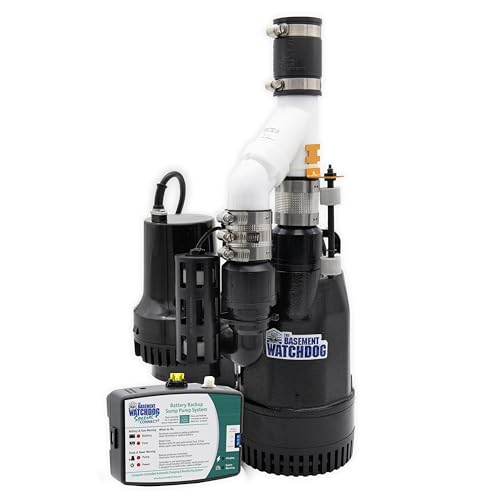
Basement Watchdog Combo CITS-50 System

Basepump RB750-EZ Water Powered Backup System

NPP 12V 40Ah AGM Deep Cycle Battery (2 Pack)
A Closer Look At Each Pick
The NPP HR12280W sits in the heavy-output tier of sealed lead-acid batteries, rated at 12V 85Ah and built around a gel-style construction that resists leaks. That makes it a practical drop-in reserve for higher-draw sump pump systems and other demanding standby roles. It pairs naturally with the full backup systems later in this list when a longer runtime matters more than a compact footprint.
For homeowners with a finished basement or a sump that cycles often, the higher amp-hour rating translates directly into more hours of protection per charge. It’s heavier and bulkier than the smaller Group 24 and U1 batteries further down the list, so plan for a sturdy shelf or rack near the pump. Installation is straightforward as long as the terminals, vent space, and charging specs line up with your existing backup controller.
Well-Handled Touches
- Sealed gel design cuts routine maintenance and resists acid spills in basement air.
- Higher amp-hour reserve supports extended outages without a generator.
- Versatile fit across UPS, sump, and solar standby setups.
- Stable output under sustained draw suits high-cycle sump pits.
Things To Consider
- Heavier than smaller AGM options, so shelf placement needs to handle the weight.
- Larger footprint may not suit tight sump pits where space is limited.
Key Product Details
Who It Suits Best
Homeowners with high-draw backup systems in spacious pits who want longer runtime per charge.
Consider Something Else When
The NPP 12V 80Ah AGM Deep Cycle Battery is a lighter, more compact Group 24 alternative when shelf space is tight.
The VIOPUMPO 2500W system takes a different route than the standalone pumps below: it converts stored DC battery power into clean AC through a pure sine wave inverter. That matters because some pump motors, especially older or higher-horsepower models, run more quietly and reliably on sine wave output than on modified square wave alternatives. The automatic switchover hands off the load the instant grid power drops, so the pit keeps moving without manual intervention.
The included LCD remote controller is the kind of detail installers appreciate, giving you real-time readouts without climbing down to the pit. In our view, this is more of an integrator’s pick than a DIY weekend project, since wiring an inverter into a sump circuit calls for basic electrical comfort. For homes with a single high-horsepower pump on a dedicated circuit, this is one of the more capable inverter-based options on the market.
Everyday Wins
- Pure sine wave output runs sensitive pump motors cleanly and quietly.
- Automatic switchover keeps protection hands-off during outages.
- LCD remote surfaces system status without bending over the pit.
- Generous 2500W headroom handles demanding pump circuits.
Honest Caveats
- Inverter integration is more involved than a direct 12V backup pump swap.
- Battery is sold separately, so total cost scales with the reserve you choose.
- Worth noting that the system’s full capability depends on a properly sized battery bank.
Right Fit For
Homeowners with high-horsepower pumps who want sine wave power and prefer a remote status readout.
Look Elsewhere When
The Basement Watchdog Big Dog CONNECT is a simpler DC-style system if you’d rather avoid inverter wiring.
The Big Dog CONNECT is Basement Watchdog’s high-flow backup pump, and the 3,500 GPH rating puts it near the top of the category for sheer throughput. The copper-wound motor is a quiet flex: copper windings tend to last longer and handle heat better than aluminum alternatives in continuous-duty situations. A built-in USB port accepts an optional WiFi module for push, text, or email alerts when you’re away from the house.
For homes where the sump sees serious inflow during big storms, the higher flow rate means the pit empties faster and cycles less often, which directly extends battery runtime. Compared to the Wayne combo system later in the list, this is a backup-only design that bolts onto your existing primary pump rather than replacing the whole setup. Depending on your pit geometry, the bigger pump body may need a wider basin or more clearance around the float.
Why It Works Well
- 3,500 GPH throughput handles heavy inflow during major weather events.
- Copper-wound motor supports long service life under heat stress.
- USB port enables remote monitoring through an add-on WiFi module.
- Remote terminal accepts home-security system integration.
- User-friendly control panel simplifies setup and diagnostics.
Trade Offs
- WiFi module is sold separately, so connectivity adds to total cost.
- Larger pump body needs adequate clearance around the float switch.
Feature Snapshot
Made For
Homes in storm-prone regions with high-inflow sump pits that need serious backup capacity.
Swap It Out When
The Basement Watchdog Combo CITS-50 is a more complete primary-plus-backup package if you want both pumps installed together.
Wayne’s preassembled combo arrives with the primary pump and battery backup already mounted on a shared base, which removes most of the fiddly plumbing that scares off first-time installers. The 1/2 HP primary moves serious water, and the top-suction design helps reduce clogging from debris that tends to settle in the pit. For new construction or a full sump replacement, this is one of the easier paths to a complete, code-friendly installation.
The system needs a deep-cycle battery (either a 40Ah or 75Ah unit, sold separately) to deliver meaningful backup runtime. Compared to the Basement Watchdog Big Dog CONNECT, this is more of a turnkey replacement rather than a backup-only add-on. The honest read is that preassembly saves a Saturday, but the battery choice still drives how long you stay protected when the lights go out.
Where It Delivers
- Factory preassembly dramatically shortens installation time.
- Top-suction primary design reduces clogging from pit debris.
- 1/2 HP primary handles typical residential inflow confidently.
- Combined system layout simplifies code and inspection approvals.
Points To Note
- Battery is sold separately and not included in the package.
- Runtime depends on which deep-cycle battery you pair with the system.
Quick Facts
Best Suited To
Homeowners replacing a full sump system who want both primary and backup pumps installed at once.
A Better Fit Elsewhere
The Basement Watchdog Combo CITS-50 is a comparable preassembled package with 24-hour self-monitoring built in.
NPP’s 110Ah AGM battery brings Group 31 sizing to the sump pump backup conversation, and the higher amp-hour count buys meaningful extra runtime over the Group 24 option below. The sealed AGM (absorbent glass mat) design means no acid spills, no fluid checks, and safe indoor mounting with basic ventilation. It also supports series and parallel configurations, so you can scale up to 24V-48V inverter systems if your backup ambitions grow.
At roughly 69.4 lbs and measuring just under 13 inches long, this is a substantial battery that wants a sturdy shelf near the pump. The T16 terminals are common in deep-cycle applications, but verifying fit with your existing controller before ordering is worth the minute it takes. For homeowners who want one battery to cover sump, solar, RV, and off-grid needs, this is the most versatile reserve in the lineup.
Everyday Perks
- 110Ah capacity delivers extended runtime for sump backup use.
- Sealed AGM design means no maintenance and no acid spills.
- Vibration-resistant build suits mobile and stationary applications.
- Series and parallel flexibility supports 24V-48V system expansion.
Some Limits To Know
- Heavy at around 69 lbs, so placement needs a solid surface.
- T16 terminals should be verified against your backup controller before purchase.
Spec Overview
Who Should Grab It
Homeowners who want maximum runtime in a single battery and may expand into solar or off-grid use later.
Reach For A Different Pick When
The NPP 12V 80Ah AGM Group 24 battery is a lighter, more compact reserve when shelf space is the main constraint.
The Group 24 NPP battery is the most common size for residential sump backup controllers, which makes it a near-universal swap for aging reserves. The 80Ah rating sits in the comfortable middle of the lineup: bigger than the compact 40Ah option below, smaller than the Group 31 heavy hitter above. Two batteries per pack give you either a parallel runtime boost or a series path to higher-voltage inverter setups.
The sealed AGM design keeps maintenance to zero, and the T14 terminals are familiar to anyone who has worked on a backup system before. It’s a practical fit for a wide range of sump backup pumps, security panels, and mobility devices. You may find the dimensions worth a quick tape-measure check before ordering, since Group 24 footprints vary slightly between manufacturers.
Real-World Strengths
- Common Group 24 fit matches most residential sump backup controllers.
- Sealed AGM chemistry requires no routine fluid or terminal checks.
- Two-pack format supports parallel runtime or series voltage expansion.
- Versatile across sump, UPS, security, RV, and mobility applications.
Trade-Offs To Consider
- Group 24 dimensions vary slightly, so verifying your tray space is worth the effort.
- Mid-tier capacity means shorter runtime than the Group 31 option above.
The Right Fit
Homeowners replacing existing Group 24 reserves who want a balanced runtime in a familiar form factor.
Where Another Pick Suits Better
The NPP 12V 110Ah AGM Group 31 battery is a stronger reserve when you need every extra hour of outage coverage.
The Basement Watchdog Combo CITS-50 ships preplumbed and preassembled, so the install day is mostly about lowering the unit into the pit and connecting the discharge. The included monitoring controller watches pump, power, and battery conditions around the clock and sounds an alarm if anything drifts out of spec. The 1/2 HP copper-wound PSC (permanent split capacitor) motor is built for energy-efficient long-life operation.
For homeowners who want backup and primary pumps working together from day one, this combo simplifies the install in a way that bare backup pumps can’t. The WiFi-capable controller accepts an add-on module for push and email alerts, mirroring the connectivity story on the Big Dog CONNECT earlier. Compared to the Wayne combo, the CITS-50 leans harder into self-monitoring, which is the kind of detail that pays off when you’re traveling during storm season.
Strong Points
- Preplumbed assembly cuts the install down to a half-day project for most homeowners.
- 24-hour monitoring of pump, power, and battery conditions reduces surprise failures.
- Copper-wound PSC motor balances energy efficiency with long service life.
- WiFi-capable controller supports remote alerts through an add-on module.
Potential Drawbacks
- WiFi module is sold separately, so remote alerts add to total cost.
- Battery is not included and must be sourced separately for full functionality.
Whose Shelf It Belongs On
Homeowners who want a complete primary-plus-backup system with active self-monitoring from the controller.
Skip It When
The Basement Watchdog Big Dog CONNECT is a better fit when you need higher flow and already have a working primary pump.
The Basepump RB750-EZ breaks the category’s unspoken rule: it doesn’t need a battery at all. Powered entirely by municipal water pressure, it kicks in automatically when the primary pump fails or loses power, and it keeps running as long as the water utility stays pressurized. For regions where outages stretch into days, that’s a fundamentally different protection story than a battery that drains in hours.
The trade-off shows up in flow capacity: at up to 15 gallons per minute under rated conditions, it moves serious water, but the operating cost is metered water usage during every cycle. Owners commonly report this as a worthwhile exchange during extended outages, especially in homes where battery runtime would have run dry before the grid returned. Depending on your water rates, the operating cost can add up across multiple storm events each year.
Where It Excels
- No battery, charger, or generator required for operation.
- 15 GPM capacity handles serious backup flow during extended outages.
- Automatic activation when the primary pump fails or loses power.
- Unlimited runtime as long as municipal water pressure stays on.
Honest Caveats
- Uses metered municipal water, so operating cost scales with each cycle.
- Requires adequate household water pressure to deliver rated flow.
Perfect Match For
Homeowners in regions with frequent multi-day outages and reliable municipal water pressure.
Another Choice May Suit
The NPP 12V 110Ah AGM Group 31 battery paired with a DC backup pump is a better fit where metered water cost matters more than unlimited runtime.
The NPP 40Ah battery uses the standard Group U1 footprint, the smallest common case size in residential sump backup systems. That makes it the right reserve for tight sump pits, crawl-space installations, and replacement scenarios where shelf space is genuinely limited. Two batteries per pack let you run them in parallel for extended runtime or in series for 24V, 36V, or 48V mobility systems.
The T14 nut-and-bolt terminals are familiar to installers who have worked on small-format backup systems before. Capacity sits at the lower end of the lineup, so this is a fit for lighter-duty pumps and shorter expected outage windows. Worth noting that the Group U1 dimensions can vary between brands, so a quick check against your existing battery tray is worth the minute it takes before ordering.
What It Does Well
- Compact Group U1 footprint fits tight sump and crawl-space installations.
- Sealed AGM design means zero routine maintenance indoors.
- Two-pack format supports parallel runtime and series voltage expansion.
- Common T14 terminals simplify replacement in existing backup systems.
Worth Bearing In Mind
- Smaller 40Ah capacity means shorter runtime than larger batteries in this list.
- Group U1 tray dimensions vary, so verifying fit before ordering is wise.
Built With In Mind
Homeowners with tight sump pits or compact backup systems who need a small-footprint reserve.
Not Your Match When
The NPP 12V 80Ah AGM Group 24 battery offers noticeably more runtime in a still-compact Group 24 case.
What To Weigh Before Choosing Battery Backup Sump Pumps
Match The Pump To The Pit
Pump capacity, measured in gallons per hour (GPH), needs to match your basement’s inflow during peak storms, not just average conditions. Homes in regions with heavy snowmelt or frequent cloudbursts benefit from higher GPH ratings like the 3,500 figure on the Basement Watchdog Big Dog CONNECT. For quieter residential cycles, a 1/2 HP combo like the Wayne system covers most needs comfortably.
Battery Capacity Drives Runtime
Amp-hour (Ah) ratings translate directly into hours of protection per charge cycle, and the gap between a 40Ah battery and a 110Ah unit is substantial. A 110Ah reserve like the NPP Group 31 can outlast a smaller battery through long overnight outages. Match the Ah rating to your typical outage length and the cycling behavior of your primary pump.
Pure Sine Wave Vs. Direct DC
Inverter-based systems like the VIOPUMPO 2500W convert battery DC into AC power that mimics grid electricity, which some pump motors prefer. Direct DC backup pumps connect straight to a 12V battery with no conversion step, which keeps the system simpler and the cost lower. The choice comes down to whether your existing pump is sensitive to waveform quality.
Decide Between A Pump Or A Battery
Some entries in this list are complete backup pump systems, while others are standalone batteries meant to pair with an existing backup pump. Homeowners building a system from scratch need both; those replacing an aging battery just need the reserve. The Basement Watchdog combo systems deliver both at once, while the NPP batteries are pure replacements.
Plan For Monitoring
Modern backup systems increasingly include self-monitoring controllers that track pump, power, and battery health around the clock. The Basement Watchdog CITS-50 leans hard into this category, while simpler batteries rely on occasional manual checks. Connected features usually come through an optional WiFi add-on rather than built-in, so factor that into your setup plan.
Smart Choices Across These Picks
Common Buying Traps
The most common slip-up is undersizing the battery for the actual cycling behavior of the sump. A 40Ah reserve paired with a high-inflow pump drains faster than owners expect during a long storm. Verify pump draw in amps, multiply by expected runtime hours, then size the battery with headroom to spare.
Another trap is forgetting that battery backup pumps need their own maintenance cycle even when the grid is healthy. AGM batteries like the NPP line require minimal attention, but periodic terminal checks and charger testing still matter. Skipping that step leads to silent failures right when you need protection most.
Where The Extra Money Goes
Higher-tier systems earn their cost through better motors, smarter controllers, and stronger connectivity. The Basement Watchdog Big Dog CONNECT adds a copper-wound motor and remote alert capability that budget backup pumps skip. For finished basements or high-value storage, that extra capability translates into real protection during multi-day events.
Premium batteries like the NPP 110Ah Group 31 cost more than basic reserves, but the longer runtime per charge means fewer replacement cycles over a decade. For homeowners who would rather replace a battery every eight years than every four, the upgrade is straightforward. The honest read is that premium matters most when the consequences of failure are high.
Frequently Asked Questions
How Long Will A Battery Backup Sump Pump Run During An Outage?
Runtime depends on battery capacity and how often the pump cycles. A 110Ah battery like the NPP Group 31 typically powers a moderate-duty backup pump for roughly 10 to 14 hours of intermittent use. Lower-capacity reserves like the 40Ah option deliver fewer hours per charge.
Can A Battery Backup Sump Pump Replace The Primary Pump?
Battery backup systems are designed to assist, not replace, the primary pump. The Basement Watchdog combo systems integrate both, but standalone backups like the Big Dog CONNECT work alongside your existing primary. Running the backup as a primary shortens battery life significantly and isn’t how these systems are sized.
Do Sump Pump Backup Batteries Need Maintenance?
Sealed AGM batteries like the NPP lineup are maintenance-free for fluid and acid checks. Periodic terminal inspection and annual charger testing still help confirm the system is ready when the grid drops. Wet-cell batteries, by contrast, require regular water checks and ventilation management.
How Do I Know What Size Battery My Backup Pump Needs?
The battery size is usually specified by the pump manufacturer in amp-hour requirements. Most residential backup pumps call for batteries between 40Ah and 110Ah. Matching the battery group size and terminal type to your controller is just as important as the Ah rating.
Is A Water Powered Backup Better Than A Battery Backup?
Water-powered backups like the Basepump RB750-EZ run indefinitely on municipal pressure but consume metered water during each cycle. Battery backups use stored energy with no operating cost but have a finite runtime per charge. The right answer depends on local water rates, outage duration, and pressure reliability.
Closing Thoughts
The right battery backup sump pump setup depends on your pit, your pump, and how long the grid tends to stay down. Full systems like the Basement Watchdog combos give you primary and backup together, while standalone batteries like the NPP lineup refresh an existing reserve. For unlimited runtime on municipal water, the Basepump RB750-EZ breaks the battery category wide open.
Whichever direction fits your home, sizing the battery to your actual cycling behavior is what separates a setup that protects you through a multi-day outage from one that runs dry halfway through the storm.