A 12V 200Ah LiFePO4 battery sits at the heart of most serious off-grid setups, from weekend RV trips to full-time solar homes. Picking the wrong one means dead fridges at midnight, finicky Bluetooth apps, or a bank that won’t talk to your inverter. The picks below cover mainstream 200Ah models and a few higher-capacity alternatives that solve the same problems at slightly different price and size points.
The Choices Worth Comparing
GOKWH 12V 300Ah LiFePO4 Battery with Bluetooth Smart Monitoring

GOKWH 12V 100Ah Group24 LiFePO4 Lithium Battery with Smart APP

GOKWH 12V 320Ah LiFePO4 Lithium Battery with Smart APP

Litime 12V 200Ah Mini Trolling Motors LiFePO4 Lithium Battery

Litime 12V 200Ah Lithium LiFePO4 Battery for Trolling Motor

Litime 12V 200Ah Mini LiFePO4 Battery with Bluetooth

2-Pack GoKwh 12V 280Ah LiFePO4 Lithium Battery with Bluetooth APP

GOKWH 12V100Ah LiFePO4 Lithium Battery for Trolling Motor (2 Pack)
GOKWH 12V 320Ah LiFePO4 Lithium Battery with Bluetooth APP
Meet The Standout Selections
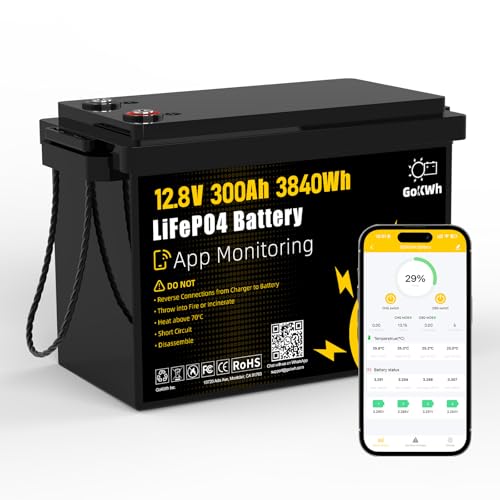
Starting the list at 300Ah rather than a flat 200Ah, this GOKWH unit brings 3840Wh of usable capacity in a single case. The Bluetooth 5.0 module streams live voltage, temperature, and state of charge to a phone, which matters when the battery lives behind a seat or in a sealed compartment you can’t easily open. A 200A battery management system (BMS, the onboard circuitry that protects against overcharge, short circuits, and thermal runaway) handles big inverter surges without flinching.
For shoppers planning a system that grows over time, the ability to wire up to sixteen units into a 4P4S configuration (four in parallel, four in series) opens the door to a 61.44kWh home bank. The honest read is that one of these alone weighs more than a pair of Group 24 100Ah batteries, so plan for mounting space.
Points In Its Favor
- Real-time Bluetooth monitoring means no guessing at state of charge from a voltage reading alone.
- 200A BMS supports heavy inverter loads for microwaves, air conditioners, and induction cooktops.
- Parallel-and-series expandability protects the investment if your power needs double next year.
- Deep-cycle rating of 8000+ cycles translates into roughly a decade of daily use before meaningful capacity loss.
Things To Consider
- The 300Ah case is heavier and bulkier than a true 200Ah model, which may not fit older battery trays.
- Hazmat shipping regulations mean this unit is non-returnable on the retailer; order carefully.
Who It Suits Best
Full-time RVers and homeowners building a solar array that may expand from a weekend cabin to a primary residence.
A Better Fit Elsewhere
The GOKWH 12V 100Ah Group24 fits small camper vans much better, where tray space and weight savings matter more than raw capacity.
For anyone replacing an old Group 24 lead-acid battery (a standard automotive case size roughly 10.25 x 6.8 x 8.9 inches), this 100Ah GOKWH drops into the same tray without rewiring. The 1280Wh capacity and 100A BMS cover typical RV loads: lights, water pump, fridge, phone charging, and a small inverter for laptops. Bluetooth 5.0 ties to a phone app that shows state of charge and fault alerts.
Two of these in parallel double your capacity without taking up much more space, and that pairing strategy solves most weekend-van builds. Compared with the 300Ah unit at pick one, this trades raw capacity for a much friendlier installation in legacy compartments.
Everyday Advantages
- Standard Group 24 footprint slides into existing trays that were never designed for lithium.
- Phone app delivers live state of charge and charge/discharge control from a distance.
- 100A BMS handles most RV essentials, including residential-style fridges.
- 4000-cycle rating easily covers a decade of weekend trips.
Points To Note
- 100A continuous output falls short for large inverters; running a 2000W microwave may trip protection.
- Single 100Ah may not be enough for multi-day off-grid trips without a second battery.
Made For
RV and camper owners upgrading from lead-acid who want a plug-in lithium swap without tray modifications.
Look Elsewhere When
The Litime 12V 200Ah Mini with Bluetooth fits better when you need a real 200Ah in a tight space and don’t mind a Group 31 case.
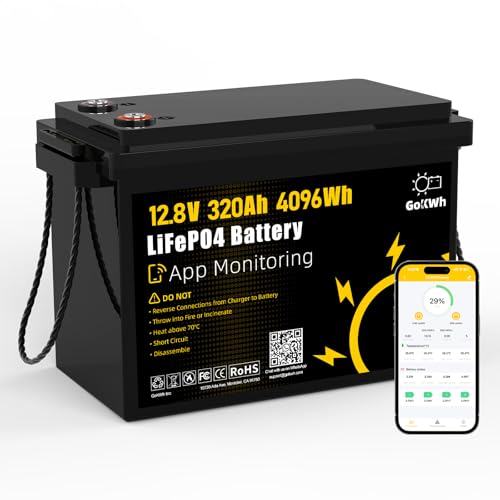
This 320Ah GOKWH packs 4096Wh into a single unit, effectively a one-battery home backup that can run a fridge and lights through a 24-hour outage. The 200A BMS supports serious inverter loads, so pairing with a 3000W inverter is realistic for solar cabins and small off-grid homes. Bluetooth 5.0 brings the same diagnostics as the smaller GOKWH siblings.
The 8000-cycle rating and 10-year lifespan claim put this in long-haul territory for serious off-grid users. The catch is weight; a 320Ah case tends to be heavier than two 100Ah Group 24 units wired in parallel.
Well-Handled Touches
- 4096Wh of capacity means fewer batteries for the same usable energy footprint.
- 200A BMS supports heavy inverter use, including microwaves and induction cooking.
- Bluetooth 5.0 app exposes cell-level diagnostics without opening the case.
- 8000-cycle lifespan keeps replacement costs out of the picture for years.
Honest Caveats
- Heavier than a pair of smaller batteries; verify your battery box or compartment can handle the load.
- Larger case may not fit tight marine trays originally specced for smaller Group 24 or 27 batteries.
Right Fit For
Off-grid cabin owners and full-time RVers running residential-style loads through a mid-sized inverter.
Another Choice May Suit
The Litime 12V 200Ah Lithium with Bluetooth works better for saltwater anglers who need lighter marine-friendly weight.
Litime’s Mini 200Ah was the first 200Ah LiFePO4 in the Group 31+ size category (a battery case roughly 13 x 6.8 x 9.4 inches), which puts real capacity in a footprint that older boats and campers can actually swallow. At 44.5 pounds, it lands roughly 65% lighter than a comparable lead-acid pack, and that weight savings translates directly to faster planing times and easier hull balance on small craft.
The chemistry uses Grade A automotive-grade LiFePO4 cells, which generally hold up well under deep discharge. Trolling motor anglers will appreciate that the smaller case still delivers the full 200Ah, so a long day on the water at low speed won’t drain it before sunset.
Practical Pluses
- Group 31+ case fits trays that wouldn’t accept a standard 200Ah brick.
- 44.5-pound weight reduces boat load and speeds installation.
- Grade A cells typically deliver consistent cycle counts and thermal stability.
- 200Ah of usable capacity handles full-day trolling motor sessions.
Softer Spots
- No Bluetooth module on this variant, so monitoring requires a separate shunt or multimeter.
- Single-battery trolling setups may still need a second unit for multi-day trips.
Whose Shelf It Belongs On
Boat owners and RVers upgrading from lead-acid who want full 200Ah capacity in a slimmer Group 31+ case.
Where Another Pick Suits Better
The Litime 12V 200Ah Lithium with Bluetooth 5.0 makes more sense for anglers who want phone-based diagnostics from the console.
Built with marine use squarely in mind, this Litime 200Ah combines a standard battery footprint with Bluetooth 5.0 diagnostics. Scanning the QR code on the case pairs the battery to Litime’s app, where you can monitor state of charge, voltage, current, and trigger discharge control remotely. That’s useful on a boat where checking battery status means lifting a hatch in the rain.
Grade A cells and a 6000-cycle rating at 100% depth of discharge (DOD, the percentage of total capacity you actually drain before recharging) position this for serious anglers and liveaboards. The trade-off shows up in price, since the Bluetooth and marine build command a small premium over the non-connected Mini variant.
Strong Points
- Bluetooth 5.0 with QR-code pairing makes the app setup unusually fast.
- Real-time current monitoring catches parasitic drain before it kills the bank.
- 6000-cycle rating covers well over a decade of typical use.
- Grade A cells improve thermal consistency during heavy discharge.
Small Caveats
- Standard 200Ah case is bulkier than Litime’s Mini variant; confirm tray clearance first.
- Higher price tag than the non-Bluetooth Mini sibling for similar capacity.
Best Suited To
Boat owners who want at-a-glance battery data from the helm without climbing into a bilge every trip.
Swap It Out When
The Litime 12V 200Ah Mini fits better when space behind the console is genuinely tight and Bluetooth isn’t a must-have.
This Mini variant trims roughly 40.8% off the volume of a standard 200Ah brick while keeping the full capacity. At 44.5 pounds, it slides into Group 31 trays that many RV manufacturers still use, which solves the most common installation headache. Bluetooth 5.0 connectivity adds phone-based diagnostics to a battery that’s already physically friendly.
Compared with the larger Litime 200Ah at pick five, this one prioritizes tray fit over absolute ruggedness. Owners commonly report the smaller case requires careful cable routing to avoid strain on the terminals, so plan your wiring path before mounting.
Strengths Worth Knowing
- 40.8% volume reduction opens up tight RV compartments that reject standard 200Ah cases.
- Bluetooth module brings live state of charge to a phone.
- 6000+ deep cycles at 100% DOD cut replacement anxiety over the long term.
- 44.5-pound weight eases solo installation.
A Few Limitations
- Smaller case concentrates heat during high discharge; monitor temps in enclosed compartments.
- Terminal layout may need low-profile lugs to clear compartment lids.
Perfect Match For
RV owners working with factory Group 31 trays who still want full 200Ah capacity and Bluetooth monitoring.
Reach For A Different Pick When
The Litime 12V 200Ah Mini Trolling Motors LiFePO4 Battery (no Bluetooth) is a better call when you prefer a separate shunt-based monitor and want to skip the connected module.
A two-pack changes the math for first-time solar builders: 560Ah total at 12V means roughly 7kWh of usable energy on day one. The 200A BMS in each unit supports real inverter loads, so running a fridge, lights, and a small microwave off-grid is within reach without adding more batteries immediately. Bluetooth 5.0 reports state of charge, voltage, current, and temperature to your phone.
For shoppers who know they want at least 400Ah but don’t want to spec a single oversized case, this bundle is the cleanest path. The honest read is that the two-pack costs more in absolute terms than a single 280Ah, which is the entire trade-off.
Positive Takeaways
- Two batteries in parallel deliver 560Ah and 400A combined continuous output.
- Bluetooth diagnostics on each unit expose per-pack state of charge.
- 200A BMS per battery supports residential-style 12V loads through a mid-sized inverter.
- 3584Wh per battery keeps capacity realistic for weekend cabin runs.
Worth Bearing In Mind
- Two-pack pricing exceeds a single 280Ah unit; the value comes from flexibility, not savings.
- Wiring two packs requires matched-length cables and a quality bus bar for balanced current.
Built With In Mind
First-time solar builders who want a turnkey starter bank rather than piecing together individual batteries.
Where A Sibling Pick Shines
The GOKWH 12V 320Ah with Bluetooth APP fits better when you prefer a single 4096Wh unit over managing two parallel packs.
Trolling motors that run on 24V typically need two 12V batteries wired in series (positive of one to negative of the other, doubling voltage while keeping capacity). This two-pack lands at 200Ah of total capacity at 24V, which is a sweet spot for serious anglers running mid-thrust motors all day. The Group 24 form factor keeps cable runs short and trays manageable.
Bluetooth 5.0 with phone-app monitoring exposes state of charge for each battery, which is genuinely useful when a single weak cell can drag down a series pair. The trade-off is that you now manage two batteries rather than one, so a balancing routine matters.
What Stands Out
- Series wiring at 24V suits mid-thrust trolling motors without needing an external booster.
- Group 24 form factor fits standard marine trays in most bass boats and jon boats.
- Phone app exposes per-battery state of charge to catch imbalance early.
- Two-pack pricing often beats buying singles separately.
Potential Drawbacks
- Series wiring demands matched batteries; replacing one means replacing both for balance.
- 24V system requires compatible motor and charger; verify before committing.
Who Should Grab It
Anglers running 24V trolling motors who want a clean factory-paired battery kit rather than mixing brands.
Consider Something Else When
The Litime 12V 200Ah Mini Trolling Motors LiFePO4 Battery is a stronger fit for 12V-only motor setups where one big battery beats a series pair.
Closing the list with another 320Ah option, this GOKWH delivers the same 4096Wh and 200A BMS as pick three but lists in a different replacement-parts category, which occasionally affects shipping and warranty handling. Bluetooth 5.0 streams live voltage, current, and temperature to a phone, and the BMS layer protects against overcharge, over-discharge, and short circuits.
The honest read is that the practical difference between this and the earlier 320Ah entry is mostly paperwork; both serve the same use cases. Compare the two on availability, included accessories, and warranty terms before choosing, since the cells and BMS perform similarly.
What Works In Its Favor
- 4096Wh capacity covers multi-day fridge and lighting loads without recharging.
- 200A BMS supports serious inverter loads for residential-style off-grid living.
- Bluetooth app delivers remote state-of-charge visibility.
- Deep-cycle rating supports long daily use over many years.
Points To Keep In Mind
- Heavy and bulky; verify compartment reinforcement and lifting access before ordering.
- Pairs of smaller batteries may be easier to service than a single 320Ah brick.
Who Will Love This
Off-grid households and full-time RV travelers who prefer one large reserve battery over managing multiple packs.
Not Your Match When
The 2-Pack GoKwh 12V 280Ah LiFePO4 Lithium Battery fits better when you want serviceable parallel packs and built-in redundancy.
What Matters Most Before Choosing 12v 200ah Lifepo4 Battery
Capacity Versus Real-World Loads
Capacity on the label tells you how many amp-hours the battery can deliver, but usable capacity depends on depth of discharge. LiFePO4 chemistry routinely allows 100% DOD without damage, while lead-acid banks lose lifespan past 50%. Run the math on your fridge watts, lighting hours, and inverter surge before chasing the biggest number on the shelf.
BMS Rating And Continuous Output
The battery management system controls how much current flows safely. A 100A BMS suits modest inverters under 1500W, while a 200A BMS handles 3000W-class inverters and bigger microwave loads. Mismatched BMS ratings are the most common reason setups trip protection during cooking or AC use.
Form Factor And Tray Fit
Group 24, Group 27, Group 31, and Group 31+ cases fit different compartments. Measure your tray, terminal clearance, and lid height before ordering. A 200Ah battery that won’t physically mount is no battery at all, regardless of how good its cells are.
Bluetooth Versus External Monitoring
Built-in Bluetooth 5.0 simplifies monitoring by streaming data to a phone app, with no separate shunt required. External shunt monitors (a precision resistor that measures current flowing in and out) cost extra and add wiring but support larger banks and offer finer detail. Choose based on how visible you want your battery data to be.
Key Considerations Across These Picks
Where Shoppers Go Wrong
The most common mistake is sizing by nameplate capacity rather than continuous BMS output. A 200Ah battery with a 100A BMS still cannot safely run a 2000W inverter at full draw, and many shoppers only discover this on their first cooking attempt. Equally common is underestimating weight: LiFePO4 is lighter than lead-acid but a 320Ah unit still tests any single-person installation.
What The Higher Tier Buys
Paying more in this category typically buys higher continuous BMS current, Bluetooth 5.0 with finer cell-level telemetry, and longer cycle ratings. Premium-tier units also tend to include low-temperature charge protection, which prevents cell damage when charging below freezing. For full-time off-grid users, those extras pay back in avoided replacement costs and fewer surprises during winter camping or shoulder-season storms.
Frequently Asked Questions
How long does a 12V 200Ah LiFePO4 battery typically last?
A quality LiFePO4 battery rated for 4000 to 8000 deep cycles generally delivers 8 to 12 years of daily use before noticeable capacity loss. Storage at moderate temperatures and avoiding full discharges below 10% both extend that lifespan.
Can a 12V 200Ah LiFePO4 battery run a residential refrigerator?
Most modern residential fridges draw 100 to 300W running, and a 200Ah LiFePO4 battery can power one for roughly 8 to 24 hours depending on duty cycle. Inverter efficiency and ambient temperature both shift that estimate noticeably.
Is a 200A BMS necessary for an RV solar setup?
A 200A BMS is helpful for setups with mid-sized inverters (1500W to 3000W), especially when running microwaves or induction cooktops. Smaller inverter loads under 1200W generally work fine with a 100A BMS.
Can I mount LiFePO4 batteries on their side?
Most LiFePO4 batteries are designed for upright mounting, and laying them flat or sideways depends on the manufacturer’s instructions. Always check the datasheet before mounting in non-standard orientations to avoid venting or terminal stress issues.
Do LiFePO4 batteries need a special charger?
LiFePO4 batteries need a charger with a lithium profile, typically topping out at 14.4 to 14.6V during bulk charge. Lead-acid chargers set to equalization voltages can damage cells over time, so a lithium-compatible charger or solar charge controller setting matters.
Closing Remarks
A 12V 200Ah LiFePO4 battery is one of the most consequential upgrades an off-grid user can make, and the right pick depends as much on your tray and inverter as on capacity. Start with form factor and BMS current, then layer in Bluetooth convenience and expandability. The options above cover the most common combinations, from compact boat swaps to large home banks, and each one earns its place for a specific user profile.