A weekend camping trip that turns into a power-drought, a backyard studio with no outlet in sight, a food truck running gear off-grid on a Saturday morning. These are the moments when a portable power station paired with a folding solar panel stops being a gadget and starts being essential gear. Off-grid living, mobile workstations, and emergency preparedness have all pushed the battery and solar panel combo into mainstream territory. Your situation dictates the right setup, whether that means a compact 1024Wh station for quick trips or a 2048Wh LiFePO4 workhorse that can power tools and appliances for days. This roundup pairs portable batteries with matching panel options so you can match capacity, output, and form factor to your actual routine.
The Lineup, Simplified

EF ECOFLOW Delta 3 Portable Power Station, 1024Wh 1800W

400W Portable Solar Panel for Power Station, ETFE Foldable 24% Efficient

BLUETTI AC200L Portable Power Station 2048Wh 2400W LiFePO4

Dark Energy Spectre Folding 18W Solar Panel, USB-C/A, IPX7
280W Portable Solar Panel, HPBC IP65 for RV Off-Grid

120W Portable Solar Panel, ETFE Foldable, Type-C 60W, IP65

200W Portable Solar Panel, ETFE Foldable 24%, MC4 Output

250W Portable Solar Panel, HPBC Cell, RV Outdoor Backup
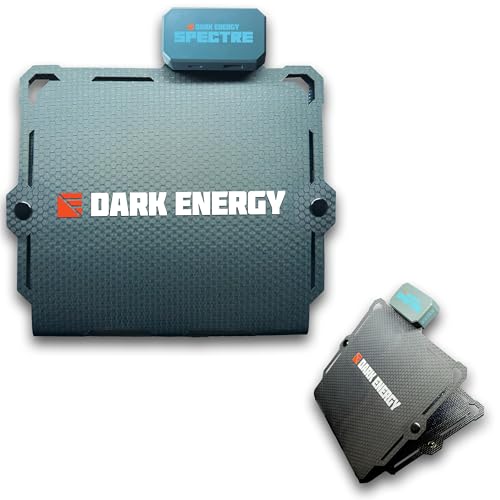
Dark Energy Spectre Folding 8W Solar Panel, USB-C/A, IPX7

EF ECOFLOW River 3 Plus Extra Battery EB600, 572Wh
The Picks, Examined More Closely
The Delta 3 sits in the sweet spot for most households dipping into portable power. A 1024Wh capacity (watt-hours, the unit that measures how much energy the battery can store) handles weekend camping fridges, phone banks, and CPAP machines without forcing a mid-trip recharge. Its 1800W output runs small kitchen appliances, projectors, and most power tools, which gives it real versatility beyond just charging laptops.
What separates it from rivals in this category is the recharge speed. Combined AC plus solar input pushes it from empty to 80 percent in roughly 30 minutes, which matters when storms are rolling in or you’re racing sunset on a campsite. The unit also plays nicely with EcoFlow’s wider battery ecosystem, so you can stack extra packs if your needs grow.
What Makes Sense
- Rapid hybrid recharge cuts downtime during short weather windows
- 1024Wh covers a typical two-day camping or emergency scenario
- Compatible with EcoFlow’s expandable battery family for scaling up
- 1800W output handles kitchen gear and job-site tools, not just gadgets
Points To Keep In Mind
- Heavier than grab-and-go stations, so you’ll want to keep it car-mounted
- Solar input maxes out around 500W, meaning you need compatible panels
Quick Facts
Made For
Weekend campers, mobile creators, and homeowners wanting backup for a fridge and a few lights during outages.
Consider Something Else When
The BLUETTI AC200L suits you better when you run heavy appliances like table saws or need multi-day off-grid capacity without recharging.
For shoppers chasing the fastest refill times, 400 watts of folding panel changes the math. The TWELSEAVAN 400W uses A-grade monocrystalline cells (single-crystal silicon cells that convert sunlight more efficiently than polycrystalline versions) rated at 24 percent conversion, with an ETFE-laminated surface that lets through more than 95 percent of available light. ETFE (ethylene tetrafluoroethylene) is a durable fluoropolymer coating that resists UV damage and abrasion better than standard PET laminates.
It pairs well with mid-to-large stations like the Delta 3 or the BLUETTI AC200L. The MC4 connector (the industry-standard solar plug used on most portable panels and stations) ensures broad compatibility, and the IP65 rating (a dust-tight build that resists low-pressure water jets) means morning dew and brief rain showers won’t end the charge session.
Bright Spots
- 400W output cuts recharge time roughly in half versus 200W panels
- ETFE coating handles UV exposure and light scratching in field use
- MC4 output works with most major portable stations without adapters
Trade Offs
- Unfolded footprint demands serious yard or driveway space to angle toward the sun
- Higher cost than mid-range 200W alternatives, so it’s overkill for small weekend setups
Whose Shelf It Belongs On
RVers, full-time van dwellers, and homeowners running large-capacity stations who refill outdoors often.
Skip It When
The 200W TWELSEAVAN panel is a smarter match for solo campers with smaller stations who rarely need the extra wattage.
The AC200L lives in a different weight class than the Delta 3, and that’s the point. With 2048Wh of LiFePO4 chemistry (lithium iron phosphate, a battery type known for thermal stability and thousands of recharge cycles) and a 2400W AC output, it powers induction cooktops, full-size refrigerators, and heavy job-site tools. The chemistry also outlasts standard NMC lithium packs by years, depending on usage patterns.
Its expansion path is one of the broadest in this category, scaling up to 8192Wh with compatible BLUETTI battery packs. Compared to the Delta 3’s modest 1024Wh baseline, the AC200L is the right answer when one charge needs to stretch across multiple days or power-hungry appliances.
The Helpful Details
- LiFePO4 cells rated for thousands of cycles before notable degradation
- 2400W handles induction burners, microwaves, and most power tools
- Modular expansion reaches 8192Wh for whole-room backup scenarios
- 45-minute AC fast-charge mode for pre-storm top-ups
Things To Consider
- Significantly heavier than the Delta 3, so plan a permanent spot rather than carrying it daily
- Higher upfront cost that only pays off if you actually use the extra capacity
Feature Snapshot
Right Fit For
Off-grid cabin owners, food-truck operators, and contractors needing reliable job-site power without a generator.
Look Elsewhere When
The EF ECOFLOW Delta 3 is a better match for casual weekend users who don’t need 2048Wh of capacity to spare.
This is a panel for backcountry days, not backyard afternoons. The Spectre 18W folds down small enough to slide into a pack pocket and weighs around 15 ounces, which barely registers on a long hike. USB-A and USB-C outputs let you charge a phone, headlamp, or GPS directly without a power station intermediary.
The build is what separates it from generic mini-panels. Armor-Flex construction and an IPX7 rating (submersible up to one meter for 30 minutes) mean it shrugs off drops, creek splashes, and the kind of rough handling that ruins glass-laminated panels. It’s not designed to refill a 2000Wh station, and that’s fine for its intended role.
What Works In Its Favor
- Direct USB-C output charges modern phones and small laptops without a station
- Rugged Armor-Flex shell survives drops that would crack glass panels
- IPX7 waterproofing handles stream crossings and rain squalls
A Few Limitations
- 18W output tops out at trickle-charging speed for most devices
Technical Highlights
Who Should Grab It
Thru-hereurs, overlanders, and field researchers who need direct device charging far from any outlet.
Reach For A Different Pick When
The TWELSEAVAN 120W panel suits you better when you’re camping near your vehicle and need to refill a portable station, not just a phone.
HPBC cell technology (heterojunction cells with a back-contact design that reduces shading losses) gives this TWELSEAVAN panel an efficiency edge in real-world conditions. The manufacturer rates conversion at up to 25.8 percent, with notably strong low-light output during early mornings, late afternoons, and overcast skies. For RV owners chasing every possible watt before sundown, that gap matters.
The 280W rating lands between mid-size 200W and heavy-duty 400W options, so it balances portability with serious refill capability. The IP65 sealing handles steady rain, which is reassuring when a panel lives outside your rig for days at a time.
The Upside
- 25.8% HPBC efficiency outperforms older polycrystalline panels in cloudy conditions
- Mid-size wattage refills a 1000Wh station in a reasonable daylight window
- IP65 build tolerates extended outdoor deployment without weather anxiety
Honest Caveats
- Folded size still demands significant cargo space in smaller RVs
- HPBC premium pricing reflects the newer cell technology
Best Suited To
Full-time RVers and van-lifers who rely on solar as their primary charging method over multi-week trips.
Swap It Out When
The Dark Energy Spectre 8W is a smarter backup for travelers who mainly want emergency phone charging and rarely deploy a full-size panel.
The 120W TWELSEAVAN hits a portable-friendly weight class without dropping into pure trickle-charge territory. It’s the panel that fits in a sedan trunk, sets up next to a tent, and still puts meaningful wattage back into a mid-size station during a single afternoon of sun.
Built-in QC3.0 (Qualcomm’s Quick Charge 3.0 fast-charging standard for USB-A devices) and Type-C 60W outputs let you skip the station entirely for phone, tablet, and even some laptop charging on sunny days. The MC4 output handles station refills when you do want to top up a Delta 3 or similar pack.
What Stands Out
- Built-in USB outputs let you charge gear without a station in the loop
- ETFE laminate and fiberglass backing add serious abrasion resistance
- Metal mounting holes simplify permanent mounting on vans and tents
Worth Noting
- 120W refill takes longer than 200W or 280W alternatives for larger stations
Feature Snapshot
Built With In Mind
Solo travelers, weekend tent campers, and digital nomads who want one panel that handles both station refills and direct device charging.
A Better Fit Elsewhere
The TWELSEAVAN 200W panel makes more sense when you carry a larger station and want noticeably faster refill times on the same trip.
The 200W TWELSEAVAN sits right in the middle of the wattage ladder, and for many households that’s exactly where it belongs. It refills a 1024Wh station in roughly five to six hours of solid sun, depending on angle and weather, which covers a typical overnight camping setup with daylight to spare.
It also includes the same QC3.0 and Type-C 60W direct outputs as the 120W sibling, so you get panel versatility without sacrificing the convenience of charging a laptop directly from sunlight. MC4 output keeps the station connection straightforward.
Features That Help
- 200W refills mid-size stations within a single sunny day
- Direct USB-C output handles laptops and modern phones without a station
- ETFE laminate holds up against years of UV exposure in field use
Room For Improvement
- Folded size runs larger than 120W panels, so storage planning matters
- 8-in-1 adapter bundle adds cable clutter for some users
Perfect Match For
Couples and small families pairing the Delta 3 or similar stations for weekend trips and emergency backup.
Another Choice May Suit
The TWELSEAVAN 280W HPBC panel is the smarter buy if you want better low-light performance and don’t mind the larger footprint.
Weather sealing is where this 250W TWELSEAVAN pulls ahead of competitors at similar wattage. IP68 protection (dust-tight and rated for continuous submersion beyond one meter) makes it a strong fit for coastal regions, storm-prone zones, and any setup where the panel lives outside in conditions that would stress lesser builds.
HPBC cells deliver the same 25.8 percent conversion efficiency as the 280W sibling, with strong low-light performance that keeps watts flowing during dawn, dusk, and overcast weather. Hot-spot protection adds another layer of safety during partial shading.
Well-Handled Touches
- IP68 sealing handles salt mist, heavy rain, and high-humidity environments
- HPBC efficiency outpaces older cell types in low-angle and cloudy light
- Built-in hot-spot protection reduces fire risk during partial shading
Some Limits To Know
- Higher cost than IP65-rated panels at the same wattage
- Folded size demands serious storage space in smaller vehicles
Quick Facts
Who Will Love This
Coastal homeowners, storm-region preppers, and full-time outdoor workers who need year-round panel reliability.
Where A Sibling Pick Shines
The TWELSEAVAN 400W suits you better when absolute refill speed matters more than weather sealing depth.
At roughly 10 ounces and folding down to tablet size, the Spectre 8W is barely larger than the phone it’s meant to charge. It belongs in a glove box, a bug-out bag, or the back pocket of someone who wants assurance that a dead phone won’t leave them stranded.
The same Armor-Flex shell and IPX7 rating carry over from the 18W sibling, so you get genuine drop and water resistance despite the smaller form factor. USB-A and USB-C outputs handle direct charging for most modern devices, though at 8W the speed is closer to emergency top-up than primary charging.
The Good Stuff
- Tablet-sized folded footprint fits in jacket pockets and small bags
- IPX7 sealing handles rain and accidental drops into shallow water
- Dual USB outputs cover most emergency charging scenarios
Practical Considerations
- 8W output is genuinely slow for anything beyond phone top-ups
- Not designed to refill a portable power station
The Right Fit
Emergency kit builders, day hikers, and commuters who want a tiny solar safety net without adding weight.
Not Your Match When
The TWELSEAVAN 120W is the better match when you want one panel that can both refill a station and charge devices directly.
The EB600 is the second half of a system rather than a standalone battery. It docks to the River 3 Plus via pogo-pin connection (a spring-loaded contact that mates without screws or cables) and adds 572Wh of storage, pushing total capacity to 858Wh. The pogo-pin approach keeps setup to a single click.
The extra pack also runs independently when you want to lighten the load. Take just the EB600 on a quick day trip for phone and laptop top-ups, or stack it on the River 3 Plus when the family joins for longer outings. That flexibility is what makes it worth considering.
Everyday Perks
- Pogo-pin dock adds capacity without cables or tools
- Runs independently from the main unit for lighter carry days
- Extends River 3 Plus total capacity to 858Wh for longer trips
Where It Is Less Suited
- Only useful for existing River 3 Plus owners, since it isn’t a standalone station
- 572Wh expansion is modest compared to BLUETTI’s multi-kWh packs
Who It Suits Best
Current River 3 Plus owners looking to stretch runtime for camping or emergency backup without buying a whole new station.
Consider Something Else When
The BLUETTI AC200L is the better starting point if you don’t already own a River 3 Plus and want bigger built-in capacity from day one.
How To Match Battery And Solar Panels To Your Setup
Capacity comes first, and it starts with honest math. A 1024Wh station runs a 50W fridge for about 16 hours, a 100W laptop for 10 hours, and a 1500W induction burner for roughly 40 minutes. Total your expected watt-hours for a typical outing before sizing anything.
Output wattage matters more than capacity for tool-heavy users. A 1500W table saw needs a station rated to handle that surge, not just store enough energy. Look at the running and peak watt ratings, and leave a 20 percent headroom for startup spikes.
Solar panel wattage should roughly match your station’s solar input ceiling. Pairing a 400W panel with a station that accepts only 200W wastes the extra capacity. The Delta 3’s 500W solar ceiling, for instance, plays well with one 400W panel plus room to grow.
Portability follows form factor. Under 15 pounds and folding to backpack size works for hikers. Twenty to thirty pounds in a shoulder bag suits car campers. Anything heavier belongs in an RV or fixed home setup.
Battery chemistry affects how long the station lasts. LiFePO4 cells outlast standard NMC lithium by a wide margin in cycle count, which matters if you’ll discharge and recharge weekly.
Key Considerations Across These Picks
Mistakes Worth Dodging
Sizing panels by wattage alone is a common slip. A 400W panel under cloud cover delivers a fraction of its rating, so matching cell efficiency and low-light behavior matters as much as the headline number. Buyers also underestimate weight, often discovering too late that a “portable” station needs two people to lift after a long day.
Where The Extra Money Goes
Premium pricing in this category typically buys LiFePO4 chemistry, higher solar input ceilings, better weather sealing, and longer cycle life. The upgrade pays off for daily users and harsh-environment owners, but weekend-only users often find mid-tier models cover their needs without the extra spend.
Frequently Asked Questions
How long does a portable power station actually last?
It depends on what you plug in. A 1000Wh station running a 100W load drains in roughly 10 hours, assuming no inefficiencies. Heavy 1500W tools cut that to under an hour, so matching capacity to your heaviest expected load is essential.
Can solar panels work in cloudy weather?
Yes, but output drops significantly. HPBC and high-efficiency monocrystalline panels maintain better low-light performance than older polycrystalline designs, often delivering 25 to 40 percent of rated wattage under heavy cloud cover.
What does LiFePO4 actually do for me?
It extends the usable lifespan of the battery, often supporting thousands of charge cycles versus a few hundred for standard lithium. It also runs cooler and handles thermal stress better, which matters in hot vehicles and direct sun.
Is a folding solar panel tough enough for real outdoors?
The IP65 and IP68 panels in this roundup handle rain, dust, and rough handling well. The Dark Energy Spectre models add genuine drop resistance through Armor-Flex construction, though any panel can crack under sharp impacts regardless of rating.
Do I need expansion batteries right away?
Not unless you already max out your base station regularly. Starting with the right core capacity and adding expansion later is usually cheaper than buying a smaller station plus batteries from day one.
Closing Remarks
The right battery and solar panel pairing depends on what you actually run and how often you’re off-grid. Match capacity to your heaviest expected load, choose panel wattage that fits your station’s input ceiling, and prioritize weather sealing when your gear lives outdoors. Your setup will pay you back every time the grid blinks or the campsite sits past dark.