A trolling motor only behaves well when the battery behind it behaves well. Anglers chasing all-day run times, RV owners tired of heavy lead-acid banks, and anyone rigging a kayak for the first time all end up asking the same question: which 12V 100Ah LiFePO4 pack actually delivers on the water? Group size, BMS headroom, cold-weather behavior, and Bluetooth visibility shape that answer more than marketing ever will. The picks below lean on spec analysis and common ownership patterns to make the decision easier.
How The Shortlist Stacks Up
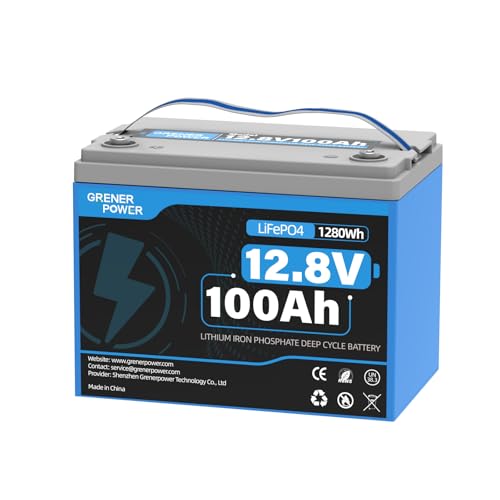
GrenerPower 12V 100Ah LiFePO4 Battery, Group 24

Redodo 12V 300Ah Deep Cycle LiFePO4 Battery
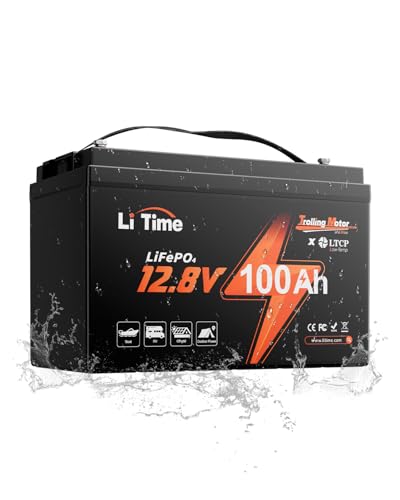
Litime 12V 100Ah Trolling Motor LiFePO4 Battery, Group 31

Litime 12V 100Ah Bluetooth Trolling Motor Battery, Group 31

Litime 12V 100Ah LiFePO4 Battery, Group 27 Bluetooth
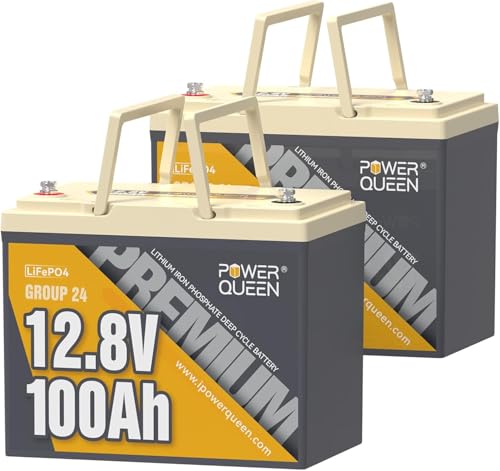
Power Queen 2-Pack 12V 100Ah LiFePO4 Battery Group 24

Redodo 2-Pack 12V 100Ah RV LiFePO4 Battery Group 31 Bluetooth

Redodo 12V 100Ah Marine LiFePO4 Battery, Group 31

Redodo 36V 50Ah Trolling Motor Lithium Battery with Charger
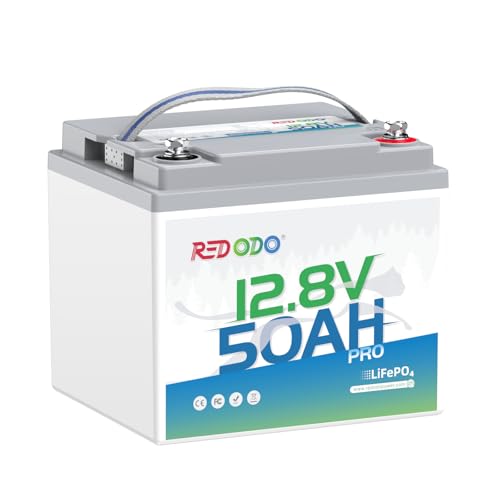
Redodo 12V 50Ah Trolling Motor LiFePO4 Battery
Taking A Closer Look At The Options
Swapping a tired AGM for a lithium bank usually means guessing whether the new pack actually fits. The GrenerPower 12V 100Ah sidesteps that anxiety by living in the standard Group 24 footprint, so existing trays and hold-downs typically accept it without modification. Inside that familiar shell sits a cylindrical A-grade LiFePO4 cell layout (cylindrical cells are individual round battery cells, as opposed to flat prismatic pouches), paired with a 100A BMS (battery management system, the circuit board that protects the pack from electrical faults).
Where it earns its keep is the owners who already run a Group 24 lead-acid compartment in an RV, a small boat console, or a compact off-grid enclosure. The advertised 15,000-cycle lifespan points to roughly a decade of regular weekend cycling before capacity meaningfully drifts down. You also get the standard five-layer electronic guard: overcharge, over-discharge, short-circuit, overcurrent, and overheat, which is reassuring in tighter installations where airflow is limited.
Useful Highlights
- Group 24 dimensions keep the swap-in mechanical work close to zero
- 15,000-cycle rating suggests years of service before noticeable aging
- 100A BMS gives enough headroom for most 80-lb thrust trolling motors
- Five-layer electronic protection covers the common failure paths
Things To Consider
- No Bluetooth readout, so state-of-charge checks happen at the terminals
- Cold-weather charging below freezing isn’t explicitly addressed, worth confirming for winter anglers
Key Specs
Right Fit For
RVers and small-boat owners running a single Group 24 lead-acid compartment and not yet ready to move up to Bluetooth monitoring.
Skip It When
The Redodo 12V 100Ah Marine LiFePO4 Battery is a better match for anglers who want a longer-established marine-oriented pack with a Bluetooth option in the family.
Where every other pack on this list settles at 100Ah, the Redodo 12V 300Ah triples that headline number in a single housing. For off-grid owners running fridges, lights, and a trolling motor from the same bank, that extra headroom changes the planning math: you stop rationing amp-hours and start thinking in days. The 3.84kWh usable figure roughly maps to a 50W fridge running well past 60 hours between charges.
The form factor does demand a deliberate install. This isn’t the kind of battery you slide into an OEM Group 24 slot without checking measurements first, so you’ll want a dedicated bay or compartment. Once mounted, the 2560W continuous output headroom handles coffee makers, kettles, and a fridge on the same circuit, which keeps the overall pack count low. Run it parallel with smaller Redodo units later if you want staged expansion.
Positive Points
- 300Ah capacity removes most amp-hour anxiety on multi-day trips
- High continuous output supports appliances alongside the trolling motor
- One large pack can replace a bank of smaller units, simplifying wiring
Worth Noting
- Physical size rules out tight OEM Group 24 trays; plan a dedicated bay
- Larger pack means heavier lifting at install time, so a second pair of hands helps
Built With In Mind
Full-time RV owners and off-grid cabin users who run multiple appliances and a trolling motor from one electrical bank.
Consider Something Else When
The Power Queen 2-Pack 12V 100Ah LiFePO4 Battery Group 24 is a smarter fit for shoppers needing two smaller drop-in units rather than one large pack.
Saltwater doesn’t forgive sloppy battery choices. The Litime 12V 100Ah Trolling Motor battery earns its place here by meeting ABYC E-13 standards (the American Boat & Yacht Council’s electrical safety benchmark for marine lithium installs) and adding dust and salt-spray protection on top of the usual BMS layer. That’s the kind of spec detail that coastal anglers pay attention to once they’ve replaced a corroded pack or two.
The low-temperature protection is the second story worth telling. Charging cuts off below 32°F and discharging cuts off below -4°F, which keeps the cells out of the plating-damage range that kills LiFePO4 packs in shoulder-season fishing. Weighing around 22 lb in a Group 31 case, it works across 12V, 24V, and 36V motor configurations via 4P4S (four in parallel, four in series) expansion, so a single investment scales with future trolling motor upgrades.
Strong Points
- ABYC E-13 alignment for marine electrical safety standards
- Smart low-temperature cutoffs protect the cells in cold climates
- IP65 rating keeps out dust and low-pressure water jets (IP65 means the enclosure resists dust ingress and water spray from any direction)
- Scales from 12V up to 36V with up to 4P4S configurations
Room For Improvement
- Group 31 sizing requires a check against existing battery trays before ordering
Feature Snapshot
Whose Shelf It Belongs On
Coastal and offshore anglers who need certified marine protection and don’t mind stepping up to a Group 31 case.
A Better Fit Elsewhere
The GrenerPower 12V 100Ah LiFePO4 Battery Group 24 makes more sense for shoppers locked into a Group 24 tray who don’t need ABYC documentation.
Bluetooth on a marine battery sounds trivial until you’re kneeling in a bilge trying to read a status light at dusk. The Litime Bluetooth model solves that moment by surfacing state-of-charge, voltage, and a discharge control toggle in the phone app. It builds on the same Group 31 foundation as the Litime pick above, so you keep the ABYC-style marine protection while adding real-time visibility.
Compare that to the GrenerPower at pick one: that battery has the same 100A BMS but no app layer at all, so the only feedback is whatever the motor display or a multimeter provides. With this Litime version, you can confirm remaining runtime before pushing off the dock, which is exactly the kind of foresight that saves a tow back to the launch ramp. Cold-weather protections, IP65 sealing, and 20+ onboard safety layers round out the package.
Where It Excels
- App-based monitoring replaces guesswork at the dock
- Same marine-leaning protections as the non-Bluetooth Litime sibling
- Group 31 size and IP65 sealing handle splash and spray zones
- Low-temp cutoffs mirror the proven cold-weather behavior of its line
Trade Offs
- Bluetooth adds a small failure point in the connection chain
- Premium over the non-Bluetooth Litime model isn’t trivial for budget builds
Best Suited To
Boat owners who already keep their phone handy at the console and want pack telemetry without crawling into compartments.
Look Elsewhere When
The Redodo 2-Pack 12V 100Ah RV LiFePO4 Battery Group 31 Bluetooth serves shoppers who need twin packs with Bluetooth on both rather than one connected pack.
Group 27 sits in an awkward middle ground between the common Group 24 and the larger Group 31, which is exactly why a battery engineered for that specific footprint is useful. The Litime Group 27 model targets known-fussy RV bays in rigs like the Brinkley Z 2900, Four Winds 22E, and Forest River Forester, where a generic 100Ah unit either rattles around or simply doesn’t seat. The Bluetooth 5.0 readout sits on top, so the same app that works with the larger Litime pack carries over here.
Beyond the tailored fit, the spec sheet reads close to the other Litime trolling motor entries: 100A BMS, 15,000-cycle ceiling, low-temperature charge and discharge cutoffs, and IP65 sealing. The honest read is that this pick is essentially a fit-driven alternative for shoppers whose RV compartment spec rules out the Group 31 options reviewed above. For everyone else, the Group 31 variants give you a touch more flexibility downstream.
Everyday Advantages
- Group 27 case addresses specific RV battery bays that reject other sizes
- Bluetooth 5.0 readout for real-time state-of-charge checks
- Low-temp and IP65 protections match the broader Litime marine line
Honest Caveats
- Narrow use case outside those specific RV battery compartments
- Group 27 format commands a small premium over generic Group 24 choices
Who Should Grab It
RVers driving Brinkley, Four Winds, or Forest River models whose Group 27 compartments reject other form factors.
Swap It Out When
The Litime 12V 100Ah Trolling Motor Battery Group 31 fits shoppers with more standard battery bays who prefer broader future expansion options.
Trailer owners often want twice the runtime without thinking about battery sizing twice. The Power Queen two-pack hands you two complete Group 24 100Ah batteries in one shipment, each sized to slide into a familiar lead-acid tray. That removes the measurement anxiety the larger Redodo 300Ah pick above creates, while still doubling your available amp-hours compared to a single-bank setup.
Each unit weighs roughly a third of a comparable AGM, so lifting them into a trailer tongue box is a one-person task for most adults. The 1280Wh usable figure per pack outperforms a 70Ah AGM that you can only run down to about 50% depth of discharge. EV-grade LiFePO4 cells back the claim, with multi-layer protection covering the usual electrical faults. Two-pack shipping can arrive in separate boxes, which is worth knowing for logistics.
Notable Upsides
- Two-pack format doubles runtime while keeping each battery manageable to lift
- Standard Group 24 dimensions drop into legacy AGM trays
- Each pack delivers 1280Wh usable compared to limited AGM depth
Practical Considerations
- Two-pack orders often arrive in separate shipments at different times
- Wiring two banks correctly requires basic series or parallel knowledge
Made For
Trailer owners who want to double their amp-hours without jumping to a single oversized battery.
Reach For A Different Pick When
The Redodo 12V 100Ah Marine LiFePO4 Battery Group 31 is a better fit for single-pack buyers focused on marine use rather than trailer banks.
This is the dual-pack answer for shoppers who liked the Litime Bluetooth idea at pick four but want two connected packs instead of one. Each Redodo 100Ah unit reports independently to the phone app, which makes diagnosing a single weak cell in a parallel bank far easier than guessing based on terminal voltage alone.
The Group 31 footprint rules out some OEM Group 24 trays, so measure before clicking. Both packs land at roughly 22 lb each, keeping the install manageable for one person. Low-temperature cutoffs match the Bluetooth Litime reviewed above, and the cells are rated for deep-cycle work typical of long RV stays. Two-pack shipping can arrive separately, so plan a few days of variance on arrival.
The Practical Payoff
- Bluetooth on both packs makes per-bank state-of-charge checks easy
- Two Group 31 packs give substantial reserve for longer off-grid stops
- Low-temp charging and discharging protections suit shoulder-season camping
Some Limits To Know
- Group 31 size rules out some smaller OEM battery trays
- Twin-pack orders may ship separately and arrive at different times
Who Will Love This
Connected RV travelers who want per-pack visibility and enough reserve for multi-day boondocking.
Another Choice May Suit
The Litime 12V 100Ah Bluetooth Trolling Motor Battery Group 31 suits shoppers who prefer a single connected pack over a two-bank configuration.
The Redodo 12V 100Ah Marine battery is one of the older listings in this roundup, and that’s part of its appeal. A pack that’s been on the market long enough to accumulate owner feedback gives shoppers a baseline of expected behavior to compare against the newer entries above. EV-grade LiFePO4 cells, a 100A BMS, and a 1280W peak load ceiling form the core spec set.
Where it lands between the GrenerPower Group 24 drop-in above and the Litime Bluetooth-equipped Group 31 is on the support equipment side. This Redodo lacks Bluetooth, so it occupies the same visibility tier as the GrenerPower, but in the larger Group 31 case. Owners commonly use it for 30 to 55 lb thrust trolling motors and basic RV house banks. Without app telemetry, you’ll want a voltmeter or a dedicated shunt for state-of-charge confirmation.
Everyday Wins
- Established model with a longer feedback history than newer entrants
- EV-grade cells suggest solid energy storage density for the footprint
- 100A continuous output covers common trolling motor loads
Points To Note
- No Bluetooth readout means manual voltage checks for state-of-charge
- Group 31 case requires tray measurement for retrofit installs
Perfect Match For
Shoppers who want a proven marine 100Ah pack and don’t need phone-app telemetry.
Not Your Match When
The Litime 12V 100Ah Bluetooth Trolling Motor Battery Group 31 is a smarter fit for owners who want app-based monitoring in the same form factor.
Every other pack on this list runs at 12V, but a chunk of serious trolling motors run at 36V for higher thrust. The Redodo 36V 50Ah bundle is engineered for exactly that crowd, pairing the battery with a 43.8V 25A charger designed for it. Full recharge lands around the two-hour mark on that dedicated charger, which keeps turnaround reasonable between fishing sessions.
This bundle targets trolling motors in the 100 to 120 lb thrust range. Without the matching charger, the pack becomes a much less attractive option, so treat it as a system rather than a stand-alone battery. The 50Ah capacity at 36V roughly equals a 150Ah 12V bank in stored energy, so you’re not giving up runtime. Bundle shipping can also split into separate boxes, which is worth tracking when both arrive.
Useful Touches
- Matched charger simplifies the install for first-time 36V owners
- Two-hour recharge turnaround on the bundled 25A charger
- 36V format supports larger trolling motors than 12V packs
Where It Is Less Suited
- Only fits 36V trolling motor setups, not 12V or 24V systems
- Bundle items may ship separately and arrive on different days
Who It Suits Best
Anglers running 100 to 120 lb thrust 36V trolling motors who want one source for battery plus charger.
Where Another Pick Suits Better
The Redodo 12V 100Ah Marine LiFePO4 Battery Group 31 fits shoppers running 12V trolling motors who need the higher 100Ah reserve rather than 36V format.
Kayak anglers and small-craft owners operate under tighter weight budgets than bass-boat owners, which is why a 50Ah pack earns its place on a 100Ah roundup. At roughly 11 lb, the Redodo 12V 50Ah is portable enough to lift with one hand and small enough to stash in a hatch. Capacity drops to half of the larger 100Ah units above, so runtime planning matters more on the water.
For 30 lb thrust kayak motors with intermittent duty cycles, the 50Ah reserve typically covers a full day of fishing. Where it falls short is sustained high-thrust running or long RV house loads. Pair it with the app-equipped Bluetooth variants above if you want pack telemetry; this entry relies on terminal checks. The cycle rating of 4,000 deep cycles still outpaces a lead-acid pack many times over.
What Works In Its Favor
- Lightweight 50Ah format suits kayak and small-craft installs
- Manageable single-hand carry at roughly 11 lb
- 4,000-cycle rating still eclipses most lead-acid alternatives
Points To Keep In Mind
- Half the runtime of a 100Ah pack, so plan trips around amp-hour budget
- No Bluetooth readout for pack state-of-charge visibility
Right Fit For
Kayak anglers and small-boat owners who prioritize portability over maximum runtime per charge.
Skip It When
The Litime 12V 100Ah Trolling Motor Battery Group 31 is a better fit for full-size craft owners who need all-day runtime at higher thrust levels.
What To Weigh Before Picking A Trolling Motor Lithium Pack
Group size is the easiest spec to confirm and the easiest to get wrong. Group 24 fits the broadest set of OEM battery trays, while Group 27 targets specific RV compartments, and Group 31 gives you more capacity per square inch in larger trays. Measure the bay before you buy, not after.
BMS current rating matters more than headline capacity. A 100A BMS handles most trolling motors up to 80 lb thrust without throttling, while 30 lb thrust kayak motors can run fine on lower-rated boards. Mismatched ratings show up as sudden power cuts during heavy throttle demands.
Cold-weather behavior is a quiet deal-breaker. LiFePO4 cells suffer permanent damage when charged below freezing without a low-temp cutoff, so anglers in northern climates should look for explicit charging and discharging protection thresholds. Bluetooth visibility adds convenience but isn’t strictly required for safe operation.
Matching Battery To Motor And Environment
Saltwater anglers benefit most from ABYC-aligned packs with documented ingress protection, while freshwater boaters can prioritize capacity over marine certifications. Kayak owners should weigh portability heavily, while RV travelers should consider two-pack configurations over single oversized batteries for flexible installation.
Key Considerations Across These Picks
Mistakes Worth Dodging
Buying a battery before measuring the tray is the most common error. Group 24, 27, and 31 cases all look similar in photos but differ enough to rule out half the options in a given compartment. Skipping a low-temperature charging cutoff to save a few dollars also tends to backfire on the first cold morning of the season.
When Paying More Pays Off
Higher-tier models justify their cost through Bluetooth state-of-charge visibility, ABYC marine certification, and matched charger bundles. Anglers who fish weekly or live in their RV will recoup that premium through avoided battery replacements. Weekend-only users may find a basic Group 24 pack entirely sufficient.
Frequently Asked Questions
How long will a 12V 100Ah lithium battery run a trolling motor?
Run time depends on motor thrust and current draw, but most 80 lb thrust motors at moderate speeds pull 20 to 30 amps, giving roughly three to five hours of runtime per charge from a single 100Ah pack.
Can I replace my lead-acid battery with a 12V 100Ah LiFePO4 drop-in?
In most cases yes, provided the LiFePO4 pack fits the same Group 24 or Group 31 tray. LiFePO4 also weighs roughly a third of an equivalent AGM, so mounting hardware may need a shim to stay snug.
Do lithium trolling motor batteries need a special charger?
A standard lead-acid charger often works in a pinch, but a lithium-specific charger with the correct voltage profile protects cell longevity. Charging below freezing without a low-temp cutoff can permanently damage the cells.
How long does a 12V 100Ah lithium battery last?
Cycle life ratings of 4,000 to 15,000 deep cycles translate to roughly eight to fifteen years of regular weekend use before noticeable capacity loss. Calendar aging still applies, so storage conditions matter.
Can I connect multiple 12V lithium batteries together?
Yes, in series for higher voltage or parallel for higher capacity, following the manufacturer’s instructions. Mixing brands, ages, or BMS ratings in the same bank is the common cause of imbalance problems.
Wrap Up
The right 12V 100Ah lithium battery depends on the compartment it lives in, the motor it powers, and the climate it sees. Marine-focused anglers benefit from ABYC-aligned Group 31 packs, RV owners lean toward drop-in Group 24 units or Bluetooth-equipped variants, and kayak users trade capacity for portability with 50Ah options. Match the spec to the use case first, and the rest of the decision usually falls into place.