Quartz watches don’t die dramatically, they just lose a second here and there until the hands freeze mid-afternoon. The fix is rarely the watch itself; it is almost always a small coin cell hiding under the caseback. The catch is that watch batteries come in a forest of sizes (371, 377, 364, CR2032, LR44, and friends), and chemistry matters too, since silver oxide cells hold voltage more steadily than alkaline ones. Choosing the wrong one shortens the life of an expensive timepiece or simply doesn’t fit. This roundup narrows nine solid options across chemistries and formats so you can match a cell to the watch on your wrist without second-guessing yourself at checkout.
The Picks In Brief

Renata #371 Silver Oxide Batteries 20-Pack

Maxell SR521SW Silver Oxide Watch Battery

Duracell CR2032 8-Pack Lithium Coin Cells

Duracell CR2450 6-Pack 3V Lithium

Fuspower CR2032 Lithium Coin 10-Pack

Fuspower SR920SW 371/370 10-Pack

Fuspower SR626SW 377/376 10-Pack

Fuspower LR44/AG13 Alkaline 10-Pack
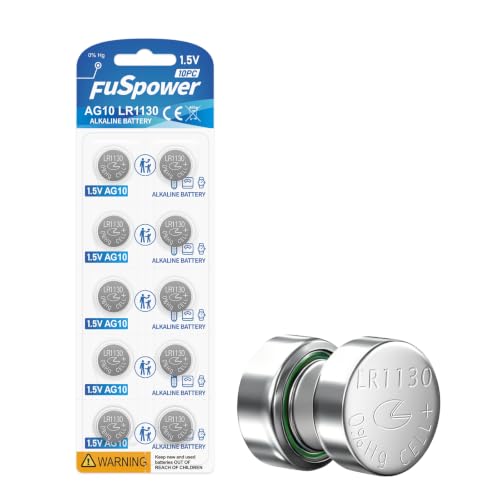
Fuspower LR1130/389/390 10-Pack
The Strengths Of Each Pick
Renata built its name inside Swiss watch workshops, so the brand carries a quiet reputation among watchmakers. The #371 silver oxide cell is one of the most-requested sizes in repair shops, which is why a 20-pack makes sense for a household with more than one quartz timepiece.
Compared to alkaline coin cells, silver oxide chemistry holds its voltage more steadily as the battery drains, which keeps a watch’s second hand tracking accurately closer to the end of the cell’s life. For anyone whose analog watch cost more than the battery budget typically allows, that stability matters.
What Helps Most
- Silver oxide chemistry delivers a flatter discharge curve than alkaline, so timing stays accurate even as the cell ages.
- A 20-pack covers multiple watches, plus spares for calculators and small electronics that share the 371 footprint.
- Renata is widely accepted by independent watchmakers, simplifying future battery swaps done by a professional.
Honest Caveats
- Twenty cells is more than most people need in a single order, so unused spares must be stored properly to keep charge.
- The 371 designation only fits watches designed for that specific size, so check the caseback or old cell before ordering.
Key Specs
Made For
Owners of classic analog watches who want a brand watchmakers tend to specify, plus anyone keeping a multi-watch household running without repeated orders.
Look Elsewhere When
The Duracell CR2032 8-Pack Lithium Coin Cells is a stronger match if your watch actually takes a CR2032 and you also need to feed key fobs or fitness trackers.
The Maxell SR521SW sits on the smaller end of watch coin cells, used in slim ladies’ watches and ultra-thin men’s watches where space inside the case is tight. Buying a single replacement keeps the order focused when there is no need to stock a drawer of spares.
Maxell is a known name in button cell manufacturing, and the silver oxide format here matches the chemistry preferred by watchmakers for longevity and stable voltage. The trade-off is no economy of scale, since one cell is exactly what arrives.
A Few Strong Suits
- The SR521SW footprint fits slim watches that won’t accept larger LR-series cells.
- Silver oxide chemistry supports consistent timekeeping through the cell’s lifespan.
- A single-cell purchase avoids waste when only one watch needs a swap.
Soft Spots
- The single-cell format is less cost-efficient than a multi-pack if more than one watch uses this size.
- Without a child-resistant feature, storage matters in homes with curious kids.
Best Suited To
Anyone replacing one cell in a slim watch and not interested in building a stash of batteries at home.
A Better Fit Elsewhere
The Renata #371 Silver Oxide Batteries 20-Pack suits multi-watch households better when several watches share the 371 size.
The CR2032 is the workhorse coin cell of the modern home, slipping into digital watches, key fobs, fitness trackers, and small medical devices alike. Duracell pairs that universal fit with a non-toxic bitter coating on both sides, which is rare among coin cells and adds a layer of safety around children.
For homes juggling AirTags alongside a digital wristwatch, an 8-pack spreads comfortably across both without leaving a long tail of leftovers. The lithium chemistry (CR-series) also holds voltage longer in storage than alkaline, so spares stay usable when forgotten in a drawer.
The Practical Payoff
- The bitter-taste layer on both faces is designed to discourage accidental ingestion by curious children.
- Three-volt lithium output suits higher-drain digital watches that alkaline LR44 cells can struggle with.
- An 8-cell pack covers a household’s worth of digital watches, fobs, and trackers with one order.
Points To Keep In Mind
- The 20mm diameter is too large for many analog watches that take slimmer 371, 377, or 364 cells.
- CR2032 cells must be installed with correct polarity, and a slipped orientation can quickly drain the cell.
Quick Facts
Whose Shelf It Belongs On
Households running digital watches, AirTags, and car remotes where the same CR2032 size shows up everywhere.
Skip It When
The Fuspower SR920SW 371/370 10-Pack is the better match if the watch on your wrist is a slim analog that takes a 371 cell.
The CR2450 is a thicker, higher-capacity cousin of the CR2032, found in sport watches with backlights, altimeters, and digital watches that drain coin cells faster than slim analogs do. A 6-pack matches the smaller device count these watches usually appear in.
Duracell’s lithium chemistry keeps the cell fresh through years of storage, which matters for owners who rotate seasonal watches or keep a backup in a glove box. The 2450 footprint is incompatible with smaller watches, however, so this is a focused buy rather than a universal cell.
Real Benefits
- Higher capacity than CR2032 supports watches with active backlights and continuous sensors.
- Long storage life keeps unused cells viable when a seasonal watch gets put away.
- Six cells comfortably covers a household with one or two sport watches.
Practical Considerations
- The 24.5mm diameter is too large for most analog watches, narrowing its usefulness beyond sport and digital models.
- Owners commonly report that the thicker cell fits tightly in some watch cases, so gentle pressure matters during installation.
Built With In Mind
Wristwatchers running sport watches or larger digital models with backlights and active readouts.
Consider Something Else When
The Fuspower LR44/AG13 Alkaline 10-Pack is a more useful pick for everyday analog watches and small gadgets that share the LR44 size.
This 10-pack leans into the volume side of coin cell ownership, useful when the household runs AirTags alongside car remotes, fitness bands, and a digital watch. Each cell delivers the standard 3V that CR2032 devices expect.
The leak-resistant seal design is meant to keep dormant cells from corroding inside devices left untouched for months. That matters for items like spare key fobs in drawers, where a leaking battery is an unpleasant surprise.
Where It Delivers
- Ten cells offer enough inventory to feed several digital watches, fobs, and small trackers without reordering.
- The mercury-free formula avoids heavy-metal concerns for households cautious about disposal.
- Leak-resistant construction helps protect stored devices from corrosion.
Worth Bearing In Mind
- Ten identical CR2032 cells is overkill for a single-watch household, leaving many cells idle in storage.
- Like most CR2032 cells, the size restricts use to digital devices rather than slim analog watches.
Feature Snapshot
The Right Fit
Multi-device households where one person runs several AirTags, fobs, or fitness gadgets alongside a digital wristwatch.
Reach For A Different Pick When
The Duracell CR2032 8-Pack Lithium Coin Cells suits households wanting the bitter-coating child safety that this bulk pack omits.
The 371 and 370 sizes share enough physical similarity that watchmakers frequently cross-reference them, and this pack covers both. That dual-fit character is genuinely useful when the original paperwork for an older watch is long gone.
Output runs at 1.5V in alkaline form, which is the chemistry supplied here. Compared with silver oxide, alkaline coin cells tend to drop voltage more sharply near end of life, so accuracy can wander in the final stretch.
Everyday Perks
- Covers both 371 and 370 sizes, useful when watch documentation is missing.
- Ten-cell pack keeps several slim watches running without repeat orders.
- The mercury-free formula simplifies household disposal.
Small Limitations
- Alkaline chemistry produces a steeper voltage drop than silver oxide near end of life.
- Cells should be stored away from heat to avoid premature capacity loss.
Who Should Grab It
Owners of slim analog watches who cannot find a clear size reference and want one pack that covers the likely candidates.
Not Your Match When
The Renata #371 Silver Oxide Batteries 20-Pack is a stronger choice for buyers who want silver oxide chemistry in the same 371 footprint.
The 377 and 376 sizes are workhorses in mid-size analog watches, and this pack covers both with a single alkaline cell. Outside of watches, the same cells appear in thermometers, calculators, and small toys, so a 10-pack rarely goes unused.
The listed two-year shelf life is typical for alkaline coin cells. Storing unused cells somewhere cool and dry preserves capacity, especially in garages or cars where summer heat accelerates self-discharge.
Positive Points
- Covers both 377 and 376 sizes, two of the most common watch cell footprints.
- The cells work in watches and many small electronics, increasing real-world usefulness.
- Full 1.5V charge at activation supports immediate use after installation.
Some Limits To Know
- Alkaline chemistry produces a more noticeable voltage drop than silver oxide near end of life.
- Avoid storing loose cells where metal objects can short the contacts.
Perfect Match For
Anyone running a mix of analog watches and small household electronics where 377 or 376 cells keep showing up on shopping lists.
Swap It Out When
The Renata #371 Silver Oxide Batteries 20-Pack is a better match for owners wanting silver oxide chemistry and who specifically wear 371-size watches.
LR44 cells, also sold as AG13, A76, or 357 equivalents depending on the brand, are everywhere. They power small watches, laser pointers, digital thermometers, and the small LED lights that seem to multiply in every junk drawer.
Buying in a 10-pack makes sense because the cells disappear fast across so many household uses. The 1.5V alkaline format is the standard chemistry here, which keeps the price approachable for that level of consumption.
Where It Helps
- Cross-compatibility across LR44, AG13, 357, and similar size codes reduces guesswork at the drawer.
- Ten cells handle watches plus toys, thermometers, and small LED gadgets in one order.
- Mercury-free chemistry simplifies disposal in standard household waste streams.
A Few Limitations
- Alkaline cells lose voltage faster than silver oxide, so analog watch accuracy can drift near end of life.
- Owners commonly report that LR44 cells can leak if left installed in unused devices for years.
Best Suited To
Shoppers who want one battery pack on hand for the rotating mix of watches, toys, and small gadgets that share the LR44 footprint.
Where Another Pick Suits Better
The Duracell CR2032 8-Pack Lithium Coin Cells is the right call if your watch actually takes a CR2032 and you’d prefer lithium chemistry.
The 389 and 390 sizes show up in older analog watches and a scattering of specialty devices, and the LR1130 label is the IEC designation for this same family. Finding these cells at general retailers can be tricky, which is exactly why a 10-pack earns its keep.
Output is 1.5V alkaline, matching the typical use cases. Mercury-free construction simplifies disposal, and the child-resistant packaging helps in homes where curious hands might investigate the small cells.
A Strong Showing
- Covers the less common 389/390/LR1130 sizes that mainstream packs usually skip.
- Ten cells provide enough inventory to outlast multiple watch swaps.
- Child-resistant packaging adds a layer of safety in family homes.
Trade-Offs To Consider
- The niche size makes the pack overkill for anyone not running 389/390 devices.
- Alkaline chemistry delivers less steady voltage than silver oxide through the cell’s life.
Who Will Love This
Owners of older or specialty analog watches that take the unusual 389 or 390 size, plus households that collect small electronics sharing this cell.
Another Choice May Suit
The Fuspower SR626SW 377/376 10-Pack is more useful for households whose watches run on the more common 377/376 cells.
What Matters When Matching Cells To Your Watch
Reading The Existing Cell Or Caseback
Before any battery order, find the three- or four-digit code stamped on the old cell or engraved into the caseback. That number (371, 377, 364, CR2032) is the actual spec, not the marketing label on the packaging. Cross-reference codes like AG13, LR44, and 357, since the same physical cell often appears under several names.
Silver Oxide Versus Alkine Versus Lithium
Silver oxide cells deliver the steadiest voltage, which matters for analog watches where timing accuracy depends on a stable supply. Alkaline cells are cheaper but their voltage drops more sharply toward end of life. Lithium coin cells (CR-series) deliver 3V instead of 1.5V, suiting digital watches, key fobs, and small electronics rather than slim analogs.
Pack Size And Storage Habits
Bulk packs only pay off when the household actually consumes that many cells. Heat shortens coin cell shelf life noticeably, so spares stored in garages or car glove boxes lose capacity faster than ones kept indoors. A loose cell in a junk drawer can also short against metal objects, wasting the cell and risking minor damage.
Watchmaker Preference And Special Tools
Some watch backs screw down, others snap-fit, and a few require a specific case wrench. Without the right tool, even the right battery becomes a frustrating afternoon. When in doubt, especially with vintage or water-resistant watches, a watchmaker swap is usually cheaper than a scratched caseback.
Key Considerations Across These Picks
Common Shopping Slip Ups
The most common slip is trusting packaging language over the actual cell number, leading to a coin cell that’s a millimeter off and won’t seat properly. Another is mixing voltage families, dropping a 3V CR2032 into a watch that expects 1.5V silver oxide. Battery type matters more than brand prestige in most cases.
What Separates Premium From Basic
Premium watch cells tend to use silver oxide chemistry, source cleaner steel for the casing, and seal against leaks more reliably than budget alkaline cells. That extra manufacturing shows up in steadier voltage across the cell’s life, which matters most in analog watches where accuracy is visible on the dial.
Frequently Asked Questions
How Do I Know Which Battery My Watch Takes?
Open the caseback or check the old cell for a printed code like 371, 377, or CR2032. That three- or four-digit code is the actual specification, regardless of brand names on the packaging.
Are Silver Oxide Batteries Better Than Alkaline For Watches?
Silver oxide cells hold voltage more steadily as they drain, which keeps analog watches accurate closer to end of life. Alkaline cells are usually cheaper and work fine for less time-sensitive devices.
How Long Do Watch Batteries Typically Last?
Most coin cells run a watch for one to three years, depending on the watch’s features. Backlights, alarms, and continuous sensors shorten that span compared with a simple two-hand analog.
Can I Replace A Watch Battery At Home?
Many snap-back cases open with a thin blade, and standard coin cells drop right in. Screw-down or water-resistant cases benefit from a watchmaker, since scratched casebacks are an easy mistake.
What Happens If I Install The Wrong Battery?
A wrong-size cell won’t seat and may damage the movement when forced. A correct-size but wrong-voltage cell can cause erratic behavior, and forcing a 3V lithium cell into a 1.5V watch is an easy way to burn out a movement.
The Takeaway
The right cell comes down to three small details: the printed code on the old battery, the chemistry your watch prefers, and how many cells you’ll actually use before they age out. Match those honestly and almost any of the packs above will serve you well. Keep spares stored somewhere cool, and a stopped watch rarely stays stopped for long.