A solar battery bank only performs as well as the cells behind it. After living through a couple of grid flickers and one storm that knocked out power for three days, you start caring less about brand marketing and more about capacity curves, cycle life, and whether a unit will hold a charge through a January cold snap. This roundup breaks down ten batteries and portable power stations that pair cleanly with solar setups, from small weekend camping banks to whole-home LiFePO4 packs.
An Overview Of The Picks
PickWhy We Picked ItBest ForAction

Heavy Duty PickVATRER POWER 12.8V 460Ah Self-Heating LiFePO4 Battery
Cold-weather self-heating
Off-grid cabin rigs
Outdoor ReadyELECOM NESTOUT 15000mAh Portable Charger and LED Light
Rugged IP67 build
Backcountry trips
Performance LeaderBLUETTI Elite 200 V2 Portable Power Station
High 2600W output
Home backup runs
Fast Recharge PickEF ECOFLOW Delta 3 Portable Power Station
Quick 56-minute charge
Modular home setups
Budget FriendlyEnergizer Rechargeable AA NiMH Batteries
Energizer Rechargeable AA NiMH Batteries
Everyday rechargeables
Low-drain household use
Expandable Power PickBLUETTI AC200L Portable Power Station 2048Wh
Modular battery expansion
Off-grid workshop power

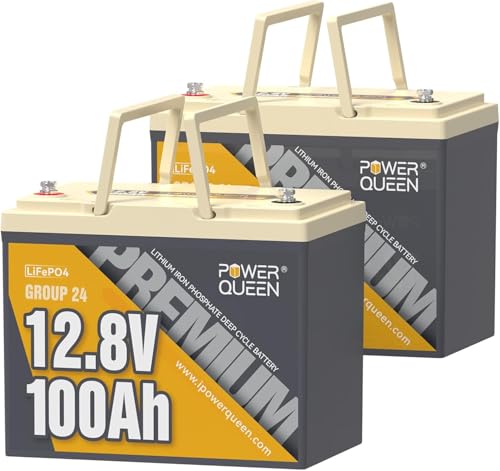
RV Upgrade PickPower Queen 2PACK 12V 100Ah LiFePO4 Group 24
Drop-in lead-acid swap
RV solar replacements
Travel ReadyJackery Explorer 1000 v2 Portable Power Station
Portable 1500W output
Weekend camping trips
Compact ChoiceAnker SOLIX C1000 Portable Power Station
Fast 43-minute recharge
Apartment blackout cover
Add-On FavoriteEF ECOFLOW River 3 Plus Extra Battery EB600
Stackable expansion
River 3 Plus owners
A Closer Look At Each Pick
If you live somewhere the thermometer dips below freezing for weeks, this VATRER POWER pack solves the most overlooked problem with solar batteries: charging in the cold. Lithium iron phosphate (LiFePO4) cells can refuse a charge below a certain temperature, but the built-in heating pads warm the bank just enough to let the BMS (battery management system) accept current safely.
The 460Ah capacity translates into roughly 5.8kWh of usable energy, enough to run a residential fridge for a day or keep an off-grid cabin’s lights and small inverter humming. The app monitoring is a nice touch for tracking voltage, state of charge, and cell health from inside the house.
Good Reasons To Consider
- ✓Self-heating function activates between -4°F and 41°F, so winter charging actually works
- ✓460Ah rating covers multi-day off-grid use without parallel banks
- ✓App monitoring gives remote visibility into cell voltage and temperature
- ✓LiFePO4 chemistry typically delivers thousands of cycles compared to lead-acid
Things To Consider
- •Heavy unit, plan a permanent mount rather than hauling it around
- •Non-returnable due to hazmat shipping rules, so verify fit before ordering
Who It Suits Best
Cabin owners and serious off-grid households in cold climates who need reliable winter charging.
Consider Something Else When
Lightweight weekend campers will be better served by the portable Jackery Explorer 1000 v2 lower in this list.
Small-format solar setups don’t always mean wall-sized power stations. The ELECOM NESTOUT is a compact 15000mAh power bank paired with a 1000-lumen LED flashlight, designed for backpackers who carry a foldable panel. The silicone-wrapped shell handles drops, and the IP67 rating means dust and brief submersion are non-issues.
Unlike the larger VATRER POWER above, this isn’t meant to run household appliances. It charges phones, headlamps, GPS units, and similar small loads, which fits a base-camp or emergency kit perfectly.
Everyday Advantages
- ✓IP67 waterproofing handles creek crossings and rainstorms
- ✓32W USB-C PD (Power Delivery) refills a modern phone quickly
- ✓Built-in 1000-lumen light eliminates a separate flashlight in your pack
- ✓Mil-spec drop-tested body shrugs off trail wear
Points To Note
- •15000mAh is modest for anyone trying to power laptops or CPAP machines overnight
- •Solar panel sold separately, so budget for a compatible folding panel
The Right Fit
Backpackers and overlanders who need a rugged pocket-sized charger with integrated lighting.
Skip It When
Anyone running household loads should jump to the BLUETTI Elite 200 V2 reviewed next.
The BLUETTI Elite 200 V2 sits in the sweet spot for whole-room backup. Its 2073.6Wh LiFePO4 pack pushes a continuous 2600W of AC output, which is enough for refrigerators, coffee makers, and most shop tools. With nine output ports, you can keep a household’s worth of devices running from a single box.
For homeowners comparing this to the EF ECOFLOW Delta 3 below, the Elite 200 V2 trades raw charging speed for higher sustained wattage. If you care more about running a microwave during an outage than topping off quickly between solar hours, the math leans toward BLUETTI here.
Bright Spots
- ✓2600W continuous handles high-draw appliances without tripping
- ✓2073.6Wh LiFePO4 cells should deliver years of daily cycling
- ✓Nine output ports cover AC, USB-A, USB-C, and DC at once
- ✓Solar input extends runtime indefinitely in good sun
Worth Noting
- •Heavier than compact options, plan a spot near where you store emergency gear
- •Charging speed is slower than the EF ECOFLOW Delta 3 in this list
Quick Facts
| | Feature | Specification | Why It Matters |
|---|
| Capacity | 2073.6Wh | Runs a 100W fridge roughly 18 hours |
| AC Output | 2600W continuous | Powers microwaves and hair dryers |
| Chemistry | LiFePO4 | Long cycle life and thermal stability |
| Ports | 9 outputs | Charges multiple devices simultaneously |
Who Will Love This
Homeowners wanting a single station to cover kitchen appliances during multi-hour outages.
Look Elsewhere When
Travelers who value a lighter build should consider the Jackery Explorer 1000 v2 instead.
The EF ECOFLOW Delta 3 leans hard into recharge speed, reaching 80% capacity in about 30 minutes when AC input is available. Combined with up to 500W of solar input, you can top off between cloud breaks faster than most competitors. Its 1024Wh capacity and 1800W output handle most household essentials short of a central AC.
Where the Delta 3 differs from the BLUETTI Elite 200 V2 is ecosystem. It pairs with the EF ECOFLOW River 3 Plus Extra Battery EB600 covered later in this list, letting you scale storage as your solar array grows.
What Stands Out
- ✓56-minute full charge means quick turnarounds between solar cycles
- ✓Expandable up to 5kWh with extra battery packs in the ecosystem
- ✓1800W AC output covers kitchen appliances and power tools
- ✓500W solar input is generous for a mid-size station
Trade Offs
- •Smaller base capacity than the BLUETTI Elite 200 V2 without expansion
- •Extra batteries are an added purchase, so total system cost climbs fast
Made For
Households that want modular storage they can grow over time, starting with a single Delta 3.
A Better Fit Elsewhere
Shoppers wanting maximum capacity out of the box will get more from the BLUETTI AC200L further down.
Not every battery in a solar setup needs to be lithium. AA cells still run remote sensors, flashlights, weather stations, and small DC devices that sip power. These Energizer NiMH (nickel-metal hydride) rechargeables are rated at 2300mAh and can be topped off roughly a thousand times.
Compared to the giant LiFePO4 stations on this list, these are doing completely different work. Think of them as the consumables that keep the small stuff alive when the main bank is busy with bigger loads.
Real-World Strengths
- ✓2300mAh capacity suits digital cameras and handheld gaming devices
- ✓Rated for up to 1,000 recharge cycles, replacing many disposable cells
- ✓Works in any standard AA charger you already own
Honest Caveats
- •Self-discharge is higher than lithium, so long-shelf storage needs topping off
- •Not the right tool for powering anything beyond small electronics
Best Suited To
Anyone stocking a kit of low-drain devices powered alongside a larger solar bank.
Reach For A Different Pick When
You actually need meaningful watt-hours; the Power Queen 2PACK reviewed below fills that role.
The BLUETTI AC200L is the workhorse for serious solar households. Its 2048Wh LiFePO4 pack delivers 2400W of AC output, and it accepts up to two B300K, B300, B210, or B230 expansion batteries. That’s a ceiling of 8192Wh, which can run a typical home circuit for days when paired with panels.
Versus the EF ECOFLOW Delta 3 reviewed above, the AC200L ships with more base capacity and faster recharge from AC wall input. The trade-off is footprint: this is a heavier unit meant to live on a garage shelf.
Where It Delivers
- ✓Expansion path up to 8192Wh covers most home backup scenarios
- ✓2400W output runs window AC units and shop tools
- ✓LiFePO4 chemistry is well-suited to daily deep cycling
- ✓45-minute fast recharge from AC input minimizes downtime
Small Caveats
- •Heavier and bulkier than portable options for tailgating or car camping
- •Full system cost rises quickly once expansion batteries are added
Key Specs
| | Feature | Specification | Why It Matters |
|---|
| Capacity | 2048Wh base, up to 8192Wh expanded | Scales from cabin to whole-home use |
| AC Output | 2400W | Handles demanding household appliances |
| Chemistry | LiFePO4 | Long cycle life and thermal safety |
| AC Recharge | 45 minutes | Quick top-offs between solar cycles |
Perfect Match For
DIYers building a permanent home backup system who plan to expand storage over time.
Swap It Out When
Mobility matters more than capacity; the Jackery Explorer 1000 v2 travels much easier.
RVs, boats, and trailers built around Group 24 battery trays have a direct upgrade path here. These 12V 100Ah LiFePO4 cells drop into existing boxes without rewiring, weigh roughly a third of comparable AGM (absorbent glass mat) batteries, and deliver more usable capacity per cycle.
Where the Power Queen pack differs from the BLUETTI AC200L above is form factor. This is a raw 12V deep-cycle bank rather than an all-in-one inverter station. You’ll still need a solar charge controller and inverter if your rig doesn’t have them.
Practical Pluses
- ✓Standard Group 24 footprint drops into existing battery trays
- ✓Two-pack doubles storage without parallel wiring complexity
- ✓LiFePO4 cells handle deeper discharges than lead-acid equivalents
- ✓Significantly lighter than AGM, freeing payload for other gear
Areas To Watch
- •Requires a LiFePO4-compatible charger or solar controller
- •No built-in inverter, so AC loads need a separate unit
Feature Card
| | Feature | Specification | Why It Matters |
|---|
| Voltage | 12V | Matches typical RV and trailer systems |
| Capacity | 100Ah per battery, 2-pack | Delivers extended runtime for off-grid travel |
| Form Factor | Group 24 | Swaps directly into existing trays |
| Chemistry | LiFePO4 | Long cycle life compared to lead-acid |
Whose Shelf It Belongs On
RV and trailer owners retiring tired lead-acid banks for a lighter lithium setup.
Another Choice May Suit
Anyone wanting plug-and-play AC output will be happier with the Anker SOLIX C1000 reviewed below.
The Jackery Explorer 1000 v2 hits a sweet spot for people who want one station that does everything without the heft of a home backup unit. Its 1070Wh LiFePO4 battery feeds 1500W of AC output (3000W surge), and the entire thing weighs around 23.8 pounds with a foldable handle for easy carrying.
Compared to the bulkier BLUETTI AC200L reviewed earlier, this trades capacity for portability. For weekend camping trips or a moving tailgate setup, that trade usually pays off.
Useful Touches
- ✓One-hour fast charge keeps downtime between uses short
- ✓100W USB-C output charges laptops without a separate brick
- ✓1500W AC handles small appliances and power tools
- ✓Foldable handle and lightweight body simplify transport
Points To Keep In Mind
- •Capacity tops out around 1070Wh, smaller than fixed-installation options
- •Solar panel is optional, so factor that into total project cost
Built With In Mind
Campers, RV weekenders, and road-trippers who want a single grab-and-go station.
Where A Sibling Pick Shines
Long-duration home backup calls for the larger BLUETTI Elite 200 V2 covered earlier.
Anker’s SOLIX C1000 packs 1056Wh of LiFePO4 storage into a roughly suitcase-sized shell, with 1500W of continuous AC output (and a higher peak for short bursts). The standout spec is the 43-minute UltraFast recharge, which Anker activates through the companion app on a phone.
Against the EF ECOFLOW Delta 3 covered earlier, the C1000 trades some charging flexibility for the included car charging cable. For RV or van-build owners who frequently top off while driving, that bundled accessory is a quiet win.
A Favorable Mix
- ✓43-minute UltraFast recharge minimizes downtime
- ✓Compact form factor fits apartment closets and van builds
- ✓Included car charging cable adds flexibility for mobile use
- ✓App control surfaces recharge modes and status
Less Ideal Details
- •UltraFast mode requires a specific AC input temperature window to engage fully
- •1056Wh capacity is moderate for multi-day outages
At A Glance
| | Feature | Specification | Why It Matters |
|---|
| Capacity | 1056Wh | Suits overnight appliance and device use |
| AC Output | 1500W | Runs most small kitchen appliances |
| Recharge | 43 minutes UltraFast | Fast turnaround between uses |
| Included | Car charging cable | Top off while driving |
Who Should Grab It
Apartment dwellers and van-lifers wanting a single compact station that fits limited space.
Not Your Match When
Multi-day off-grid use calls for the higher-capacity BLUETTI AC200L earlier in the roundup.
The EF ECOFLOW River 3 Plus Extra Battery EB600 is a niche pick: it only makes sense alongside the right parent station. It snaps onto a River 3 Plus via a pogo-pin connection, adding 572Wh of storage for a combined 858Wh total, or it can run independently as its own smaller pack.
Compared to the larger EF ECOFLOW Delta 3 covered earlier, this EB600 plays a different role. It’s modular expansion rather than a primary unit, ideal for existing River owners who want more runtime without buying a whole new station.
Useful Strengths
- ✓Pogo-pin stacking needs no extra cables or screws
- ✓Functions independently if you want a second small station
- ✓Adds meaningful runtime for car fridges and travel kettles
Potential Compromises
- •Only useful alongside a River 3 Plus base unit
- •Modest standalone capacity limits independent use cases
Right Fit For
Existing River 3 Plus owners who need extra storage without buying a separate station.
Where Another Pick Suits Better
First-time shoppers are better served by the Anker SOLIX C1000 reviewed above.
What To Weigh Before Choosing Batteries For Solar Battery Bank
Capacity versus portability is the central trade-off in this category. Whole-home backup stations like the BLUETTI AC200L and BLUETTI Elite 200 V2 hold enough energy to keep a fridge running overnight, but they weigh in at 60+ pounds and live best on a garage floor. Smaller stations like the Jackery Explorer 1000 v2 and Anker SOLIX C1000 are easier to grab but cap out around 1000Wh.
Chemistry And Cycle Life
Lithium iron phosphate (LiFePO4) has become the default for serious solar batteries because it tolerates deeper discharges and lasts thousands of cycles. Compared to lead-acid or standard lithium-ion, LiFePO4 cells run cooler and degrade more slowly. AA rechargeables like the Energizer NiMH pack on this list use a different chemistry (nickel-metal hydride) better suited to small-format household devices.
Cold-Weather Performance
Charging lithium batteries below freezing can damage cells permanently. Packs with built-in self-heating pads, like the VATRER POWER 460Ah reviewed above, solve this by warming the cells before accepting a charge. For anyone in northern climates, that feature quietly extends the usable season.
Expansion And Ecosystem
Modular systems let you start with a base unit and add batteries as your solar array grows. The EF ECOFLOW Delta 3 and River 3 Plus Extra Battery EB600 share an ecosystem that scales up to 5kWh. The BLUETTI AC200L accepts multiple expansion packs up to 8192Wh, which is more headroom but locks you into BLUETTI accessories.
Real-World Output
Wattage matters more than watt-hours for running appliances. A 2000Wh battery won’t run a 2000W microwave because the inverter can’t deliver that surge. Check continuous AC output carefully: 1500-1800W covers most kitchen gear, while 2400-2600W adds window air conditioners and shop tools.
Key Considerations Across These Picks
Where Shoppers Go Wrong
The biggest mistake in this category is buying on watt-hours alone. A battery with massive capacity and a weak inverter can’t run the appliances you actually need. Always match inverter output to your highest-draw device. Another common slip-up is ignoring temperature ratings. Standard lithium cells refuse to charge below freezing, which is why cold-climate shoppers should target self-heating models.
What The Higher Tier Buys
Stepping up to a 2000Wh+ station like the BLUETTI Elite 200 V2 or AC200L buys you real appliance-grade output, faster AC recharge, and modular expansion paths. For apartment dwellers or weekend campers, the premium often goes unused. For households expecting multi-day outages or running a workshop, that tier is where the meaningful capability lives.
Frequently Asked Questions
QHow long do solar battery banks typically last?
Most LiFePO4 packs on this list are rated for several thousand full charge cycles, which translates to 7-10 years of daily use before noticeable capacity loss. Lead-acid banks degrade faster and typically last 3-5 years under similar conditions.
QCan I leave a portable power station plugged in all the time?
Modern stations manage their own charge cycles and won’t overcharge, but storing at 100% constantly can accelerate cell wear. Many owners keep the unit at around 80% during long storage periods and top off before use.
QDo I need a solar panel to buy these batteries?
No panel is included with most picks on this list, though stations like the Jackery Explorer 1000 v2 support optional panels. You can recharge from a wall outlet and add solar later as your setup grows.
QWhat’s the difference between watt-hours and amp-hours?
Watt-hours measure total energy storage, while amp-hours measure capacity at a specific voltage. To compare batteries fairly, multiply amp-hours by voltage to get watt-hours. A 12V 100Ah battery holds 1200Wh, for example.
QAre LiFePO4 batteries safer than other lithium types?
LiFePO4 chemistry is more thermally stable than standard lithium-ion, meaning it’s less prone to thermal runaway. That stability is one reason it has become the default for home solar storage and portable stations alike.
The Takeaway
The right solar battery bank depends entirely on how you live. RV owners and cabin dwellers should look at the Power Queen Group 24 pack or VATRER POWER cold-weather bank. Home backup shoppers get the most from the BLUETTI Elite 200 V2 or BLUETTI AC200L. Travelers and apartment dwellers will be happier with the Jackery Explorer 1000 v2 or Anker SOLIX C1000. Match the unit to your climate, your typical load, and how permanent you want the installation to be.